
 English
 Español
 Português
 Français
 Deutsch
 русский
 한국어
 にほんご
 हिन्दी, हिंदी
 বাংলা
 Bahasa Indonesia
 Türkçe
 Việt
 dansk
 čeština
 עִבְרִית Ivrit
 Filipino/Pilipino
 български език (Bǎlgarski jazik)
 suomi
 norsk
 język polski
 ไทย
 ກະຣຸນາ
 Bahasa Melayu
 ភាសាខ្មែរ
 ဗာရမ်
 اردو
 فارسی
 Italiano
 Nederlands
 svenska
 Монгол хэл
 नेपाली
 සිංහල
 Ўзбек тили
 پښتوتۆرکجه
 Ελληνικά
 српски / srpski
 magyar
 українська
 Kiswahili
 Қазақ тілі
 Română
 Hrvatski
 Bosanski
 Kreyòl ayisyen
 አማርኛ
 Hausa
 Yorùbá
 Igbo

What Is A Tool Cabinet In Electrical Safety Context
A tool cabinet, in the electrical equipment management domain, is a purpose-built enclosure engineered to store, protect, and organize insulated hand tools, voltage detectors, grounding sets, and other safety-critical gear. Unlike generic storage units, a professional tool cabinet must comply with IEC 61482, ASTM F1506, and EN 61482-1-1 standards for dielectric integrity and environmental resilience. Its structural definition includes reinforced frame geometry, non-conductive interior linings, and sealed access points—all designed to preserve insulation performance and prevent accidental energization.
Material composition directly impacts longevity and safety: cold-rolled steel offers impact resistance but requires corrosion-resistant coating; stainless steel provides superior moisture resistance but at higher cost; and hybrid designs (e.g., steel frame with polymer-lined interior) balance durability and electrical isolation. A true tool cabinet integrates functional design—such as adjustable shelves, dedicated holders for insulated gloves or rubber mats—and safety logic—notably grounding continuity verification and humidity-triggered dehumidification.
The term 'tool cabinet' also encompasses intelligent variants now deployed across substations, power plants, and rail infrastructure. These systems embed sensors, RFID readers, and cloud-connected dashboards—transforming passive storage into an active node in electrical safety management systems. Jinneng Power’s intelligent safety tool cabinets reflect this evolution, combining heavy-duty steel construction with real-time environmental monitoring and customizable configuration options.
Why Tool Cabinets Are Non-Negotiable In Electrical Workspaces
Electrical safety isn’t ensured by PPE alone—it depends on consistent tool condition, verified insulation integrity, and contamination-free storage. Traditional lockers or open shelving fail to control humidity, dust ingress, or accidental contact with conductive surfaces—leading to premature degradation of insulating materials like rubber mats or gloves. A certified tool cabinet mitigates these risks through controlled microenvironments, mechanical protection, and process discipline.
Jinneng Power’s tool cabinets address core failure modes: moisture-induced tracking on insulated surfaces, thermal cycling damage to voltage detectors, and misplacement of grounding clamps during emergency response. Their integrated dehumidification and temperature-humidity control maintain relative humidity below 60%—a threshold validated to preserve dielectric strength over time. Organized storage reduces human error during pre-use inspection, while optional RFID management enables full lifecycle traceability of each safety tool.
Unlike retrofit solutions, Jinneng Power’s cabinets are engineered from the ground up for electrical safety workflows—featuring grounded chassis, ESD-safe interiors, and modular compartments sized for standard safety equipment (e.g., 10kV voltage detectors, 35kV grounding rods). This eliminates ad-hoc adaptations that compromise certification validity or audit readiness.
Who Uses Tool Cabinets And Where They’re Deployed
Primary users include utility maintenance crews, substation operators, industrial plant safety officers, railway electrification teams, and third-party electrical contractors. These professionals rely on tool cabinets not only for daily workflow efficiency but also for regulatory compliance—especially under OSHA 1910.335, NFPA 70E, and IEC 61482-2 requirements mandating controlled storage for live-working equipment.
Global deployment varies by climate and risk profile: coastal facilities prioritize IP66-rated cabinets with marine-grade stainless hardware; arid inland substations emphasize UV-stable polymer components and thermal buffering; and urban distribution centers integrate intelligent tool cabinets into centralized safety management platforms. All require adherence to local building codes and grid operator specifications—making standardized, test-certified tool cabinets essential for cross-border project execution.
Jinneng Power’s tool cabinets support multi-site operations through scalable configurations—from compact wall-mounted units for control rooms to floor-standing intelligent cabinets with dual-zone climate control for central tool rooms. Each unit is designed for rapid integration into existing safety protocols, whether supporting ISO 45001 audits or internal tool calibration schedules.
How Tool Cabinet Materials And Load Ratings Impact Performance
Material selection governs mechanical endurance, corrosion resistance, and electrical safety. Cold-rolled steel (Q235 or S355 grade), powder-coated per ISO 14644-1 Class 8 cleanliness standards, forms the backbone of most industrial tool cabinets. Its tensile strength (≥370 MPa) supports dynamic load ratings up to 200 kg per shelf—critical when storing heavy grounding equipment or stacked insulated ladders.
Load rating isn’t just about weight—it reflects uniform distribution, cantilever tolerance, and long-term deflection limits. Jinneng Power validates shelf load capacity through static testing per EN 1022, simulating 10-year cyclic usage. Internal lining materials—such as anti-static PVC or silicone-coated fiberglass—prevent surface charging and ensure no inadvertent discharge path exists between stored tools and cabinet walls.
Structural joints use M10 stainless bolts with torque-controlled assembly, and door hinges feature self-lubricating bushings rated for 100,000+ cycles. Every tool cabinet undergoes factory-applied salt-spray testing (ASTM B117, 96 hours) and impact resistance validation (IK08 per EN 62262) to guarantee field reliability—even in unheated switchgear buildings or outdoor kiosks.
IP Classification: Decoding Protection Against Environmental Threats
IP (Ingress Protection) ratings define a tool cabinet’s ability to resist solid particles and liquids—vital in electrical environments where dust can bridge insulation gaps and water vapor accelerates corrosion. The first digit (0–6) indicates dust protection: IP6X means complete dust-tightness, required for indoor switchgear rooms with airborne metal particulates. The second digit (0–8) defines liquid resistance: IPX5 resists low-pressure water jets; IPX6 handles powerful seawater sprays; IPX7 ensures submersion survival up to 1 meter for 30 minutes.
For electrical safety applications, IP54 is the minimum acceptable rating for indoor use—but IP65 or higher is strongly recommended where condensation, cleaning protocols, or outdoor exposure occur. Jinneng Power’s tool cabinets achieve IP66 certification via gasketed doors with dual-lip silicone seals, recessed ventilation with hydrophobic membrane filters, and seamless welded base pans—ensuring no pathway for moisture migration into tool storage zones.
Importantly, IP rating applies only to the cabinet’s enclosure—not internal components. Therefore, intelligent features like humidity sensors or RFID antennas must be housed in IP67-rated modules or isolated behind secondary barriers. Jinneng Power’s intelligent safety tool cabinets maintain full IP66 integrity even with active electronics, thanks to compartmentalized internal architecture and conformal-coated circuit boards.
How Much Does A Professional Tool Cabinet Cost Over Its Lifecycle
Total Cost of Ownership (TCO) for a tool cabinet extends far beyond purchase price. Key TCO drivers include: dehumidifier energy consumption (typically 25–45W continuous draw), replacement filter costs (every 12–18 months), calibration labor for integrated sensors, and downtime from tool failure due to improper storage. A $2,500 cabinet with poor moisture control may incur $1,200/year in premature PPE replacement—versus $300/year for one maintaining optimal RH levels.
Jinneng Power’s intelligent safety tool cabinets reduce TCO through energy-efficient thermoelectric dehumidification (vs. compressor-based systems), modular sensor upgrades (no full-unit replacement), and predictive maintenance alerts that cut inspection time by 40%. Optional RFID integration lowers administrative overhead—reducing manual logbook entries and enabling automated audit trails for NFPA 70E compliance reporting.
ROI analysis shows breakeven within 18–24 months when factoring in reduced glove/mats replacement, avoided incident investigations, and faster tool retrieval during outage response. For fleets of 10+ cabinets, centralized firmware updates and remote diagnostics further compress support costs—making Jinneng Power’s solution scalable across regional utility networks without proportional service overhead.
Future Trends Shaping Tool Cabinet Design And Deployment
Three converging trends are redefining tool cabinet expectations: digital twin integration, predictive environmental modeling, and sustainability-driven material innovation. Next-generation cabinets will feed real-time temperature, humidity, door-open duration, and tool usage data into asset management platforms—enabling predictive recalibration scheduling and anomaly detection (e.g., sustained high RH triggering automatic desiccant regeneration).
Material science advances include recyclable polymer composites with embedded antimicrobial agents and bio-based coatings that retain dielectric properties after 500+ UV exposure hours. Regulatory pressure is also shifting: EU CE marking now requires documented environmental impact assessments for industrial enclosures—prompting manufacturers to adopt low-VOC powder coatings and aluminum extrusion frames with 85% recycled content.
Jinneng Power’s R&D pipeline aligns with these developments—testing AI-powered shelf occupancy analytics, integrating LoRaWAN for low-power wide-area telemetry, and developing modular cabinet skins compatible with solar-charged dehumidification. As electrical grids grow smarter and more distributed, the tool cabinet evolves from static storage to intelligent safety infrastructure—where every component, including the tool cabinet, contributes measurable value to system reliability and workforce protection.
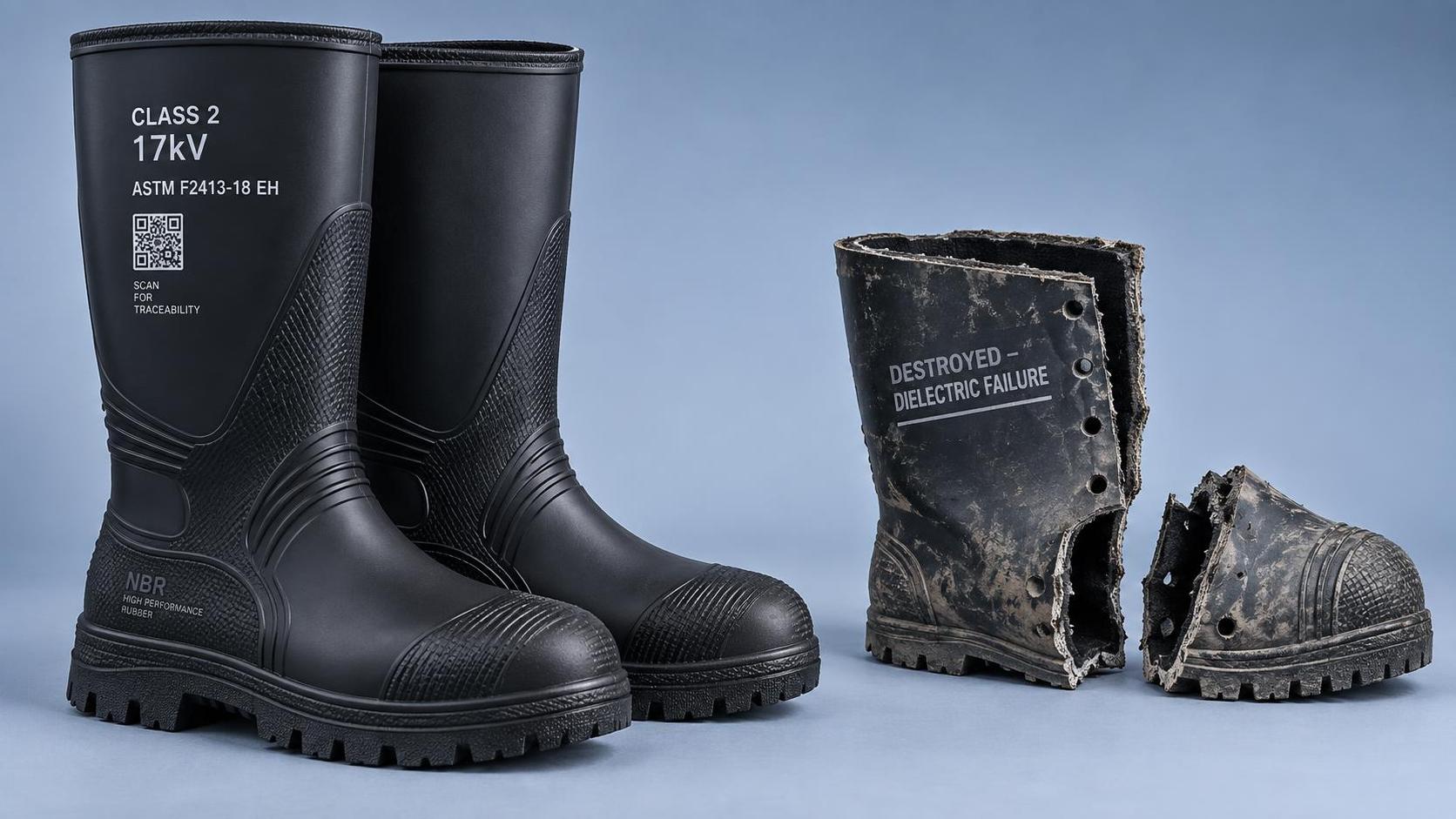
 How to Replace Electrical Insulating Boots After Dielectric Breakdown?How to replace electrical insulating boots after dielectric breakdown? Step-by-step, standards-compliant replacement guide — ensure safety, compliance & zero downtime with JINPOWER certified solutions.
 Safety Equipment Storage Cabinet vs. Regular Steel Locker: What’s the Difference?Is there a difference between safety equipment storage cabinet and regular steel locker? Yes—discover why ESD control, humidity management, and certification-ready design matter for electrical safety.
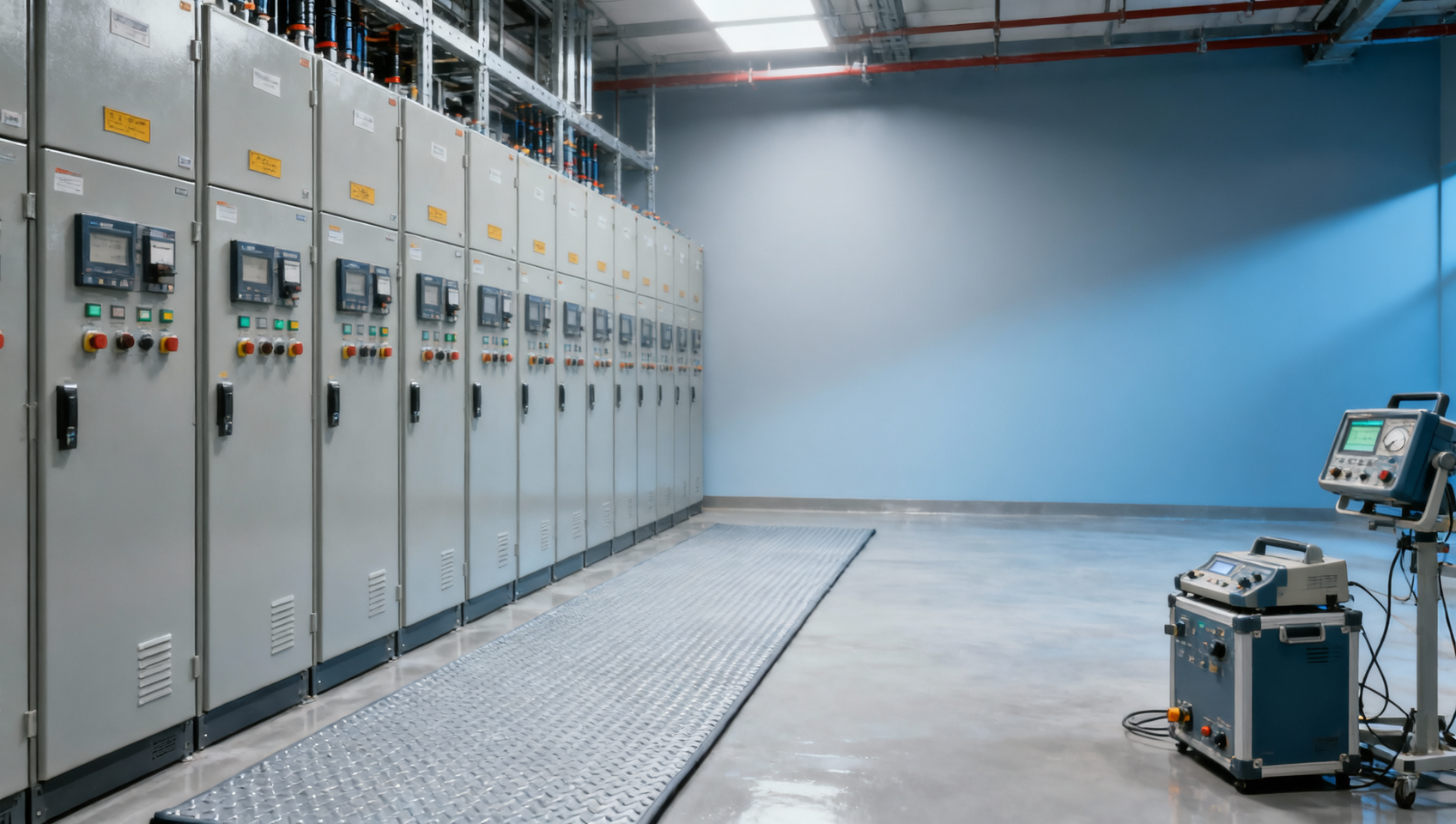
 Rubber Mat Flooring for Electrical Panels: How to Choose the Right GradeRubber mat flooring for electrical panel areas: learn how to select the right insulating grade, ensure safe coverage, and protect workers with documented, durable solutions.
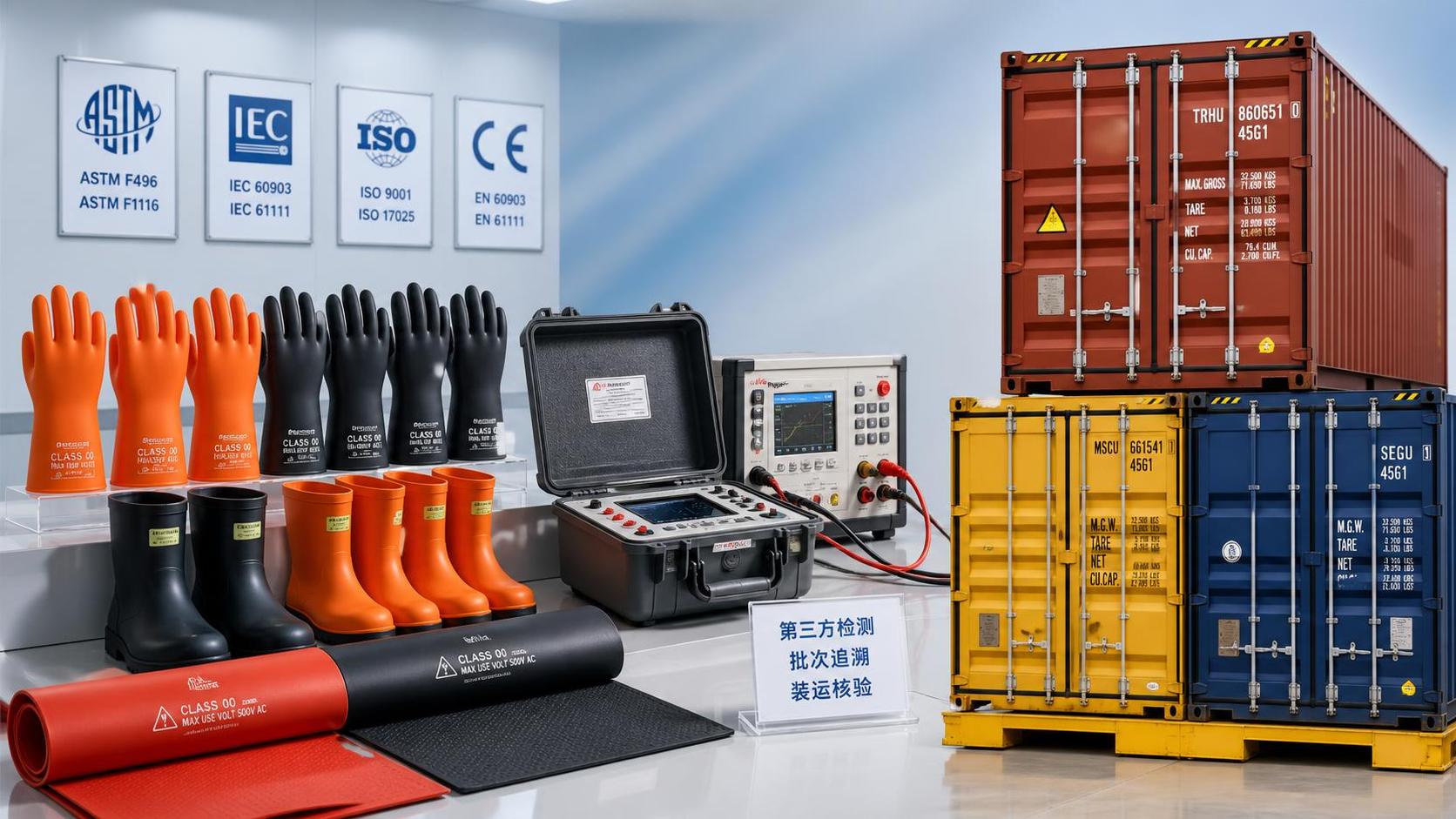
 Can You Get Third-Party Inspection Reports for Every PPE Shipment?Can I get third party inspection reports for every shipment of electrical PPE? Learn how traceability, sampling, testing, and timing support reliable shipment acceptance.
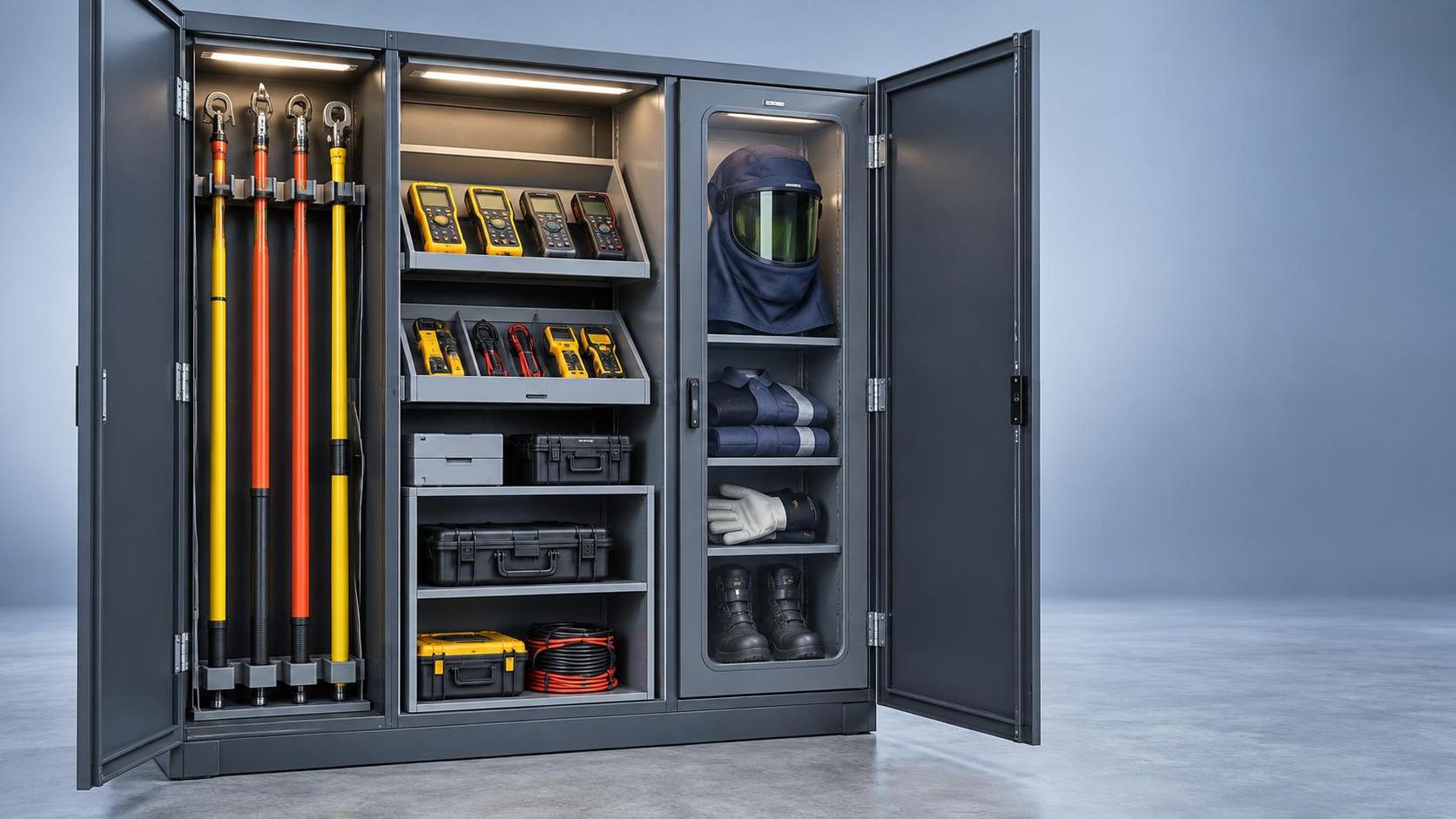
 Heavy-Duty Electrical Safety Equipment Cabinet for Insulated Tools & PPEJINPOWER supplies Heavy-Duty Electrical Safety Equipment Cabinets for centralized storage of insulated tools, grounding equipment, electrical PPE and maintenance equipment in substations, utility workshops, power maintenance centers and industrial electrical facilities.
Compared with a general electrical safety tool cabinet, the Heavy-Duty configuration is intended for larger tool sets, heavier equipment and projects that need stronger storage organization and higher load-bearing requirements.
For professional buyers, cabinet selection should be based on overall dimensions, cabinet construction, shelf and drawer load requirements, internal layout, locking method, storage environment and the actual electrical safety equipment that needs to be stored. Electrical Safety Equipment Cabinet for Insulated Tools & PPEJINPOWER supplies Electrical Safety Equipment Cabinets for centralized storage of electrical PPE, voltage detectors, grounding equipment and insulated tools in substations, electrical rooms, utility maintenance facilities and industrial electrical sites.
A dedicated cabinet keeps safety equipment organized, visible and easier to inspect instead of mixing insulating gloves, detectors, PPE and electrical tools with general workshop equipment.
For professional buyers, cabinet selection should be based on the actual equipment list, cabinet dimensions, shelf layout, storage capacity, locking requirement, working environment and any optional ventilation or environmental-control functions.

