English
 Español
 Português
 Français
 Deutsch
 русский
 한국어
 にほんご
 हिन्दी, हिंदी
 বাংলা
 Bahasa Indonesia
 Türkçe
 Việt
 dansk
 čeština
 עִבְרִית Ivrit
 Filipino/Pilipino
 български език (Bǎlgarski jazik)
 suomi
 norsk
 język polski
 ไทย
 ກະຣຸນາ
 Bahasa Melayu
 ភាសាខ្មែរ
 ဗာရမ်
 اردو
 فارسی
 Italiano
 Nederlands
 svenska
 Монгол хэл
 नेपाली
 සිංහල
 Ўзбек тили
 پښتوتۆرکجه
 Ελληνικά
 српски / srpski
 magyar
 українська
 Kiswahili
 Қазақ тілі
 Română
 Hrvatski
 Bosanski
 Kreyòl ayisyen
 አማርኛ
 Hausa
 Yorùbá
 Igbo
Can Non-Standard Field Conditions Void Equipment Warranties?
Can Non-Standard Field Conditions Void Equipment Warranties?
Can non-standard field conditions void the warranty on utility safety equipment? Sometimes, yes—but not simply because a product was used outdoors, got dirty, or encountered a difficult job. The real question is whether the equipment was used, stored, maintained, and modified within the conditions and instructions covered by the manufacturer’s warranty.
That distinction matters in utility work. Electrical protective tools rarely live in clean, controlled environments. They are carried through substations in rain, stored in service vehicles, exposed to UV radiation, used near salt air or industrial dust, and occasionally pressed into service when a crew is working under time pressure. Those conditions are normal to the job. They are not automatically “misuse.” However, contamination left unaddressed, severe mechanical damage, unauthorized repairs, or use outside a stated application can create both a safety problem and a warranty dispute.
For safety managers, procurement teams, contractors, and line crews, the practical goal is not to argue about warranty language after an incident. It is to choose appropriate equipment, understand its limits before deployment, and maintain records that show reasonable care throughout its service life.
A warranty is not a guarantee against every field failure
A manufacturer’s warranty generally addresses defects in materials or workmanship under normal or intended use. It is different from a promise that a tool will remain serviceable regardless of what happens to it in the field. A fiberglass insulating pole that develops a manufacturing defect may fall within warranty coverage. The same pole may not be covered if it has been crushed under other equipment, drilled to fit an improvised attachment, or left for long periods in conditions the manufacturer specifically warns against.
The wording varies by supplier and product category, so there is no universal answer. Utility safety equipment also has a special complication: warranty coverage is only one part of the decision. A product can be outside warranty and still be usable after inspection, or it can remain within a warranty period but be removed from service because its electrical or mechanical condition is no longer acceptable. Worker protection must take priority over replacement-cost discussions.
In practice, warranty reviews often focus on three things: the condition of the item, the environment it encountered, and whether the user followed the supplied instructions. A clear, well-kept record can make the difference between a straightforward evaluation and an inconclusive claim.
Which field conditions create the most warranty risk?
“Non-standard” can mean different things on different projects. A coastal transmission contractor may regard salt contamination as routine. A solar installation team may be more concerned with dust, heat, and long-term UV exposure. An industrial maintenance crew may face chemical residues that are not present at a typical utility site. The condition itself is not always the issue; the issue is whether the product was selected and cared for with that exposure in mind.
Contamination and poor cleaning practices
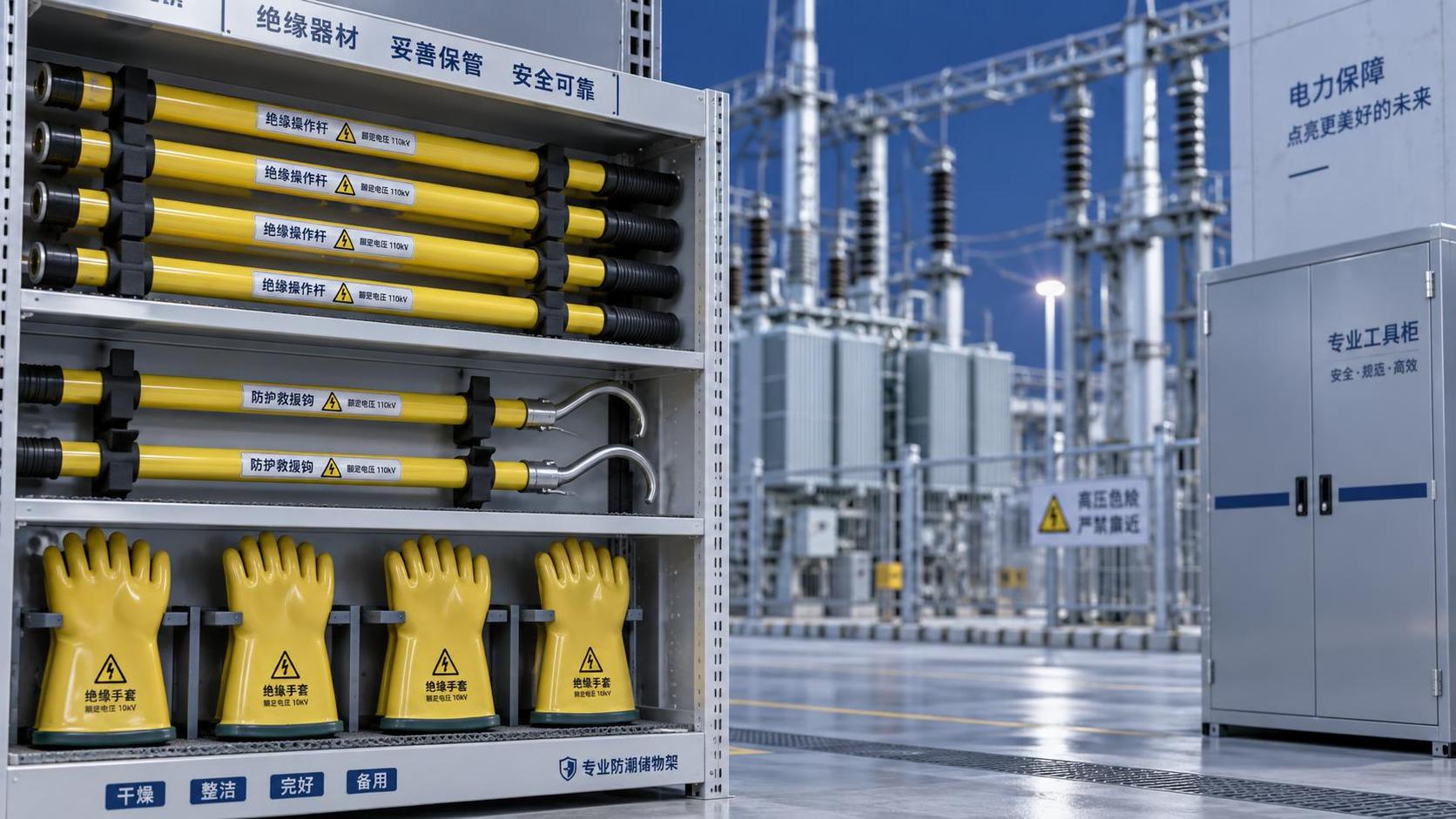
Moisture combined with conductive dust, salt, oil, carbon deposits, or chemical residue can affect the safe use of insulating equipment. On hot sticks, insulating rods, rescue hooks, insulating ladders, and related tools, surface cleanliness is not cosmetic. A contaminated surface may compromise the insulating characteristics the user relies on.
A warranty may be challenged when contamination has been allowed to build up or when harsh, incompatible cleaning materials damage the surface. Crews sometimes make a well-intended mistake here: they use an aggressive solvent because it removes grime quickly. If that solvent dulls, softens, cracks, or otherwise alters the material, the resulting damage may not be treated as a manufacturing defect. The safer approach is to use the cleaning method and materials specified by the equipment manufacturer and to quarantine any item whose condition is uncertain.
Extreme weather and improper storage
Rain and temperature changes are part of outdoor utility work. But prolonged exposure during storage is a separate matter. Leaving equipment unsecured on an open truck bed, allowing water to collect in cases, or storing insulating tools against sharp metal edges can produce avoidable deterioration. Heat inside a closed vehicle, prolonged direct sunlight, and freezing conditions can also matter, depending on the tool’s materials and the manufacturer’s stated storage limits.
A tool that arrives wet after a shift is not necessarily damaged. It should, however, be cleaned, dried, visually inspected, and returned to protected storage rather than treated as if it were ordinary hardware. This is especially important when crews rotate equipment across multiple vehicles, where responsibility for care can become unclear.
Mechanical abuse, impact, and unauthorized alteration
This is one of the clearest areas of warranty risk. Cracks, deep scratches, crushed sections, bent fittings, damaged end caps, and impact marks can indicate that a tool has been subjected to forces beyond its intended use. The same applies to field modifications: drilling a fiberglass component, adding non-approved hardware, changing a fitting, repainting an insulating surface, or attempting an unapproved repair.
Field improvisation can feel practical when a job is moving quickly. For electrical protective equipment, it is usually a poor trade. It can change mechanical strength, interfere with inspection, trap moisture or contamination, and make it difficult for a manufacturer to determine why a failure occurred. Even where warranty is not expressly voided, the equipment may no longer be suitable for service.
Use outside the intended application
Utility crews often use tools in demanding ways, but intended use still matters. An item designed for one voltage class, operating method, load condition, or work environment should not be assumed suitable for another. Using a protective tool as a lever, support, lifting device, or general-purpose access tool when it was not designed for that purpose can cause damage that a warranty will not cover.
This is why the purchase decision should go beyond dimensions and unit price. The procurement specification should reflect the actual work: substation maintenance, overhead distribution, renewable-energy construction, emergency response, industrial shutdown work, or coastal exposure all place different demands on equipment.
What should a crew document before making a warranty claim?
When a safety tool is damaged or its performance is questioned, avoid cleaning away evidence or continuing to use it while waiting for a decision. Remove it from service according to the organization’s safety procedure, label it clearly, and document what happened as soon as possible.
- Product identification, purchase information, batch or serial details where available, and the date the item entered service.
- Clear photographs of the full item, close-ups of the damage, labels, fittings, and any visible contamination or deformation.
- A factual description of the work being performed when the issue was found. Record conditions without trying to assign blame too early.
- Relevant inspection, cleaning, testing, and storage records, including whether the equipment had previously shown any abnormal condition.
- Details of any repair, replacement part, cleaning chemical, accessory, or modification applied after purchase.
Good documentation does more than support a warranty review. It helps safety teams identify recurring handling problems. If several tools from the same vehicle show abrasion near the same point, for example, the root cause may be the storage rack rather than the equipment itself. That is a more useful finding than simply replacing the affected items.
Warranty coverage and electrical safety compliance are separate questions
A common misunderstanding is that a valid warranty means equipment is automatically safe for use. It does not. Similarly, a denied warranty claim does not by itself prove that a product was unsafe when supplied. These are different evaluations with different purposes.
Safety equipment should be inspected and maintained according to the manufacturer’s instructions, the applicable workplace rules, and the standards or testing practices relevant to the equipment and location. Requirements can differ between countries, utilities, contractors, and project owners. Where electrical protective tools require periodic electrical testing or formal inspection, the schedule and method should be confirmed for the specific product rather than copied from a generic checklist.
If an item has a visible defect, has experienced a major impact, or may have been exposed to conditions beyond its documented limits, the correct first response is normally removal from service—not a debate over whether it is still under warranty.
How to reduce disputes before equipment reaches the field
The lowest-cost warranty claim is often the one that never needs to be filed. That starts with a realistic product selection process. Ask the supplier what the equipment is designed to withstand, what conditions require additional protection, how it should be cleaned, what storage method is recommended, and what actions can invalidate coverage. These questions are especially important for buyers sourcing equipment for unfamiliar climates or mixed applications.
It also helps to make warranty information available to the people who handle the tools, not just the purchasing department. A field technician does not need legal language, but they should know that a damaged insulating surface, an unauthorized repair, or the wrong cleaning agent is not a minor housekeeping issue.
Manufacturers with long-term experience in electrical protective tools can provide useful guidance before a problem arises. Hebei Jinneng Power Technology Co., Ltd. (JINPOWER), founded in 2009, focuses on the development and manufacture of electrical safety equipment for power-industry applications. Its work across substations, utility operations, renewable-energy projects, and industrial maintenance reflects a practical reality: equipment has to perform in the field, not merely look suitable in a catalog.
For buyers operating across different regions, the value of an integrated manufacturer is not just production capacity. It is the ability to discuss material selection, inspection expectations, storage practices, and product suitability before an order is finalized. JINPOWER serves customers in more than 100 countries and regions, but the appropriate solution should still be matched to the project’s actual exposure, work method, and applicable local requirements.
The practical answer
Non-standard field conditions can void or limit a warranty on utility safety equipment when they involve misuse, neglect, prohibited alteration, improper storage, or use outside the manufacturer’s stated limits. Tough weather alone is not usually enough to answer the question. The details matter: what happened, what the instructions said, what evidence remains, and whether the equipment was maintained as a safety-critical asset.
Before sending equipment back or writing it off, review the warranty terms, preserve the item’s condition, gather inspection records, and contact the manufacturer or authorized supplier with a complete description. More importantly, use the event to check whether the product selection, transport method, cleaning routine, and crew training are genuinely suited to the conditions your teams face every day.
Next:No more content
Recommend
 Sep 19, 2026
Can Non-Standard Field Conditions Void Equipment Warranties?
Can non-standard field conditions void the warranty on utility safety equipment? Learn how storage, contamination, misuse, and documentation affect coverage.
 May 13, 2026
Hidden Safety Risks Are Like Tigers — Equipment Quality Must Be Taken Seriously
Sun, a distributor in Dongying, Shandong, works with a local power plant. Recently, he has been troubled by a serious issue: the power plant reported that the operating rods he supplied were of poor quality and lacked proper inspection certificates, making them impossible to pass acceptance and be put into use.
 May 13, 2026
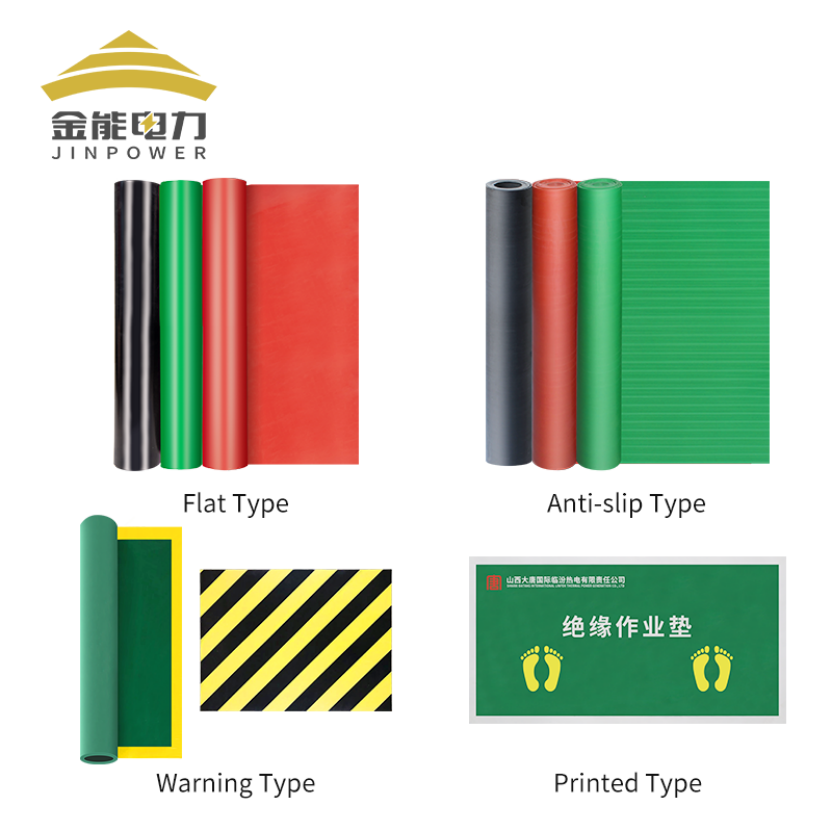
Jinneng Electric Insulating Rubber Mat: Making Frequent Replacement a Thing of the Past!
In the world of the power industry, safety is undoubtedly the most valuable benchmark for every practitioner. As a leading enterprise in electrical safety tools and equipment, JINPOWER has become a trusted choice for countless customers, thanks to its outstanding product quality and reliable performance.
Recently, we received enthusiastic feedback from a customer who has been using Jinneng insulating rubber mats since 2019. After more than four years of continuous service and countless real-world tests, the mats have consistently maintained excellent performance and have passed every annual inspection with ease.