English
 Español
 Português
 Français
 Deutsch
 русский
 한국어
 にほんご
 हिन्दी, हिंदी
 বাংলা
 Bahasa Indonesia
 Türkçe
 Việt
 dansk
 čeština
 עִבְרִית Ivrit
 Filipino/Pilipino
 български език (Bǎlgarski jazik)
 suomi
 norsk
 język polski
 ไทย
 ກະຣຸນາ
 Bahasa Melayu
 ភាសាខ្មែរ
 ဗာရမ်
 اردو
 فارسی
 Italiano
 Nederlands
 svenska
 Монгол хэл
 नेपाली
 සිංහල
 Ўзбек тили
 پښتوتۆرکجه
 Ελληνικά
 српски / srpski
 magyar
 українська
 Kiswahili
 Қазақ тілі
 Română
 Hrvatski
 Bosanski
 Kreyòl ayisyen
 አማርኛ
 Hausa
 Yorùbá
 Igbo
Can Humidity-Controlled Cabinets Keep Temperatures Below 40°C?
Humidity-controlled cabinets can keep stored equipment below 40°C when their thermal design and operating environment support that limit. Humidity control alone does not guarantee it. A cabinet that removes moisture may still become warmer than the surrounding room, especially if its dehumidifier, regeneration heater, lighting, or other components release heat inside the enclosure.
For substation operators, utility maintenance teams, and industrial facilities, the first question is whether the cabinet provides active cooling or simply controls relative humidity. If the room can reach or exceed 40°C, a cabinet relying only on ventilation and moisture removal cannot reliably maintain a lower internal temperature. It needs a cooling system capable of rejecting heat outside the storage space, or it must be installed in a room that stays sufficiently cool.
A credible answer therefore depends on three things: how the cabinet handles heat, the hottest conditions at its installation location, and the temperature limits of the equipment being stored. A humidity setpoint or a digital temperature display does not establish a temperature guarantee.
What humidity control actually does to cabinet temperature
Relative humidity describes how close air is to saturation at its current temperature. When air warms without a change in its moisture content, its relative humidity falls. A cabinet can therefore show a lower humidity reading while its temperature rises, even though no water has been removed. This distinction matters when assessing equipment advertised as keeping protective tools “dry.”
Heating can help prevent condensation by keeping surfaces above the surrounding air’s dew point. However, heating alone does not remove moisture from a closed enclosure. If moisture is meant to escape through ventilation, performance also depends on the condition of the incoming air. In a hot, humid equipment room, exchanging air may introduce more moisture while providing limited temperature relief.
Different moisture-control designs also have different thermal effects:
- Heating-based systems: These raise the temperature to lower relative humidity or reduce condensation risk. They consume part of the available margin below 40°C.
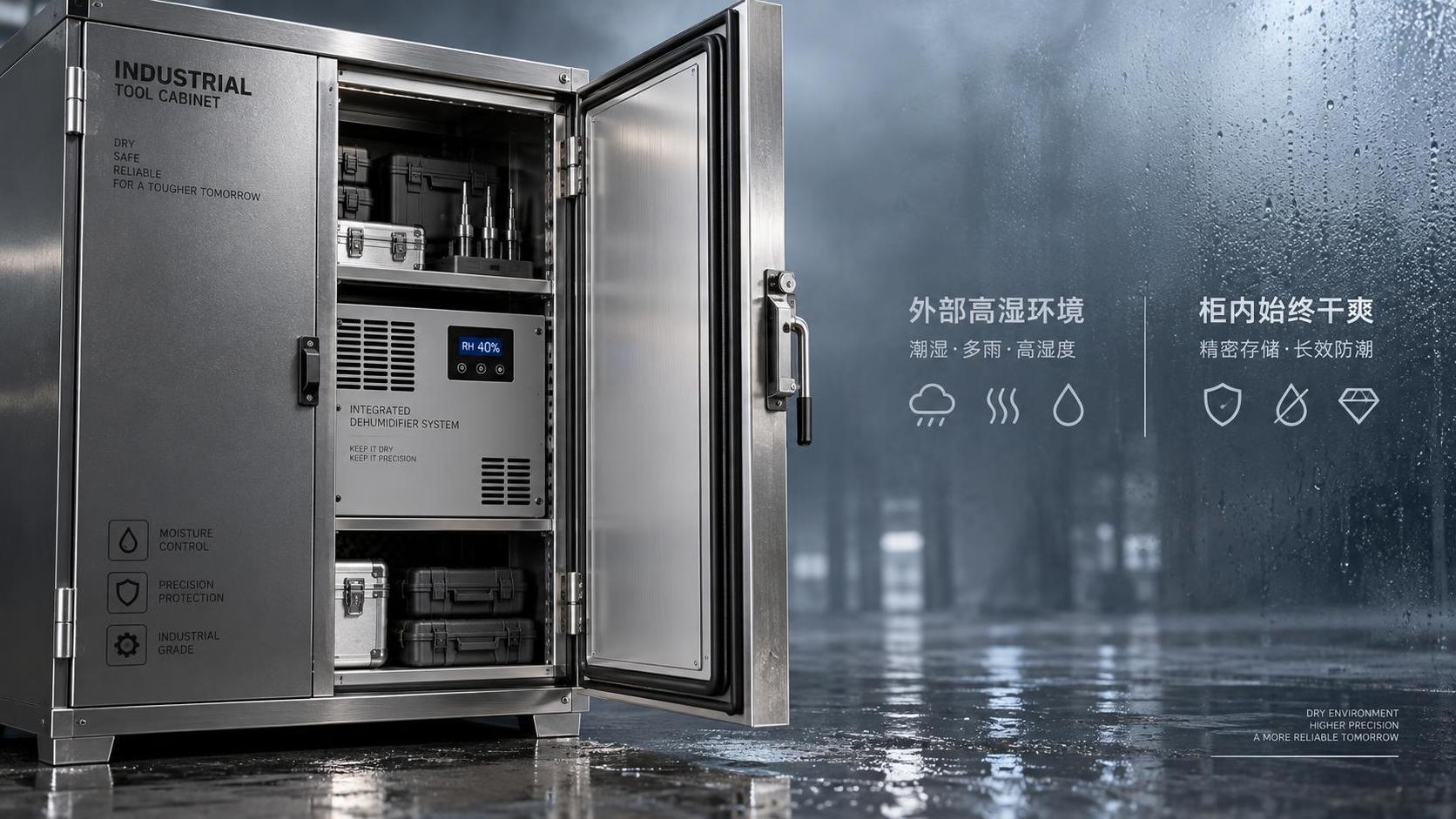
- Refrigeration dehumidifiers: These condense moisture on a cold surface. Where the evaporator and condenser both operate within the cabinet’s air circuit, the discharged air can be warmer, and the system adds heat overall.
- Desiccant systems: These capture moisture using an adsorbent. Adsorption releases heat, and regenerating the desiccant requires energy. The effect on stored equipment depends on where regeneration occurs and how heat and moisture are discharged.
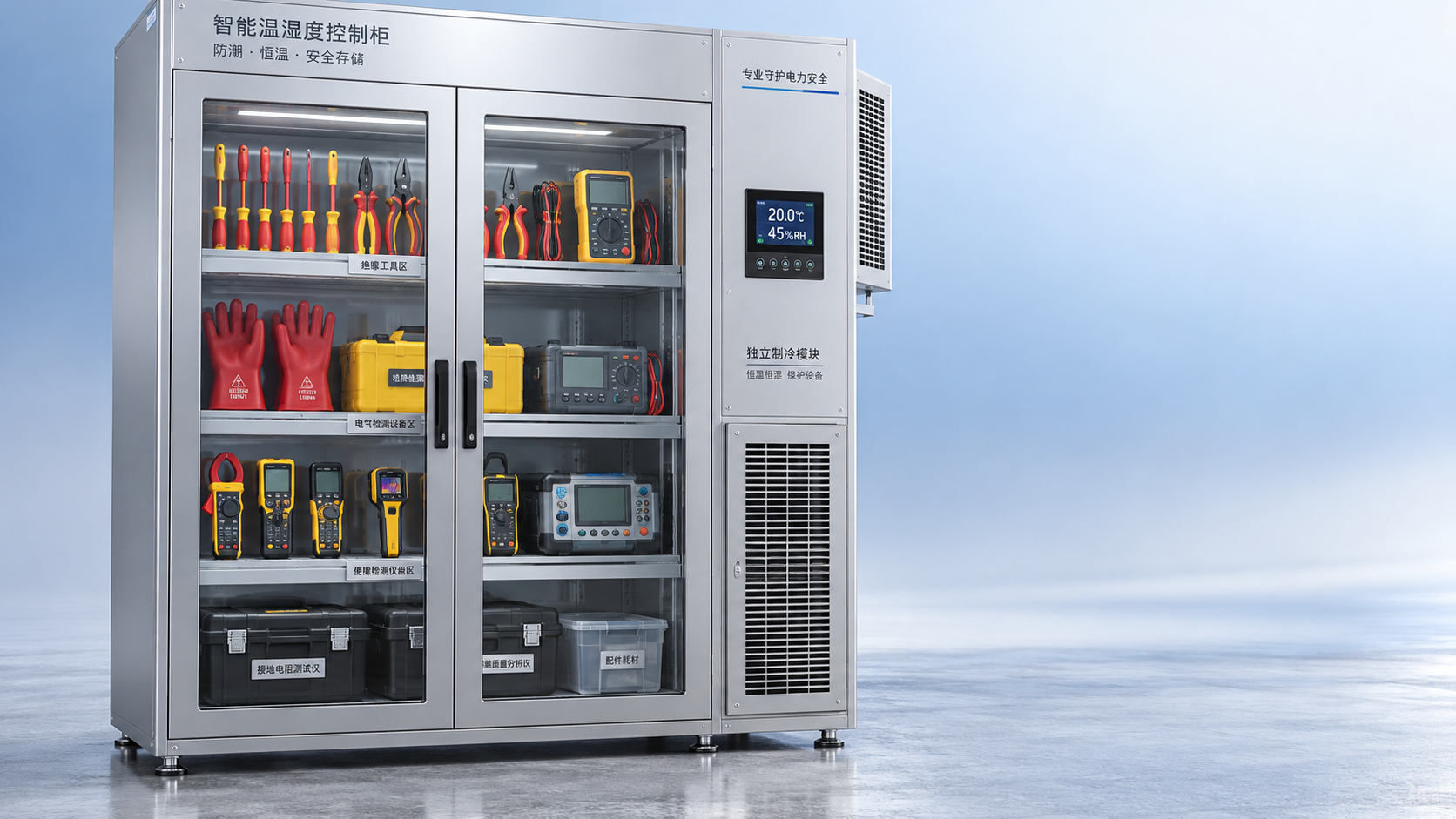
- Cabinets with dedicated cooling: These can remove heat from the storage compartment, provided the cooling system has adequate capacity and rejects that heat to an appropriate external location.
The equipment name alone may not reveal the arrangement. A “temperature and humidity controlled cabinet” could use heating and dehumidification without refrigeration cooling. Its temperature setting may define when a heater stops, rather than when cooling starts. For a below-40°C requirement, the supplier should explain what happens when the cabinet gets too warm.
When staying below 40°C is realistic
Consider a cabinet installed in a conditioned tool room whose maximum temperature remains comfortably below the storage limit. If its internal heat generation is modest and heat can escape effectively, the cabinet may stay below 40°C without dedicated cooling. That outcome still depends on the difference between room temperature and cabinet temperature during the most demanding operating periods.
A room approaching 40°C leaves little margin. Even a small temperature rise from moisture-control equipment or nearby heat sources can push part of the storage compartment above the limit. A cabinet located beside a sun-exposed wall, a hot electrical enclosure, or equipment exhaust may experience conditions that the room’s central thermostat does not capture.
Where the surrounding air exceeds 40°C for sustained periods, ventilation cannot cool the cabinet below that air temperature. Fans improve air movement and can reduce local hot spots, but they do not create a colder heat sink. Insulation can slow heat entering the cabinet; it cannot maintain a lower temperature indefinitely without a way to remove heat.
Active cooling changes the situation, but its capacity must be assessed at the actual operating conditions. Performance quoted for a mild ambient temperature may not establish performance in a hot room. As the temperature around the heat-rejection equipment rises, the system may have less available cooling capacity while facing a greater heat load.
The heat-rejection path also needs attention. An integrated cooler can keep the storage compartment cool while releasing heat into the room around it. If that room has insufficient ventilation or air conditioning, its temperature can climb and reduce the cabinet’s cooling performance. Several cabinets sharing a small room can make this interaction more significant.
Opening the doors adds another variable. Warm, humid air enters during retrieval and restocking, increasing both the sensible cooling load and the moisture-removal load. A system that meets the limit with closed doors may recover slowly after repeated access. Whether a brief excursion is acceptable should follow the stored equipment’s requirements and the facility’s storage procedure.
Specify the temperature limit where the tools are stored
“Below 40°C” needs a clear definition before it becomes a useful purchasing requirement. It might refer to the controller’s reading, the average compartment air temperature, the hottest shelf, or the temperature of the stored equipment. These are different measurements, and a single sensor cannot automatically represent all of them.
For electrical protective tools, start with the manufacturer’s storage instructions for each relevant product. Insulating gloves, polymer components, fiberglass tools, and other protective equipment may have different requirements for temperature, moisture, light exposure, contamination, and physical support. A common cabinet limit should accommodate those requirements rather than assume that 40°C is universally acceptable.
Temperature control is also only one part of preserving equipment condition. A suitable storage environment does not establish that a tool is fit for electrical work or extend its inspection and testing intervals. Those decisions remain subject to the applicable maintenance procedure and the equipment’s requirements.
Inside the cabinet, shelf arrangement affects airflow. Closely packed gloves, bags, cases, or long tools can obstruct circulation and leave warmer pockets near heat-producing components. A temperature sensor mounted beside a cooling outlet may report acceptable conditions while equipment on another shelf remains warmer.
A practical specification should identify the allowable temperature at representative storage positions under an agreed load arrangement. It should also distinguish normal operation from door-opening recovery, startup after an outage, and fault conditions. If the requirement is strictly below 40°C, a nominal 40°C setpoint leaves no allowance for sensor error, control cycling, or temperature differences across the compartment.
The operating target should leave enough margin to accommodate those effects. The appropriate margin depends on demonstrated temperature uniformity, measurement uncertainty, and the consequences of an excursion. Simply selecting a lower number on the controller does not prove that the entire storage area will remain within the required limit.
Humidity specifications deserve the same precision. Excessively low humidity is not automatically better for every stored material. Use the equipment’s recommended storage conditions, and check whether the cabinet can maintain both temperature and humidity together. Cooling lowers air temperature and, unless moisture is removed, raises relative humidity; sufficiently cold surfaces can also collect condensation.
What to ask for before accepting a performance claim
The strongest purchasing evidence is a defined operating envelope supported by measurements. A statement such as “humidity adjustable” or “temperature displayed” says little about whether the cabinet will keep a loaded storage compartment below 40°C during the hottest part of the year.
Ask the supplier to address these points in the technical specification:
- Maximum operating ambient: The surrounding temperature and humidity at which the claimed storage conditions can be maintained.
- Control method: Whether temperature is managed through heating, ventilation, refrigeration, thermoelectric cooling, or another identified mechanism, including where heat is discharged.
- Simultaneous performance: Whether the temperature limit is met while the moisture-control system is operating, including any regeneration cycles.
- Storage conditions: The loading arrangement, shelf positions, airflow clearances, and door-opening assumptions used to establish performance.
- Measurement and alarms: Sensor locations, stated measurement accuracy, temperature variation across the storage space, and how an overtemperature condition is reported.
- Installation requirements: Clearances, room ventilation, condensate handling, electrical supply, and maintenance needed to sustain the claimed performance.
Request test results that match the intended duty as closely as possible. A short demonstration in an empty cabinet at room temperature cannot establish performance in a densely loaded cabinet exposed to summer heat. Useful evidence shows temperature and humidity over time, including the periods when moisture removal or regeneration produces the greatest thermal load.
If the supplier’s evidence does not cover the installation conditions, a site acceptance check can resolve the gap. Use independent logging instruments at representative storage positions, including locations likely to be warmest. Run the cabinet with a representative load and the normal pattern of access long enough to capture its operating cycles. Compare those measurements with the built-in display.
Testing should reflect the stated requirement. If continuous compliance is necessary, average temperature alone is insufficient; peak temperatures and excursion duration matter. If recovery after door opening is permitted, define that allowance in advance. Otherwise, two parties may agree that a cabinet “maintains below 40°C” while applying different interpretations.
Any guarantee also has an operating boundary. Loss of power, blocked airflow, cooling failure, or an open door can defeat normal temperature control. Where the stored equipment is sensitive to excursions, alarms and a clear response procedure help operators decide when to relocate items and assess whether their storage conditions have been compromised.
For an existing cabinet, the next step is to log its internal temperature alongside the surrounding room temperature during demanding conditions. If the room stays cool but the cabinet overheats, investigate internal heat generation, loading, airflow, and control settings. If both become too hot, reducing room temperature, relocating the cabinet, or adding properly sized cooling addresses the thermal problem more directly than changing the humidity setpoint.
A humidity-controlled cabinet can meet a below-40°C storage requirement, but that capability should be stated for a defined ambient range, load, and access pattern. The purchasing decision becomes much clearer when the supplier can show how heat leaves the cabinet and demonstrate that the warmest relevant storage positions remain within the required limit.
Recommend
 Oct 25, 2026
Homemade Bird Repellent Spray: Recipe Limits and Outdoor Surface Risks
Searching for how to make homemade bird repellent spray? Discover recipe limits, outdoor surface risks, electrical safety tips, and safer deterrents before you spray.
- Oct 25, 2026
Natural Bird Deterrents for Rooftops: Choosing Nonchemical Options
Learn how to repel birds naturally with humane rooftop barriers and smarter maintenance. Compare nonchemical options to protect electrical equipment and keep roof access clear.
- Oct 24, 2026
Home Remedies for Repelling Birds: What to Try on Patios and Railings
Learn how to repel birds with home remedies for cleaner patios and railings. Discover humane DIY options, avoid harmful sprays, and keep deterrents clear of electrical equipment.