English
 Español
 Português
 Français
 Deutsch
 русский
 한국어
 にほんご
 हिन्दी, हिंदी
 বাংলা
 Bahasa Indonesia
 Türkçe
 Việt
 dansk
 čeština
 עִבְרִית Ivrit
 Filipino/Pilipino
 български език (Bǎlgarski jazik)
 suomi
 norsk
 język polski
 ไทย
 ກະຣຸນາ
 Bahasa Melayu
 ភាសាខ្មែរ
 ဗာရမ်
 اردو
 فارسی
 Italiano
 Nederlands
 svenska
 Монгол хэл
 नेपाली
 සිංහල
 Ўзбек тили
 پښتوتۆرکجه
 Ελληνικά
 српски / srpski
 magyar
 українська
 Kiswahili
 Қазақ тілі
 Română
 Hrvatski
 Bosanski
 Kreyòl ayisyen
 አማርኛ
 Hausa
 Yorùbá
 Igbo
Do Dehumidified Tool Cabinets Resist Salt Corrosion in Coastal Substations?
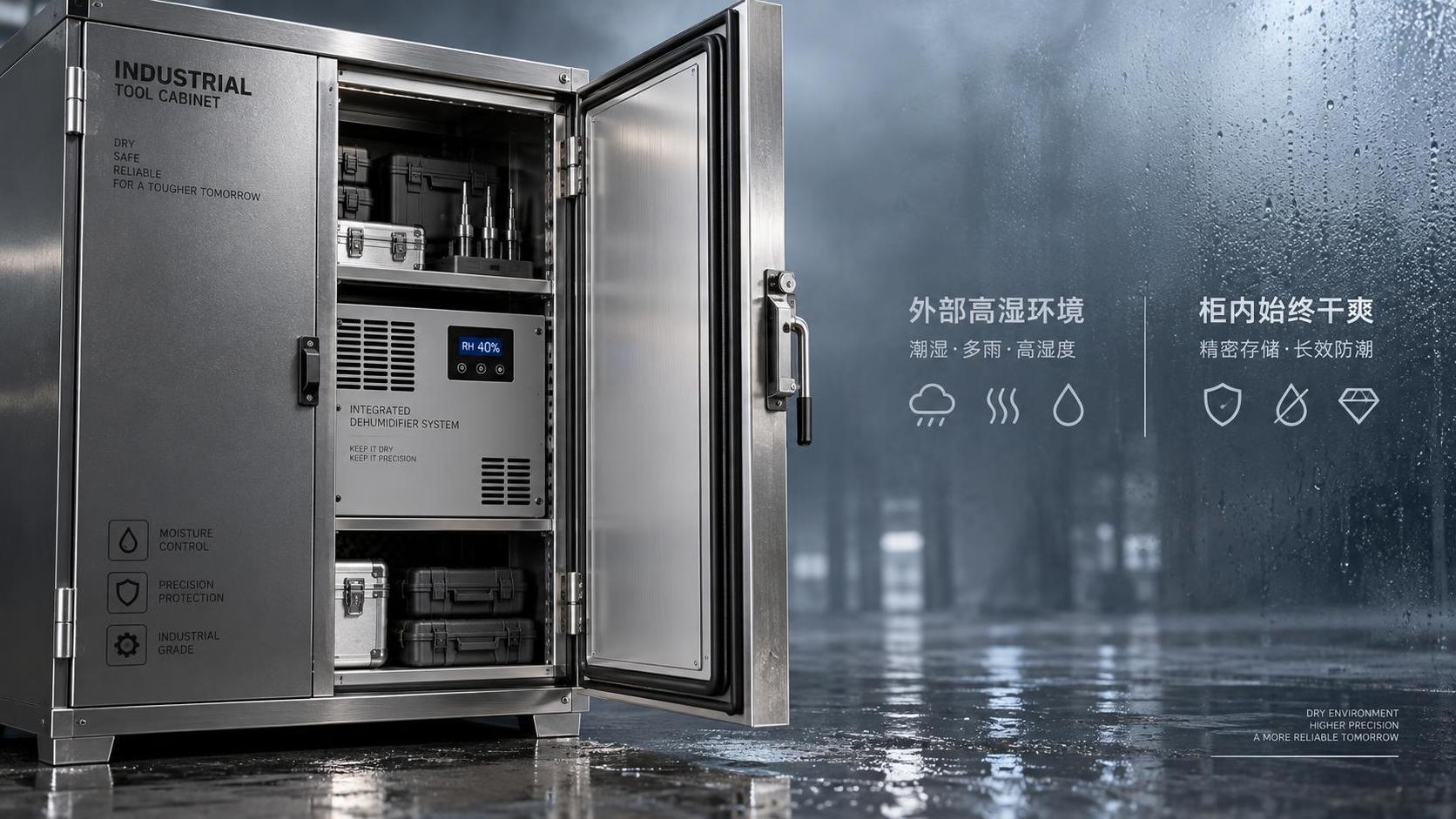
How does a tool cabinet with dehumidifier perform in coastal high salt environments? For a technical evaluator working around a coastal substation, the practical answer is: it can make a meaningful difference, but only when humidity control is combined with a cabinet designed to manage salt-laden air, condensation cycles, and routine inspection.
Salt corrosion is rarely caused by one dramatic event. More often, chloride particles settle quietly on metal surfaces, tool fittings, cabinet hinges, test equipment leads, and insulating tool accessories. When relative humidity rises, those deposits attract moisture and form a conductive electrolyte film. Over time, that film accelerates corrosion, damages coatings, and can compromise the condition of tools intended to protect workers during live-line or near-live electrical work.
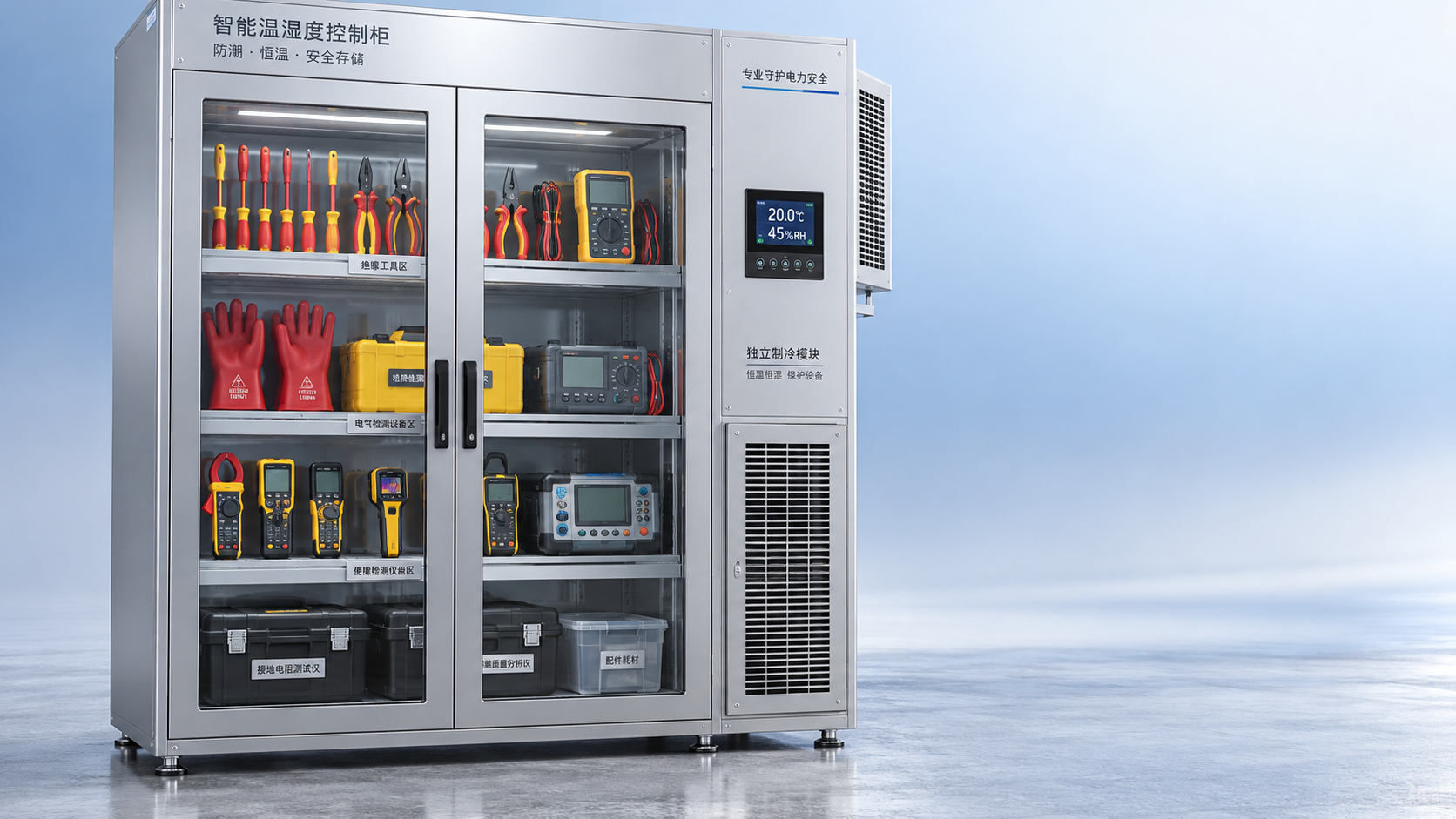
A dehumidified tool cabinet is therefore not simply a storage box with a drying function. In a coastal electrical environment, it is part of the preservation system for insulating rods, gloves, boots, grounding equipment, voltage detectors, rescue tools, and other electrical safety equipment. Its performance depends on how well the whole system interrupts the cycle of salt deposition, moisture absorption, condensation, and corrosion.
Why Coastal Substations Create a Different Storage Problem
Inland substations often struggle mainly with dust, rain-season humidity, or temperature fluctuations. Coastal installations face those same issues, plus airborne chlorides from sea spray, tidal winds, and industrial marine atmospheres. Salt can travel farther than many facility plans assume, particularly during storms, strong onshore winds, or dry periods when fine particles remain suspended in the air.
The concern is not limited to visible rust. Chloride contamination can affect several parts of an electrical safety tool storage system:
- Cabinet seams, hinges, locks, drawer slides, handles, and mounting hardware may corrode.
- Metal components on insulated tools can develop surface oxidation or pitting.
- Moisture and salt deposits can reduce the cleanliness of insulating surfaces.
- Labels, inspection tags, and calibration records may become difficult to read or detach.
- Condensation inside a cabinet may create localized wet spots even when the room itself does not appear damp.
- Electronic instruments stored alongside tools may experience contact corrosion or unstable readings.
For technical teams, this matters because electrical protective tools are not ordinary maintenance items. Their readiness is tied directly to work authorization, inspection schedules, and personnel safety. A cabinet that looks acceptable from the outside but allows humid salt air to circulate internally may create a hidden reliability problem.
What Dehumidification Actually Does—and What It Does Not Do
The core role of a dehumidifier cabinet is to maintain a lower and more stable internal humidity level than the surrounding environment. By reducing moisture in the enclosed space, it lowers the likelihood of condensation on metal parts and reduces the water available for chloride deposits to become electrochemically active.
This is especially valuable during the conditions that frequently trouble coastal substations: warm, humid days followed by cooler nights; rainy-season ventilation changes; temporary air-conditioning shutdowns; and doors opened repeatedly during maintenance shifts. Even a brief period above the dew point can leave moisture on cold surfaces. Once salt particles are present, that moisture is far more corrosive than clean condensation.
However, dehumidification does not “remove” salt already deposited on a tool or cabinet surface. It also cannot compensate for a poorly sealed enclosure, damaged door gasket, corroded cabinet body, or frequent exposure of tools to outdoor marine air. A dehumidifier reduces the corrosion-driving moisture component; it does not replace cleaning, inspection, or suitable material selection.
That distinction is important during procurement. When evaluating a tool cabinet with dehumidifier for coastal use, the question should not be, “Does it have a drying unit?” A better question is, “Can the cabinet maintain a controlled internal environment after tools have been exposed to a chloride-rich workplace?”
How a Dehumidified Tool Cabinet Resists Salt Corrosion
A well-considered cabinet addresses corrosion through several interacting features rather than a single device. The drying system is central, but enclosure design determines whether the system can work efficiently.
1. Lower humidity reduces chloride activity
Many salts, including sodium chloride mixtures commonly found in marine aerosols, retain moisture under humid conditions. Once a thin moisture layer develops, corrosion cells can form between dissimilar areas of a metal surface. Keeping internal relative humidity under control reduces the time that this electrolyte layer remains active.
For insulated tools, dry storage also supports cleaner, more stable surfaces. Moisture can hold dust and salt residues against fiberglass, composite, or polymer components. That does not mean a dry cabinet eliminates the need for dielectric inspection, but it helps prevent avoidable contamination during storage.
2. A sealed cabinet limits new salt entry
Dehumidification is most effective in a cabinet with a reasonably enclosed storage volume. Door alignment, seals, cable pass-throughs, ventilation openings, and panel joints all matter. A large gap around a door can allow humid marine air to enter as quickly as the dehumidifier removes moisture.
Complete airtightness is not always necessary or practical, particularly when a cabinet must accommodate power connections or operational access. Still, the cabinet should minimize uncontrolled air exchange. In coastal areas, this also limits the daily accumulation of airborne salt particles.
3. Corrosion-resistant materials protect the cabinet itself
The cabinet body should not become the weakest link. Evaluators should examine the coating system, substrate treatment, exposed fasteners, hinge construction, and any unpainted edges created during fabrication. Powder-coated steel with proper pretreatment can offer practical protection in many electrical rooms, while more aggressive coastal environments may justify higher-corrosion-resistance material choices for critical fittings and hardware.
Attention to small components is worthwhile. A corrosion-resistant enclosure paired with ordinary hinges, lock cylinders, or drawer rails can still become difficult to operate after extended exposure. When doors no longer close smoothly, the internal humidity-control strategy is weakened as well.
4. Internal arrangement prevents trapped moisture
Tools should not be stored in a crowded pile at the bottom of the cabinet. Shelves, hanging supports, partitions, and clearance around long insulating rods allow air circulation and make it easier to inspect surfaces. Poorly arranged storage can create stagnant zones where moisture persists, especially after a wet tool is returned from field use.
A practical cabinet layout also separates items with different storage needs. For example, grounding sets with metal clamps, insulating gloves, voltage detectors, and long fiberglass operating rods should not necessarily be forced into the same crowded compartment. Separation reduces abrasion, simplifies inspection, and helps staff identify whether a returned item needs cleaning before storage.
Performance Depends on the Cabinet’s Location
Even the best cabinet will perform differently depending on where it is installed. A climate-controlled relay room, a semi-open service building, and a containerized substation near the shoreline present very different exposure profiles.
In a relatively enclosed indoor electrical room, a dehumidified cabinet can maintain stable conditions with modest operating demand. In a building where doors are frequently opened to the sea-facing side, the cabinet will encounter more humidity spikes and salt ingress. In semi-outdoor or poorly sealed facilities, it should be treated as one layer of protection—not the entire corrosion-control plan.
Placement should avoid direct paths of humid outside air, roof leaks, wall condensation, floor washdown areas, and intense solar heating. The cabinet should also be positioned where staff can access it without leaving doors open longer than necessary. A cabinet installed in an inconvenient corner tends to remain open while workers search for tools, defeating much of its environmental control.
What Technical Evaluators Should Check Before Approval
Rather than approving a cabinet based on appearance or a general “moisture-proof” claim, technical evaluators can use a more operational checklist.
- Humidity-control method: Determine whether the cabinet uses an active dehumidifier, heating-based moisture control, desiccant technology, or a combination. Each approach has different maintenance and energy implications.
- Humidity indication and alarm capability: A visible humidity display, data interface, or alarm function helps operators identify abnormal conditions before stored tools are affected.
- Recovery after door opening: Ask how the cabinet responds when humid air enters during routine access. Stable recovery is more relevant than a dry reading under untouched laboratory conditions.
- Door seals and closure quality: Inspect whether the door closes evenly and whether seals can be maintained or replaced.
- Cabinet finish and hardware: Review coating integrity, exposed edges, hinges, locks, fasteners, and drawer mechanisms for suitability in chloride-bearing environments.
- Internal storage configuration: Verify that the layout suits the actual dimensions and quantities of insulating tools used on site.
- Power and maintenance access: Confirm that electrical supply, drainage requirements where applicable, servicing space, and routine cleaning procedures are realistic for the substation.
- Inspection compatibility: The cabinet should support—not obstruct—periodic visual checks, cleaning, test-date verification, and inventory control.
It is also sensible to clarify whether the cabinet is intended for electrical safety tools only or for mixed storage. Combining wet rain gear, chemical cleaning materials, metal spare parts, and insulating equipment in one enclosure usually creates unnecessary contamination and moisture challenges.
A Common Misunderstanding: Dry Air Does Not Make a Contaminated Tool Ready for Use
One of the most important operating rules in coastal substations is that a tool returned from field work may carry salt film even if it feels dry. Placing it immediately inside a dehumidified cabinet can stop further moisture-driven damage, but it does not restore surface cleanliness.
A more reliable workflow is to inspect returned tools before storage. If there is visible salt residue, mud, oil, or moisture, follow the organization’s approved cleaning and drying procedure. Only then should the item return to the controlled cabinet. This is particularly relevant for insulated poles, insulating gloves, boots, and devices used outdoors near sea-facing structures.
For tools subject to dielectric testing, storage conditions should be documented as part of the broader maintenance program. A cabinet supports preservation between inspections; it is not a substitute for required tests, pre-use checks, or replacement decisions.
How Often Should a Coastal Site Inspect the Cabinet?
There is no single schedule that fits every site, because exposure varies with distance from the shore, prevailing wind direction, building condition, and maintenance activity. Still, coastal locations generally benefit from more frequent checks than inland facilities.
Operators should routinely verify the humidity reading, door closure, abnormal noise from the drying system, signs of internal condensation, and any corrosion around hinges or hardware. A periodic deeper inspection should include cleaning surfaces, checking seals, reviewing stored-tool condition, and confirming that cabinet contents match the designated storage arrangement.
After typhoons, severe storms, flooding, prolonged HVAC failure, or building envelope damage, the cabinet should be inspected promptly. These events can introduce unusually high moisture and chloride loads into a substation, even if the cabinet was closed at the time.
Where JINPOWER Fits Into the Storage Strategy
For organizations managing electrical safety equipment across coastal substations, storage should be evaluated alongside the tools themselves. Hebei Jinneng Power Technology Co., Ltd. (JINPOWER) has focused on electrical protective tools and related safety solutions for the power industry since 2009. That practical connection matters: storage requirements are better understood when the manufacturer recognizes how insulating tools are inspected, transported, used, and returned from demanding field conditions.
A suitable dehumidified tool cabinet should be selected around the site’s actual tool inventory, environmental exposure, operating routines, and maintenance expectations. The goal is not merely to keep equipment looking clean. It is to preserve the condition, traceability, and readiness of safety-critical tools between one task and the next.
Final Assessment for Coastal Applications
Yes, dehumidified tool cabinets can resist the conditions that drive salt corrosion in coastal substations—but their effectiveness is conditional. They perform best when they maintain low internal humidity, limit salt-bearing air entry, use corrosion-conscious construction, and are supported by disciplined cleaning and inspection practices.
For technical evaluators, the most balanced conclusion is that dehumidification is a strong preventive measure rather than a standalone cure. In a coastal substation, the cabinet should be viewed as a controlled storage environment within a larger electrical safety management system. When specified and used correctly, it can reduce corrosion risk, protect insulating equipment from unnecessary environmental stress, and give maintenance teams greater confidence that critical tools are ready when needed.
Recommend
 Oct 25, 2026
Homemade Bird Repellent Spray: Recipe Limits and Outdoor Surface Risks
Searching for how to make homemade bird repellent spray? Discover recipe limits, outdoor surface risks, electrical safety tips, and safer deterrents before you spray.
- Oct 25, 2026
Natural Bird Deterrents for Rooftops: Choosing Nonchemical Options
Learn how to repel birds naturally with humane rooftop barriers and smarter maintenance. Compare nonchemical options to protect electrical equipment and keep roof access clear.
- Oct 24, 2026
Home Remedies for Repelling Birds: What to Try on Patios and Railings
Learn how to repel birds with home remedies for cleaner patios and railings. Discover humane DIY options, avoid harmful sprays, and keep deterrents clear of electrical equipment.