English
 Español
 Português
 Français
 Deutsch
 русский
 한국어
 にほんご
 हिन्दी, हिंदी
 বাংলা
 Bahasa Indonesia
 Türkçe
 Việt
 dansk
 čeština
 עִבְרִית Ivrit
 Filipino/Pilipino
 български език (Bǎlgarski jazik)
 suomi
 norsk
 język polski
 ไทย
 ກະຣຸນາ
 Bahasa Melayu
 ភាសាខ្មែរ
 ဗာရမ်
 اردو
 فارسی
 Italiano
 Nederlands
 svenska
 Монгол хэл
 नेपाली
 සිංහල
 Ўзбек тили
 پښتوتۆرکجه
 Ελληνικά
 српски / srpski
 magyar
 українська
 Kiswahili
 Қазақ тілі
 Română
 Hrvatski
 Bosanski
 Kreyòl ayisyen
 አማርኛ
 Hausa
 Yorùbá
 Igbo
Electrical Safety Cabinet Requirements for Controlled Access to PPE and Gear
Electrical Safety Cabinet Requirements for Controlled Access to PPE and Gear
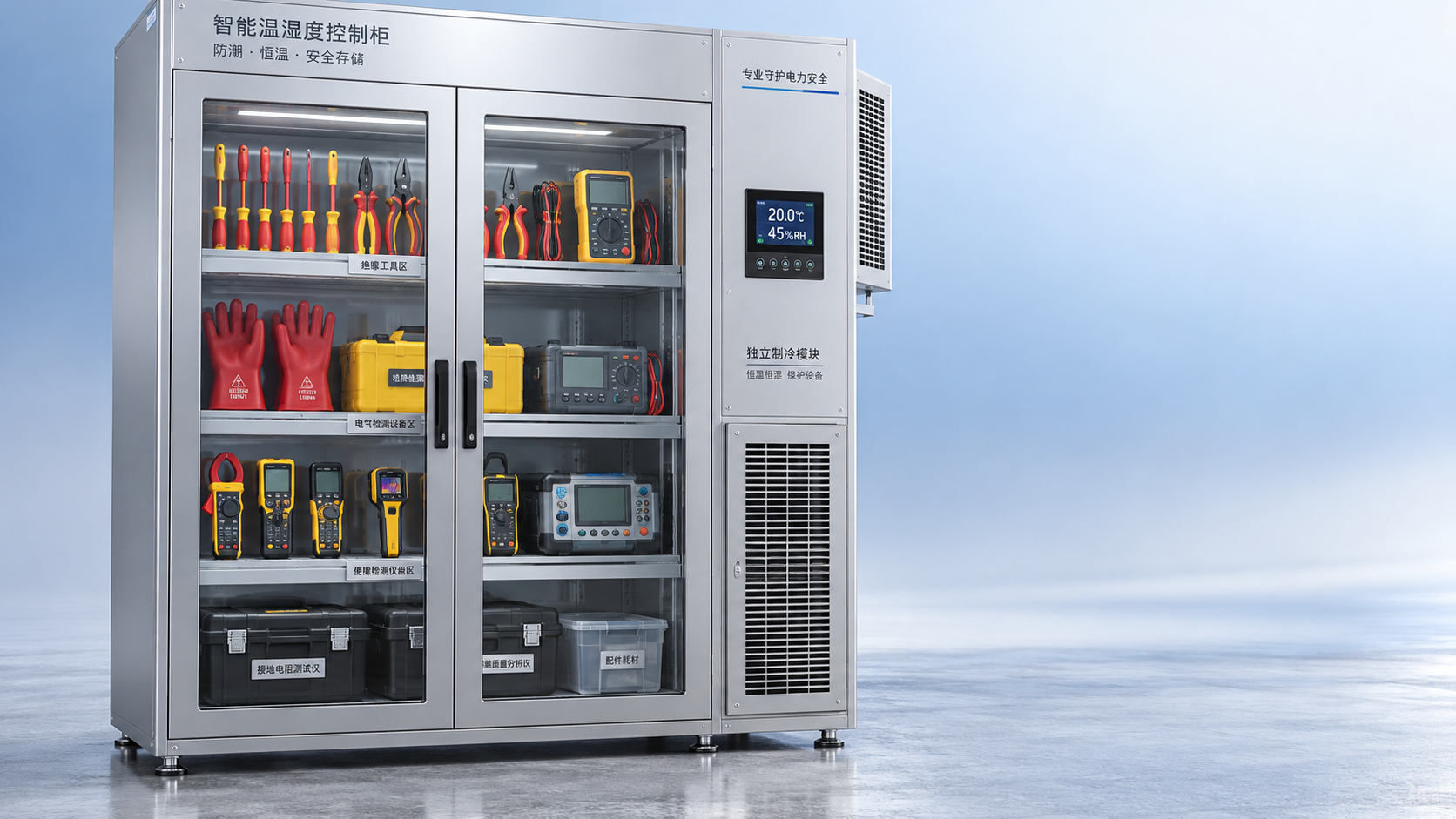
An electrical safety cabinet is more than a storage unit—it is a critical control point for protecting PPE, insulating tools, and emergency gear from damage, loss, and unauthorized use. For quality control and safety managers, clear cabinet requirements help maintain equipment readiness, support compliance, and ensure workers can access verified protective gear when every second matters.
The difficult part is that a cabinet alone does not make an electrical work area compliant or safe. A well-built enclosure can still fail as a control measure if expired gloves are mixed with serviceable gloves, insulating poles are stored under mechanical load, keys are shared without accountability, or equipment inspection status cannot be identified at the point of issue. The cabinet, its contents, and the management process must work together.
For substations, utility maintenance depots, renewable energy sites, and industrial electrical rooms, the starting question should not be “Which cabinet should we buy?” It should be: “What equipment must be available here, who is allowed to use it, and how will we prove it was in acceptable condition when issued?”
Start With the Risk and the Equipment Inventory
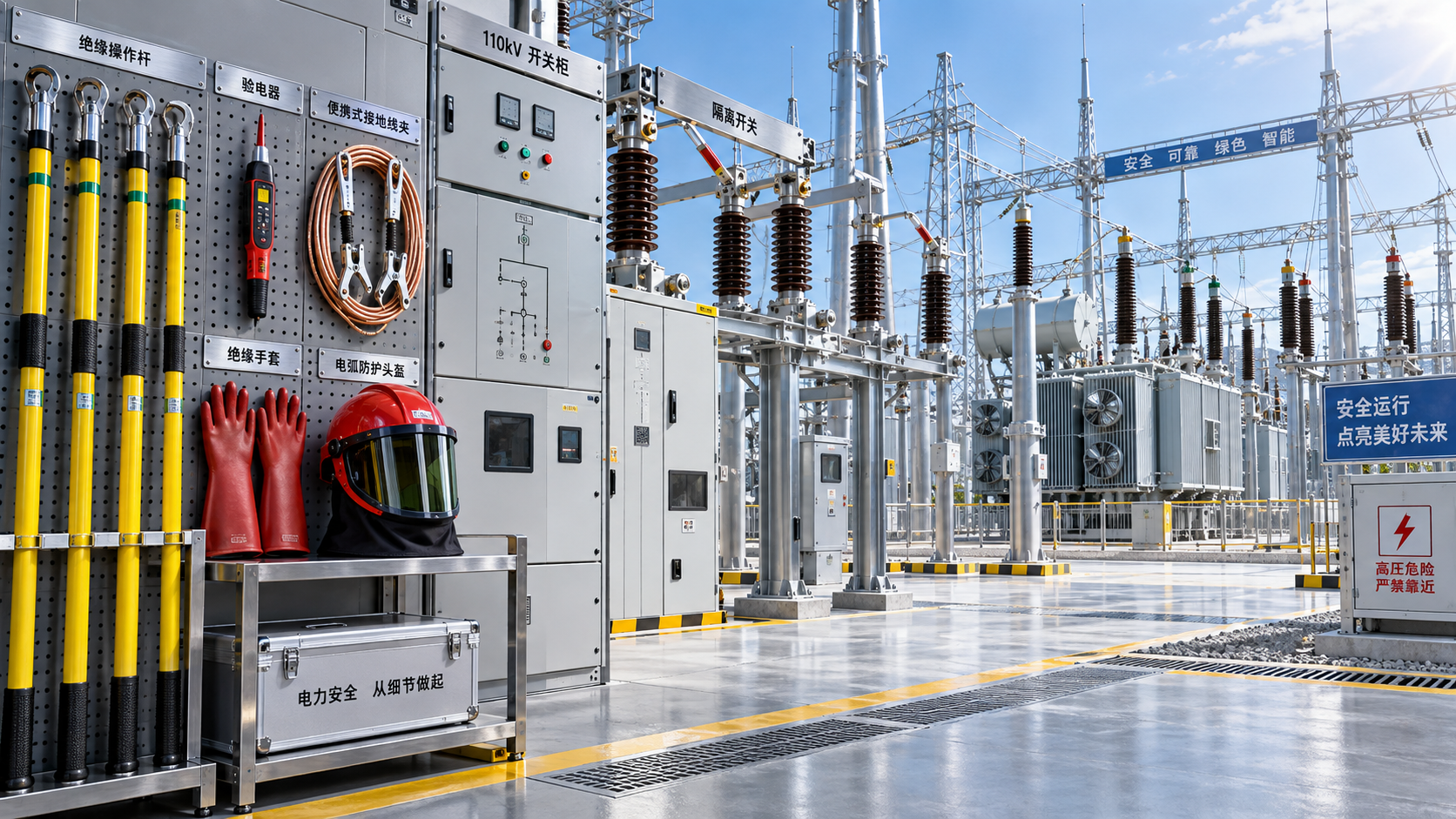
Cabinet requirements should reflect the hazards of the work location. A low-voltage maintenance room may need controlled storage for electrical insulating gloves, face protection, lockout/tagout devices, voltage detectors, rescue equipment, and basic insulating hand tools. A higher-voltage substation environment may require space for insulating poles, grounding equipment, insulating mats, voltage indicators, arc-rated PPE, and site-specific emergency gear.
This distinction matters because electrical protective equipment is not interchangeable. Gloves, sleeves, live-line tools, insulating platforms, and arc-flash clothing have different storage vulnerabilities and inspection needs. Some items are damaged by ultraviolet exposure, excessive heat, moisture, oils, chemical contamination, compression, bending, or sharp edges. A cabinet specification that merely states “steel cabinet with lock” does not address those risks.
Before defining dimensions or locking methods, build a location-specific inventory. Include the item name, quantity, intended user group, applicable inspection interval, storage position, and whether the item is shared, individually assigned, or emergency-only. This inventory often reveals avoidable problems: a cabinet designed around current stock may have no room for replacement equipment, seasonal PPE, or the long tools required for switching and testing tasks.
The Cabinet Must Preserve the Condition of Protective Equipment
The internal environment is usually more important than the cabinet’s exterior finish. Electrical PPE and insulating equipment should be kept clean, dry, protected from direct sunlight, and separated from sources of contamination. Where a cabinet is installed near workshops, battery rooms, chemical stores, outdoor access points, or dusty industrial processes, the environmental risks should be assessed before equipment is placed inside.
A practical electrical safety cabinet normally needs enough structure to prevent equipment from being crushed, folded incorrectly, or dropped into a pile. Shelves should carry expected loads without deflection. Compartments should be sized for the actual storage method, rather than forcing gloves, face shields, or protective footwear into unsuitable spaces. Hooks, racks, brackets, and holders should not create sharp contact points that can abrade insulating surfaces or snag garments.
Long insulating tools deserve particular attention. They should be supported in a way that avoids permanent bending, impact damage, and contact with floor moisture. Storing poles vertically can be appropriate where the cabinet height and retention method are suitable; horizontal storage may be better for longer equipment or areas with vibration. In either arrangement, the goal is controlled support, not simply making the tools fit.
Ventilation is another point that is often handled too casually. A cabinet should not trap moisture, but unrestricted openings may introduce dust, insects, water, or industrial contaminants. The appropriate approach depends on the room conditions and the equipment manufacturer’s storage guidance. If humidity, condensation, or temperature extremes are credible risks, the wider room environment may need correction rather than expecting the cabinet to solve every problem.
Controlled Access Is a Safety Function, Not Just a Lock
Access control should match the criticality of the contents. Emergency rescue equipment must be quickly available to trained personnel, while high-value insulating tools or restricted test equipment may need more formal authorization. A cabinet that is too difficult to open can delay a response. One that is permanently left unlocked can allow equipment to disappear, be used by untrained personnel, or be returned without inspection.
Keyed locks, combination locks, electronic access control, and sealed emergency access arrangements can all be appropriate in different settings. The decision should be based on the site’s work permit system, number of authorized users, shift pattern, emergency response plan, and need for traceability. An electronic lock may provide useful access records, but it cannot replace a clear issue-and-return procedure. Conversely, a simple mechanical lock may be entirely suitable for a small, supervised maintenance area if key control is disciplined.
A useful rule is to separate three categories physically where possible: serviceable equipment ready for use, equipment awaiting inspection or cleaning, and equipment rejected from service. Mixing these categories is one of the fastest ways to undermine a PPE control program. A clearly marked quarantine section, or a separate locked enclosure, prevents a failed item from finding its way back into active use because it was convenient.
Information at the point of issue
Workers should not need to search through maintenance records to determine whether an item is current. The cabinet or its adjacent control board can identify inspection status, equipment class where relevant, return expectations, and any restrictions on use. Labels should remain readable in the local working environment and should be consistent with the site’s established safety identification system.
For insulating gloves and sleeves, the storage process should align with the applicable product instructions and the inspection and test requirements adopted by the employer. In North American programs, references may include ASTM specifications for electrical insulating gloves and sleeves, as well as OSHA and NFPA 70E practices where applicable. For insulated hand tools, IEC 60900 is widely recognized as a relevant product standard. These references do not create a universal cabinet design, but they help define why proper condition, identification, and inspection control matter.
What a Quality Review Should Examine
When reviewing an electrical safety cabinet for deployment or routine audit, safety managers should look beyond the purchase specification. The following checks are more meaningful than a generic statement that the cabinet is “suitable for PPE.”
- Does the cabinet provide enough protected space for the complete required equipment set, including replacements and emergency items?
- Are insulating tools supported without bending, excessive pressure, sharp contact, or risk of falling when doors are opened?
- Can clean, inspected equipment be separated from returned, contaminated, damaged, or overdue items?
- Is the locking arrangement compatible with both normal authorization and emergency access procedures?
- Are labels, inspection records, and equipment locations understandable to the people who use the cabinet during a shift?
- Will the installed location expose contents to water ingress, direct solar heat, corrosive fumes, vibration, vehicle impact, or unauthorized public access?
- Can the cabinet be cleaned, inspected, and replenished without disrupting routine work?
Installation details deserve the same scrutiny. A heavy loaded cabinet may require secure anchoring based on the floor or wall construction and local site requirements. Door swing must not obstruct escape routes, electrical panels, or emergency access. In areas with vehicle movement, physical protection may be needed. If the cabinet is located outdoors or in a semi-exposed structure, enclosure protection, drainage, corrosion resistance, and temperature effects should be considered as part of the whole installation.
Avoid the “One Cabinet for Everything” Mistake
Centralizing all safety gear can simplify stock control, but it can also create delays. A remote wind site, a solar inverter station, or a substation control building may need a combination of central storage and local point-of-use cabinets. The correct arrangement depends on travel distance, work frequency, site layout, security exposure, and the type of electrical tasks performed.
There is also a limit to how much should be stored together. Electrical PPE should not become mixed with general tools, cleaning products, solvents, spare parts, or personal belongings. These materials introduce contamination and make it harder to see when protective equipment is missing. A cabinet should make the safe action easier: take the correct item, verify its status, use it appropriately, and return it to a defined location.
The same principle applies to arc-rated garments and face protection. Their storage needs may differ from those of insulating equipment, especially when garments require clean hanging space or protection from dust and oil. For many sites, a modular arrangement with dedicated sections is more effective than a single large compartment.
Make Inspection and Replenishment Part of the Design
An electrical safety cabinet should support an operating routine, not add another unmanaged asset to the facility. Assign cabinet ownership to a named role or department. Define who checks stock, who reviews inspection dates, who removes suspect equipment, and who authorizes replenishment. The frequency should reflect site activity and the equipment involved; a cabinet used daily needs more frequent attention than one reserved for infrequent switching work.
Visual management can help, provided it remains simple. Empty outlines, numbered positions, issue tags, and inspection-status indicators make shortages easier to detect. Digital asset systems can add traceability where the organization already uses them, but a complicated process that technicians bypass is less valuable than a clear physical control that is consistently followed.
At JINPOWER, electrical safety equipment development is approached with this field reality in mind. Founded in 2009, Hebei Jinneng Power Technology Co., Ltd. has focused on electrical protective tools for power-industry applications, including the demanding conditions found in substations, utility operations, renewable energy projects, and industrial maintenance. Product selection and storage design are closely connected: equipment can only provide its intended protection when it remains identifiable, correctly maintained, and ready for issue.
For projects operating across multiple regions, the cabinet review should also confirm the governing customer specifications, local regulations, and standards referenced in the contract. International standards and product test requirements may be relevant, but they should be verified against the intended market and application rather than assumed from a general product description.
A Cabinet Is a Visible Test of Safety Discipline
A well-managed cabinet tells workers that electrical protection is expected to be ready, clean, traceable, and treated with care. A disorganized one sends the opposite message, even if the site has strong written procedures. For quality and safety teams, the most reliable cabinet requirement is therefore not a single material grade, lock type, or shelf count. It is a documented system that protects equipment condition, controls access, separates nonconforming items, and fits the actual work performed at the site.
Before finalizing a specification, review the PPE list, tool lengths, expected environmental exposure, access hierarchy, inspection process, and emergency arrangements together. That review is where a storage cabinet becomes a practical part of electrical risk control rather than an overlooked piece of furniture.
Recommend
 Oct 25, 2026
Homemade Bird Repellent Spray: Recipe Limits and Outdoor Surface Risks
Searching for how to make homemade bird repellent spray? Discover recipe limits, outdoor surface risks, electrical safety tips, and safer deterrents before you spray.
- Oct 25, 2026
Natural Bird Deterrents for Rooftops: Choosing Nonchemical Options
Learn how to repel birds naturally with humane rooftop barriers and smarter maintenance. Compare nonchemical options to protect electrical equipment and keep roof access clear.
- Oct 24, 2026
Home Remedies for Repelling Birds: What to Try on Patios and Railings
Learn how to repel birds with home remedies for cleaner patios and railings. Discover humane DIY options, avoid harmful sprays, and keep deterrents clear of electrical equipment.