English
 Español
 Português
 Français
 Deutsch
 русский
 한국어
 にほんご
 हिन्दी, हिंदी
 বাংলা
 Bahasa Indonesia
 Türkçe
 Việt
 dansk
 čeština
 עִבְרִית Ivrit
 Filipino/Pilipino
 български език (Bǎlgarski jazik)
 suomi
 norsk
 język polski
 ไทย
 ກະຣຸນາ
 Bahasa Melayu
 ភាសាខ្មែរ
 ဗာရမ်
 اردو
 فارسی
 Italiano
 Nederlands
 svenska
 Монгол хэл
 नेपाली
 සිංහල
 Ўзбек тили
 پښتوتۆرکجه
 Ελληνικά
 српски / srpski
 magyar
 українська
 Kiswahili
 Қазақ тілі
 Română
 Hrvatski
 Bosanski
 Kreyòl ayisyen
 አማርኛ
 Hausa
 Yorùbá
 Igbo
How Do Safety Equipment Cabinets Differ from Regular Steel Lockers?
Yes—safety equipment cabinets can differ significantly from regular steel lockers, but the difference is not simply the steel enclosure or the product name. A purpose-built cabinet is designed around the storage requirements of protective equipment: preventing mechanical damage, separating incompatible items, maintaining suitable environmental conditions where necessary, and making inspection status easy to identify. A regular locker primarily provides enclosed, lockable space.
However, a cabinet advertised for safety equipment does not automatically provide humidity control, electrical protection, or regulatory compliance. Some models are little more than steel cupboards with labeled shelves. The meaningful comparison is whether the cabinet protects the specific equipment stored inside it under the conditions at the installation site.
What makes a safety equipment cabinet different in practical use?
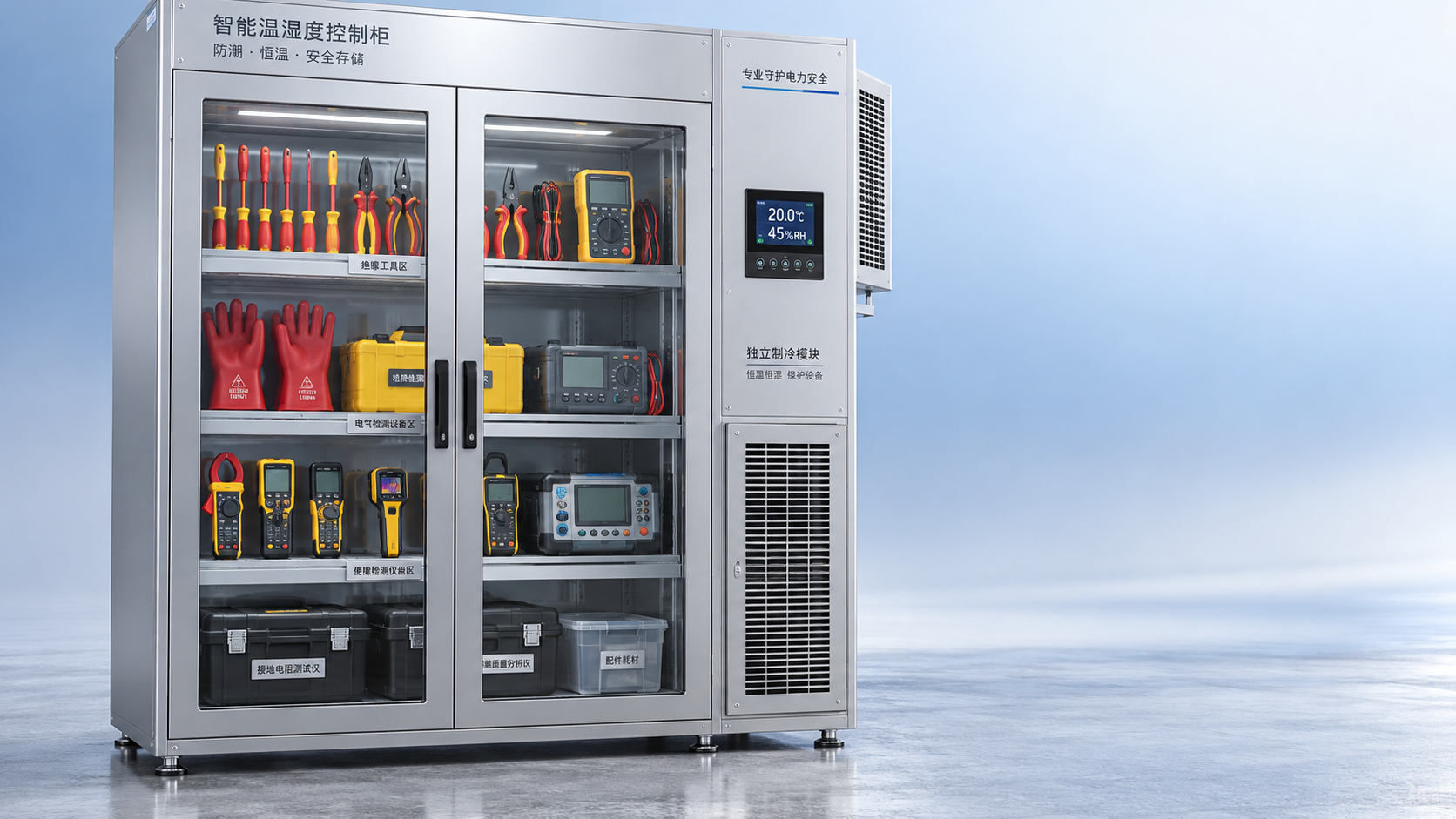
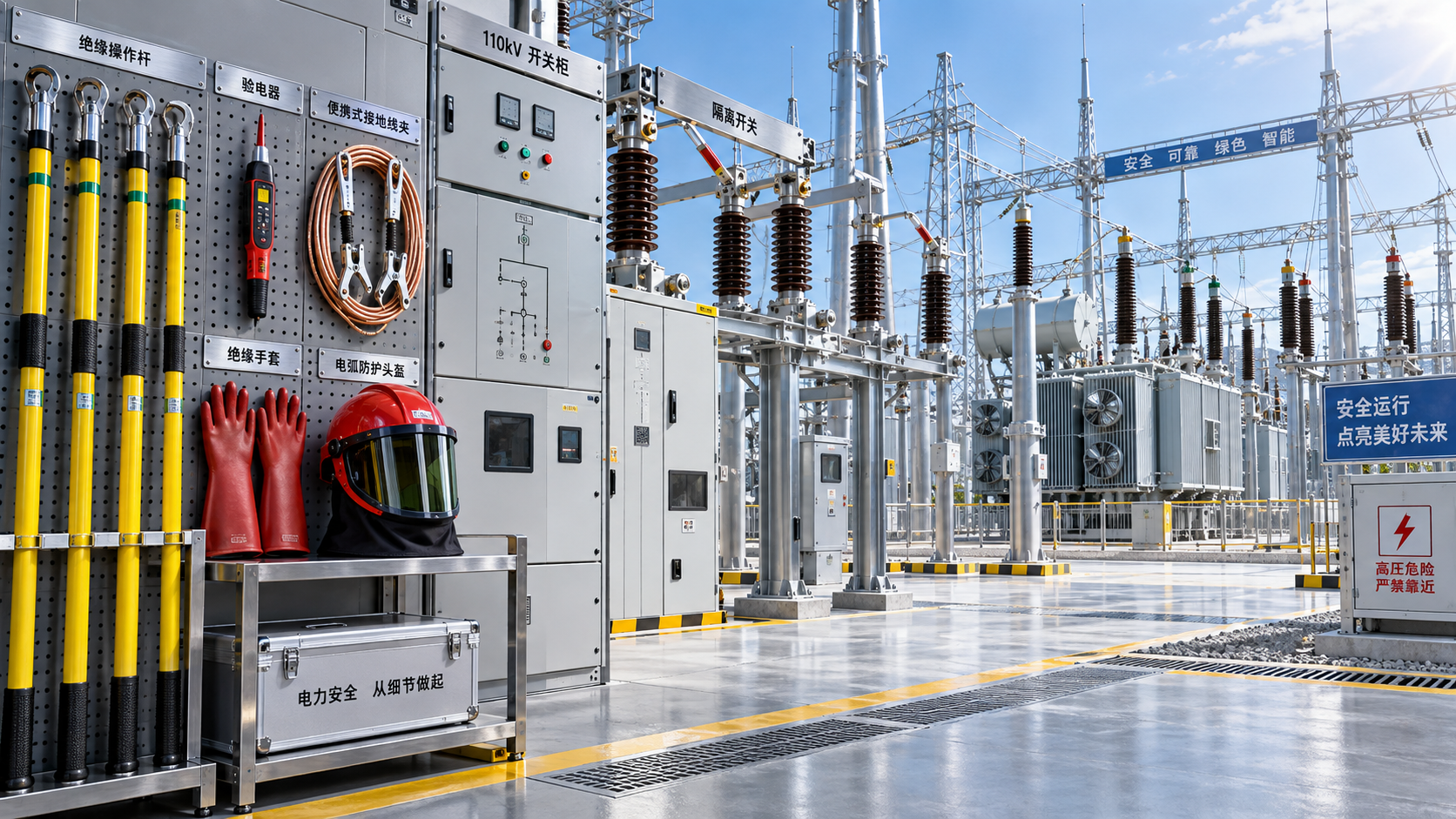
Electrical protective equipment can lose reliability through poor storage even when it has not been used. Rubber insulating gloves can be damaged by sharp edges, folding, or contact with unsuitable substances. Insulating sticks need supports that prevent bending and protect their working surfaces. Voltage detectors require protection against impact, contamination, and storage conditions outside their manufacturers’ limits.
A general-purpose locker does not necessarily address these risks. Its shelf spacing, hooks, ventilation openings, and internal dimensions may be intended for clothing, bags, or miscellaneous supplies rather than electrical protective tools.
A suitably specified safety equipment cabinet translates the equipment’s storage instructions into physical arrangements and operating controls.
These are design possibilities, not universal features. A well-organized passive cabinet can be appropriate in a conditioned equipment room, while an electrically heated cabinet with unsuitable supports can still damage the tools it contains.
Which equipment needs more than an ordinary shelf?
Rubber insulating gloves should be stored according to their manufacturer’s instructions, without damaging folds, compression, or exposure to harmful conditions. Their storage position must also prevent contact with sharp metal edges and heavier equipment. Dedicated compartments or suitable storage bags can provide that protection; an open shelf alone may not.
Leather protectors and rubber insulating gloves also have different care requirements. Putting damp or contaminated protectors directly against clean insulating gloves can transfer moisture or substances that should not contact the rubber. Storage arrangements should allow clean, dry equipment to remain protected rather than treating all gloves as interchangeable items.
Long insulating tools introduce a different problem. A cabinet must accommodate their full length or their approved disassembled configuration. Improvised placement across shelves, leaning tools against a door, or forcing them into narrow compartments can put stress on joints and working surfaces. Supports should hold the tools securely without creating damaging point loads.
Portable earthing equipment needs sufficiently strong supports and controlled positioning for cables and clamps. Heavy metal clamps should not share an unprotected compartment with rubber equipment or delicate detector housings. The relevant distinction is load handling and separation, not whether the cabinet carries a safety label.
Voltage detectors and other electronic devices may be best stored in their designated cases. Cabinet compartments should accommodate those cases and preserve access to identification and inspection records. The cabinet does not replace the device’s prescribed functional checks or battery maintenance.
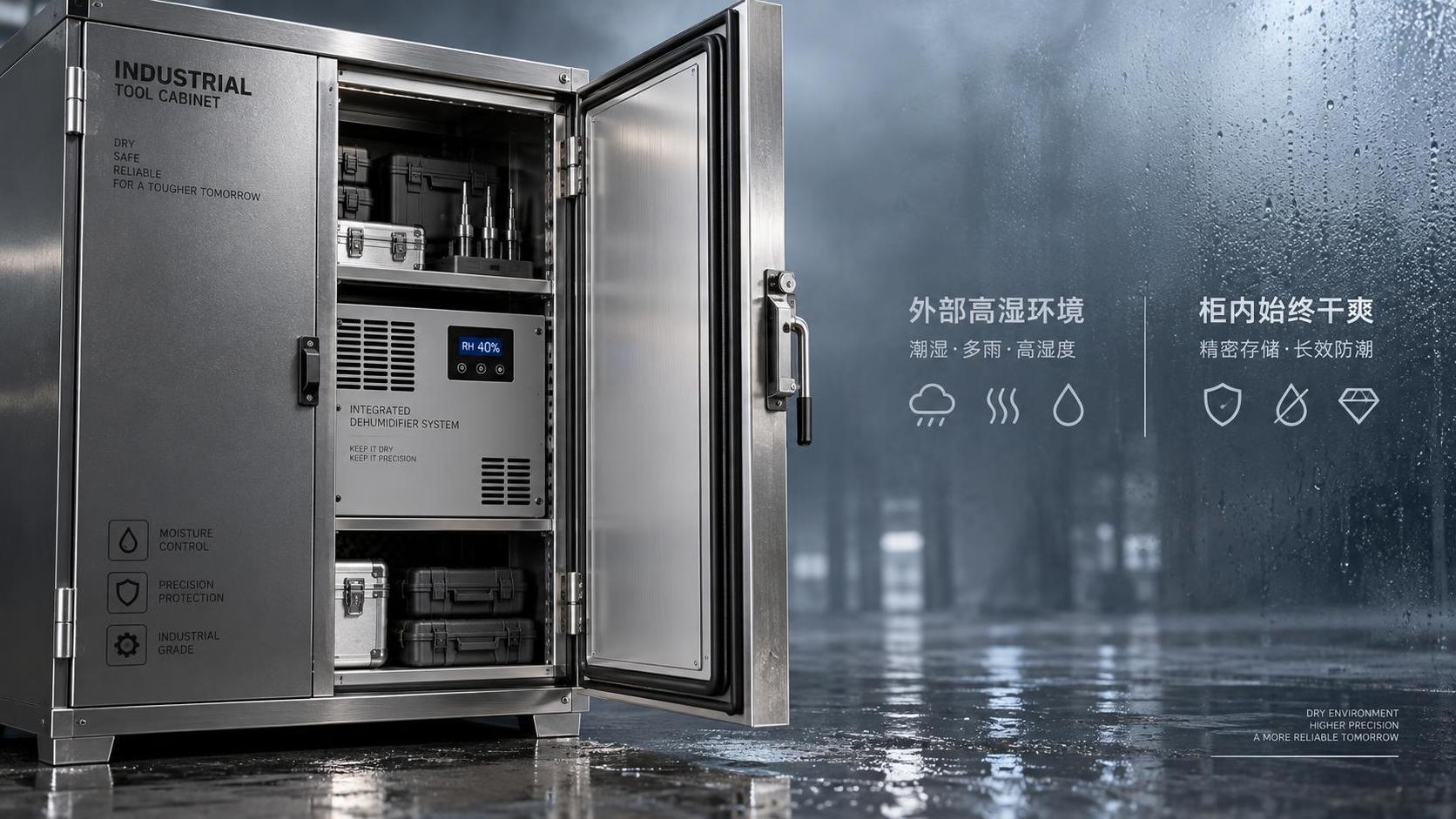
Does a safety equipment cabinet control humidity?
Only if it has a specified system capable of doing so. A sealed door, a ventilation grille, a heater, and a dehumidifier perform different functions and should not be treated as equivalent.
Ventilation exchanges air with the surrounding room. It can support drying when the incoming air is suitable, but it does not guarantee a dry interior. In a humid room, uncontrolled ventilation can introduce additional moisture.
Heating can lower relative humidity by raising air temperature, but it does not by itself remove water from the cabinet. Condensation risk can return when heating stops or surfaces cool. Excessive heating can also conflict with equipment storage limits, so a “drying” function is not automatically beneficial.
Dehumidification removes moisture, but its effectiveness depends on operating temperature, cabinet leakage, door-opening frequency, and the amount of moisture introduced. Some systems collect condensate and require drainage or emptying; others use a different moisture-removal method. That operating requirement belongs in the specification.
For an actively controlled cabinet, useful information includes:
- The operating temperature and humidity range, including any limitations.
- The control method and whether the cabinet measures both temperature and relative humidity.
- Sensor location, accuracy, and provisions for checking readings.
- Air distribution around shelves and stored equipment.
- Alarm behavior and what happens after a power interruption.
- Drainage, filter cleaning, and other routine maintenance requirements.
No single humidity setting is appropriate for every item of electrical protective equipment. Storage conditions should follow the equipment manufacturer’s instructions and applicable requirements. A digital display demonstrates measurement at a sensor location—not automatically uniform conditions throughout a fully loaded cabinet.
Is a steel locker unsuitable because it conducts electricity?
No. A steel enclosure is not inherently unsuitable for storing electrical protective equipment. Both ordinary lockers and dedicated safety cabinets can be made from steel. The cabinet is a storage enclosure, not an insulating barrier intended to protect someone working on live electrical equipment.
The important risks include sharp edges, corrosion, contamination, unstable shelves, and unsuitable positioning. Rust or damaged coatings can create rough surfaces and debris that should not contact protective tools. A strong external shell does not compensate for poorly finished internal fittings.
An electrically powered cabinet introduces additional considerations. Heaters, fans, controllers, and dehumidifiers require appropriate wiring, overcurrent protection, and protection against electric shock. Protective earthing or other protective measures must suit the design and applicable installation requirements. These requirements arise from the powered equipment—not from a general rule that every metal storage locker needs an electrical connection.
A cabinet should not be placed where access exposes users to energized parts or obstructs electrical working clearances. Better storage features cannot correct an unsuitable installation location.
Does a dedicated cabinet make stored equipment compliant or safe to use?
No. Correct storage helps preserve equipment condition, but it does not establish dielectric performance, confirm an inspection, or extend a test interval.
In the United States, OSHA’s electrical protective equipment provisions in 29 CFR 1910.137 address storage protection against damaging conditions, including light, temperature extremes, excessive humidity, ozone, and other injurious substances or conditions. This is a requirement concerning the equipment and its treatment; it is not a blanket approval of cabinets marketed for electrical safety storage.
Other jurisdictions, equipment standards, and utility procedures can impose different obligations. Standards applicable to insulating gloves or live-working tools should not be presented as cabinet certifications unless the claimed scope genuinely covers the cabinet.
The distinction matters when comparing quotations. A supplier’s statement that a cabinet is “compliant with international standards” is incomplete without the standard number, applicable product scope, and supporting documentation. A certificate covering a controller or heater does not establish that the complete cabinet meets every relevant requirement.
Storage should also make equipment status unambiguous. Clean equipment awaiting inspection, equipment released for service, and rejected equipment should not become mixed together. Labels and separate compartments can support that separation, but a clearly controlled quarantine location may be more effective than placing rejected items behind the same door as ready-to-use tools.
Can a regular steel locker be adapted successfully?
Yes, provided it meets the equipment’s actual storage needs. In a clean, dry indoor room with stable conditions, a suitable steel locker may work well after adding appropriate supports, protective containers, clear identification, and segregation.
Adaptation becomes less convincing when the room experiences condensation, the tools do not fit without distortion, or the locker cannot safely carry the intended loads. Fitting a small heater into an ordinary locker is not equivalent to engineering a controlled storage system. It can introduce hot surfaces, uneven temperatures, and electrical hazards unless properly designed.
A practical assessment starts with the stored items rather than the cabinet dimensions alone. Check the longest tool, the largest protective case, the heaviest loaded shelf, and the space needed to remove equipment without striking neighboring items.
For example, a locker may have enough internal height for an insulating stick but insufficient door clearance to retrieve it safely. Similarly, several glove bags may fit on a shelf while remaining compressed beneath other equipment. Nominal capacity is not the same as usable protective storage.
If adaptation meets those conditions without improvised handling or environmental controls, replacing the locker solely because it lacks a “safety equipment” label may add little value.
What should be checked before choosing a cabinet?
The specification should connect each requested feature to a storage problem. “Heavy-duty steel” says little about protection for insulating gloves. “Intelligent humidity control” says little unless the operating range, control performance, and maintenance needs are defined.
A useful equipment schedule records item dimensions, quantity, weight, storage instructions, and access frequency. The cabinet layout can then be checked against that schedule, including protective bags and cases rather than bare-tool dimensions alone.
Installation conditions deserve equal attention. A cabinet designed for an indoor equipment room should not be assumed suitable for an outdoor enclosure, a washdown area, or a corrosive atmosphere. Where ingress protection is claimed, the documented rating should match the intended exposure. An enclosure rating does not prove that the interior will remain free of condensation.
For powered models supplied across borders, confirm supply voltage, frequency, connection method, and local electrical conformity requirements. Replacement sensors, fans, controllers, and moisture-removal components also affect whether the cabinet can remain functional throughout its service life.
Acceptance checks should include door operation, stability, shelf and support security, internal finish, identification arrangements, and practical loading and retrieval. Active controls should be checked for readings, alarms, and recovery after interruption under agreed conditions. An empty-cabinet demonstration alone does not establish performance when shelves are crowded and airflow is restricted.
When is the dedicated cabinet worth the additional cost?
The additional cost is justified when the cabinet addresses a defined risk that ordinary storage cannot adequately control: damaging tool placement, mixed equipment status, unsuitable moisture conditions, or difficult access that encourages unsafe handling.
Compare installed costs rather than purchase prices alone. A basic locker may need supports, protective cases, room conditioning, and labeling. An active cabinet adds electricity use, maintenance, and component replacement. Neither option removes the need for inspection, testing, cleaning, and disciplined equipment handling.
The deciding question is not whether one cabinet looks more specialized. It is whether the storage arrangement keeps each item within its required conditions, protects it from avoidable damage, and allows only correctly identified equipment to return to service. A regular steel locker can meet that test in a suitable setting; a purpose-built cabinet earns its advantage when its verified features solve problems the locker cannot.
Recommend
 Oct 25, 2026
Homemade Bird Repellent Spray: Recipe Limits and Outdoor Surface Risks
Searching for how to make homemade bird repellent spray? Discover recipe limits, outdoor surface risks, electrical safety tips, and safer deterrents before you spray.
- Oct 25, 2026
Natural Bird Deterrents for Rooftops: Choosing Nonchemical Options
Learn how to repel birds naturally with humane rooftop barriers and smarter maintenance. Compare nonchemical options to protect electrical equipment and keep roof access clear.
- Oct 24, 2026
Home Remedies for Repelling Birds: What to Try on Patios and Railings
Learn how to repel birds with home remedies for cleaner patios and railings. Discover humane DIY options, avoid harmful sprays, and keep deterrents clear of electrical equipment.