English
 Español
 Português
 Français
 Deutsch
 русский
 한국어
 にほんご
 हिन्दी, हिंदी
 বাংলা
 Bahasa Indonesia
 Türkçe
 Việt
 dansk
 čeština
 עִבְרִית Ivrit
 Filipino/Pilipino
 български език (Bǎlgarski jazik)
 suomi
 norsk
 język polski
 ไทย
 ກະຣຸນາ
 Bahasa Melayu
 ភាសាខ្មែរ
 ဗာရမ်
 اردو
 فارسی
 Italiano
 Nederlands
 svenska
 Монгол хэл
 नेपाली
 සිංහල
 Ўзбек тили
 پښتوتۆرکجه
 Ελληνικά
 српски / srpski
 magyar
 українська
 Kiswahili
 Қазақ тілі
 Română
 Hrvatski
 Bosanski
 Kreyòl ayisyen
 አማርኛ
 Hausa
 Yorùbá
 Igbo
How Does a Dehumidifier Tool Cabinet Protect Tools in Humid Regions?
How Does a Dehumidifier Tool Cabinet Protect Tools in Humid Regions?
In humid regions, moisture can quietly damage electrical tools, insulation equipment, and critical maintenance supplies, increasing safety risks and replacement costs for field teams.
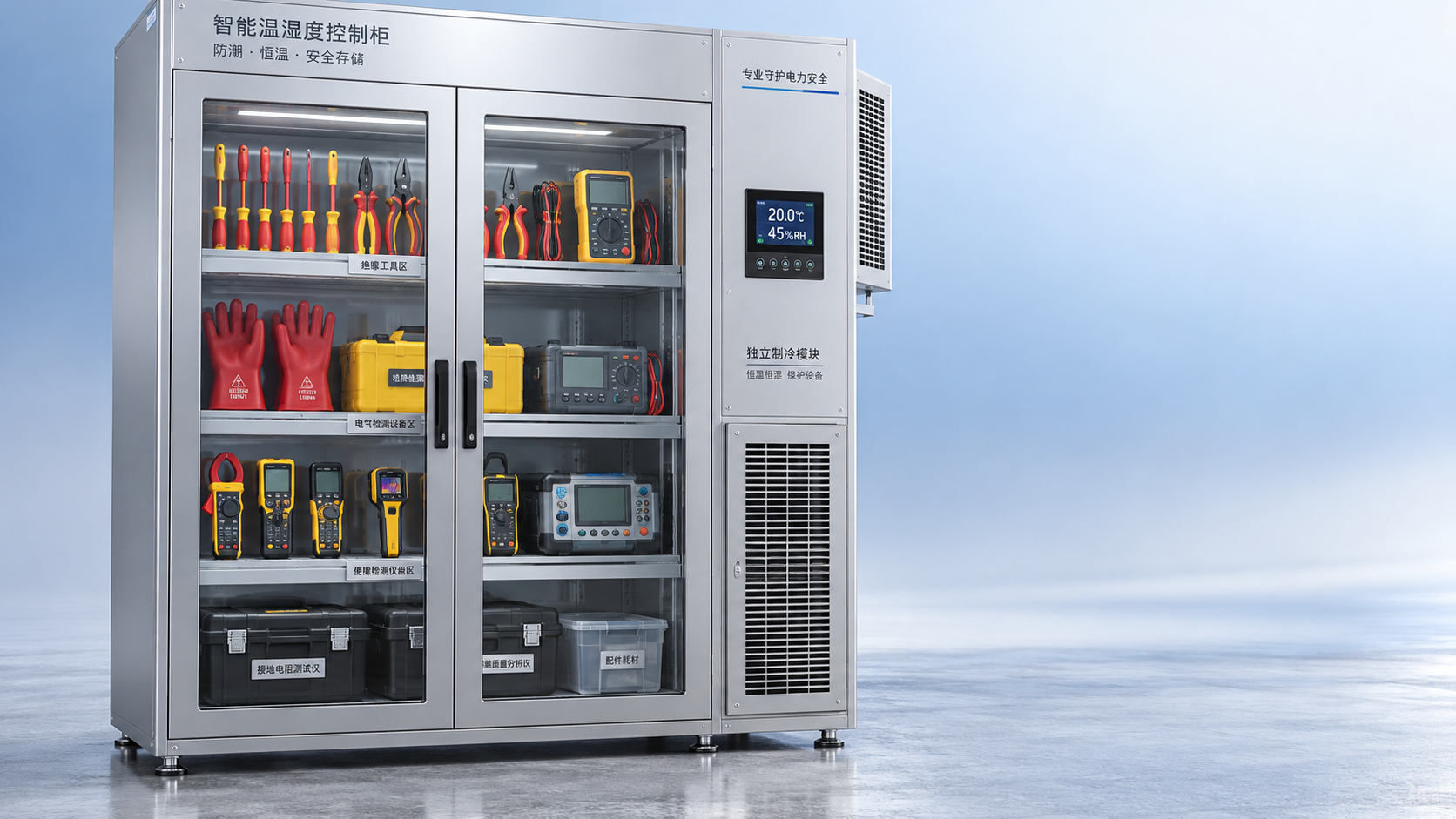
A dehumidifier tool cabinet for humid climate regions creates controlled storage conditions that reduce corrosion, mold, insulation deterioration, and moisture-related equipment failures.
For utilities, substations, renewable energy sites, and industrial maintenance departments, the cabinet is not merely storage furniture but part of a practical safety management system.
Why Humidity Is a Serious Tool Storage Risk
High humidity affects stored equipment even when tools are not exposed directly to rain, flooding, seawater spray, or visibly wet working conditions.
Warm air naturally contains water vapor, and temperature changes can cause that vapor to condense on metal surfaces, terminals, connectors, and protective tool components.
In coastal, tropical, rainy, and monsoon-prone areas, the risk is often continuous because ambient humidity remains elevated for long periods throughout the year.
Metal tools are especially vulnerable because moisture initiates oxidation, which can gradually weaken surfaces, seize moving parts, and impair reliable mechanical operation.
Rust on torque tools, cutters, ratchets, clamps, grounding equipment, and fasteners can reduce accuracy, increase operating force, and shorten useful service life.
Electrical protective tools face an even more important concern: moisture may affect insulating materials that workers depend on during high-voltage maintenance tasks.
Insulating gloves, boots, sleeves, blankets, hot sticks, and related equipment require careful storage because moisture contamination can compromise cleanliness and electrical performance.
Humidity can also encourage mold growth on textile components, leather tool bags, protective covers, labels, foam inserts, and organic packaging materials.
When labels become unreadable or inspection records deteriorate, teams may lose essential information about test dates, equipment identification, and approved operating limits.
For managers, the real issue is not simply cosmetic damage. Moisture can create hidden reliability problems that appear only when a critical tool is needed.
How a Dehumidifier Tool Cabinet Controls Moisture
A dehumidifier tool cabinet for humid climate regions protects equipment by reducing the moisture level inside an enclosed storage space instead of treating damage afterward.
The cabinet separates sensitive tools from unstable ambient conditions, helping create a more predictable environment for storage between inspections, shifts, shutdowns, and emergency jobs.
Its dehumidification system removes water vapor from the internal air, preventing persistent high humidity from accumulating around tools and protective equipment.
Many cabinets use automatic humidity control, which activates the moisture-removal function when internal conditions exceed a selected humidity threshold.
This approach is more dependable than relying on workers to remember temporary moisture-control measures, especially at busy substations and round-the-clock industrial facilities.
A sealed or well-fitted cabinet enclosure improves performance because it limits the amount of humid outside air entering the protected storage area.
Internal air circulation is also important. It helps ensure that moisture is removed consistently around shelves, drawers, compartments, and stored equipment.
Unlike ordinary lockers, a purpose-built cabinet is designed to maintain stable conditions rather than simply conceal tools from dust or unauthorized access.
Some models include digital displays, humidity indicators, alarms, and adjustable settings, allowing supervisors to verify that storage conditions remain within the intended range.
These functions support preventive maintenance because abnormal humidity can be identified before corrosion, mildew, or insulation concerns become widespread.
What Equipment Benefits Most from Controlled Storage
Not every item requires the same degree of protection, but humid storage is particularly valuable for equipment with metal, electrical, insulating, or calibrated components.
Electrical safety equipment should receive priority because its condition can directly influence worker protection during switching, testing, maintenance, and emergency restoration activities.
Insulated hand tools benefit from reduced moisture exposure, particularly when handles, coatings, identification markings, and protective layers must remain in good condition.
Voltage detectors, measuring instruments, clamp meters, insulation testers, and portable diagnostic devices also benefit because moisture can affect electronics, batteries, and terminals.
Grounding and short-circuiting equipment requires proper storage because corroded clamps, cables, connectors, and contact surfaces can impair dependable field deployment.
Hot sticks, insulating poles, and operating rods should be kept clean and dry, particularly when used in environments where electrical safety procedures are strictly controlled.
Precision tools such as torque wrenches, micrometers, calipers, and crimping tools may lose accuracy when corrosion affects mechanical interfaces or adjustment mechanisms.
Spare electrical components, terminals, fuses, relays, connectors, and small hardware can also remain more usable when protected from oxidation and contamination.
Facilities with expensive or specialized maintenance equipment often gain the greatest value because replacement delays can be as costly as the equipment itself.
A cabinet can also organize equipment by category, making inspection routines easier and reducing the chance that workers select damaged or unapproved tools.
How Humidity Protection Supports Electrical Safety
For power industry teams, tool storage quality is closely linked to safety because protective equipment must perform as expected under demanding field conditions.
Moisture does not automatically mean that insulation has failed, but it creates a condition that requires attention, inspection, cleaning, and potentially additional testing.
Dry, controlled storage helps reduce unnecessary exposure to contaminants that may affect surface condition, tracking resistance, handling comfort, and inspection visibility.
It also supports a disciplined process in which electrical protective tools are returned to a designated environment after use, cleaning, and visual examination.
This is particularly useful when equipment is stored near outdoor work areas, poorly ventilated rooms, coastal substations, tunnels, mines, or temporary project facilities.
By reducing corrosion on metal components, controlled storage also helps workers operate tools smoothly and maintain proper mechanical contact during critical tasks.
A sticking clamp, corroded connection, or unreliable measuring device can create delays during maintenance, fault response, or planned equipment isolation procedures.
For safety managers, the cabinet should complement routine inspections, electrical testing programs, cleaning procedures, calibration schedules, and documented equipment management practices.
It is not a substitute for formal inspection or testing, but it helps preserve equipment condition between those required verification activities.
That distinction matters when evaluating return on investment: the cabinet supports compliance and reliability by reducing avoidable storage-related deterioration.
How to Choose the Right Cabinet for Your Site
Choosing a dehumidifier tool cabinet for humid climate regions begins with understanding what will be stored, how often items are accessed, and where the cabinet will operate.
Start by listing equipment types, quantities, dimensions, material sensitivity, inspection requirements, and expected future inventory rather than purchasing based on exterior size alone.
Cabinet capacity should allow tools to be stored without overcrowding, because tightly packed equipment can restrict airflow and make inspections more difficult.
Consider shelf strength, compartment layout, drawer configuration, hanging options, and whether long insulating tools require vertical or horizontal storage arrangements.
The target humidity range should match the equipment manufacturer’s recommendations, site procedures, and local environmental conditions rather than following a universal setting blindly.
Digital monitoring is useful for sites that require recorded conditions, frequent audits, or remote supervision across multiple substations, warehouses, and maintenance locations.
Check whether the cabinet provides alarms for excessive humidity, power interruptions, sensor abnormalities, or door-open conditions that could affect stable internal storage.
Construction quality also matters. Durable steel, protective finishes, reliable door seals, stable shelving, and corrosion-resistant components improve long-term cabinet performance.
For industrial environments, assess electrical supply requirements, energy consumption, noise level, maintenance access, and compatibility with existing facility safety procedures.
If the cabinet will store electrical protective tools, consult relevant standards, internal rules, and manufacturer guidance before defining storage practices or acceptance criteria.
Where These Cabinets Deliver the Most Value
Coastal substations often experience salt-laden air, high humidity, and temperature changes, making controlled storage especially valuable for electrical tools and spare components.
Tropical utility networks face persistent moisture throughout much of the year, particularly where equipment rooms are not continuously air-conditioned or tightly sealed.
Hydropower plants, wastewater facilities, ports, marine terminals, and offshore support areas can also create demanding conditions for stored maintenance equipment.
Solar and wind projects may use remote operation and maintenance stations where environmental control is limited and replacement tools are not immediately available.
Factories with steam, washdown processes, chemical exposure, or poor ventilation may need localized humidity control even when the broader facility appears dry.
Construction contractors can benefit when valuable electrical safety equipment is stored in temporary site offices, mobile workshops, containers, or project warehouses.
Distribution centers and tool rooms gain operational benefits because a central cabinet gives supervisors a clearer system for issuing, returning, and checking equipment.
In these settings, reduced tool loss and faster inspection can be as valuable as corrosion prevention because technicians spend less time searching for usable equipment.
Organizations operating across several climate zones can standardize storage practices by deploying cabinets where humidity monitoring identifies elevated risk.
This targeted approach avoids unnecessary spending while protecting the locations, tool categories, and operational assets with the greatest moisture exposure.
Evaluating Cost, Maintenance, and Return on Investment
The financial case for a dehumidifier cabinet should include more than the purchase price, because damaged tools can create replacement, downtime, and safety-related costs.
Calculate the value of equipment currently stored in humid conditions, then estimate how often corrosion, mold, calibration problems, or premature replacement occurs.
Also consider indirect losses, including delayed maintenance work, emergency procurement, repeated inspections, labor spent cleaning tools, and reduced confidence in equipment condition.
A single failed or unavailable specialized tool may delay a high-priority repair, potentially affecting production, grid reliability, project schedules, or customer service commitments.
Cabinet maintenance is generally straightforward, but teams should assign responsibility for checking displays, cleaning vents, inspecting seals, and reviewing alarms.
Where condensate collection is part of the cabinet design, staff should follow the manufacturer’s instructions for drainage, emptying, and routine cleaning.
Humidity readings should be reviewed alongside inspection observations, allowing managers to identify whether storage conditions are improving equipment preservation over time.
Energy use should be evaluated realistically. A properly sized, automatic cabinet may use far less energy than attempting to control an entire storage room unnecessarily.
The strongest return usually comes from extending the service life of high-value safety equipment and reducing the risk of preventable tool unavailability.
For procurement teams, reliability, local service support, spare part availability, warranty terms, and technical documentation should influence the final supplier decision.
Practical Storage Practices That Improve Results
A dehumidifier cabinet performs best when it is integrated into a clear storage routine rather than treated as a passive piece of equipment.
Before returning tools to the cabinet, workers should remove visible dirt, water, oil, salt residue, and contaminants according to applicable equipment care procedures.
Wet equipment should not be sealed away immediately without proper attention, since standing water or contamination may require cleaning and drying first.
Organize tools so that labels remain visible, inspection dates can be checked quickly, and high-use items do not disrupt protected equipment unnecessarily.
Avoid blocking air paths with oversized bags, cardboard boxes, loose packaging, or stacked materials that prevent internal circulation around stored tools.
Assign ownership for cabinet access, routine checks, and recordkeeping, especially where multiple shifts share tools across electrical, mechanical, and maintenance departments.
Regular visual inspections remain essential. Look for rust, cracked insulation, damaged seals, mildew, loose components, and unreadable identification markings.
Where regulations or company procedures require electrical testing, continue those programs at the required intervals regardless of improved storage conditions.
Training should explain why controlled storage matters, because workers are more likely to follow procedures when they understand the safety and reliability consequences.
Simple discipline at the point of return can protect the cabinet’s performance and preserve critical equipment for the next scheduled or emergency assignment.
Conclusion: A Practical Defense Against Humidity Damage
A dehumidifier tool cabinet for humid climate regions protects valuable equipment by reducing the moisture exposure that leads to corrosion, mold, insulation concerns, and unreliable operation.
For power utilities, industrial plants, renewable energy projects, and maintenance contractors, this protection supports safer work, longer tool life, and more dependable field readiness.
The best cabinet choice depends on stored equipment, local climate, capacity needs, monitoring requirements, construction quality, and the organization’s existing safety management process.
When combined with cleaning, inspection, testing, and organized issue-return procedures, controlled storage becomes a measurable investment in asset reliability and operational continuity.
Organizations facing persistent humidity should evaluate their current tool room conditions before damage becomes visible, expensive, or connected to a critical safety task.
Recommend
 Oct 25, 2026
Homemade Bird Repellent Spray: Recipe Limits and Outdoor Surface Risks
Searching for how to make homemade bird repellent spray? Discover recipe limits, outdoor surface risks, electrical safety tips, and safer deterrents before you spray.
- Oct 25, 2026
Natural Bird Deterrents for Rooftops: Choosing Nonchemical Options
Learn how to repel birds naturally with humane rooftop barriers and smarter maintenance. Compare nonchemical options to protect electrical equipment and keep roof access clear.
- Oct 24, 2026
Home Remedies for Repelling Birds: What to Try on Patios and Railings
Learn how to repel birds with home remedies for cleaner patios and railings. Discover humane DIY options, avoid harmful sprays, and keep deterrents clear of electrical equipment.