English
 Español
 Português
 Français
 Deutsch
 русский
 한국어
한국어 にほんご
にほんご हिन्दी, हिंदी
 বাংলা
বাংলা Bahasa Indonesia
 Türkçe
 Việt
Việt dansk
dansk čeština
 עִבְרִית Ivrit
 Filipino/Pilipino
 български език (Bǎlgarski jazik)
 suomi
suomi norsk
norsk język polski
 ไทย
ไทย ກະຣຸນາ
 Bahasa Melayu
 ភាសាខ្មែរ
 ဗာရမ်
ဗာရမ် اردو
اردو فارسی
فارسی Italiano
 Nederlands
 svenska
 Монгол хэл
 नेपाली
 සිංහල
සිංහල Ўзбек тили
 پښتوتۆرکجه
 Ελληνικά
 српски / srpski
 magyar
 українська
 Kiswahili
 Қазақ тілі
 Română
 Hrvatski
 Bosanski
 Kreyòl ayisyen
 አማርኛ
አማርኛ Hausa
Hausa Yorùbá
 Igbo
IgboSafety Equipment Storage Cabinets vs. Steel Lockers: What Is the Difference?
Is there a difference between a safety equipment storage cabinet and a regular steel locker? For power utilities, substations, and industrial maintenance teams, the answer directly affects equipment protection, compliance, and worker readiness. Both products provide enclosed, lockable storage, but they solve different problems. A regular steel locker is primarily designed to secure personal belongings. A safety equipment storage cabinet is intended to preserve the condition, traceability, accessibility, and service readiness of protective equipment.
That distinction becomes important when the stored items include insulating gloves, sleeves, face shields, arc-rated clothing, voltage detectors, grounding equipment, rescue tools, insulated operating rods, safety harnesses, or lockout/tagout devices. These are not ordinary tools that can simply be kept behind a locked door. Their protective performance may be affected by moisture, ultraviolet exposure, dust, oil, sharp edges, excessive compression, poor housekeeping, or mixing serviceable equipment with items awaiting inspection.
A locker can sometimes be an acceptable storage enclosure for low-risk items. It is not automatically a suitable substitute for a purpose-designed safety equipment cabinet.
Different starting points: security versus equipment readiness
The main function of a standard steel locker is access control. It gives an individual or department a place to store uniforms, bags, hand tools, documents, and personal protective equipment. Its design usually emphasizes compartment quantity, door strength, ventilation holes, padlock compatibility, and economical use of floor space.
A safety equipment storage cabinet begins with a different question: Can the equipment remain identifiable, clean, undamaged, dry, and ready for use when a worker needs it? The cabinet is therefore part of a safety management process rather than merely a physical enclosure.
In an electrical environment, this can mean separating equipment by voltage class, application, ownership, inspection status, or work area. It can also mean providing dedicated locations for items that should not be stacked, bent, crushed, or exposed to contamination. The cabinet supports a controlled workflow: issue, use, return, inspection, cleaning, quarantine, and replacement.
This is why the question “Is there a difference between safety equipment storage cabinet and regular steel locker?” should not be answered by comparing sheet-metal thickness alone. A heavy-duty locker may be physically robust, but it may still fail to support proper electrical safety equipment management.
How the designs differ in practice
Internal organization is not a cosmetic feature
The most visible difference is often inside the enclosure. An ordinary locker encourages users to place items wherever there is room. That works reasonably well for boots or jackets, but it creates predictable problems with electrical protective equipment.
Insulating gloves, for example, should not be stored under sharp tools, metal fittings, or heavy objects that may puncture, nick, or permanently deform the material. Face shields and visors can be scratched if piled together. Harnesses may become tangled or contaminated by oils and chemicals. Portable grounding equipment can be mixed with damaged clamps or incorrectly assembled components if there is no defined storage position. A voltage detector stored loose among general tools is more likely to be misplaced, contaminated, or returned without its related accessories.
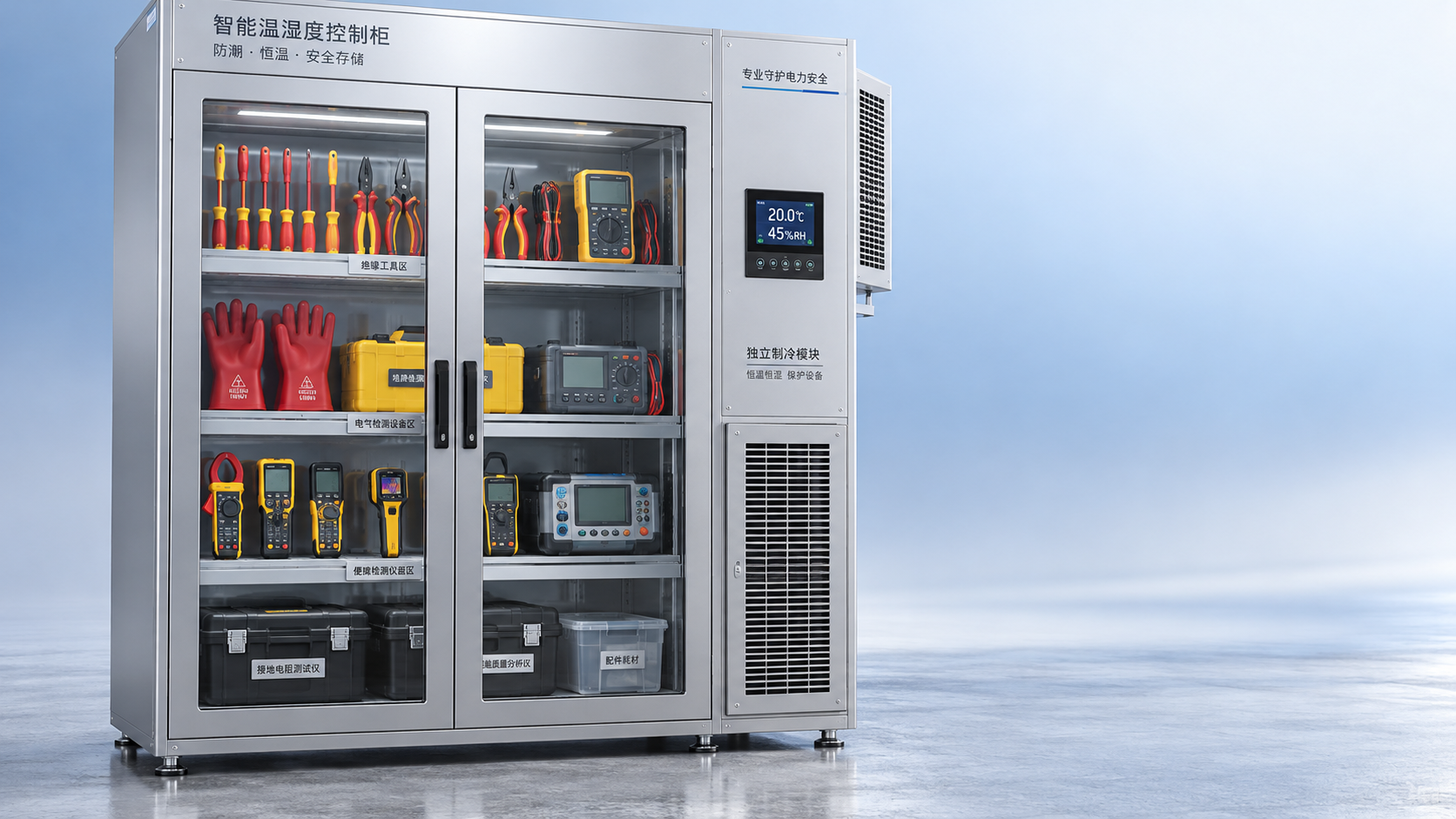
A well-planned cabinet uses compartmentalization to make the correct action easier than the incorrect one. Hanging arrangements may be appropriate for certain garments and harnesses. Shallow drawers or trays can protect small accessories. Separate shelves can distinguish clean, inspected equipment from returned equipment awaiting evaluation. Longer compartments may be needed for insulated rods or rescue poles, while small controlled sections may be used for lockout/tagout kits and permits.
Not every cabinet requires every feature. The correct arrangement depends on the equipment list, the number of users, the frequency of issue, and the physical constraints of the site. The essential point is that the internal layout should be designed around the condition and handling requirements of the stored items, not around the maximum number of doors that can fit into a wall.
Protection from the environment matters as much as theft prevention
Steel construction alone does not guarantee a suitable storage environment. In many utility and industrial settings, cabinets are installed near entrances, vehicle bays, process areas, or outdoor work zones where dust, humidity, temperature variation, and contamination are common.
For electrical protective equipment, poor storage conditions can create risks that are not immediately visible. Rubber insulating equipment may be affected by oils, solvents, ozone-generating sources, excessive heat, direct sunlight, and physical damage. Textile-based PPE can accumulate moisture, dust, or chemical residues. Electronic test devices may require protection from impacts and conditions outside their specified storage range.
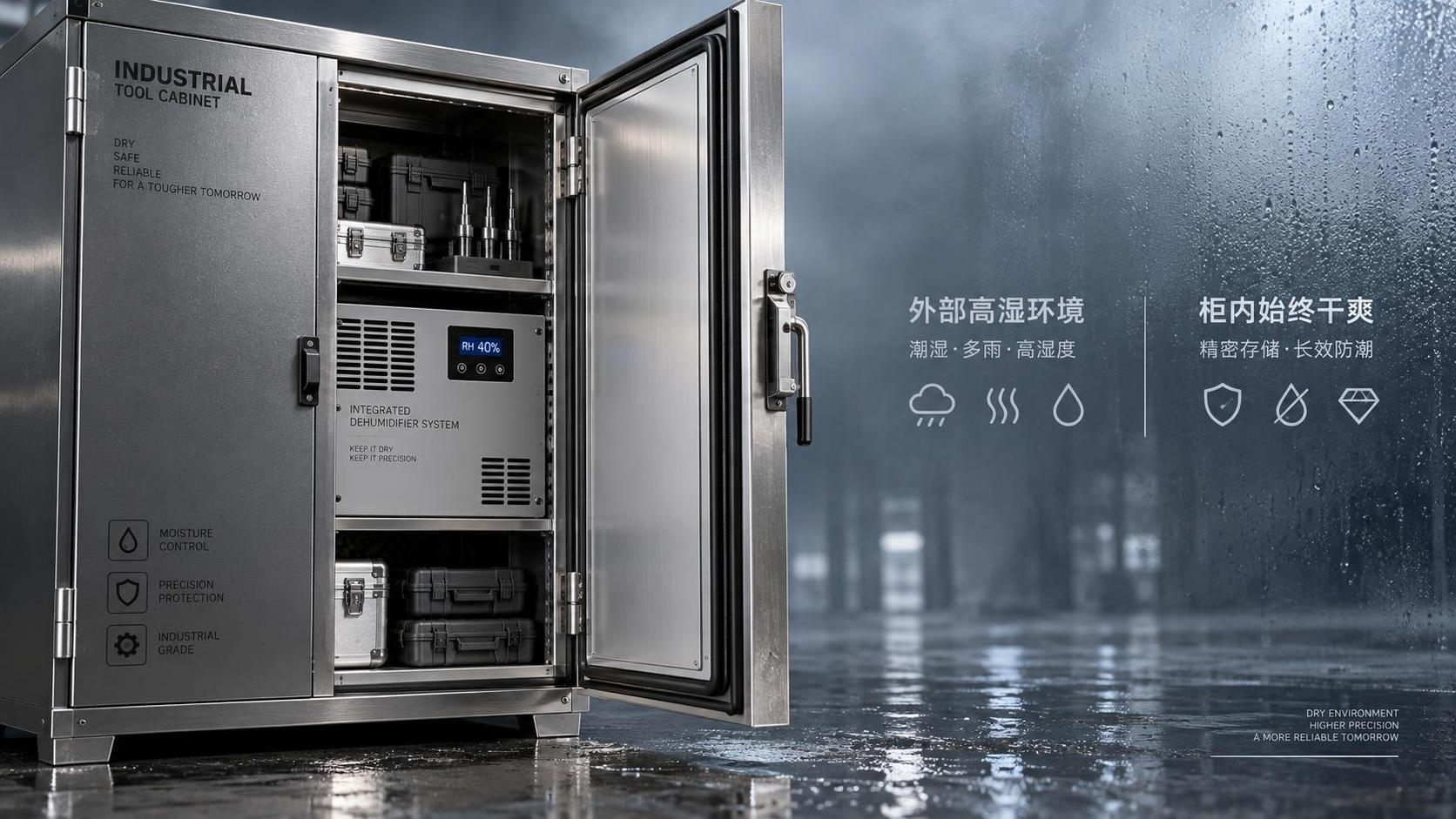
A safety cabinet may therefore include features such as raised bases, practical ventilation, sealed or enclosed sections where appropriate, corrosion-resistant finishes, smooth internal surfaces, and arrangements that keep equipment off the floor. Whether ventilation is beneficial depends on what is stored and on the surrounding environment. More ventilation is not always better if the cabinet sits in a dusty or chemically contaminated location. The selection should follow the equipment manufacturer’s storage instructions and the site’s exposure assessment.
In humid coastal areas, outdoor-adjacent substations, and industrial plants with airborne contaminants, the cabinet’s finish, hinges, door fit, and base construction deserve closer attention than they might in a clean indoor maintenance room. A cabinet that looks acceptable at delivery may corrode quickly or become difficult to operate if its environmental suitability has not been assessed.
Inspection status is often the overlooked difference
Electrical safety equipment has a service life that depends on condition, inspection, testing, cleaning, and correct use. Storage should support that control system rather than undermine it.
A common failure occurs when equipment that has just returned from field work is placed back with equipment that has been inspected and cleared for use. No one may know whether the returned item was exposed to moisture, dropped, contaminated, or used in a way that requires follow-up inspection. At the next job, a worker may select it simply because it is available.
Purpose-designed storage makes it easier to establish clear status zones. Examples include:
- Ready for use: equipment that has passed the required inspection or test interval and is clean, complete, and available.
- Returned for inspection: equipment removed from routine issue until its condition is confirmed.
- Quarantine: damaged, expired, suspect, or incomplete equipment that must not be used.
- Repair or replacement: items awaiting an approved disposition.
This does not require an elaborate digital system. Clear labels, color coding, inspection tags, and disciplined cabinet allocation can be highly effective. Digital asset systems, barcode records, or RFID identification may add value on large sites, but they cannot compensate for a cabinet layout that allows status categories to be mixed physically.
Applicable requirements vary by country, equipment type, and work practice. In the United States, OSHA provisions require personal protective equipment to be maintained in a sanitary and reliable condition, while electrical protective equipment is subject to specific rules under 29 CFR 1910.137. ASTM and IEC documents also address product-specific requirements for certain electrical protective equipment. However, organizations should not assume that a cabinet itself is “certified” merely because it is sold for safety use. The relevant question is whether the complete storage arrangement supports the applicable equipment instructions, inspection regime, and local safety rules.
When a regular steel locker may be sufficient
A regular locker is not inherently unsuitable. It can be a practical and economical solution when the stored contents are personal, low-risk, and unlikely to be damaged by ordinary storage. Examples may include personal work clothing, basic helmets, gloves not requiring specialized storage control, manuals, or individually assigned PPE in a clean and well-managed facility.
It may also be used as one component of a broader arrangement. For example, workers may keep personal clothing and routine items in individual lockers, while shared electrical protective equipment, rescue equipment, grounding sets, and test devices are held in a centralized, controlled cabinet.
The locker becomes a weak choice when it is used as a catch-all enclosure for high-value or safety-critical equipment without clear internal organization. Warning signs on the outside do not solve the problem if the interior still permits equipment to be stacked, mixed, or damaged.
When a dedicated safety equipment cabinet is justified
A dedicated cabinet is usually the more defensible choice where equipment failure could contribute directly to electrical shock, arc-flash injury, failed isolation, delayed rescue, or an inability to begin work safely. The case is especially strong when equipment is shared among shifts, used across multiple work areas, subject to formal inspection intervals, or needed during emergency response.
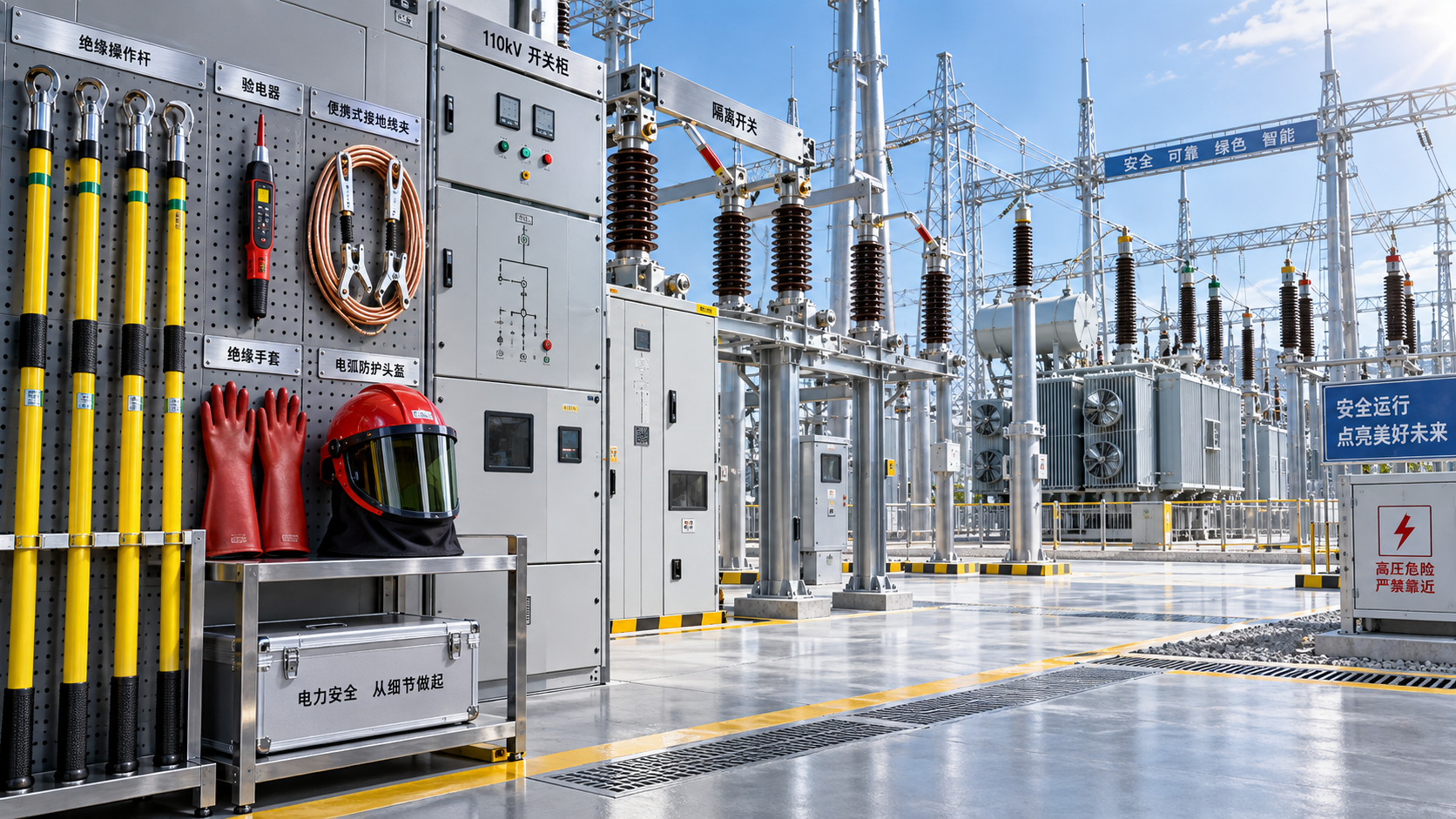
Typical examples include substation control rooms, electrical switchgear areas, wind and solar maintenance facilities, utility service centers, heavy industrial plants, rail traction power installations, and contractor staging locations. In these settings, the cabinet is not just a storage expense. It reduces time spent searching for equipment, helps prevent unauthorized removal, improves auditability, and makes missing or damaged items easier to identify before a task begins.
The economic rationale is usually based on avoided disruption rather than the purchase price alone. A lower-cost locker can become expensive if it contributes to damaged equipment, failed inspections, repeated replacement purchases, delayed work permits, or confusion during an emergency. Conversely, an oversized, highly customized cabinet is not automatically better if the site has a small equipment inventory and no disciplined inspection process. The cabinet must fit the operating model.
Questions to ask before specifying either option
Procurement decisions improve when the specification starts with the equipment inventory rather than with a generic cabinet description. A useful review should answer the following questions:
- What specific equipment will be stored, and what are its manufacturer-recommended storage conditions?
- Which items must remain separated to prevent damage, contamination, or status confusion?
- Are any items too long, too heavy, or too sensitive for a standard locker compartment?
- Will equipment be individually assigned or shared across teams and shifts?
- How will inspected, returned, and quarantined items be physically separated?
- Is the location clean, dry, climate-controlled, dusty, corrosive, or exposed to frequent temperature changes?
- Who needs access, and should access be individual, departmental, or restricted to authorized custodians?
- What labels, inspection records, or asset identification methods must be visible at the point of storage?
- Does the cabinet need anchoring, a raised plinth, movable casters, or seismic restraint under local site requirements?
- Can the supplier provide material details, load ratings, dimensions, finish specifications, and replacement-part support?
For cross-border sourcing, it is also worth clarifying terminology early. “Safety cabinet” can mean a flammable-liquid cabinet, chemical storage cabinet, PPE cabinet, electrical tool cabinet, or emergency equipment cabinet depending on the market. A purchase order should describe the intended contents, internal configuration, environmental conditions, locking arrangement, labeling, and installation requirements. Relying on the product name alone creates room for costly interpretation differences.
The practical distinction
A steel locker answers the question, “Where can this item be locked away?” A safety equipment storage cabinet answers a more demanding question: “How can this item remain protected, identifiable, properly controlled, and ready for safe use?”
For general personal storage, a standard locker may be entirely adequate. For electrical protective tools and equipment that require controlled handling, inspection discipline, and protection from avoidable damage, a dedicated safety equipment cabinet is usually the more appropriate system. The right choice is determined not by appearance or metal gauge alone, but by the consequences of equipment being misplaced, contaminated, damaged, or returned to service without proper control.
Recommend
 Oct 25, 2026
Homemade Bird Repellent Spray: Recipe Limits and Outdoor Surface Risks
Searching for how to make homemade bird repellent spray? Discover recipe limits, outdoor surface risks, electrical safety tips, and safer deterrents before you spray.
- Oct 25, 2026
Natural Bird Deterrents for Rooftops: Choosing Nonchemical Options
Learn how to repel birds naturally with humane rooftop barriers and smarter maintenance. Compare nonchemical options to protect electrical equipment and keep roof access clear.
- Oct 24, 2026
Home Remedies for Repelling Birds: What to Try on Patios and Railings
Learn how to repel birds with home remedies for cleaner patios and railings. Discover humane DIY options, avoid harmful sprays, and keep deterrents clear of electrical equipment.