English
 Español
 Português
 Français
 Deutsch
 русский
 한국어
 にほんご
 हिन्दी, हिंदी
 বাংলা
 Bahasa Indonesia
 Türkçe
 Việt
 dansk
 čeština
 עִבְרִית Ivrit
 Filipino/Pilipino
 български език (Bǎlgarski jazik)
 suomi
 norsk
 język polski
 ไทย
 ກະຣຸນາ
 Bahasa Melayu
 ភាសាខ្មែរ
 ဗာရမ်
 اردو
 فارسی
 Italiano
 Nederlands
 svenska
 Монгол хэл
 नेपाली
 සිංහල
 Ўзбек тили
 پښتوتۆرکجه
 Ελληνικά
 српски / srpski
 magyar
 українська
 Kiswahili
 Қазақ тілі
 Română
 Hrvatski
 Bosanski
 Kreyòl ayisyen
 አማርኛ
 Hausa
 Yorùbá
 Igbo
Voltage Detector Storage Between Jobs: Cases, Moisture, and Battery Care
Voltage Detector Storage Between Jobs: Cases, Moisture, and Battery Care
Where does your voltage detector go when the job is done—into a protective case or loose in a damp tool bag? Proper voltage detector storage helps protect the housing, sensing components, and batteries from damage between jobs. For operators working in substations, utilities, and industrial maintenance, a few practical habits can reduce avoidable wear and keep equipment ready for its next required inspection and function check.
The challenge is not simply finding somewhere dry to put it. A detector may come back from an outdoor switchyard wet, spend the night in a cold vehicle, and then enter a warm maintenance room. Its case can protect it from impact while also trapping moisture. Its batteries may power the next shift reliably—or leak during an extended shutdown. Storage needs to account for those differences without becoming a substitute for pre-use safety checks.
Start with the detector you actually use
“Voltage detector” covers equipment with different sensing methods, voltage ranges, and maintenance requirements. A pocket non-contact detector, a two-pole tester, and a high-voltage detector used with an insulating pole should not automatically share the same storage procedure. Some have replaceable batteries; others use rechargeable packs or require no battery for their primary indication.
Before deciding on a case or battery routine, check the instructions for the exact model. Look for storage temperature and humidity limits, cleaning methods, battery specifications, and any inspection or periodic testing requirements. Operating limits and storage limits may differ. An ingress-protection rating does not mean that wet equipment can safely remain sealed in a case indefinitely.
For high-voltage equipment, consider the detector head, approved connection fittings, and insulating pole as a complete equipment set where applicable. Protecting the electronics while leaving the pole exposed to dirt, abrasion, or unsuitable storage conditions leaves part of the problem unresolved.
Choose a case that protects without creating new damage
The manufacturer-supplied case is usually the starting point because its layout is intended for that equipment. If a replacement is needed, check compatibility rather than choosing by external dimensions alone. The detector should remain secure during transport without pressure on its sensing end, switches, display, battery cover, or connectors.
A hard case makes sense when equipment travels in a service vehicle, shares space with heavy tools, or moves between sites. A padded pouch may be adequate for a compact detector carried inside a clean, protected compartment. Neither option is suitable if the instrument can move freely inside it or if other tools can strike it.
- Check that the lid closes without forcing the instrument into its insert or holding a button down.
- Keep leads and accessories separated from sensing surfaces; avoid tight bends at cable exits.
- Use clean cushioning compatible with the equipment, and replace inserts that crumble, retain moisture, or no longer hold it securely.
- For sectional poles, protect threads and fittings and follow the prescribed support arrangement rather than forcing sections into a short case.
Inspect the case itself. Broken latches, damaged seals, dirty interiors, and loose inserts can defeat otherwise careful handling. Loose metal accessories should not share an unprotected compartment with battery terminals or delicate components. A closed case also needs a secure place in the vehicle: it should not slide around beneath heavier equipment.
Moisture control begins before the lid closes
One avoidable mistake is returning a wet detector to its case immediately after use. Water on the housing, damp foam, and wet gloves left beside the instrument can create a humid enclosure. A sealed case may exclude outside rain while retaining moisture already inside.
After the equipment has been safely removed from service, clean and dry it using the manufacturer’s method. Typically, this involves a suitable cloth and an approved cleaning process, but solvents, sprays, or immersion should not be assumed acceptable. Cleaning requirements for insulating surfaces deserve particular attention because contamination can affect their electrical performance.
Allow the instrument and case interior to dry in a clean location within the specified environmental limits. Do not use a heat gun, place the detector on a heater, or open sealed sections to accelerate drying. Excessive heat can damage plastics, seals, electronics, or batteries. If water may have entered the housing, surface drying alone is not evidence that the detector is serviceable.
Condensation also matters. Moving cold equipment into warm, humid air can leave moisture on surfaces even when no rain was involved. Allow it to reach suitable conditions and inspect it before use, following the manufacturer’s guidance. Do not assume a normal indicator response rules out moisture damage.
Where desiccant helps—and where it does not
Where permitted, a contained desiccant pack can help manage residual humidity in a dry case. It cannot replace drying wet equipment or repair a damaged seal. Keep it away from electrical contacts and moving parts, and replace or regenerate it according to the pack supplier’s instructions. Saturated desiccant may offer little protection.
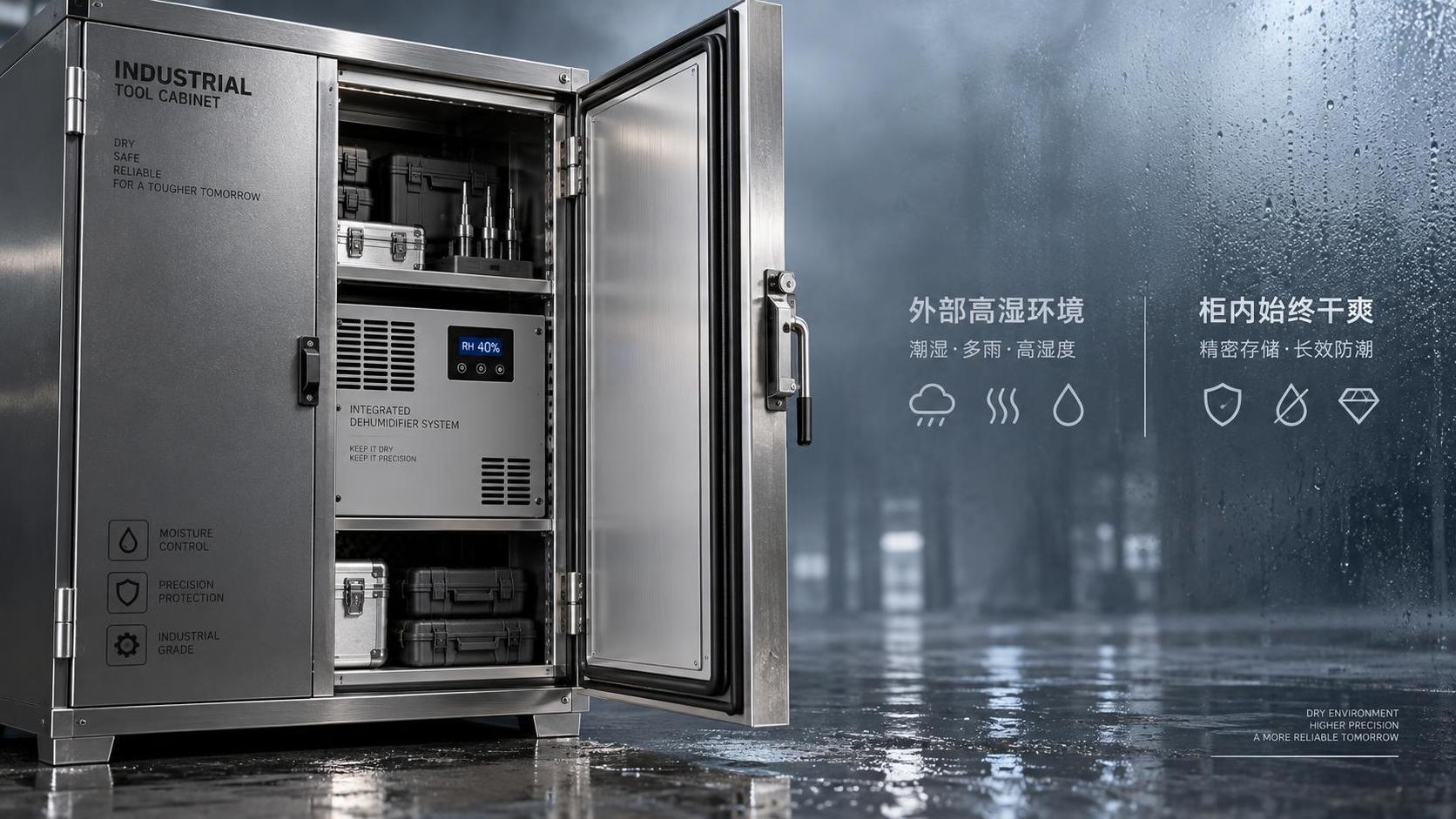
For a shared equipment cabinet, humidity monitoring can help identify unsuitable conditions. Any action threshold should come from the equipment’s storage requirements, not an arbitrary workshop target. Keep the cabinet away from washdown areas, persistent condensation, and contaminated work surfaces.
Battery care depends on chemistry and time between jobs
There is no universal rule to remove every battery after every shift. For equipment used daily, frequent removal may be unnecessary and can increase wear on covers or seals. For extended storage, removable batteries may need to be taken out to reduce leakage risk. The model’s instructions should define the approach; do not invent a fixed interval for every detector.
Use the specified battery type, size, and chemistry. Where multiple cells are used, avoid mixing old and new batteries or different types. A rechargeable cell is not automatically a suitable replacement for a disposable one, even if it fits, because its electrical characteristics may differ.
For rechargeable equipment, follow the approved charger and storage-charge guidance. Neither fully charged nor nearly empty is a universal long-term storage recommendation. Disconnect charging equipment when instructed, and do not treat an unattended charging shelf as a permanent storage solution unless that arrangement is explicitly supported.
Check accessible battery compartments for leakage, corrosion, loose contacts, and damaged covers. If leakage is found, remove the detector from service and follow the manufacturer’s handling and repair instructions. Simply installing fresh batteries does not resolve contamination or damaged contacts. Do not use or recharge a swollen or otherwise damaged rechargeable pack.
Store spare batteries in protected packaging so their terminals cannot contact loose metal. Record battery replacement when useful for shared equipment, but do not equate a recent replacement with confirmed detector performance. Battery condition is only one part of readiness.
Make the handover distinguish stored from ready
Shared equipment creates a specific risk: the next operator may assume that a detector inside its case has already been checked. A simple status system is more useful than a lengthy form nobody completes. Identify the instrument, record defects or unusual exposure, and clearly separate serviceable equipment from items awaiting inspection or repair.
After a drop, suspected water ingress, or significant contamination, do not quietly return the detector to the available-equipment shelf. Quarantine it under the site procedure and obtain the assessment required by the manufacturer. The same applies when a function check fails or gives an uncertain result.
Storage should also preserve identification labels, voltage-range markings, and inspection records. If markings become unreadable, an operator may be unable to confirm suitability. For periodic inspections or tests, follow the applicable manufacturer instructions, site rules, and local requirements; storage does not pause those obligations.
Before the next job, verify—not assume
Good voltage detector storage reduces avoidable damage. It does not establish that equipment is safe to use or that a circuit is de-energized. Before use, inspect the detector and applicable accessories, confirm the correct voltage range and application, and complete the prescribed function check using a suitable proving method.
Where the safe-working procedure requires proving before and after testing, complete both checks. A built-in self-test may verify only certain functions; it should not be assumed to replace the manufacturer’s required proving procedure. Likewise, a general-purpose non-contact detector should not be treated as sufficient proof of absence of voltage unless explicitly suitable for that task under the applicable procedure.
For equipment teams reviewing storage arrangements, useful supplier questions are specific: Which case suits this model? What cleaning products are permitted? What are the storage limits? How should its batteries be managed during shutdowns? What action is required after impact or suspected moisture ingress?
Founded in 2009, Hebei Jinneng Power Technology Co., Ltd. specializes in electrical safety equipment for the power industry under the JINPOWER brand, combining research and development, manufacturing, quality control, and customer service. That specialization is relevant when operators need model-specific care guidance rather than generic storage advice. Request instructions for the exact detector and accessory combination in service.
At the end of the shift, leave the detector clean, dry, protected, and clearly identified. At the start of the next one, inspect and prove it as required. A well-kept case supports readiness; it never replaces verification.
Recommend
 Oct 25, 2026
Homemade Bird Repellent Spray: Recipe Limits and Outdoor Surface Risks
Searching for how to make homemade bird repellent spray? Discover recipe limits, outdoor surface risks, electrical safety tips, and safer deterrents before you spray.
- Oct 25, 2026
Natural Bird Deterrents for Rooftops: Choosing Nonchemical Options
Learn how to repel birds naturally with humane rooftop barriers and smarter maintenance. Compare nonchemical options to protect electrical equipment and keep roof access clear.
- Oct 24, 2026
Home Remedies for Repelling Birds: What to Try on Patios and Railings
Learn how to repel birds with home remedies for cleaner patios and railings. Discover humane DIY options, avoid harmful sprays, and keep deterrents clear of electrical equipment.