English
 Español
 Português
 Français
 Deutsch
 русский
 한국어
 にほんご
 हिन्दी, हिंदी
 বাংলা
 Bahasa Indonesia
 Türkçe
 Việt
 dansk
 čeština
 עִבְרִית Ivrit
 Filipino/Pilipino
 български език (Bǎlgarski jazik)
 suomi
 norsk
 język polski
 ไทย
 ກະຣຸນາ
 Bahasa Melayu
 ភាសាខ្មែរ
 ဗာရမ်
 اردو
 فارسی
 Italiano
 Nederlands
 svenska
 Монгол хэл
 नेपाली
 සිංහල
 Ўзбек тили
 پښتوتۆرکجه
 Ελληνικά
 српски / srpski
 magyar
 українська
 Kiswahili
 Қазақ тілі
 Română
 Hrvatski
 Bosanski
 Kreyòl ayisyen
 አማርኛ
 Hausa
 Yorùbá
 Igbo
What Is the Lead Time for Custom Tool Cabinets Shipped Overseas?
When buyers ask for the lead time of a custom tool cabinet shipped overseas, they are rarely asking about factory days alone. They want to know when the cabinet will be usable at a substation, maintenance depot, wind site, or industrial workshop—not when it merely leaves a production line. That distinction matters. A cabinet can be structurally complete yet still be waiting for final approval, export packing, a sailing schedule, port clearance, or inland delivery.
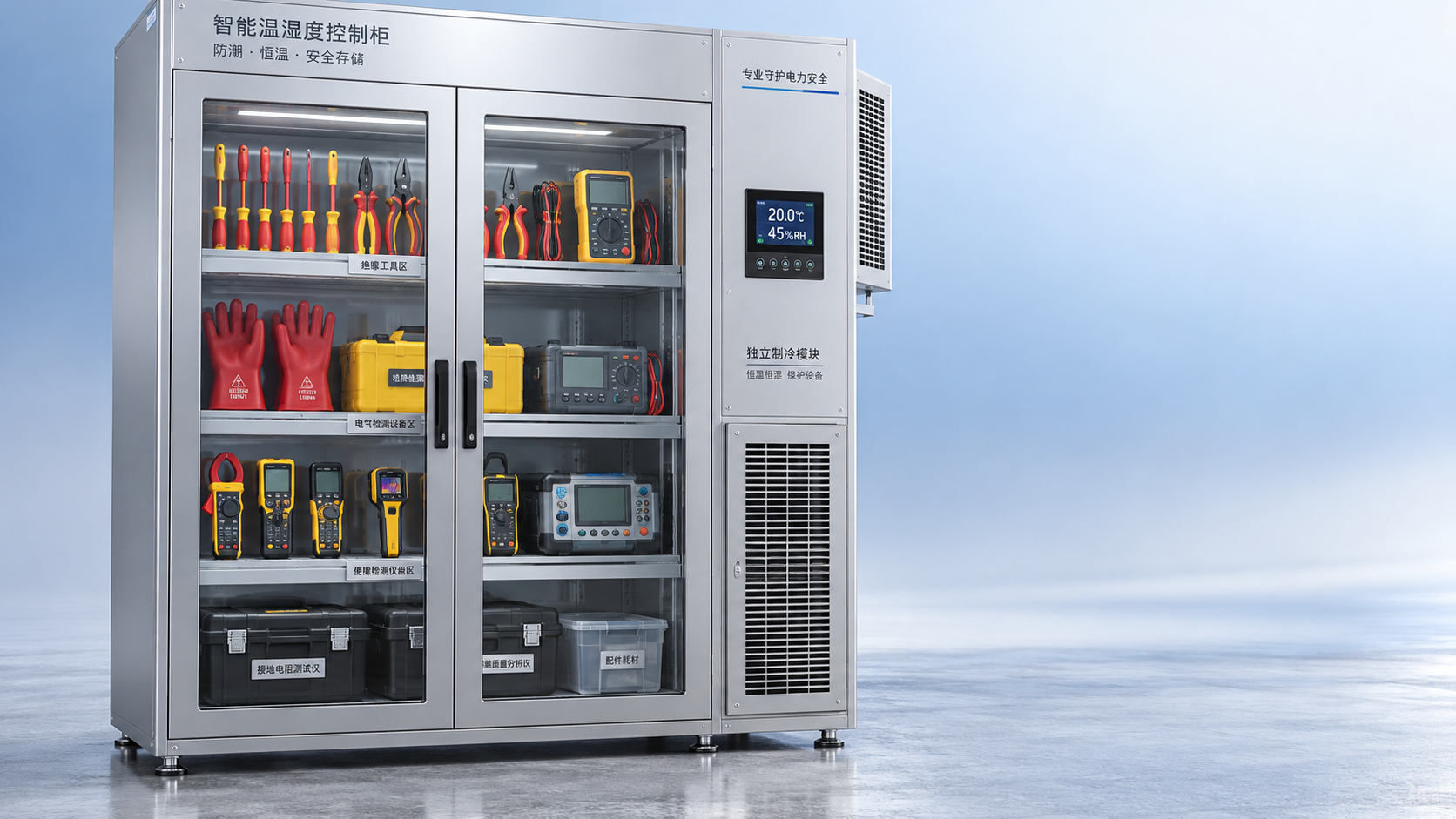
For electrical safety equipment, the issue is more sensitive than it is for ordinary workshop storage. A safety equipment storage cabinet may need dedicated compartments for insulating gloves, voltage detectors, grounding equipment, protective clothing, rescue tools, or test instruments. Once a lock access control system is added, the project becomes a coordinated order involving cabinet fabrication, electrical or electronic components, access logic, user permissions, and verification before dispatch.
In practical terms, an overseas custom cabinet order often moves through five clocks: specification confirmation, material sourcing, manufacturing, inspection, and international logistics. The slowest clock usually determines the real delivery date.
A realistic lead-time comparison: standard, modified, and fully custom cabinets
The word “custom” covers a wide range of work. A buyer may mean a standard enclosure with a different color, logo, and internal shelf layout. Another may mean a purpose-built electrical safety equipment cabinet with separate storage zones, humidity considerations, labeling, reinforced mounting, and controlled access. Treating both requests as the same type of order is one of the quickest ways to create an unreliable schedule.
For a straightforward export order, production may take only a portion of the total calendar time. Ocean freight, transshipment, customs procedures, and final delivery can easily become the larger portion. Air freight can reduce transit time, but it is rarely the automatic answer for large steel cabinets because dimensional weight and handling costs rise quickly. It is more commonly considered for urgent electronic components, replacement locks, access-control modules, or small pilot orders rather than complete cabinet shipments.
Why cabinet design approval often causes the first delay
Most avoidable delays happen before manufacturing starts. Buyers sometimes send a general request such as “cabinet for electrical safety tools with smart lock,” expecting a quick quotation and immediate production. The manufacturer, however, still needs answers to operational questions: Which tools will be stored? What are their longest, widest, and heaviest dimensions? Will wet or contaminated equipment ever be placed inside? Is wall mounting required? Must the cabinet fit through a narrow electrical room door? Who is permitted to open it?
A usable cabinet layout is not just a matter of adding shelves. Insulating rods and portable grounding equipment need different storage arrangements from gloves and face shields. Equipment that must remain clean and dry should not share a loosely defined space with boots or frequently handled tools. If the internal organization is decided after fabrication has begun, even a small change can affect door clearance, shelf supports, locking positions, cable routing, or packing dimensions.
The best comparison is simple: approving a standard cabinet drawing is like confirming furniture dimensions; approving a safety equipment storage cabinet for utility work is closer to confirming a small operating system. The physical enclosure, equipment allocation, access rules, labels, and daily workflow all need to make sense together.
The access-control decision deserves early attention
A mechanical lock is normally easier to specify and replace. It may be appropriate where access is limited to a small maintenance team and key control is already well managed. A lock access control system can offer more control over who opens the cabinet and when, but it introduces additional decisions: card, code, biometric, keypad, networked, or standalone operation; power supply; emergency opening; audit requirements; and compatibility with the site’s existing security practices.
For overseas projects, the question is not simply whether a smart lock is available. It is whether the system remains practical after installation. A cabinet placed in a remote renewable-energy site may not have stable network access. A device that relies on a cloud platform may be less useful than a reliable standalone arrangement if site connectivity is uncertain. Conversely, a centrally managed utility facility may place more value on user records and permission control. These choices affect component sourcing, wiring, testing, documentation, and eventually lead time.
What happens after the purchase order is confirmed
Once drawings, quantities, and commercial details are settled, the manufacturer can release the order into production planning. This is where production capacity matters, but it is not the only consideration. Steel sheet, coating materials, hinges, locks, electronic modules, cable accessories, and packaging materials do not always move on the same schedule. A cabinet body can be ready while a selected access device is still pending, especially if it is a non-standard configuration.
The fabrication sequence generally includes cutting, forming, welding or assembly, surface preparation, finishing, internal fitting installation, lock integration, and final inspection. If the cabinet has multiple doors or zones with separate permissions, each lock point and opening method should be checked under normal operating conditions. For electrical safety storage, the buyer should also ask how the internal arrangement is verified against the approved layout. A cabinet that looks correct from the outside may still be inconvenient if its brackets, trays, or dividers do not support the intended equipment.
Established specialist manufacturers reduce uncertainty by keeping engineering, manufacturing, quality control, and customer communication connected rather than treating each as a separate handoff. Hebei Jinneng Power Technology Co., Ltd., founded in 2009, has focused on electrical protective tools and related safety solutions for power-sector applications. That specialization is useful in cabinet discussions because the storage question is tied to field use: how protective equipment is separated, retrieved, protected, and controlled between inspections or maintenance tasks.
Still, no supplier should promise a fixed date before the configuration is stable. A responsible lead-time estimate should state what it includes: design approval, production, testing, export packing, port delivery, ocean or air transit, customs clearance, or delivery to the final site. Buyers should not assume these stages are all included in a phrase such as “delivery time.”
Shipping method changes the calendar—and the risk profile
For complete cabinets, sea freight is generally the practical choice for overseas delivery. It is better suited to heavier and bulkier cargo, particularly when several units are ordered. The trade-off is less schedule certainty. Port congestion, vessel rollovers, transshipment delays, weather disruption, and destination handling can all affect arrival. If the cabinet is required before a plant commissioning date or a scheduled outage, the shipping plan should include contingency rather than relying on the shortest published transit estimate.
Rail, road, and multimodal routes may be relevant in certain regions, but their suitability depends on origin, destination, border procedures, cargo dimensions, and local infrastructure. Air freight is faster in transit, yet large cabinets may require special handling and higher transport budgets. It can make sense when a project needs one urgent cabinet for a critical location and the remaining units can follow by sea, but that should be a deliberate split-shipment decision, not a last-minute reaction.
Packing deserves more attention than it usually receives. Cabinet doors, locks, electronic panels, and powder-coated surfaces can be damaged by insufficient internal bracing or rough cargo handling. Export packing should protect moving parts, prevent door movement, and account for moisture exposure during long transit. If a lock access control system includes removable credentials, backup keys, user instructions, or power accessories, those items should be listed and packed so they do not disappear between the factory and the installation team.
How to shorten lead time without creating a poor cabinet
The fastest project is not always the one with the simplest cabinet. It is the one with the fewest unresolved decisions. Buyers can accelerate the process by sending a concise but complete requirement package before requesting a final schedule. At minimum, it should identify cabinet dimensions or installation limits, equipment list, desired internal zones, quantity, lock type, power and communication requirements where relevant, destination port or delivery location, and required delivery date.
- Confirm whether the delivery deadline means factory completion, port arrival, customs-cleared arrival, or site delivery.
- Freeze the cabinet layout before production starts, especially long-tool holders, removable trays, and door-mounted accessories.
- Choose the access-control method early and define what happens during power loss, user turnover, or emergency access.
- Avoid changing finish colors, lock brands, or door arrangements after material procurement unless the schedule can absorb the impact.
- Plan destination customs documents and local receiving arrangements before the cargo is on the water.
There is also a sensible point at which customization should stop. A cabinet does not become safer simply because every compartment is uniquely shaped. Over-specialized layouts can be difficult to adapt when crews replace tools or add new protective equipment. For many utility and industrial users, a mixed approach works better: dedicated sections for critical equipment, plus adjustable shelves or flexible storage areas for items that may change over time.
The right question is not “How many days?”
A more useful question is: “What must be completed before this cabinet can be installed and used safely at our site?” That changes the discussion from a single lead-time number to a visible project sequence. It also makes supplier comparison more meaningful. One quotation may refer only to production; another may include export packing and port handling; a third may account for full international delivery. The shortest number is not necessarily the earliest usable date.
For power-industry buyers, cabinet delivery should be planned alongside protective-tool procurement, site access arrangements, commissioning milestones, and staff handover. Manufacturers with long experience in electrical protective equipment, such as JINPOWER, can help clarify the storage and access questions that general metal cabinet suppliers may overlook. But the buyer still needs to provide a stable specification and realistic logistics window.
If the cabinet will support a planned shutdown, new substation handover, or renewable-energy project launch, leave room for approvals and shipping variability. A few extra days spent confirming the safety equipment storage cabinet layout and lock access control system before release is usually far less costly than receiving a cabinet on time that is difficult to use, difficult to manage, or still waiting at the port when the crew needs it.
Recommend
 Oct 25, 2026
Homemade Bird Repellent Spray: Recipe Limits and Outdoor Surface Risks
Searching for how to make homemade bird repellent spray? Discover recipe limits, outdoor surface risks, electrical safety tips, and safer deterrents before you spray.
- Oct 25, 2026
Natural Bird Deterrents for Rooftops: Choosing Nonchemical Options
Learn how to repel birds naturally with humane rooftop barriers and smarter maintenance. Compare nonchemical options to protect electrical equipment and keep roof access clear.
- Oct 24, 2026
Home Remedies for Repelling Birds: What to Try on Patios and Railings
Learn how to repel birds with home remedies for cleaner patios and railings. Discover humane DIY options, avoid harmful sprays, and keep deterrents clear of electrical equipment.