English
 Español
 Português
 Français
 Deutsch
 русский
 한국어
 にほんご
 हिन्दी, हिंदी
 বাংলা
 Bahasa Indonesia
 Türkçe
 Việt
 dansk
 čeština
 עִבְרִית Ivrit
 Filipino/Pilipino
 български език (Bǎlgarski jazik)
 suomi
 norsk
 język polski
 ไทย
 ກະຣຸນາ
 Bahasa Melayu
 ភាសាខ្មែរ
 ဗာရမ်
 اردو
 فارسی
 Italiano
 Nederlands
 svenska
 Монгол хэл
 नेपाली
 සිංහල
 Ўзбек тили
 پښتوتۆرکجه
 Ελληνικά
 српски / srpski
 magyar
 українська
 Kiswahili
 Қазақ тілі
 Română
 Hrvatski
 Bosanski
 Kreyòl ayisyen
 አማርኛ
 Hausa
 Yorùbá
 Igbo
What Warranty Period Do Manufacturers Offer for Custom Tool Cabinets?
What Warranty Period Do Manufacturers Offer for Custom Tool Cabinets?
What is the typical warranty period for custom tool cabinets from manufacturers? A cautious purchasing benchmark is one to three years for manufacturing defects, but this is not a universal industry standard. Some suppliers offer shorter coverage, while others advertise longer structural warranties. The period that matters is the one written into your quotation and purchase agreement, with the covered components clearly identified.
For utilities, substations, and industrial maintenance teams, warranty terms matter beyond the purchase price. They clarify who handles defects, how repairs are arranged, and whether a cabinet can remain in service while a replacement part is being sourced. Cabinet construction, locks, drawer slides, and electrical accessories may all receive different protection. Comparing the number of years alone misses much of the practical risk.
Treat the warranty period as a starting point, not the whole promise
There is no single warranty duration that applies to every custom tool cabinet. A welded steel cabinet for a dry indoor tool room is a different proposition from a mobile maintenance cabinet or a storage unit fitted with humidity controls. Even where the headline warranty is identical, the exclusions and repair obligations can be substantially different.
During early budgeting, a one-to-three-year allowance can help frame questions to suppliers. Do not treat that range as a verified market average or assume a particular manufacturer follows it. Ask each bidder to state its actual terms. Longer structural coverage may be available, but it should not be interpreted as equally long coverage for every moving part or electronic accessory.
“Lifetime warranty” deserves particular attention. It may refer to the expected product life, the original purchaser’s ownership, or selected components only. It may also exclude commercial applications or impose registration requirements. Unless those details are defined, the phrase tells a maintenance manager very little about what happens when a drawer stops opening.
A shorter warranty with clear remedies, available spare parts, and an accessible service contact can be more useful than a longer promise that leaves freight, labor, and fault assessment unresolved.
Which parts of the cabinet are actually covered?
A custom cabinet is an assembly, not a single component. The manufacturer may produce the enclosure while buying locks, slides, casters, controllers, or lighting from other suppliers. That distinction can affect both the warranty duration and the route for making a claim.
The cabinet body may be covered against defects in materials or workmanship, such as defective welds or incorrectly assembled doors. Drawer slides and hinges may have separate conditions linked to loading and use. Paint damage caused during handling is different from a coating defect present at delivery. Corrosion coverage, if offered, needs its own wording rather than an assumption that all rust is covered.
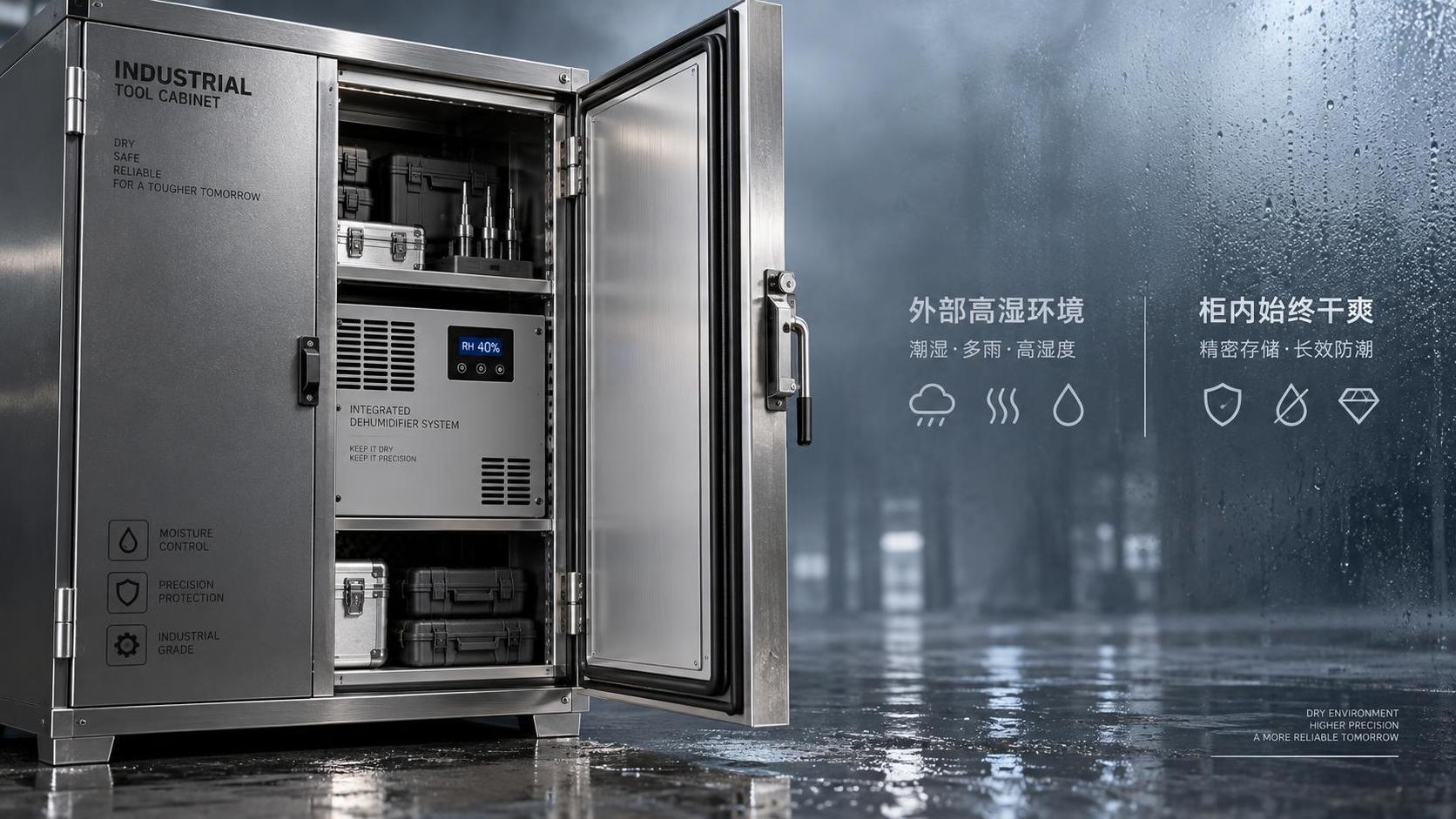
Electrical accessories introduce another layer. A dehumidifier, heater, electronic lock, or humidity controller may carry a component-specific warranty. Confirm whether the cabinet manufacturer handles the claim directly or expects the buyer to contact the accessory supplier. For overseas projects, that difference can determine whether support is straightforward or becomes a chain of unanswered referrals.
Ask for a component-level warranty schedule when the cabinet includes electrical equipment. It should identify the enclosure, mechanical hardware, electrical accessories, and any consumable items, together with the coverage period and available remedy for each. This is more useful than a brochure statement saying “full warranty included.”
Power-industry storage needs more than a furniture warranty
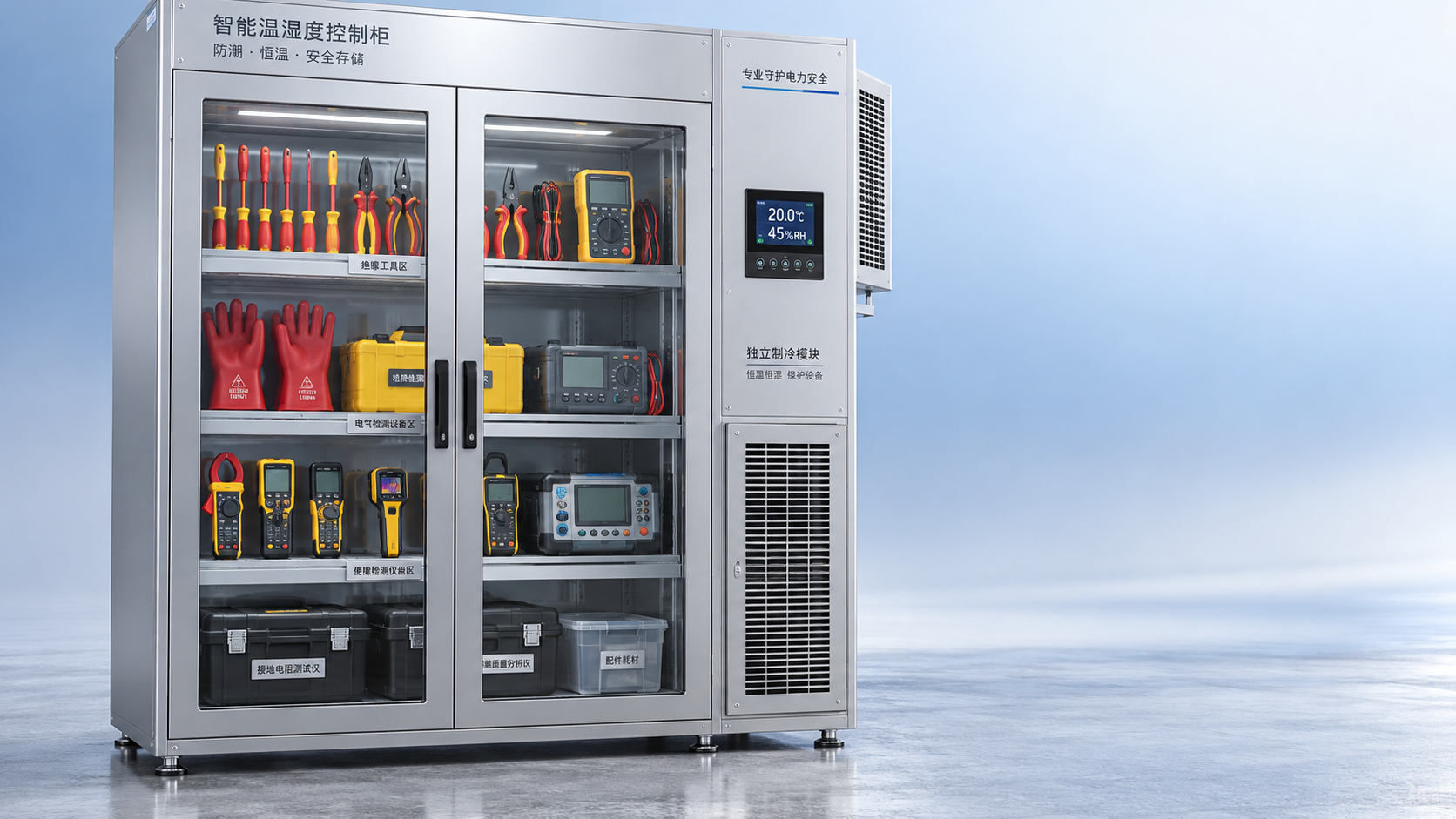
In an ordinary workshop, a cabinet mainly organizes tools. In a substation or utility maintenance facility, it may also help protect insulating gloves, operating rods, test instruments, and other safety equipment from unsuitable storage conditions. That makes the application specification important before warranty terms are discussed.
For example, a cabinet installed near an entrance may face condensation, dust, and temperature changes that an indoor office-style enclosure was never intended to handle. If moisture later appears inside, the cause could be a failed seal, unsuitable placement, incorrect controller settings, or a cabinet that was underspecified from the outset. Those possibilities lead to different warranty outcomes.
Record the expected installation environment and operating conditions in the order documents. Where controlled storage is required, specify the performance requirement and how it will be checked. An advertised “dry cabinet” description is not a substitute for an agreed operating range and acceptance procedure.
The cabinet warranty also does not certify that the tools stored inside remain safe to use. Protective equipment still requires inspection, testing, and storage in accordance with its own instructions and applicable requirements. If a storage-control fault occurs, affected tools should be assessed through the site’s safety procedures rather than returned to service simply because the cabinet has been repaired.
Custom specifications can decide whether a claim succeeds
Customization creates useful flexibility, but it also creates room for disagreement. A deeper drawer, unusual divider arrangement, or revised mounting position may alter how the cabinet carries loads. The approved drawing should therefore capture more than external dimensions and color.
For drawers, clarify the rated load, its distribution, and any restrictions when fully extended. A drawer filled with dense metal tools concentrated near the front is not necessarily equivalent to the same total weight spread evenly. Mobile cabinets need corresponding clarity about total load, floor conditions, and movement restrictions.
Consider a drawer that begins binding after installation. Possible causes include defective slides, an uneven cabinet base, overloading, or distortion caused by site modifications. An agreed specification and installation record make diagnosis easier. Without them, both sides may argue about “normal use” without having defined it.
Before fabrication, confirm responsibility for the following:
- Approved drawings, drawer loads, and the intended storage arrangement.
- Anchoring, leveling, electrical connection, and commissioning where applicable.
- Buyer-requested materials or accessories that differ from the manufacturer’s recommendation.
- Later drilling, welding, repainting, or retrofitting, including any required written approval.
A supplier should explain exclusions before production, not introduce them after a failure. Equally, buyers should not assume an undocumented site alteration leaves every part of the original warranty unaffected.
When does coverage begin—and who pays for the repair?
The start date is easy to overlook on projects with long shipping and commissioning schedules. Coverage might begin at shipment, delivery, installation, or signed acceptance. If a cabinet spends months in storage before the facility opens, a shipment-based warranty can lose useful service time before the cabinet is used.
Where commissioning will be delayed, discuss the start date before placing the order. The manufacturer may require suitable storage conditions or place a limit on delayed activation. Whatever is agreed should appear in the contract, not only in an informal message.
Next, separate a free replacement part from a free repair. Warranty coverage may provide a lock or slide without paying for technician labor, travel, removal, reinstallation, or freight. Returning a complete steel cabinet internationally is rarely an attractive first option, so ask whether approved local repair or replacement modules are possible.
Transport damage needs separate handling too. A cabinet dented in transit is not automatically a manufacturing defect. Photograph the packaging and cabinet on arrival, record visible damage, and follow the relevant delivery and insurance procedures promptly. Keeping delivery records separate from later operating-fault records helps avoid confusion over responsibility.
Compare after-sales arrangements before comparing warranty years
A useful warranty comparison asks what happens on the day something fails. Is there a named contact? What evidence is required? Can the manufacturer identify the correct replacement from the serial number and approved drawing? Will compatible locks and slides remain available after warranty coverage ends?
For remote substations, access to spare parts can matter as much as the formal warranty. A replaceable component that can be changed by an authorized local technician may reduce disruption compared with an assembly that must return to the factory. However, get approval before attempting a repair where the warranty requires it, especially for electrical accessories.
Manufacturing background is relevant, but it is not a substitute for product-specific terms. Founded in 2009, Hebei Jinneng Power Technology Co., Ltd., known as JINPOWER, specializes in electrical safety equipment for power-industry applications, including substations, utilities, renewable energy projects, and industrial maintenance. Its integrated R&D, manufacturing, quality-control, and customer-service structure is relevant to questions about design responsibility and fault support.
That background does not establish a warranty duration for a particular custom cabinet. Buyers should request the applicable written warranty, approved configuration, and service procedure from JINPOWER—or any other shortlisted manufacturer—rather than infer coverage from company experience or general product claims.
What to settle before releasing the purchase order
The most useful comparison is not “two years versus three years.” It is whether the proposed warranty matches the cabinet’s actual duties and gives a workable remedy when a covered defect occurs.
Before approval, obtain a written statement covering duration, start date, component exclusions, labor and freight responsibility, claim documentation, and the treatment of replacement parts. Confirm whether a replacement receives a new coverage period or only the remainder of the original warranty. Keep these terms with the drawings and acceptance records.
If a supplier offers a long warranty but cannot explain how a failed lock, drawer slide, or humidity controller will be handled, clarify that gap before ordering. For a cabinet supporting electrical maintenance, a specific, usable service commitment is worth more than an impressive number of years.
Recommend
 Oct 25, 2026
Homemade Bird Repellent Spray: Recipe Limits and Outdoor Surface Risks
Searching for how to make homemade bird repellent spray? Discover recipe limits, outdoor surface risks, electrical safety tips, and safer deterrents before you spray.
- Oct 25, 2026
Natural Bird Deterrents for Rooftops: Choosing Nonchemical Options
Learn how to repel birds naturally with humane rooftop barriers and smarter maintenance. Compare nonchemical options to protect electrical equipment and keep roof access clear.
- Oct 24, 2026
Home Remedies for Repelling Birds: What to Try on Patios and Railings
Learn how to repel birds with home remedies for cleaner patios and railings. Discover humane DIY options, avoid harmful sprays, and keep deterrents clear of electrical equipment.