English
 Español
 Português
 Français
 Deutsch
 русский
 한국어
 にほんご
 हिन्दी, हिंदी
 বাংলা
 Bahasa Indonesia
 Türkçe
 Việt
 dansk
 čeština
 עִבְרִית Ivrit
 Filipino/Pilipino
 български език (Bǎlgarski jazik)
 suomi
 norsk
 język polski
 ไทย
 ກະຣຸນາ
 Bahasa Melayu
 ភាសាខ្មែរ
 ဗာရမ်
 اردو
 فارسی
 Italiano
 Nederlands
 svenska
 Монгол хэл
 नेपाली
 සිංහල
 Ўзбек тили
 پښتوتۆرکجه
 Ελληνικά
 српски / srpski
 magyar
 українська
 Kiswahili
 Қазақ тілі
 Română
 Hrvatski
 Bosanski
 Kreyòl ayisyen
 አማርኛ
 Hausa
 Yorùbá
 Igbo
Why Use a Humidity-Controlled Tool Cabinet in Tropical Substations?
In a tropical substation, a tool can look clean and ready while moisture is already affecting its condition. High relative humidity, rapid temperature changes, wind-driven rain, and repeated door openings can create condensation on metal surfaces and inside storage spaces. For insulated hand tools, live-line equipment, test accessories, and maintenance hardware, this is not only a housekeeping issue. It can affect reliability, inspection results, and the confidence technicians need when working near energized systems.
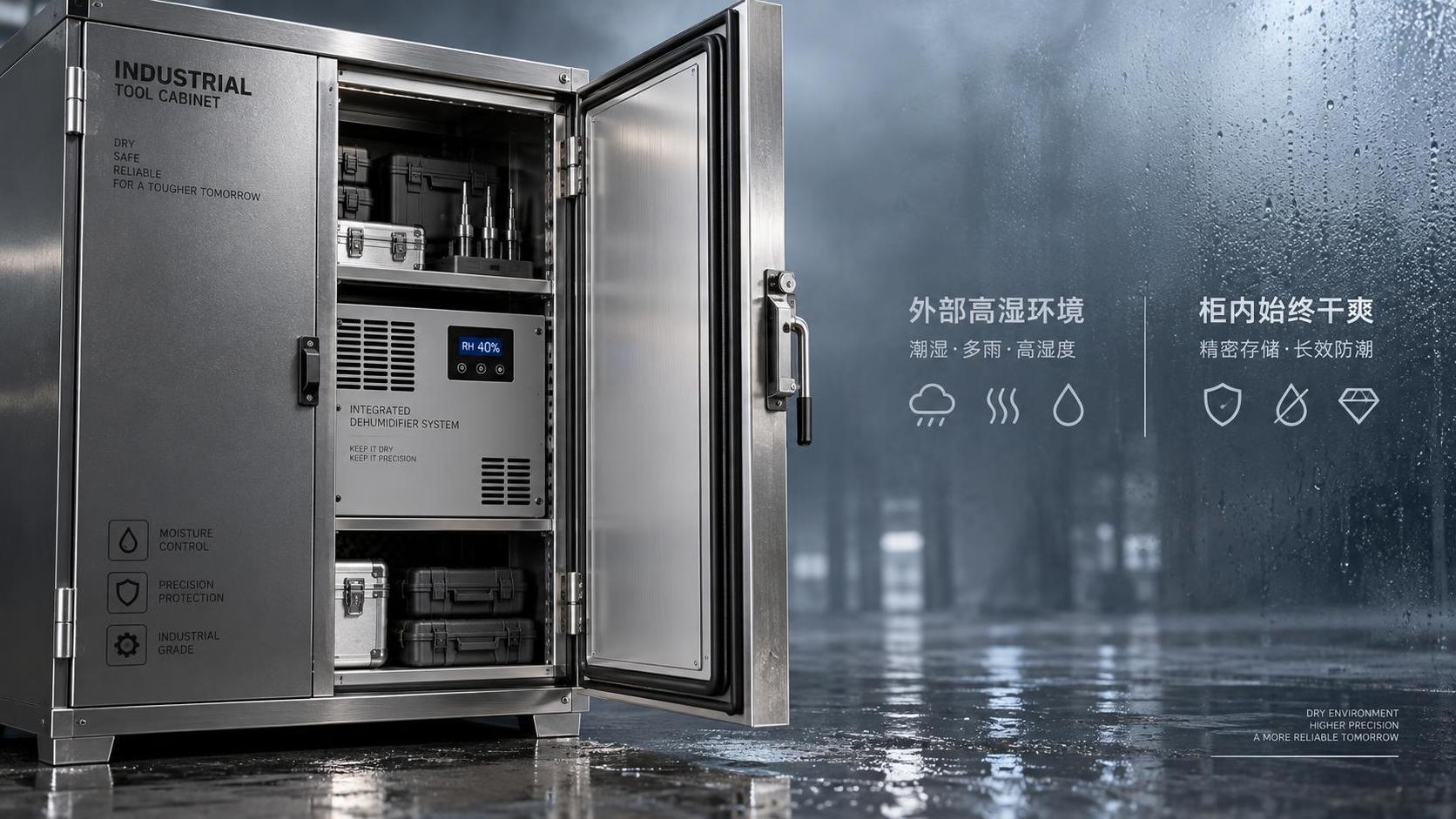
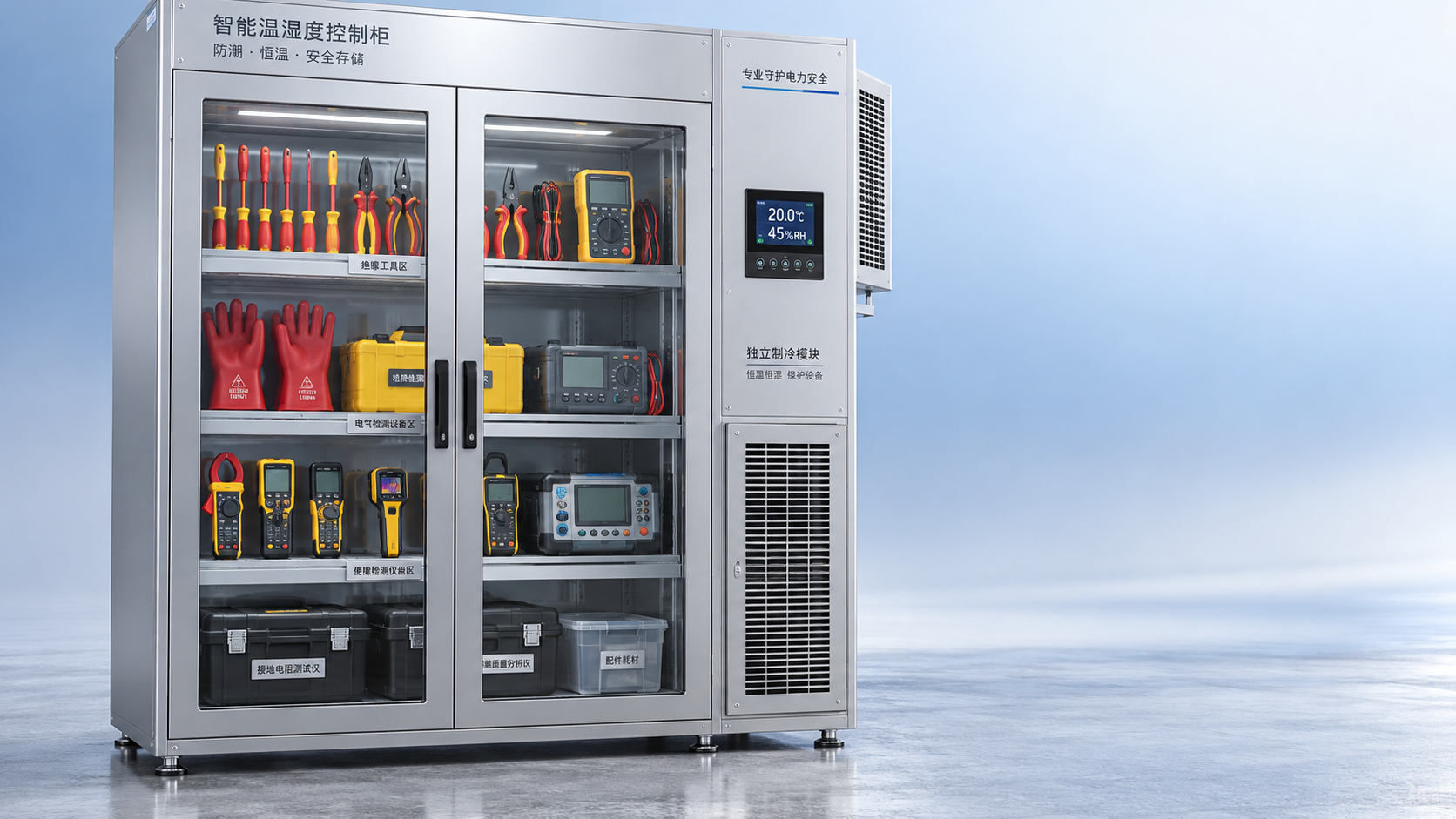
A humidity controlled tool cabinet for tropical substation use is designed to keep stored equipment in a more stable, drier environment than the surrounding room. Its value is not simply that it stores tools behind a door. It reduces the time that moisture has to settle on sensitive equipment, helps slow corrosion, and makes storage conditions more predictable between inspection and use.
This is especially useful when tools are not used every day, when a substation has seasonal maintenance cycles, or when equipment must remain ready for emergency work after long periods of storage. A controlled cabinet cannot replace correct tool inspection, cleaning, or electrical testing. It supports those practices by preventing poor storage from undoing the work done during maintenance.
Humidity causes more than visible rust
Rust is the most obvious sign of a damp storage problem, but it is often not the first problem to develop. In tropical environments, moisture can enter small joints, storage bags, protective covers, cable terminations, hinges, locks, and the layered materials used in some insulated tools. Condensation may appear when a cabinet, tool room, or container cools overnight after a hot, humid day. Even a short period of surface moisture can begin a corrosion process if it happens repeatedly.
Metal components are vulnerable because corrosion can affect smooth operation and mechanical strength. A corroded hinge may prevent a cabinet door from sealing properly. Rust on tool jaws, ratchets, fasteners, or grounding accessories can make an item harder to operate or inspect. Corrosion on a metal surface may also hide under grease, paint damage, or a protective cover until the tool is needed.
Insulating equipment presents a different concern. Moisture does not automatically mean an insulating tool is unsafe, but it can create conditions that demand closer attention. Dirt and moisture together can form a conductive surface path. Damp storage can also encourage surface contamination, fungal growth on certain materials, and deterioration of labels or inspection markings. If a technician cannot clearly identify the inspection status, rating, or ownership of an item, that tool may need to be removed from service until it is properly checked.
The practical risk is cumulative. A single humid day rarely tells the full story. Repeated exposure over weeks or months can reduce equipment readiness, increase maintenance workload, and create avoidable uncertainty during urgent fault response.
Why ordinary cabinets often fail in tropical substations
A standard steel cabinet keeps tools organized and protected from direct dust, accidental impact, and unauthorized access. It does not necessarily control the air trapped inside. If humid air enters each time the door opens and the cabinet later cools, moisture can remain inside with limited circulation. A tightly closed but uncontrolled cabinet may therefore become a damp enclosure rather than a protective one.
This is a common misunderstanding: a cabinet is not automatically a dry cabinet. The result depends on the cabinet construction, door sealing, humidity-control method, installation location, and how the equipment is used.
For example, placing a normal cabinet against an exterior wall or near an unconditioned entrance can expose it to frequent temperature swings. Keeping wet rain gear, damp gloves, cleaning cloths, or recently washed tools in the same storage space adds moisture directly into the enclosure. Leaving doors open during extended maintenance work defeats even a capable control system. In these conditions, a cabinet with no moisture-management function may provide order without providing preservation.
What a controlled cabinet changes in daily operation
The purpose of humidity control is to maintain a storage environment that is more suitable for the equipment than the tropical ambient air. Depending on the cabinet design, this may be achieved through controlled drying, dehumidification, sealed construction, monitored airflow, or replaceable desiccant systems. The method matters, but the operating result matters more: stored equipment should remain dry, accessible, and easy to inspect.
A well-selected cabinet helps maintenance teams in several practical ways:
- It slows corrosion on metal tools and accessories. This is particularly relevant for precision mechanical items, grounding components, fasteners, cutters, and tools with moving parts.
- It supports cleaner condition checks. When tools are stored dry and in assigned positions, technicians can identify contamination, cracks, missing parts, or damaged markings more easily.
- It protects readiness during low-use periods. Equipment used only for outages, switching work, storm recovery, or scheduled inspection still needs to be serviceable when called upon.
- It reduces mixed storage problems. Separating electrical protective tools from wet clothing, general workshop tools, chemicals, and consumables prevents one category from degrading another.
- It makes responsibility clearer. A dedicated cabinet can support tool identification, return control, inspection records, and access procedures.
The strongest benefit is consistency. Field teams should not have to wonder whether a tool stored last month has been sitting in a damp room, exposed to condensation, or placed beside wet equipment. Controlled storage gives the inspection process a more dependable starting point.
Not every stored item needs the same protection
A tropical substation tool room may contain everything from ordinary spanners to insulated operating rods, voltage detectors, insulating gloves, torque tools, portable earth sets, and test leads. Treating all of these items identically is inefficient. Storage should reflect the consequence of moisture exposure and the role of the equipment in safe operation.
This distinction also helps define cabinet capacity. Buying one large enclosure and filling it with unrelated items can undermine the intended protection. It is usually more effective to reserve controlled space for equipment whose condition directly affects electrical safety, switching work, measurement accuracy, or emergency response.
Choosing the cabinet: look beyond the humidity feature
Humidity control is the central function, but it is only one part of a workable storage solution. The cabinet must suit the tools, room conditions, and maintenance process around it.
Capacity should be based on access, not only volume
Tools packed tightly together are difficult to inspect and easy to damage when removed. Long operating tools may need vertical supports or dedicated racks. Gloves, test leads, and small accessories need compartments that prevent crushing or tangling. Heavy equipment needs shelves rated for the actual load and arranged so that lifting does not create a manual-handling risk.
Before selecting a cabinet, make an inventory of what must be stored inside: the item dimensions, weight, frequency of use, inspection interval, and whether it needs a protective case. This often reveals that one cabinet type cannot serve every item properly.
Door sealing and recovery matter in a humid room
A cabinet that maintains a dry internal condition when closed but takes too long to recover after frequent access may not suit a busy maintenance point. Consider how often the door opens, how long it stays open, and whether several technicians access the cabinet during the same shift. In high-traffic locations, internal layout and access discipline can be as important as the drying method.
Door seals, latches, cable-entry points, and damaged gaskets deserve attention. A cabinet cannot control moisture efficiently if humid air has an easy, continuous path inside. Sealing should not make the cabinet difficult to operate, but it should be good enough to avoid constant uncontrolled air exchange.
Monitoring should be usable by the people on site
A humidity display is useful only when someone can see it, understand it, and act when conditions are outside the intended range. Simple visual indication may be adequate for a cabinet inspected routinely. Remote alarms or integrated monitoring may be more appropriate when the cabinet protects critical equipment in an unmanned or lightly staffed site.
Avoid treating the displayed value as the whole maintenance program. The sensor location, door-opening pattern, cabinet loading, and actual condition of stored equipment all affect the result. A stable reading is helpful, but it does not replace visual inspection and the required testing of electrical protective tools.
Installation location can determine whether the cabinet succeeds
Install the cabinet in the driest practical indoor area, away from open doors, direct rain paths, washdown zones, leaking pipes, and strong heat sources. Keep it clear of walls that regularly sweat with condensation. If the room itself has severe dampness, a cabinet can protect priority items, but the broader building issue still needs attention. Moisture entering through floors, roofs, cable trenches, or ventilation openings can create conditions that overwhelm a poorly located storage system.
Storage discipline is part of the solution
A humidity-controlled cabinet works best when the workflow prevents moisture from being carried inside. Tools returned after outdoor work should be wiped clean and allowed to dry before storage. Protective covers and bags should also be checked; storing a dry tool in a wet bag does not solve the problem.
It is sensible to assign locations inside the cabinet and label them by equipment type, not merely by available shelf space. Keep calibration-sensitive instruments, insulated equipment, and general steel tools separated where practical. Do not use the cabinet as a temporary holding area for rain-soaked items, oily rags, chemical containers, or food and drink. These items introduce contamination and complicate inspections.
The cabinet should also be included in the site’s routine checks. Inspect door seals, hinges, locks, shelf condition, drainage or drying components where applicable, and the humidity indicator. Look for water marks, corrosion, unusual odor, damaged coatings, or signs that tools are being returned wet. These observations often identify a process problem before equipment is visibly damaged.
When a humidity-controlled cabinet is most justified
The case is strongest when a substation operates in a persistently humid, coastal, rainy, or monsoon-influenced climate; when air conditioning is limited or intermittent; or when temperature changes regularly cause condensation. It is also a practical choice for sites that store electrical protective tools for long periods between planned work and emergency use.
It may be less essential for a small, continuously occupied facility with a reliably conditioned tool room, disciplined cleaning procedures, and fast tool turnover. Even there, dedicated dry storage can still be worthwhile for sensitive instruments or equipment that must remain ready for infrequent critical tasks. The decision should be based on actual moisture exposure and equipment consequences, not simply on whether the site is geographically tropical.
For utilities and contractors reviewing their storage approach, the first question is not “Which cabinet has the most features?” It is “Which tools become unreliable, difficult to inspect, or expensive to replace when the storage environment remains humid?” That question identifies the equipment that deserves controlled protection first.
Manufacturers focused on electrical safety equipment, including JINPOWER, can support this decision by matching storage arrangements to the equipment categories used in substations and industrial maintenance. The useful discussion is one that starts with the tools, the site environment, and the daily handling routine, then selects a cabinet configuration that can maintain those tools in a ready condition.
FAQ
Can a humidity-controlled cabinet replace periodic inspection of electrical protective tools?
No. Controlled storage helps preserve equipment between uses, but it does not confirm that an item remains fit for service. Required inspections, cleaning, and testing still apply.
Should wet tools be placed in the cabinet to dry?
Not as a routine practice. Remove surface moisture and allow tools, covers, and bags to dry before storage. Loading wet equipment can raise cabinet humidity and expose other items to moisture.
Is a sealed ordinary cabinet enough for a tropical substation?
It may protect against dust and direct contact, but it does not actively manage moisture. In a humid environment, trapped air and temperature changes can still lead to condensation inside.
What should be checked before buying a cabinet?
Confirm the tool inventory, shelf loads, internal layout, door-opening frequency, installation location, humidity-control method, monitoring needs, and how the cabinet will be included in routine maintenance.
Recommend
 Oct 25, 2026
Homemade Bird Repellent Spray: Recipe Limits and Outdoor Surface Risks
Searching for how to make homemade bird repellent spray? Discover recipe limits, outdoor surface risks, electrical safety tips, and safer deterrents before you spray.
- Oct 25, 2026
Natural Bird Deterrents for Rooftops: Choosing Nonchemical Options
Learn how to repel birds naturally with humane rooftop barriers and smarter maintenance. Compare nonchemical options to protect electrical equipment and keep roof access clear.
- Oct 24, 2026
Home Remedies for Repelling Birds: What to Try on Patios and Railings
Learn how to repel birds with home remedies for cleaner patios and railings. Discover humane DIY options, avoid harmful sprays, and keep deterrents clear of electrical equipment.