English
 Español
 Português
 Français
 Deutsch
 русский
 한국어
 にほんご
 हिन्दी, हिंदी
 বাংলা
 Bahasa Indonesia
 Türkçe
 Việt
 dansk
 čeština
 עִבְרִית Ivrit
 Filipino/Pilipino
 български език (Bǎlgarski jazik)
 suomi
 norsk
 język polski
 ไทย
 ກະຣຸນາ
 Bahasa Melayu
 ភាសាខ្មែរ
 ဗာရမ်
 اردو
 فارسی
 Italiano
 Nederlands
 svenska
 Монгол хэл
 नेपाली
 සිංහල
 Ўзбек тили
 پښتوتۆرکجه
 Ελληνικά
 српски / srpski
 magyar
 українська
 Kiswahili
 Қазақ тілі
 Română
 Hrvatski
 Bosanski
 Kreyòl ayisyen
 አማርኛ
 Hausa
 Yorùbá
 Igbo

What: Defining 'Where To Buy Tanglefoot Bird Repellent' Beyond Retail Search
'Where to buy tanglefoot bird repellent' is not a simple e-commerce query—it reflects a critical infrastructure protection requirement. In electrical asset management, it signals the need for non-toxic, adhesive-based physical deterrents applied to ledges, conduits, and structural supports to prevent nesting, droppings, and short-circuiting risks. Tanglefoot products are formulated as viscous, weather-resistant pastes that remain tacky for 6–12 months under UV exposure and temperature extremes (−20°C to +60°C), meeting ASTM D3359 adhesion standards when properly surface-prepared.
Industrial-grade formulations differ significantly from consumer variants: they require solvent resistance (to oils, cleaning agents), low VOC content (<50 g/L), and compatibility with galvanized steel, aluminum, and PVC enclosures. Sourcing 'where to buy tanglefoot bird repellent' thus demands verification of batch-specific SDS, shelf-life documentation, and applicator compatibility—not just price or shipping speed.
True procurement readiness hinges on understanding formulation chemistry (rosin- vs. petroleum-based), application method (brush, caulk gun, or automated dispensing), and substrate priming protocols—factors that determine longevity and safety in energized environments.
Why: Why Electrical OEMs And Facility Managers Cannot Rely On Generic Sourcing
Generic retail channels often supply tanglefoot variants unsuited for electrical infrastructure—lacking UL-listed fire retardancy, failing salt-spray corrosion resistance tests (ASTM B117), or containing conductive fillers that compromise insulation integrity. When avian activity compromises busbar insulation or triggers arc-flash events, reactive mitigation costs exceed preventive investment by 4–7×.
Jinneng Power’s integrated safety ecosystem addresses this gap: while not manufacturing tanglefoot itself, its intelligent safety tool cabinets—engineered with moisture protection, dehumidification, and temperature/humidity control—serve as secure, climate-stable staging zones for storing, calibrating, and deploying bird repellent application kits alongside voltage detectors, grounding equipment, and insulated gloves. This ensures consistent material performance and traceable usage logs.
For EPC firms managing multi-site rollouts, Jinneng Power’s customizable cabinet configurations enable standardized storage of tanglefoot cartridges, brushes, PPE, and inspection checklists—reducing onsite variability and supporting ISO 45001-compliant maintenance workflows.
Who: Target Users And Their Operational Priorities
Electrical OEMs specify bird repellent integration during enclosure design—requiring compatibility with IP66-rated housings and non-outgassing behavior near sensitive electronics. Their 'where to buy tanglefoot bird repellent' evaluation prioritizes OEM validation data, REACH/ROHS compliance, and long-term stability under thermal cycling.
EPC contractors focus on installability: low-VOC formulations that comply with site air quality permits, rapid-cure variants for accelerated commissioning, and packaging optimized for field logistics (e.g., 100-g cartridges vs. bulk pails). They require supplier documentation traceable to project-level QA/QC records.
Facility managers balance lifecycle cost against downtime risk. For them, 'where to buy tanglefoot bird repellent' means identifying vendors offering batch-specific shelf-life tracking, technical support for reapplication scheduling, and compatibility reports with existing anti-corrosion coatings—ensuring no unplanned outages due to premature degradation or adhesion failure.
Where & When: Critical Application Contexts And Global Market Realities
Tanglefoot deployment is most critical at locations where avian activity intersects with high-voltage infrastructure: substation control buildings (especially in coastal or agricultural regions), solar farm combiner boxes, wind turbine nacelles, and overhead line termination points. Regional regulatory variance matters—EU projects require CE-marked formulations with SVHC screening; U.S. utility sites demand OSHA-aligned SDS and NFPA 70E-compatible handling protocols.
Seasonality dictates timing: spring (nesting onset) and post-hurricane periods (structural damage enabling new entry points) trigger highest demand. Procurement cycles must align with maintenance windows—delayed 'where to buy tanglefoot bird repellent' decisions risk summer application under >35°C ambient conditions, accelerating solvent evaporation and reducing effective tack life by 30%.
Global supply chain volatility further complicates sourcing: lead times for industrial-grade tanglefoot now average 8–12 weeks from confirmed order, necessitating buffer stock planning integrated with Jinneng Power’s intelligent cabinet monitoring systems for real-time inventory alerts and reorder automation.
How: Technical Application Protocol And Quality Assurance Framework
Effective deployment requires strict adherence to ASTM D2092 surface preparation: degreasing with isopropyl alcohol, light abrasion for metal substrates, and 24-hour cure time before exposure to humidity. Industrial users must verify viscosity (Brookfield LVT @ 25°C: 80,000–120,000 cP) and skin-over time (<1 hour) to ensure consistent bead integrity across automated applicators.
Quality control extends beyond material specs: batch testing for dielectric strength (>20 kV/mm per ASTM D149) prevents inadvertent conductivity pathways. Jinneng Power’s intelligent safety tool cabinets support this protocol via built-in temperature/humidity logging—ensuring stored tanglefoot remains within optimal 10–25°C / 30–60% RH ranges, preserving rheology and adhesive yield stress.
Optional RFID management modules allow tagging of tanglefoot batches to maintenance work orders, linking application dates, technician IDs, and environmental readings—creating auditable, ISO 55001-aligned asset protection records.
How Much: Total Cost Of Ownership Analysis For Strategic Procurement
TCO for tanglefoot bird repellent spans far beyond unit price: labor (surface prep + application), reapplication frequency (driven by UV exposure and particulate loading), waste disposal (hazardous classification varies by formulation), and downtime cost per hour of unplanned outage. A $12/kg product requiring biannual reapplication may cost 3.2× more over 5 years than a $18/kg variant lasting 18 months—when factoring in labor ($85/hr) and outage penalties ($2,200/hr).
Jinneng Power’s heavy-duty steel safety cabinets reduce TCO indirectly but materially: organized storage cuts kit assembly time by ~22%, moisture protection extends tanglefoot shelf life by 40%, and intelligent monitoring prevents expired-batch deployment—avoiding $1,400+ in rework per failed application cycle.
ROI improves when procurement teams bundle tanglefoot with Jinneng Power’s voltage detectors and insulating rubber mats—enabling consolidated logistics, unified vendor management, and harmonized warranty terms (3-year limited warranty on all core safety products). This integrated approach transforms 'where to buy tanglefoot bird repellent' from a fragmented tactical search into a strategic, system-level decision.
 Are Single-Source Tool Cabinets Better for Global EPC Projects?Are heavy duty tool cabinets from single-source manufacturers better for global EPC projects? Learn how standardization, compliance, and reliable support reduce risk worldwide.
 How Can You Verify a Safety Cabinet Meets Multi-Country Standards?How to verify if an electrical safety equipment cabinet meets multi-country standards? Check certifications, test records, labels, and build quality to ensure compliance and reliability.
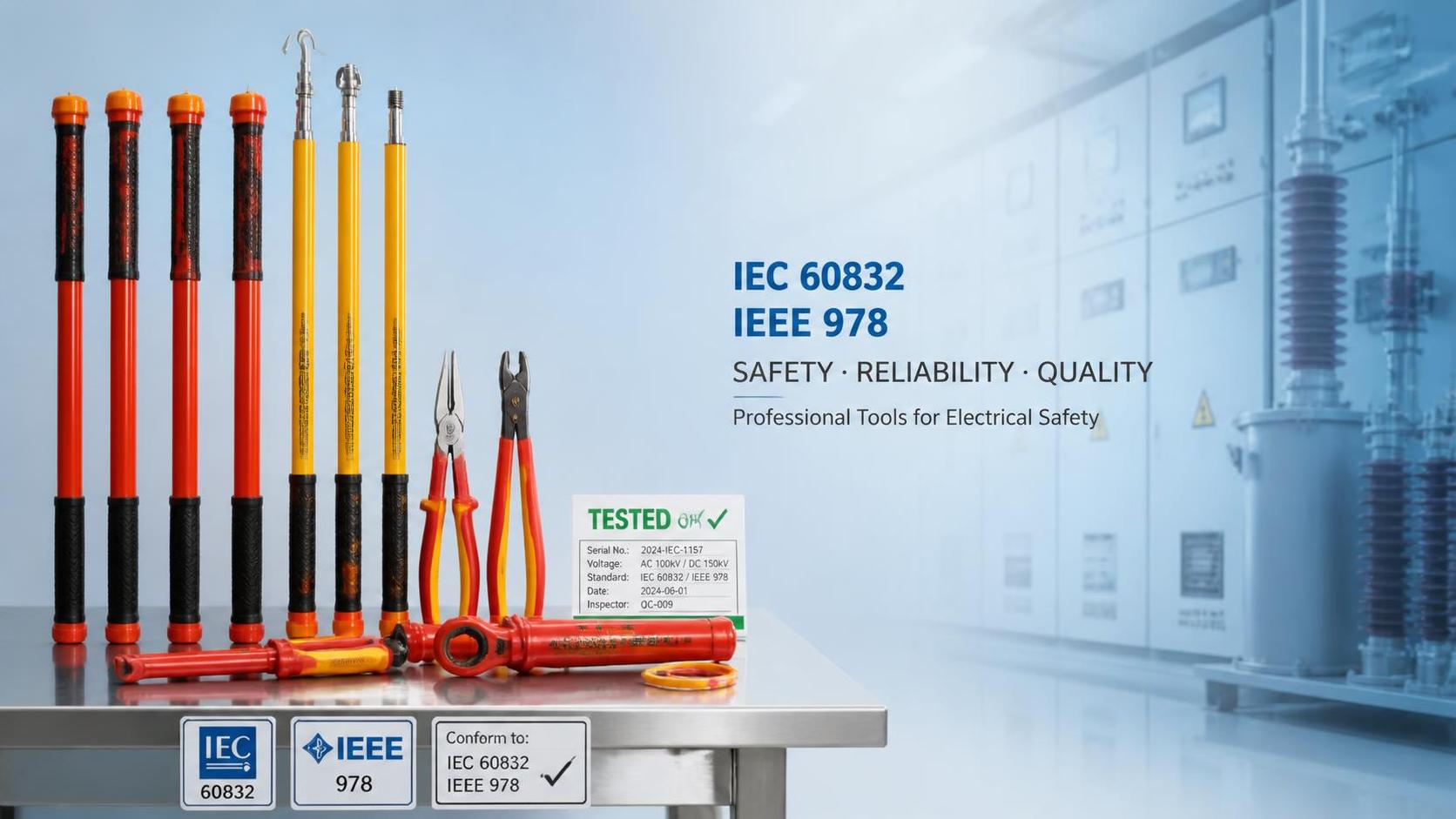
 Do IEC and IEEE Insulating Tool Standards Differ Enough to Matter?Do IEC and IEEE insulating tool standards differ enough to cause shipment rejection? Discover key compliance gaps, avoid costly delays, and ensure your tools meet destination-market acceptance rules.
 What Lead Time Should Bulk Safety Equipment Orders Expect?Industrial maintenance safety equipment bulk order lead time explained: learn what affects delivery, avoid delays, and choose a reliable supplier for faster, safer project planning.
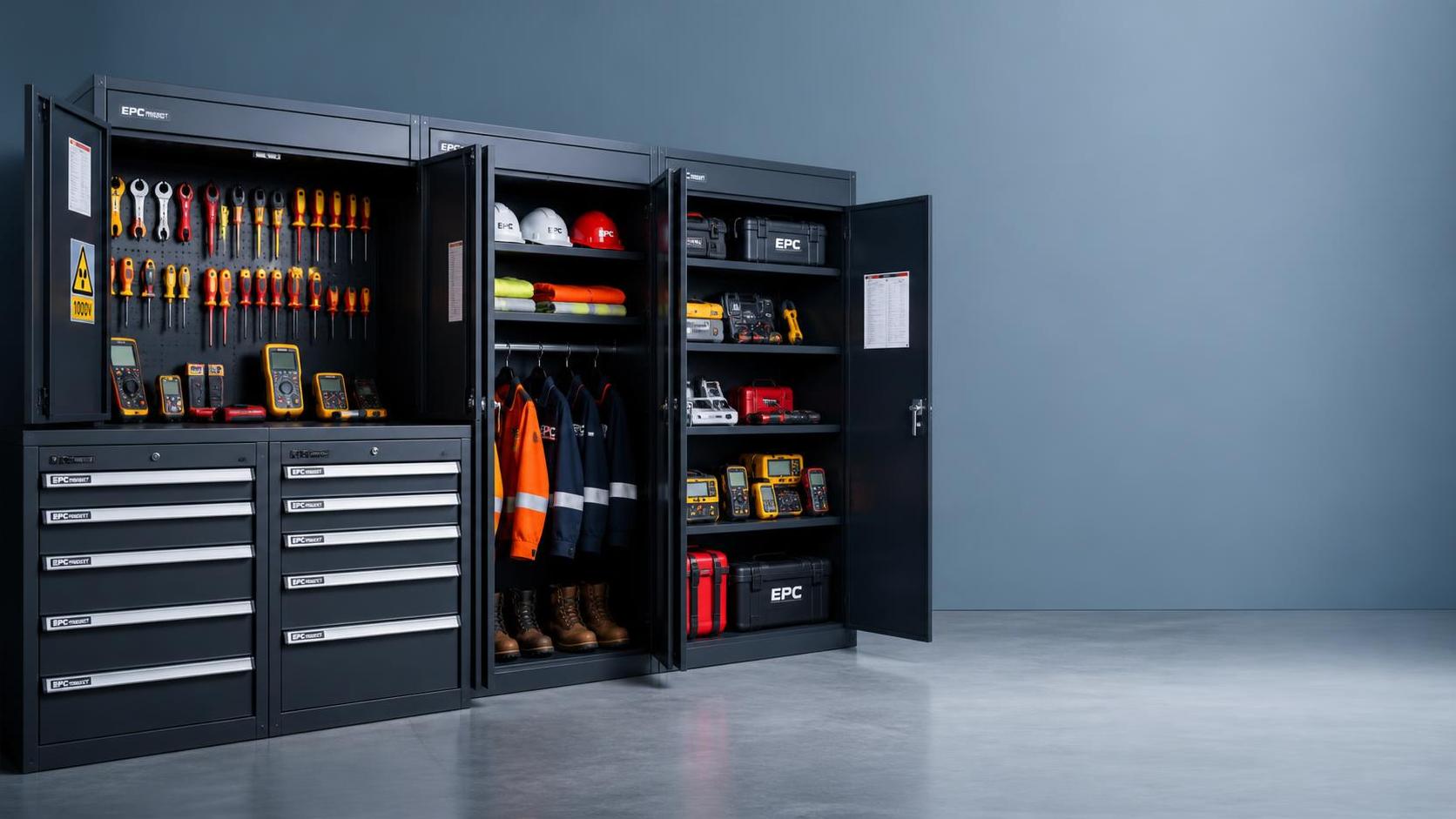
 C-Type Screw-Operated Round-Jaw Earthing RodJINPOWER supplies portable earthing rods with C-type screw-operated round-jaw phase clamps for specified temporary earthing and short-circuiting applications. The curved jaw profile is designed for round conductors and cylindrical conductive components that match the clamp's dimensions.
The screw-operated mechanism allows the clamp opening to be adjusted around a compatible connection point. Compared with a flat-jaw clamp, the round-jaw design focuses on the contact geometry of round conductors. Actual compatibility depends on the conductor diameter, clamp opening and connection requirements.
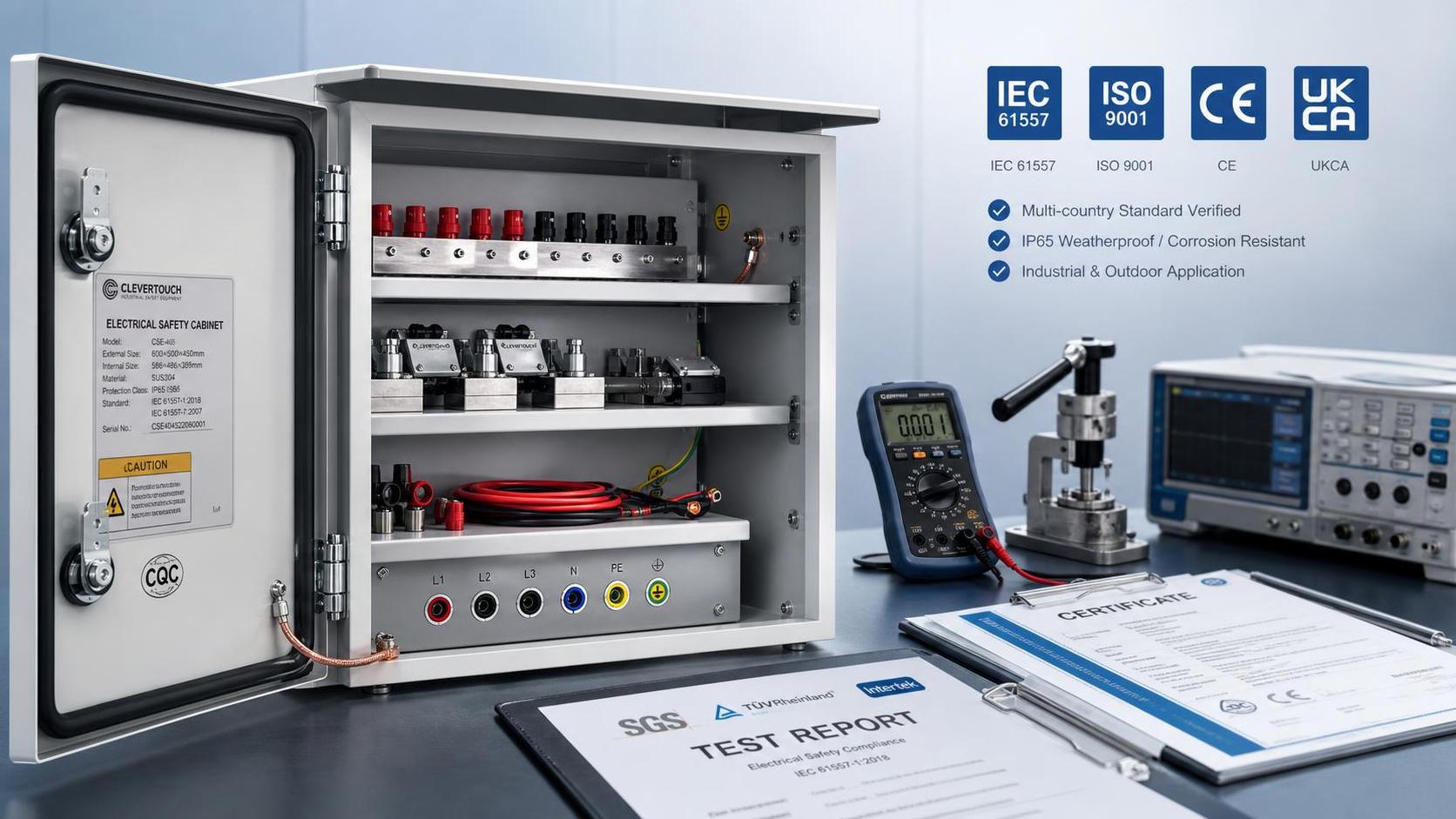
Both telescopic and non-telescopic rod configurations are available for selection according to the required operating reach and project specifications. For utilities, electrical contractors, distributors and project buyers, the main considerations include clamp dimensions, rod length, grounding cable configuration and the rated electrical performance of the complete earthing assembly. Double-Jaw Spring-Operated Snap-On Earthing RodJINPOWER supplies portable earthing rods equipped with double-jaw spring-operated snap-on phase clamps for specified temporary earthing and short-circuiting applications. The spring-loaded mechanism allows the clamp to open and close for quick attachment to compatible overhead line conductors within its specified operating range.
Unlike screw-operated phase clamps, this design does not require the operator to tighten a screw step by step during attachment. The spring-operated mechanism supports a different connection method for applications where quick attachment is required. Actual suitability depends on the conductor dimensions, clamp design, approved operating method and electrical ratings of the complete earthing assembly.