English
 Español
 Português
 Français
 Deutsch
 русский
 한국어
한국어 にほんご
にほんご हिन्दी, हिंदी
 বাংলা
বাংলা Bahasa Indonesia
 Türkçe
 Việt
Việt dansk
dansk čeština
 עִבְרִית Ivrit
 Filipino/Pilipino
 български език (Bǎlgarski jazik)
 suomi
suomi norsk
norsk język polski
 ไทย
ไทย ກະຣຸນາ
 Bahasa Melayu
 ភាសាខ្មែរ
 ဗာရမ်
ဗာရမ် اردو
اردو فارسی
فارسی Italiano
 Nederlands
 svenska
 Монгол хэл
 नेपाली
 සිංහල
සිංහල Ўзбек тили
 پښتوتۆرکجه
 Ελληνικά
 српски / srpski
 magyar
 українська
 Kiswahili
 Қазақ тілі
 Română
 Hrvatski
 Bosanski
 Kreyòl ayisyen
 አማርኛ
አማርኛ Hausa
Hausa Yorùbá
 Igbo
IgboHow Does a Dehumidified Tool Cabinet Perform in Coastal Salt Air?
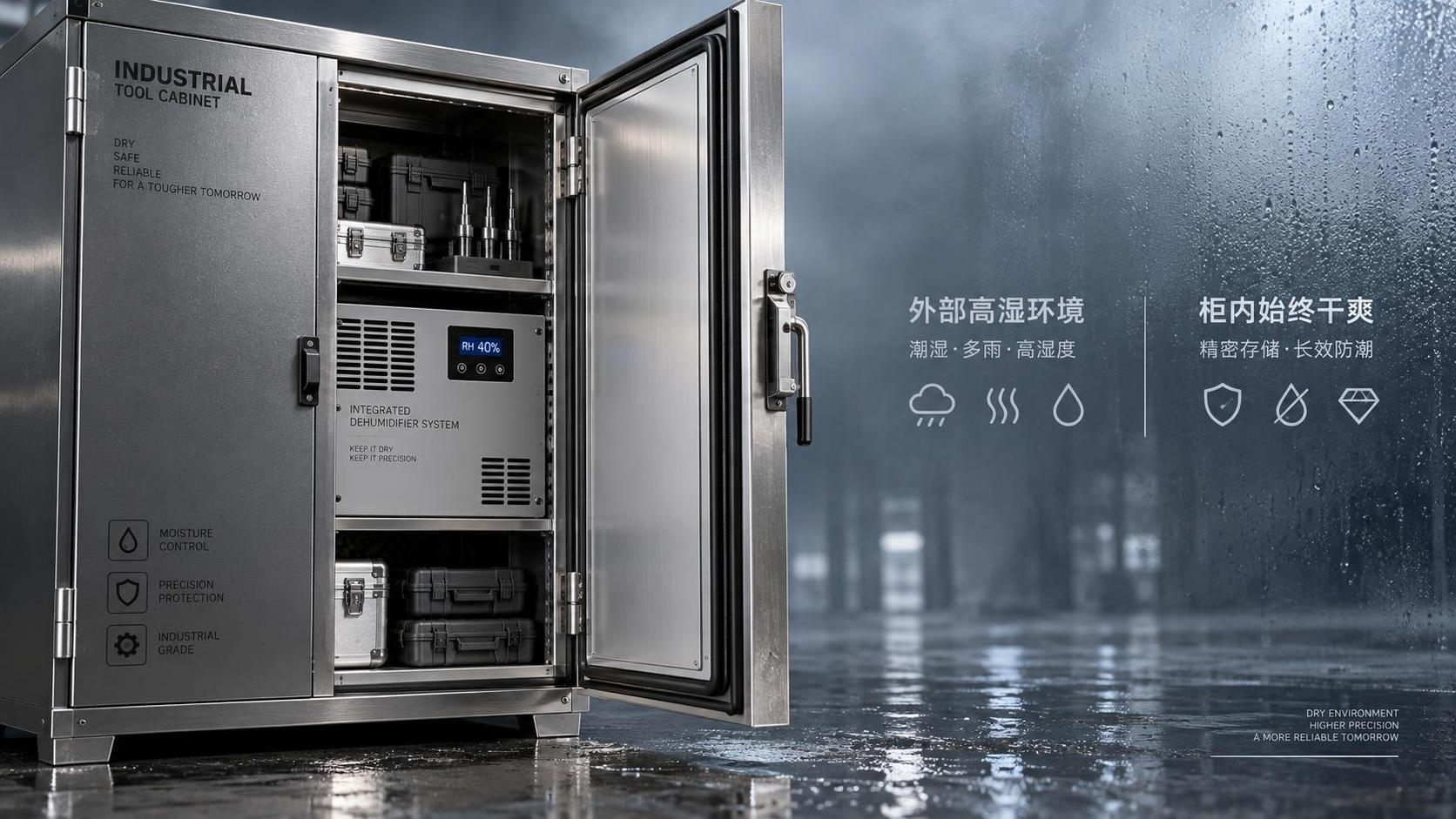
A dehumidified tool cabinet can materially improve the condition of electrical safety equipment in coastal salt air, but only when it is treated as part of a moisture-and-contamination control system rather than as a sealed “corrosion-proof box.” Its primary benefit is reducing internal relative humidity and preventing condensation, which limits the electrolyte film that allows deposited chlorides to drive corrosion, tracking, mold growth, and insulation deterioration.
The important limitation is that a dehumidifier does not remove salt already carried into the cabinet on tools, clothing, hands, or incoming air. In a marine or coastal substation, the cabinet must control two related but different risks: moisture inside the enclosure and chloride contamination entering or remaining on equipment. A cabinet that performs well against humidity but has poor door sealing, unsuitable housing materials, or uncontrolled loading practices may still suffer rapid external corrosion and internal contamination.
Why coastal salt air is more damaging than ordinary humidity
High humidity alone can cause condensation and moisture absorption in insulation materials. Salt-laden air adds chlorides, which make the problem more persistent. Chloride deposits attract moisture from the air and can form a thin conductive film even when a surface does not appear visibly wet. This is especially relevant around metal fittings, hinges, latches, electrical contacts, tool ferrules, and the surfaces of protective equipment stored after outdoor use.
In practical terms, corrosion does not require a cabinet to be flooded or exposed to sea spray. Repeated cycles of humid air, nighttime temperature drops, door openings, and salt-contaminated equipment can be enough to create damaging conditions. If the temperature of a metal surface falls below the dew point, condensation can form. When chloride residues are present, that condensed water becomes significantly more corrosive than clean water.
A dehumidified cabinet addresses the part of this process that is most controllable: it lowers the moisture available inside the storage space and reduces the likelihood that surfaces reach conditions favorable for condensation. It cannot neutralize salt deposits, repair corroded components, or substitute for cleaning and inspection.
What good performance looks like in a coastal installation
A properly specified cabinet should maintain a stable internal environment despite frequent changes outside the enclosure. The relevant performance question is not simply whether the unit contains a dehumidifier, but whether the cabinet can hold its target humidity after doors are closed, tools are loaded, and the surrounding room or outdoor shelter becomes hot, humid, and salt-contaminated.
For many electrical protective tools and metal accessories, an internal relative humidity range around 40% to 50% is commonly used as a practical storage target, provided that it is compatible with the equipment manufacturer’s instructions. The correct setpoint is not universal. Some materials, packaging systems, and local operating procedures may require a different range. The critical objective is to keep humidity low enough to avoid condensation and prolonged moisture exposure without creating an unnecessarily aggressive drying condition for materials that may be sensitive to very low humidity.
Stable performance depends on the relationship between cabinet volume, air leakage, internal heat load, ambient humidity, and door-opening frequency. A small cabinet with a large dehumidifier can still perform poorly if its door gasket leaks or if wet equipment is placed inside immediately after use. Conversely, a well-sealed enclosure with moderate moisture removal capacity can maintain suitable conditions efficiently when loading practices are controlled.
In coastal substations and offshore support areas, a cabinet should be judged by its recovery behavior as well as its normal reading. After the door has been opened or damp tools have been introduced, humidity will rise. The useful question is whether the cabinet returns to its specified range within an acceptable operating period and does so consistently without continuous fault alarms, excessive heat buildup, or heavy water accumulation.
Humidity control is not the same as salt exclusion
This distinction is often missed during specification. Dehumidification reduces the corrosive effect of chloride contamination because corrosion requires an electrolyte layer. However, the chloride ions themselves remain on surfaces unless they are removed. If a technician stores a salt-exposed torque wrench, grounding clamp, insulating pole fitting, or test lead directly after coastal field work, the cabinet may dry the deposited contamination in place. Once humidity rises again during a door opening or power interruption, the residue can become active again.
Electrical safety equipment should therefore enter the cabinet clean and reasonably dry. The appropriate cleaning method depends on the item and its manufacturer’s instructions. Metal components may require removal of salt residues and complete drying. Insulating tools require more caution: abrasive cleaning, incompatible solvents, or uncontrolled heating can damage surface finish, markings, or insulating materials. The objective is not merely to make equipment look clean, but to prevent conductive deposits and moisture from remaining on functional surfaces.
Salt-contaminated tools should not be mixed with clean, inspection-ready equipment in the same storage space. Where work conditions are severe, a separate drying or quarantine area is more effective than relying on the storage cabinet to perform both cleaning recovery and long-term preservation.
The cabinet body matters as much as the dehumidifier
In coastal high-salt environments, the enclosure itself can become the weak point. A standard painted steel cabinet may maintain acceptable internal humidity for a period while its hinges, door edges, fasteners, locks, ventilation openings, and base corrode from the outside. Once corrosion affects the door closure or gasket compression, humidity control becomes less reliable.
Material selection should reflect where the cabinet is located:
- Conditioned indoor rooms: Powder-coated steel may be suitable if the room is protected from direct marine air and routine cleaning is maintained.
- Unconditioned coastal utility rooms: Higher-grade coatings, corrosion-resistant fasteners, protected hinges, and durable sealing arrangements become more important.
- Near-shore, offshore, or open-sided locations: Stainless steel, suitably selected non-metallic materials, or engineered coated systems may be justified, depending on exposure, mechanical requirements, and cleaning chemicals.
Stainless steel should not be treated as an automatic answer. Its performance depends on grade selection, fabrication quality, weld treatment, surface condition, crevice design, and maintenance. Chlorides can still cause staining or localized corrosion under unfavorable conditions. Similarly, a thick coating is not sufficient if edges, cutouts, fastener holes, and welded joints are not protected.
Standards such as ISO 9223 can help classify atmospheric corrosivity, while ISO 12944 is often used as a reference for protective paint systems. These references help frame the environmental discussion, but they do not replace a cabinet-specific assessment of salt deposition, washdown exposure, temperature, UV exposure, and expected service life.
Sealing, airflow, and drainage determine real-world reliability
A cabinet needs enough sealing to limit humid air exchange, but it cannot be designed as a blindly airtight container without considering heat, internal circulation, and pressure changes. The door seal should compress evenly, remain flexible in the local temperature range, and resist degradation from salt, cleaning agents, and frequent operation. Damaged gaskets are a common reason why a cabinet’s displayed humidity differs from its actual condition near stored equipment.
Internal air circulation also matters. A humidity sensor near the dehumidifier may show an acceptable value while a lower shelf, a tightly packed drawer, or the inside of a storage bag remains more humid. Cabinets storing insulating gloves, sleeves, hot sticks, voltage detectors, grounding equipment, and metal hand tools should provide air movement across the usable storage volume without directing concentrated heat onto sensitive materials.
Water management deserves equal attention. Depending on the technology, extracted moisture may collect in a reservoir or drain through a line. In coastal sites, a drain line should be routed to avoid blockage, backflow, and unplanned discharge onto the cabinet base or nearby electrical equipment. A full reservoir alarm is useful only if it is regularly checked and acted upon. A cabinet that stops dehumidifying because its collection tank is full may look operational while internal humidity gradually rises.
Dehumidifier technology should match the installation conditions
Compressor-based dehumidifiers are often effective in warm utility rooms because they remove moisture efficiently at moderate-to-high temperatures. Their output can fall as temperatures decrease, and they require attention to condensate drainage, service access, vibration, and power quality.
Desiccant-based systems can perform more consistently at lower temperatures and may be appropriate where compressor operation is less effective. They can, however, introduce different energy and maintenance considerations. Some desiccant systems use regeneration heat, which can raise cabinet temperature if not managed properly. That may be undesirable for certain stored items or for tightly enclosed electrical rooms.
Thermoelectric units are compact and quiet but are generally more limited in moisture-removal capacity. They may be adequate for small, well-sealed cabinets in controlled indoor areas, but their suitability should not be assumed for a frequently opened cabinet exposed to humid coastal air.
The decisive factor is moisture load, not the label on the technology. A cabinet near a sea-facing doorway, used repeatedly during wet-weather maintenance, faces a very different load from one in an air-conditioned control building. The dehumidifier should be specified against the expected ambient conditions, enclosure leakage, cabinet volume, and operational use rather than only by nominal extraction capacity.
Electrical safety equipment needs more than dry storage
Dry storage supports readiness, but it does not eliminate inspection, cleaning, testing, or retirement requirements. Electrical protective tools can be affected by surface contamination, UV exposure, mechanical damage, aging, improper handling, and chemical contact. A low-humidity cabinet helps prevent one important source of degradation; it does not prove that an item remains electrically safe.
This is particularly relevant for insulating equipment. Surface contamination on insulating poles, gloves, sleeves, blankets, and related accessories can reduce effective performance even when the material appears intact. Storage procedures should preserve separation from sharp metal tools, oils, solvents, direct sunlight, and objects that can deform or scratch insulating surfaces.
For metal grounding equipment, clamps, connectors, and tool fittings, corrosion can affect contact pressure, mechanical integrity, and electrical continuity. Dehumidification slows moisture-driven corrosion inside the cabinet, but periodic inspection remains necessary because salt exposure may occur before storage or during use.
Applicable inspection and test intervals should follow the governing safety program, local regulations, utility procedures, and the equipment manufacturer’s instructions. The storage cabinet should support that system by keeping inspected equipment identifiable, protected, and separated from items awaiting cleaning, test, repair, or disposal.
How to assess whether a cabinet is suitable for coastal salt air
The phrase tool cabinet with dehumidifier covers a wide range of products, from lightly sealed workshop units to engineered protective storage systems. A meaningful assessment should examine the complete assembly rather than only the humidity display.
- Confirm the intended installation location: air-conditioned indoor room, unconditioned substation building, covered outdoor shelter, offshore module, or area exposed to direct spray.
- Check whether the enclosure has durable door gaskets, protected seams, corrosion-resistant hinges and fasteners, and a base that will not trap standing water.
- Review the dehumidifier’s operating temperature range, drainage arrangement, power requirements, alarm functions, and restart behavior after a power interruption.
- Ask where humidity is measured and whether internal air circulation reaches drawers, lower shelves, and enclosed storage compartments.
- Define the incoming condition of stored equipment. Wet or salt-contaminated tools should be cleaned and dried before being placed with ready-for-service items.
- Consider access frequency. Repeated door opening can dominate the moisture load and may require a larger system, improved workflow, or separate staging storage.
- Verify any required ingress-protection rating under IEC 60529 where dust or water ingress is a relevant installation risk. An IP rating addresses defined ingress conditions; it does not by itself establish resistance to marine corrosion.
Common assumptions that lead to disappointing results
The first is assuming that a low displayed humidity means all stored equipment is protected. Without proper circulation and sensor placement, localized humidity can remain higher than the control reading. The second is treating the cabinet as a drying room for freshly exposed tools. This can overload the unit and leave salt residues on equipment. The third is focusing on internal humidity while ignoring corrosion of the housing, latch, and gasket system. The fourth is selecting a cabinet for a coastal building without considering whether doors are routinely left open, whether the building is washed down, or whether it receives direct marine airflow.
Another concern is power loss. A dehumidified cabinet does not retain its protective condition indefinitely when power is unavailable. The rate at which humidity rises depends on sealing, cabinet temperature, ambient conditions, and the moisture content of stored materials. Critical locations should define what happens after an outage: whether humidity is logged, whether an alarm is sent, whether tools need reinspection after prolonged loss of control, and whether backup power is warranted.
The practical conclusion
In coastal salt air, a dehumidified tool cabinet performs well when it reduces internal humidity, prevents condensation, resists external marine corrosion, and is supported by disciplined cleaning and storage practices. It is particularly valuable for keeping electrical safety equipment dry, organized, and protected between inspection and field use.
Its effectiveness declines when chloride-contaminated equipment is stored without cleaning, when door seals or cabinet hardware degrade, when the dehumidifier is undersized for the moisture load, or when the enclosure is placed in direct salt spray conditions beyond its material and ingress design. The right decision is therefore not whether a cabinet has a dehumidifier, but whether the full storage system is engineered and operated for the actual coastal exposure.
Recommend
 Oct 25, 2026
Homemade Bird Repellent Spray: Recipe Limits and Outdoor Surface Risks
Searching for how to make homemade bird repellent spray? Discover recipe limits, outdoor surface risks, electrical safety tips, and safer deterrents before you spray.
- Oct 25, 2026
Natural Bird Deterrents for Rooftops: Choosing Nonchemical Options
Learn how to repel birds naturally with humane rooftop barriers and smarter maintenance. Compare nonchemical options to protect electrical equipment and keep roof access clear.
- Oct 24, 2026
Home Remedies for Repelling Birds: What to Try on Patios and Railings
Learn how to repel birds with home remedies for cleaner patios and railings. Discover humane DIY options, avoid harmful sprays, and keep deterrents clear of electrical equipment.