English
 Español
 Português
 Français
 Deutsch
 русский
 한국어
한국어 にほんご
にほんご हिन्दी, हिंदी
 বাংলা
বাংলা Bahasa Indonesia
 Türkçe
 Việt
Việt dansk
dansk čeština
 עִבְרִית Ivrit
 Filipino/Pilipino
 български език (Bǎlgarski jazik)
 suomi
suomi norsk
norsk język polski
 ไทย
ไทย ກະຣຸນາ
 Bahasa Melayu
 ភាសាខ្មែរ
 ဗာရမ်
ဗာရမ် اردو
اردو فارسی
فارسی Italiano
 Nederlands
 svenska
 Монгол хэл
 नेपाली
 සිංහල
සිංහල Ўзбек тили
 پښتوتۆرکجه
 Ελληνικά
 српски / srpski
 magyar
 українська
 Kiswahili
 Қазақ тілі
 Română
 Hrvatski
 Bosanski
 Kreyòl ayisyen
 አማርኛ
አማርኛ Hausa
Hausa Yorùbá
 Igbo
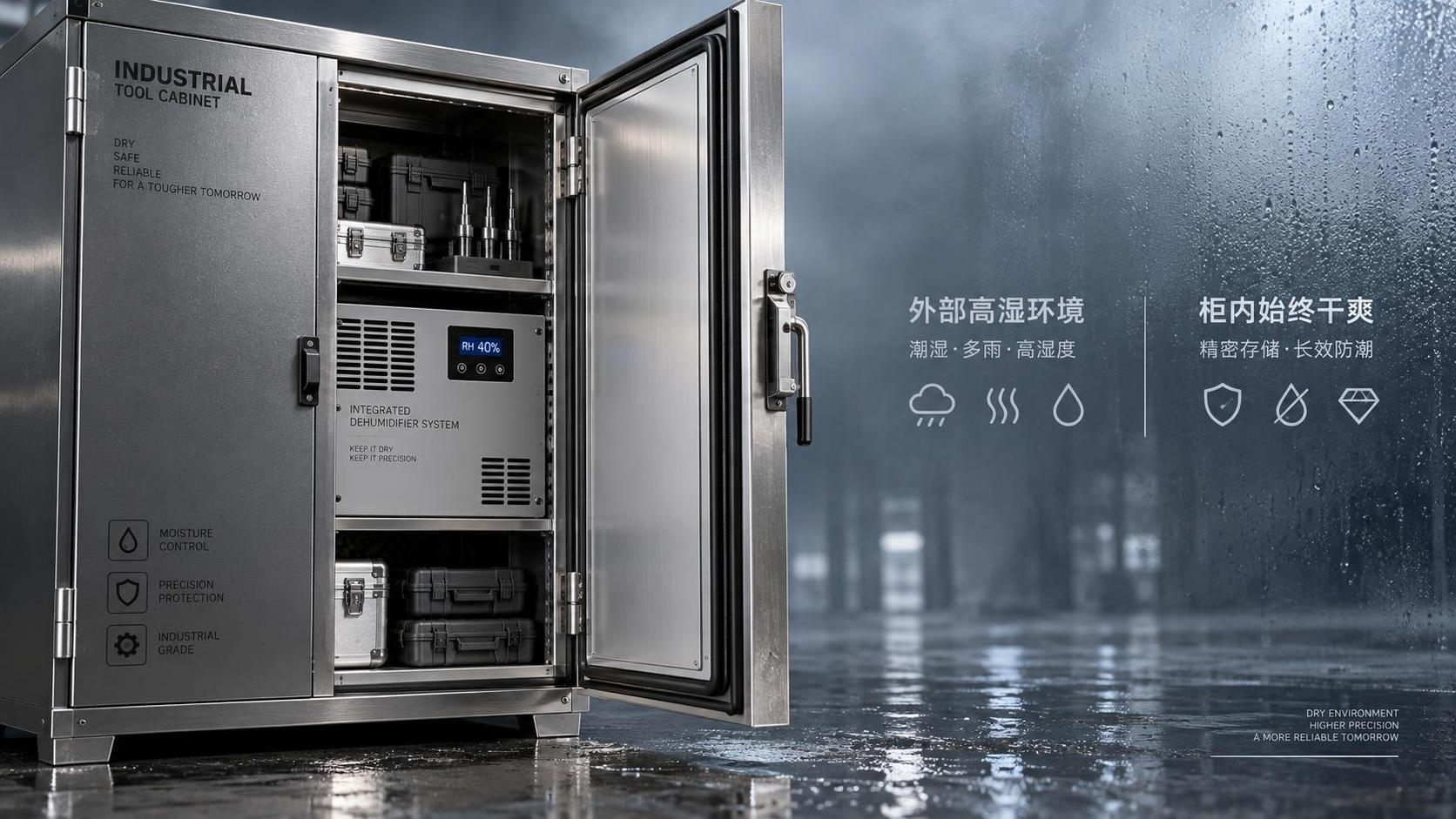
IgboHow to Choose a Temperature and Humidity Control Cabinet for Sensitive Equipment
It usually starts with something small: a control panel door feels damp when opened early in the morning, a display window fogs up after a weather change, or a relay cabinet in a utility room shows signs of corrosion much sooner than expected. In power and industrial environments, these are rarely isolated annoyances. They are often early warnings that temperature swings and airborne moisture are working against the equipment long before a failure appears on a maintenance report.
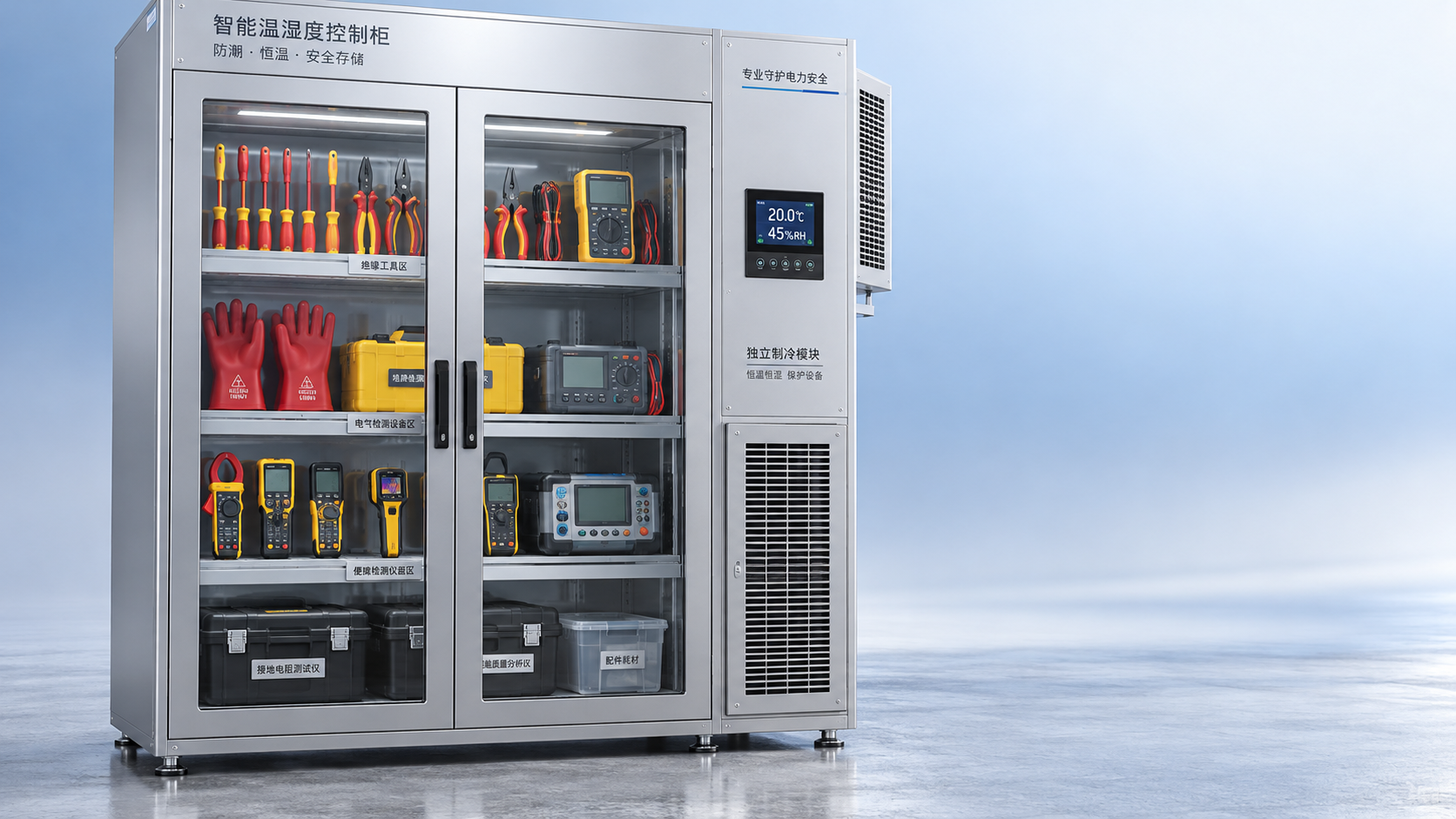
If you are responsible for equipment selection, this creates an awkward decision point. A cabinet may look acceptable on paper, but if it cannot keep internal conditions stable under real operating conditions, sensitive components can drift, age faster, or become unreliable at the worst possible moment. Choosing a temperature and humidity control cabinet is not really about buying a box with a controller. It is about judging whether the cabinet can maintain a predictable environment where electronics, protection devices, meters, and communication components can continue working as intended.
Where selection mistakes usually begin
A common mistake is to treat all environmental cabinets as roughly equivalent and focus first on dimensions, price, or a basic temperature range. That approach often ignores the actual reason these cabinets are installed: not just to store equipment, but to prevent moisture condensation, dust intrusion, thermal stress, and unstable internal conditions.
Another frequent issue is that project teams evaluate the cabinet in isolation instead of in context. A cabinet installed in a dry indoor electrical room has a very different workload from one placed in a substation auxiliary area, a coastal utility site, a tunnel, or an industrial plant with frequent door opening and shifting ambient conditions. If the environment is not defined clearly at the beginning, the chosen cabinet may be oversized in one direction and weak in another.
Many people also assume that if a cabinet includes heating and dehumidification functions, that is enough. In practice, performance depends on how those functions are coordinated, how quickly the cabinet responds to change, and whether the enclosure design itself supports control. A powerful heater cannot fully compensate for poor sealing, and a smart controller cannot prevent condensation if cold surfaces are constantly exposed to humid air through frequent access or cable entry leakage.
Start with the real operating environment, not the catalog
Before comparing models, it helps to describe the actual site in plain terms. Is the cabinet exposed to day-night temperature swings? Is the room ventilated, air-conditioned, or effectively unconditioned? Are there seasonal periods of heavy humidity? Does the site experience dust, salt spray, washdown, or vibration? Will maintenance staff open the door often, or will the cabinet remain closed for long periods?
These questions matter because internal moisture problems do not come only from wet air. They often come from temperature differences between cabinet surfaces and surrounding air. When warm humid air meets a cooler internal surface, condensation can form on terminals, bus connections, boards, and instruments. That is why a temperature and humidity control cabinet should be selected based on expected temperature fluctuation and exposure patterns, not only on nominal setpoints.
At this stage, it also helps to identify which equipment is genuinely sensitive. Protection relays, communication modules, PLC components, meters, low-voltage control assemblies, and testing devices usually require a more stable environment than purely mechanical parts. If several device types share one cabinet, selection should be driven by the most sensitive item rather than the average tolerance of the group.
The enclosure itself matters more than many buyers expect
Teams sometimes focus so much on control functions that they overlook the enclosure design. Yet the physical cabinet determines how much environmental burden the control system must fight in the first place. If the door seal is poor, if the cable entry arrangement allows moist air ingress, or if the insulation and wall construction do little to reduce thermal exchange, the internal control components will spend more time correcting problems than preventing them.
Look closely at the sealing quality, door structure, material finish, and corrosion resistance suited to the site. In some locations, the issue is not only humidity but also airborne contaminants that combine with moisture and accelerate deterioration. A cabinet with good environmental protection characteristics reduces the frequency and intensity of internal corrections, which often improves long-term stability more than adding extra control hardware alone.
Internal layout also deserves attention. Sensitive devices should not be crowded against areas where local heat or cold spots form. If heating, fans, or dehumidifying elements are poorly placed, the cabinet may show acceptable average readings while still allowing condensation in corners or on specific components. A layout that supports even airflow and avoids stagnant pockets is easier to manage and inspect.
Control logic is more important than a long feature list
When comparing options, it is tempting to prefer the model with the longest list of functions. But a better question is whether the control method matches the risk you are trying to reduce. Some sites mainly need anti-condensation control during cool, humid periods. Others need stable internal conditions for electronics that generate heat intermittently. Some require remote alarms because the cabinet is not checked daily.
The controller should be able to sense conditions accurately enough for the application and respond without unnecessary cycling. Repeated heating and stopping may waste energy and create internal gradients. Dehumidification that activates too late may allow moisture to accumulate before correction begins. Alarm settings should also be practical. If the thresholds are unrealistic, operators may end up ignoring alerts altogether.
For decision-making, it is useful to ask not “Does this cabinet have heating, cooling, and dehumidification?” but “Under what site condition will each function be activated, and what exactly will it prevent?” That question often exposes whether a cabinet is designed for real operational use or only for specification compliance.
Do not separate environmental control from electrical safety planning
One oversight in cabinet selection is treating the enclosure as a standalone environmental product while forgetting how maintenance will actually be carried out. Cabinets used around energized systems or in substation-related work are part of a broader safety process. If inspection or adjustment requires opening the door in areas where electrical hazards exist, access practices, isolation procedures, and protective tools all become relevant.
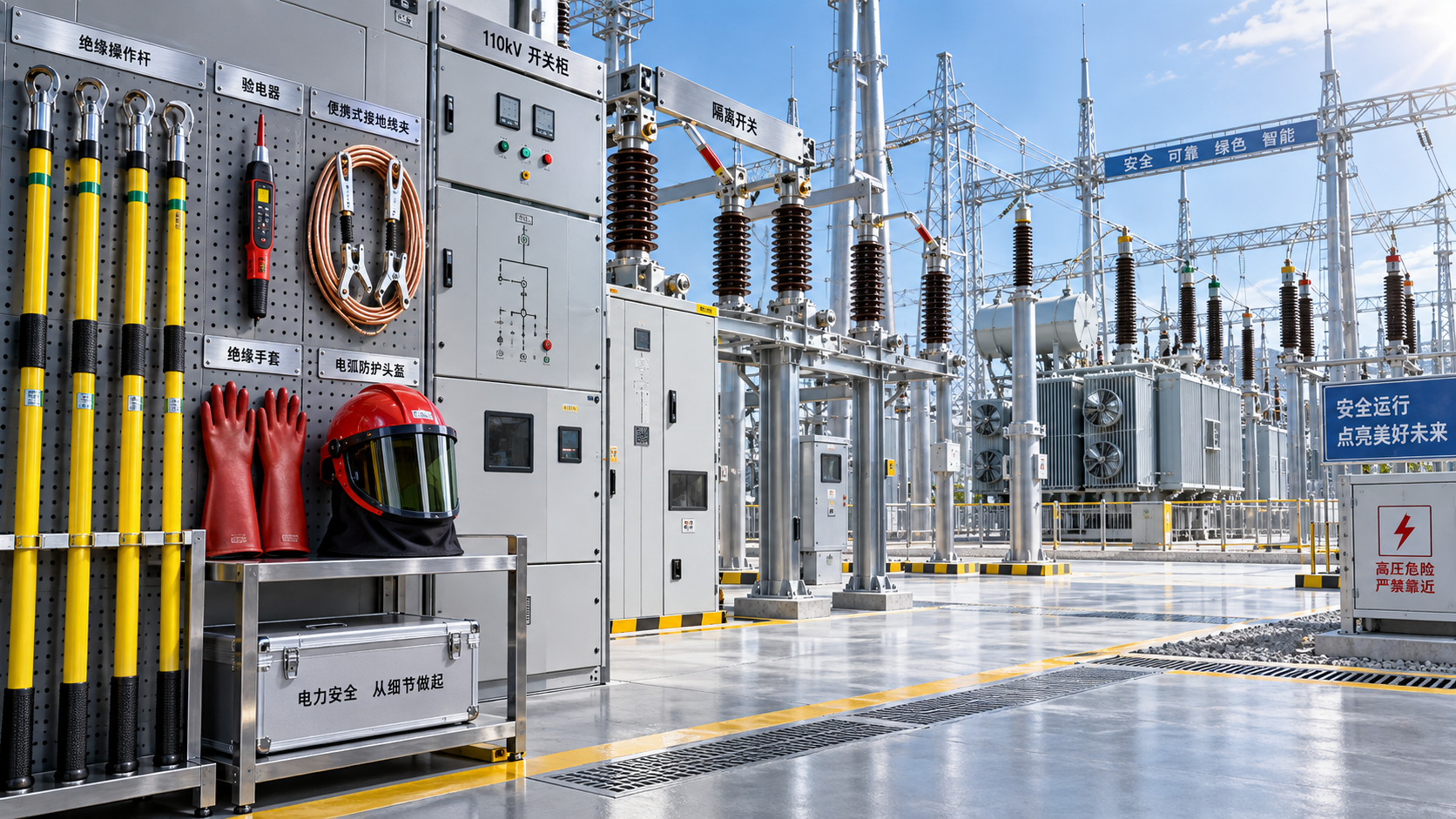
That is one reason many teams review adjacent safety equipment at the same time as cabinet planning. For example, where maintenance personnel work on or near energized electrical equipment, properly specified Insulating rubber gloves may be part of the work preparation. Their application covers live-line work, substation maintenance, electrical installation and repair, operation of electrical equipment, and high-voltage safety protection, with voltage classes including Class 00, 0, 1, 2, 3, and 4, and standards such as IEC 60903 and ASTM D120. This does not change cabinet performance, but it does help keep environmental checks aligned with actual electrical safety conditions during service.
Comparing cabinet options without getting lost in specifications
When several models seem similar, compare them through the lens of project use rather than brochure language. One practical way is to think in terms of three matching questions.
First, can the cabinet handle the site’s most difficult environmental period, not just average conditions? A model that works during mild months but struggles during condensation season may create avoidable service calls later.
Second, is the control strategy appropriate for the equipment inside? Sensitive electronics may need tighter stability and better alarm visibility than general storage or low-risk auxiliary parts.
Third, can the cabinet be maintained without creating unnecessary downtime or safety complications? Replaceable components, accessible sensors, readable displays, and straightforward inspection points matter more over time than decorative interface features.
It is also worth checking whether the cabinet integrates realistically with the rest of the installation. Cable routing, mounting space, ventilation restrictions around the enclosure, and the local power supply arrangement can all affect performance after installation. A good selection on paper can turn into a mediocre one if the cabinet is forced into a corner with poor clearance or inconsistent auxiliary power.
When a larger cabinet is not automatically the safer choice
Some decision makers lean toward larger cabinets for caution, assuming more internal volume means more protection. That is not always true. Larger internal space may take longer to stabilize, and if the heat load inside is low, the cabinet may be more vulnerable to temperature variation in certain conditions. On the other hand, a cabinet that is too compact may trap heat around components or restrict proper separation.
The better approach is to size the enclosure around the actual equipment arrangement, heat generation, required access space, and control method. Environmental stability depends on balance. Oversizing without purpose can be just as unhelpful as undersizing.
Installation decisions can undermine a good cabinet
Even a well-chosen temperature and humidity control cabinet can underperform if the installation is careless. This is where many recurring problems begin. A cable gland left poorly sealed, a door that is not adjusted after transport, or a cabinet placed directly beside a heat source or cold wall can distort the internal environment enough to cause misleading performance issues.
Mounting position should allow normal air circulation around the cabinet exterior while avoiding obvious exposure to dripping water, direct process heat, or unnecessary sunlight where relevant. Sensor placement inside the cabinet should reflect representative internal conditions rather than a localized hot or cold zone. During commissioning, it is better to verify actual behavior over a realistic period than to rely only on initial power-on readings.
Access patterns should be considered too. If staff open the cabinet repeatedly during humid periods, internal control settings may need adjustment, or some equipment may need relocation within the cabinet. The goal is to support the way the cabinet will really be used, not the idealized use imagined during procurement.
Signs that your selection criteria are on the right track
You are usually asking the right questions if the discussion moves beyond general features and toward operating logic, enclosure integrity, maintenance practicality, and site-specific risk. It is a good sign when the evaluation includes both normal conditions and awkward ones: seasonal humidity peaks, temporary power interruptions, infrequent inspections, or sudden temperature changes after shutdown.
It is also a strong sign when the team considers service behavior early. If sensors need checking, filters need cleaning, or components may need replacement, that should be possible without turning routine maintenance into a complicated intervention. In electrical environments, even simple inspection work benefits from matching procedures and protective equipment to the actual hazard level. Where the task involves exposure near energized equipment, Insulating rubber gloves are one example of safety gear that may be relevant within the broader maintenance setup.
Making the final choice without overcomplicating it
If several options remain after technical comparison, the final decision usually becomes clearer when you narrow the objective to three things: stable protection for the equipment inside, suitability for the real environment, and manageable upkeep over the life of the installation. That keeps attention on function instead of distraction by minor specification differences that may not matter in service.
A reliable selection process does not require guessing the future perfectly. It requires identifying the most credible environmental risks, understanding the sensitivity of the equipment, and choosing a cabinet whose enclosure design, control logic, and maintenance accessibility match those conditions. For most projects, that is the difference between a cabinet that merely exists on a layout drawing and one that actively prevents moisture-related trouble.
When choosing a temperature and humidity control cabinet, the safer decision is usually the one grounded in operating conditions, not assumptions. If you begin with the environment, verify how the enclosure and control system will behave there, and align maintenance with electrical safety practice, the selection becomes much less uncertain and far more useful in the field.
Recommend
 Oct 25, 2026
Homemade Bird Repellent Spray: Recipe Limits and Outdoor Surface Risks
Searching for how to make homemade bird repellent spray? Discover recipe limits, outdoor surface risks, electrical safety tips, and safer deterrents before you spray.
- Oct 25, 2026
Natural Bird Deterrents for Rooftops: Choosing Nonchemical Options
Learn how to repel birds naturally with humane rooftop barriers and smarter maintenance. Compare nonchemical options to protect electrical equipment and keep roof access clear.
- Oct 24, 2026
Home Remedies for Repelling Birds: What to Try on Patios and Railings
Learn how to repel birds with home remedies for cleaner patios and railings. Discover humane DIY options, avoid harmful sprays, and keep deterrents clear of electrical equipment.