English
 Español
 Português
 Français
 Deutsch
 русский
 한국어
한국어 にほんご
にほんご हिन्दी, हिंदी
 বাংলা
বাংলা Bahasa Indonesia
 Türkçe
 Việt
Việt dansk
dansk čeština
 עִבְרִית Ivrit
 Filipino/Pilipino
 български език (Bǎlgarski jazik)
 suomi
suomi norsk
norsk język polski
 ไทย
ไทย ກະຣຸນາ
 Bahasa Melayu
 ភាសាខ្មែរ
 ဗာရမ်
ဗာရမ် اردو
اردو فارسی
فارسی Italiano
 Nederlands
 svenska
 Монгол хэл
 नेपाली
 සිංහල
සිංහල Ўзбек тили
 پښتوتۆرکجه
 Ελληνικά
 српски / srpski
 magyar
 українська
 Kiswahili
 Қазақ тілі
 Română
 Hrvatski
 Bosanski
 Kreyòl ayisyen
 አማርኛ
አማርኛ Hausa
Hausa Yorùbá
 Igbo
IgboIs JINPOWER Electrical Safety Equipment Reliable for Overseas Substation Projects?
Is JINPOWER Electrical Safety Equipment Reliable for Overseas Substation Projects?
For utilities, EPC contractors, and distributors working on cross-border grid projects, reliability is rarely a vague branding question. It usually means something very practical: will the equipment arrive as specified, align with project standards, hold up in real field conditions, and support safe work over time? When people ask whether JINPOWER electrical safety equipment is reliable for overseas substation projects, that is the real issue behind the wording.
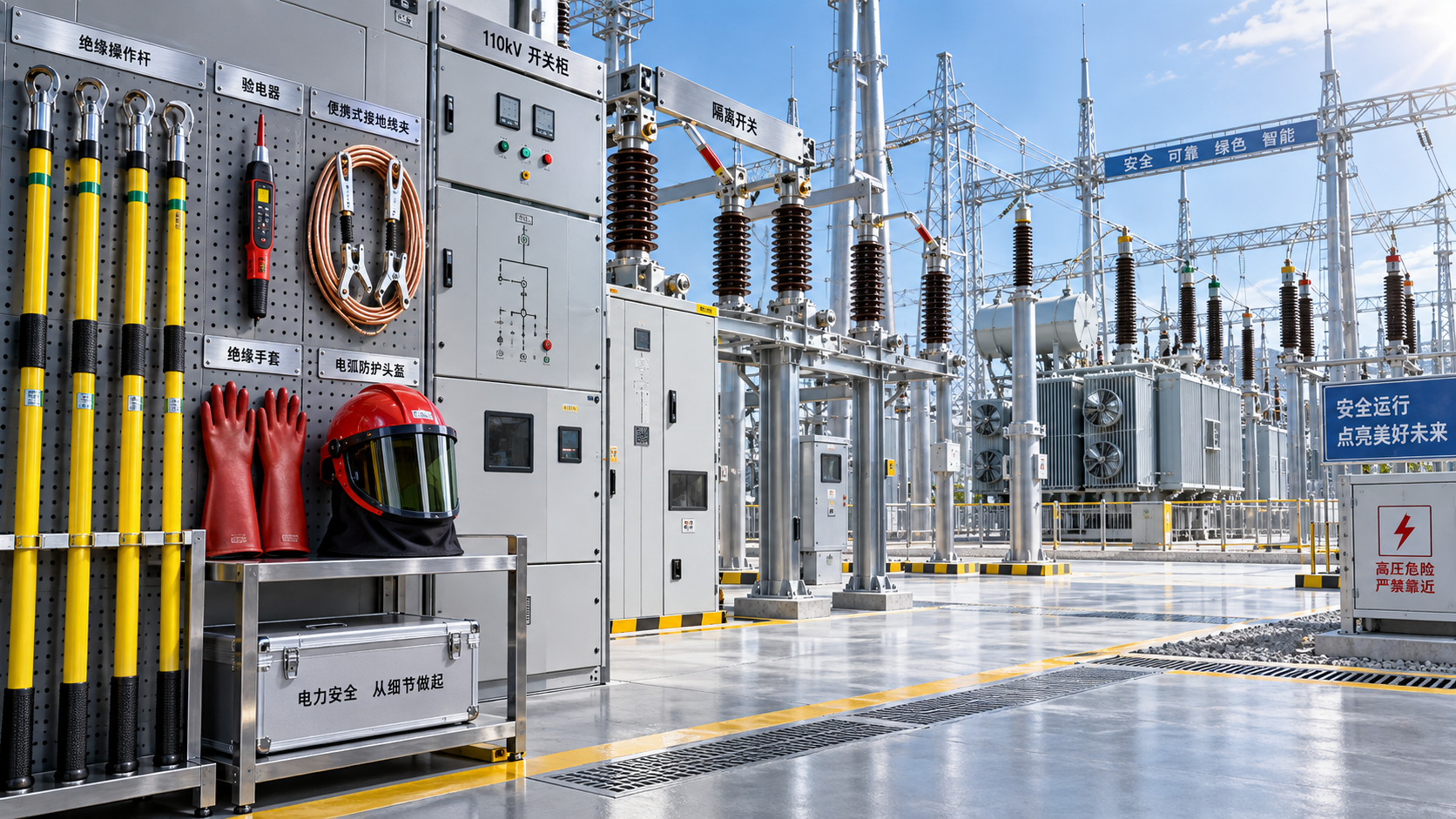
In substation environments, electrical protective tools are not peripheral items. They sit close to daily risk control. Insulating gloves, hot line tools, grounding devices, detectors, barriers, ladders, mats, and related safety products are expected to perform consistently, often in weather, dust, humidity, or maintenance conditions that are far less controlled than factory testing rooms. So reliability is not a single feature. It is the combination of design discipline, manufacturing consistency, quality control, standards awareness, and the supplier’s ability to support international delivery without losing technical accuracy.
On that basis, JINPOWER has a credible position. Founded in 2009, Hebei Jinneng Power Technology Co., Ltd. has focused specifically on electrical safety equipment for the power industry. That specialization matters more than many buyers first assume. A supplier that spends years inside one category tends to understand the difference between a product that looks acceptable in a catalog and one that can actually be used with confidence in substations, utilities, renewable energy facilities, and industrial maintenance environments.
What reliability really means in an overseas substation context
A domestic purchase and an overseas substation project are not judged by the same yardstick. In international projects, buyers normally evaluate at least four layers at once.
The first is technical suitability. Protective equipment has to match voltage level, application scenario, operating method, and maintenance routine. A product can be well-made and still be the wrong choice if it does not fit the work procedure used on site.
The second is standards compatibility. Different markets may reference IEC frameworks, local utility rules, tender documents, or contractor-specific approval lists. Reliability therefore includes how clearly a supplier can identify what a product is designed to comply with, and where project-side confirmation is still required.
The third is manufacturing consistency. For large or phased projects, sample quality is not enough. Buyers want assurance that the same performance level can be repeated across batches and timelines.
The fourth is delivery stability. Even strong products become a project problem if packaging, documentation, spare planning, labeling, or communication break down during export execution.
This is why the question is JINPOWER electrical safety equipment reliable for overseas substation projects cannot be answered by saying only that the company exports worldwide. Export experience helps, but the more useful answer is whether the company’s operating model supports those four layers in a disciplined way.
Why specialization matters more than a broad catalog
JINPOWER states that it has spent more than 17 years focused on the research, development, and production of electrical protective tools. In this sector, that kind of concentration is meaningful. Substation safety equipment is not a generic accessories business. Product performance depends on materials, insulation behavior, structural strength, ergonomic details, and the way tools are used under procedural pressure by line crews or maintenance teams.
A focused manufacturer is usually better placed to understand issues that overseas buyers actually raise during project review: whether a grounding set configuration fits local conductor arrangements, whether an insulating ladder is practical for switchyard movement, whether labeling can be adapted for multilingual operations, whether test expectations are clear before shipment, and whether recurring orders can keep the same specification baseline.
This does not automatically make every item suitable for every tender. It does suggest that JINPOWER approaches the category from a technical safety perspective rather than treating it as a side line.
Integrated control is often the difference between acceptable and dependable
One detail in JINPOWER’s background deserves attention: the company describes an integrated system covering R&D, manufacturing, quality control, and customer service. For overseas substation procurement, that structure is often more important than a long product list.
When product development, production, and quality processes are disconnected, the risks show up quickly. Technical drawings may not reflect actual production practice. Sales teams may promise one configuration while the factory ships another. Inspection records may exist, but not in a form a project team can use. These gaps are common pain points in cross-border supply.
An integrated operating model usually improves consistency in three ways. It shortens the feedback loop when customers need modifications or clarifications. It reduces the chance that commercial and technical information drift apart. And it gives buyers a better path for handling recurring orders, because the specification logic stays within one system instead of being rebuilt every time.
That does not remove the need for buyer-side verification. Serious projects should still confirm drawings, ratings, material details, inspection scope, and packing requirements before release. But it is easier to manage these steps with a supplier whose internal process appears designed for continuity.
Standards-oriented products are necessary, but project matching still comes first
JINPOWER indicates that its products are designed to meet international standards and demanding field conditions. That is the right direction, especially for projects spanning different regulatory or contractor environments. Still, buyers should keep one point clear: standards-oriented design is not the same as automatic project acceptance.
In substation work, the relevant requirement may depend on the product type, operating voltage, utility practice, and tender wording. Some projects ask for a specific test method. Others require certain documentation formats, markings, or witness inspection arrangements. In many cases, the question is less “does this product have a global label” and more “does this exact configuration satisfy the project file and local operating rule.”
A reliable supplier helps by being clear rather than vague. If JINPOWER is being evaluated, the practical approach is to request item-level confirmation against the project’s technical schedule, not just general statements about compliance. Reliable manufacturers are usually comfortable with that level of scrutiny.
Field durability is not only about materials
Overseas substations can expose equipment to UV, rain, heat, storage delays, transport vibration, and varied user habits. Buyers often think durability is mainly a material question, but in practice it depends on several linked decisions: structural design, production tolerances, packaging, instructions, and how closely the product matches the actual task.
JINPOWER’s emphasis on long-term durability and demanding field conditions is relevant here. A company serving substations, utilities, renewable energy projects, and industrial maintenance over many years is likely to have seen different operating realities. That experience can help prevent a common export problem: shipping technically acceptable products that are inconvenient or fragile in day-to-day field use.
Still, durability should be reviewed product by product. For example, storage conditions, replacement cycles, periodic testing practices, and environmental exposure can all affect service life. Those points usually need to be discussed early, especially when the end user and the importer are not the same organization.
Global reach is useful, but repeatability is the stronger signal
JINPOWER states that its products are trusted by more than 40,000 customers across over 100 countries and regions. That scale suggests the company is not new to overseas communication, logistics, or market variation. For distributors and contractors, international footprint does matter because it usually reflects some maturity in export handling and product adaptation.
Even so, seasoned buyers tend to look beyond geographic reach. The better question is whether the supplier can repeat quality and communication across orders. Overseas substation projects often involve phased supply, replacement demand, and specification updates after site feedback. A supplier may perform well on a sample order but struggle when documentation, lead time coordination, and version control become more complex.
This is where a long-term partnership model matters. JINPOWER positions itself as building lasting relationships with distributors, contractors, and utilities. That is encouraging if it translates into disciplined technical follow-up, stable product records, and responsive issue handling rather than just broad sales coverage.
How to evaluate JINPOWER for your project without guesswork
If you are deciding whether JINPOWER electrical safety equipment is reliable for overseas substation projects, the safest route is not to rely on generic claims from any supplier. Use a project-based review.
Start with the work scenario. What exact tasks will the crews perform, and under what voltage classes and maintenance procedures? Then review whether each product category is matched to those tasks.
Next, compare the supplier’s technical documentation with the tender or utility requirement. Check dimensions, ratings, materials, accessories, markings, packaging, and any requested inspection points. If the project spans multiple countries or operating entities, confirm whether one specification truly fits all locations.
It is also worth discussing recurring supply early. If future replenishment matters, ask how product consistency is controlled from batch to batch and how changes, if any, are communicated. For safety items, silent substitutions are not a minor issue.
Finally, evaluate responsiveness. A reliable overseas supplier is not simply one that ships on time once. It is one that can answer technical questions clearly, identify where confirmation is still needed, and support the documentation discipline that power projects usually require.
A balanced conclusion
So, is JINPOWER electrical safety equipment reliable for overseas substation projects? On the information available, there are solid reasons to treat the company as a serious candidate. Its long specialization in electrical protective tools, integrated R&D-to-quality structure, focus on international standards, and broad overseas customer base all point in the right direction for substation applications.
At the same time, reliability in this field is always tied to project fit. The right conclusion is not that every product is automatically suitable for every overseas tender, but that JINPOWER appears to have the manufacturing focus and operating depth that buyers typically look for when sourcing critical safety equipment internationally.
If the project is substantial, the sensible next step is to review item-level specifications, required standards, environmental conditions, packaging details, and delivery expectations before final selection. That is how experienced contractors and utilities separate a promising supplier from a dependable one.
Recommend
 Oct 25, 2026
Homemade Bird Repellent Spray: Recipe Limits and Outdoor Surface Risks
Searching for how to make homemade bird repellent spray? Discover recipe limits, outdoor surface risks, electrical safety tips, and safer deterrents before you spray.
- Oct 25, 2026
Natural Bird Deterrents for Rooftops: Choosing Nonchemical Options
Learn how to repel birds naturally with humane rooftop barriers and smarter maintenance. Compare nonchemical options to protect electrical equipment and keep roof access clear.
- Oct 24, 2026
Home Remedies for Repelling Birds: What to Try on Patios and Railings
Learn how to repel birds with home remedies for cleaner patios and railings. Discover humane DIY options, avoid harmful sprays, and keep deterrents clear of electrical equipment.