English
 Español
 Português
 Français
 Deutsch
 русский
 한국어
한국어 にほんご
にほんご हिन्दी, हिंदी
 বাংলা
বাংলা Bahasa Indonesia
 Türkçe
 Việt
Việt dansk
dansk čeština
 עִבְרִית Ivrit
 Filipino/Pilipino
 български език (Bǎlgarski jazik)
 suomi
suomi norsk
norsk język polski
 ไทย
ไทย ກະຣຸນາ
 Bahasa Melayu
 ភាសាខ្មែរ
 ဗာရမ်
ဗာရမ် اردو
اردو فارسی
فارسی Italiano
 Nederlands
 svenska
 Монгол хэл
 नेपाली
 සිංහල
සිංහල Ўзбек тили
 پښتوتۆرکجه
 Ελληνικά
 српски / srpski
 magyar
 українська
 Kiswahili
 Қазақ тілі
 Română
 Hrvatski
 Bosanski
 Kreyòl ayisyen
 አማርኛ
አማርኛ Hausa
Hausa Yorùbá
 Igbo
IgboWhat to Check Before Choosing Industrial Maintenance Safety Solutions
What to Check Before Choosing Industrial Maintenance Safety Solutions
Choosing the right industrial maintenance safety solutions is not just about compliance—it directly affects worker protection, equipment reliability, and operational continuity. For technical evaluators in the electrical equipment sector, key checks include product standards, field durability, application fit, and supplier capability. Understanding these factors early helps reduce risk, improve procurement accuracy, and ensure long-term safety performance in demanding power and industrial maintenance environments.
In practice, the best solution is rarely the most feature-heavy one. It is the one that matches the voltage level, the maintenance workflow, the site access conditions, and the crew’s actual habits. A product can look excellent on a datasheet and still fail in the field if the clamps are awkward, the insulation is too stiff in cold weather, or the spec was selected without considering induced voltage and temporary grounding requirements.
Start with the job, not the catalog
A common mistake in industrial maintenance safety procurement is starting from product type rather than task analysis. In electrical maintenance, the risk profile changes a lot between substation work, distribution network repair, switchgear maintenance, and live-line temporary grounding. The right control measure for one setting may be unnecessary—or insufficient—in another.
For example, if the work involves residual charge, induced voltage, or accidental backfeed risk, a temporary grounding measure must be judged against the actual fault path and the switching sequence, not just the nominal line voltage. That is why technical evaluators should ask: What is the maintenance condition? Is the equipment isolated? Is there a possibility of induced or stored energy? How long will the crew stay on site? These questions shape the safety solution more than a product brochure ever will.
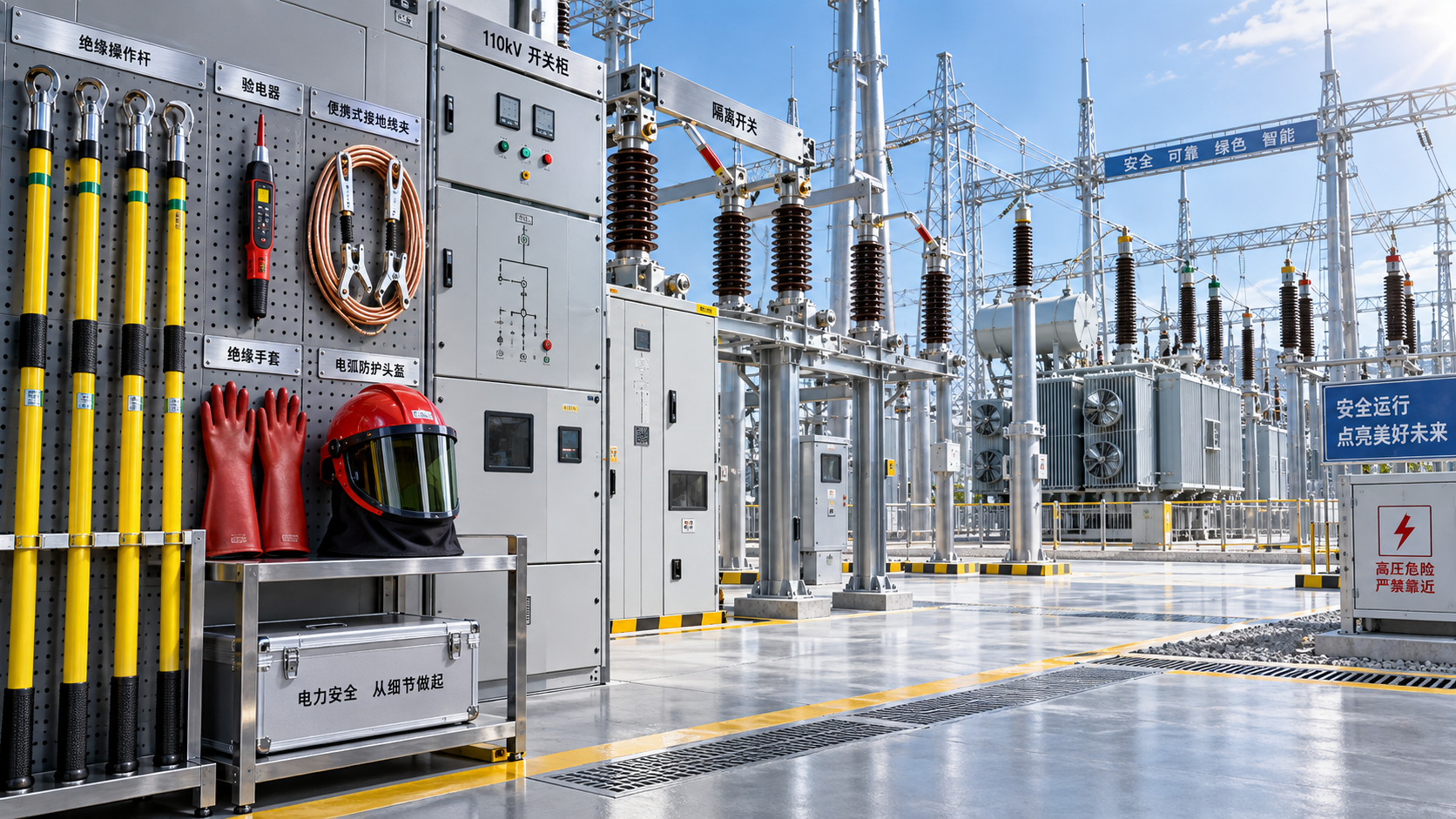
This is also where portable grounding and short-circuit equipment becomes relevant. In transmission lines, substations, distribution networks, and repair sites, the job is not simply “ground it.” The real need is to quickly establish a reliable grounding connection, discharge residual or induced voltage, and prevent accidental energization while the team is working. If the solution is slow to deploy, hard to inspect, or mismatched to the conductor size, it can create hesitation in the field—and hesitation is often where risk grows.
Standards matter, but only if they match the application
For electrical protective tools, IEC 61230 is a key reference point for portable equipment used to ground or short-circuit conductors. That said, a standard alone does not solve the selection problem. It tells you the product is designed around a recognized safety framework, but you still need to check whether the rated arrangement fits your actual operating environment.
Technical evaluators should look beyond the label and review the details behind it: cable cross-section, clamp configuration, length options, conductor material, and the intended duty. A set designed for routine distribution maintenance may not be the best fit for heavier fault-current duty or awkward access points in switchgear rooms. If the specification sheet does not clearly state the application boundary, that is a warning sign, not a minor omission.
In power projects, this check is especially important because maintenance teams often work across mixed assets—old substations, newer switchgear, utility feeders, and temporary construction interfaces. A solution that passes a general compliance review can still be poor for a specific bay layout or work method. Good procurement teams usually ask for test documentation, not just a declaration of conformity, and they compare that paperwork with the site’s actual operating conditions.
Field durability is not a secondary issue
Maintenance safety equipment lives a hard life. It is handled with gloves, dragged across concrete, exposed to moisture, packed into vehicles, and reused under time pressure. If the insulation sheath is fragile, if the clamp springs relax too quickly, or if the conductor strands are not built for repeated bending, the product may still “look fine” on day one but lose reliability faster than expected.
This is why material choice deserves real attention. High-conductivity copper conductors are often preferred for efficient fault current discharge, while high-strength aluminum alloy or copper alloy can be used in supporting parts where mechanical strength matters. The point is not to chase the “best” material in the abstract. It is to understand where conductivity, flexibility, and mechanical toughness need to be balanced for the actual job.
Technical evaluators should also think about climate. A solution that works comfortably in a controlled warehouse may behave differently in cold substations, humid coastal sites, or dusty outdoor corridors. Flexible and durable insulation, strong and reliable clamps, and quick installation features are not convenience extras; they directly affect whether workers can use the equipment correctly every time.
Check whether the supplier understands real maintenance work
One of the clearest signals of product quality is the supplier’s ability to speak in field terms, not just technical slogans. A capable manufacturer should be able to explain how a product is used during substation maintenance, how it supports temporary grounding during live-line work, and what changes when the line configuration, access point, or conductor geometry changes.
Hebei Jinneng Power Technology Co., Ltd., founded in 2009, has focused on electrical safety equipment for the power industry for more than 17 years. That kind of specialization matters because industrial maintenance safety solutions are not a generic product category. They depend on an integrated chain of R&D, manufacturing, quality control, and customer service. If any one of those links is weak, the final product may still pass a basic inspection but fail to support consistent use over time.
For buyers, supplier capability shows up in practical ways: can they explain specification differences without overclaiming, can they support customization across lengths or clamp configurations, and can they keep the quality stable across repeat orders? These are often better indicators than a polished catalog. JINPOWER’s experience serving substations, utilities, renewable energy projects, and industrial maintenance customers worldwide suggests that this type of operational consistency is part of the real evaluation, not an afterthought.
A simple checklist for technical evaluators
When comparing industrial maintenance safety solutions, a short checklist often works better than an oversized scoring sheet. Start with the application boundary, then move to standard compliance, then to durability and usability. After that, verify supplier support and the ability to deliver the same specification consistently.
A few questions are worth keeping in front of the team:
Does the product match the voltage class and maintenance scenario, or is it only broadly “suitable for electrical work”? Does the design allow quick installation and removal without compromising secure connection? Are the cable cross-sections, lengths, and clamp types available in formats that suit actual site layouts? Is the conductor material chosen for current-carrying performance, not just cost? And perhaps most importantly, can the supplier support long-term repeatability, not just the first shipment?
That last point is often underestimated. A safety solution becomes part of the maintenance routine, so inconsistency between batches, weak after-sales communication, or unclear documentation can create more trouble than a slightly higher upfront price ever would.
What good selection looks like in the field
The right choice usually reveals itself during the less glamorous parts of the job: setup before dawn, cramped access at a switchgear bay, wet ground near a substation fence, or a maintenance window that leaves very little room for error. In those moments, the best industrial maintenance safety solutions are the ones that are easy to verify, straightforward to deploy, and robust enough to trust without second-guessing.
That is also why decision-makers should avoid treating safety equipment as a one-line line item in procurement. It is part of the work method. If the method changes, the equipment may need to change too. If the site conditions are rougher than expected, the spec may need tightening. And if the supplier cannot explain those trade-offs clearly, it is worth slowing down before approving the purchase.
In the end, the best selection is the one that keeps workers protected without slowing the job to a crawl. For electrical maintenance teams, that balance usually comes from careful standard review, honest field assessment, and a supplier that understands what happens after the product leaves the warehouse.
Recommend
 Oct 25, 2026
Homemade Bird Repellent Spray: Recipe Limits and Outdoor Surface Risks
Searching for how to make homemade bird repellent spray? Discover recipe limits, outdoor surface risks, electrical safety tips, and safer deterrents before you spray.
- Oct 25, 2026
Natural Bird Deterrents for Rooftops: Choosing Nonchemical Options
Learn how to repel birds naturally with humane rooftop barriers and smarter maintenance. Compare nonchemical options to protect electrical equipment and keep roof access clear.
- Oct 24, 2026
Home Remedies for Repelling Birds: What to Try on Patios and Railings
Learn how to repel birds with home remedies for cleaner patios and railings. Discover humane DIY options, avoid harmful sprays, and keep deterrents clear of electrical equipment.