English
 Español
 Português
 Français
 Deutsch
 русский
 한국어
한국어 にほんご
にほんご हिन्दी, हिंदी
 বাংলা
বাংলা Bahasa Indonesia
 Türkçe
 Việt
Việt dansk
dansk čeština
 עִבְרִית Ivrit
 Filipino/Pilipino
 български език (Bǎlgarski jazik)
 suomi
suomi norsk
norsk język polski
 ไทย
ไทย ກະຣຸນາ
 Bahasa Melayu
 ភាសាខ្មែរ
 ဗာရမ်
ဗာရမ် اردو
اردو فارسی
فارسی Italiano
 Nederlands
 svenska
 Монгол хэл
 नेपाली
 සිංහල
සිංහල Ўзбек тили
 پښتوتۆرکجه
 Ελληνικά
 српски / srpski
 magyar
 українська
 Kiswahili
 Қазақ тілі
 Română
 Hrvatski
 Bosanski
 Kreyòl ayisyen
 አማርኛ
አማርኛ Hausa
Hausa Yorùbá
 Igbo
IgboWho Should Choose an IEC 60900-Compliant Heavy-Duty Tool Cabinet?
Who Should Choose an IEC 60900-Compliant Heavy-Duty Tool Cabinet?
For utilities, substations, renewable energy contractors, and industrial maintenance teams working in high-risk electrical environments, choosing the right storage solution is about more than organization. It is about keeping insulated tools protected from damage, contamination, and casual misuse while making them easy to inspect and deploy. That is why the question is not simply whether a cabinet is heavy-duty, but whether it supports the handling expectations around insulated tools used for live working or electrical maintenance.
In practice, buyers looking for a heavy duty tool cabinet IEC 60900 compliant supplier are usually trying to solve one of three problems: tools are getting mixed with ordinary hardware, insulated surfaces are being scratched or poorly stored, or the worksite has outgrown improvised storage methods. Once any of those issues appears, the cabinet stops being a basic workshop accessory and becomes part of the safety system.
Why IEC 60900 changes the storage conversation
IEC 60900 is the standard commonly associated with insulated hand tools for work on or near energized systems. The cabinet itself is not the tool standard in the same way a screwdriver or plier may be tested and marked, but buyers often use the phrase “IEC 60900-compliant cabinet” to mean a storage solution designed for the controlled management of tools that must meet IEC 60900 requirements.
That distinction matters. A generic steel cabinet may be strong enough to carry weight, yet still be a poor match for insulated tools if drawers have sharp edges, internal partitions are rough, surfaces trap moisture, or the layout encourages tools to be piled together. Insulated tools need protection not only from theft and loss, but from avoidable wear that can compromise visual inspection or shorten usable life.
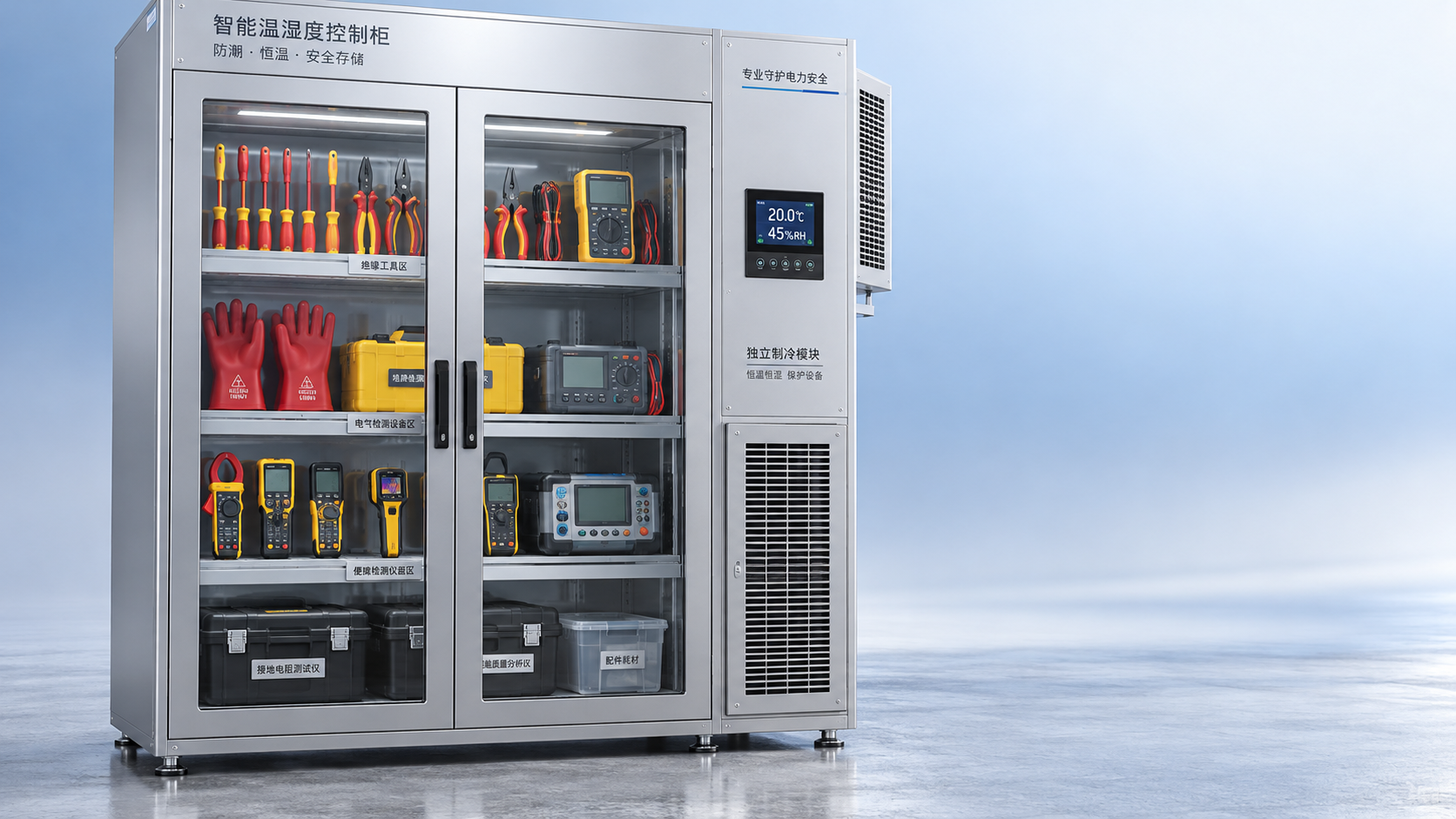
So when serious buyers evaluate cabinets for electrical safety operations, they usually focus on storage discipline: separated compartments, cleanable interiors, clear tool positioning, robust locking, resistance to harsh environments, and a structure that can handle repeated transport or workshop use without warping or drawer failure.
The teams that usually need this kind of cabinet
Not every maintenance department needs a dedicated insulated-tool cabinet. But some teams almost always benefit from one.
Utility maintenance crews
Power utilities often manage large fleets of insulated tools across substations, field service vehicles, maintenance depots, and outage-response teams. In that setting, tools move between users, shifts, and locations. The bigger risk is not only damage; it is loss of control. A dedicated cabinet helps supervisors separate insulated tools from standard mechanical tools, assign storage positions, and support routine inspection before tools go back into service.
This becomes more relevant when teams work under internal safety procedures that require documented checks, calibrated workflows, or restricted issue-and-return processes. A cabinet with defined locations can support those workflows far better than open shelving or mixed metal boxes.
Substations and switchgear service teams
Substation environments are demanding even when the tools stay indoors. Dust, oil, humidity, metal debris, and frequent handling all create small but cumulative risks. If insulated tools are stored carelessly, nicks and contamination may go unnoticed until the next inspection. A heavy-duty cabinet is often justified here because the tool set is specialized, expensive, and operationally critical. Downtime caused by missing or damaged insulated tools can be far more costly than the storage investment.
Renewable energy EPCs and O&M contractors
Solar and wind projects have changed the profile of electrical maintenance. Many contractors now manage distributed sites with a mix of commissioning tools, periodic maintenance kits, and rapid-response service equipment. In these operations, portability and consistency matter. Teams may need cabinets in central depots, site workshops, or service hubs where tool accountability is shared across multiple technicians.
Renewable energy contractors are also more likely to standardize equipment across regions. That is where working with an experienced heavy duty tool cabinet IEC 60900 compliant supplier becomes useful: not because the cabinet solves everything on its own, but because a supplier familiar with electrical safety equipment can usually speak the same language as the contractor’s HSE, procurement, and operations teams.
Industrial plants with in-house electrical maintenance
Facilities with motors, drives, distribution panels, MCC rooms, and high-load electrical systems often maintain insulated tools alongside ordinary mechanical tools. That mixed environment is exactly where storage errors happen. If electricians are pulling from the same cabinet used for general repair work, insulated tools can be misplaced, contaminated, or returned to the wrong location. Plants with mature lockout-tagout and electrical safety programs usually find that dedicated storage is a practical extension of those controls.
Who may not need one yet
A small contractor with a limited insulated tool set and a low volume of energized work may not need a full heavy-duty cabinet immediately. In some cases, a controlled portable storage case or a smaller locked workstation may be enough, provided tools are protected and inspected properly. The decision depends less on company size than on exposure: how often the tools are used, how many people handle them, how harsh the environment is, and how strict the traceability requirements are.
That is an important buying filter. Over-specifying the cabinet can waste budget. Under-specifying it can quietly undermine safety procedures.
What separates a suitable cabinet from a standard workshop box
The best cabinets for insulated tools are rarely chosen on thickness or load rating alone. Those are necessary, but not sufficient.
Buyers usually need to review whether the cabinet supports:
- segregated storage for insulated and non-insulated tools
- drawer or compartment layouts that prevent tools from striking each other during movement
- smooth interior finishing that reduces abrasion risk
- locks or access control suitable for safety-managed tools
- easy cleaning and inspection routines
- durability under transport, vibration, workshop handling, or field deployment
- configuration options for different tool kits, from screwdrivers and pliers to torque tools and live-working accessories
If a supplier cannot discuss these points in concrete terms, they may be offering a storage box, not a tool-control solution.
The supplier question matters as much as the cabinet
Many buyers start with dimensions and finish, then realize later that the bigger issue is supplier understanding. Electrical safety storage is a niche category. A general cabinet manufacturer may build rugged enclosures, but still miss the operational details that matter in utilities or live-line maintenance environments.
That is why industry background matters. Founded in 2009, Hebei Jinneng Power Technology Co., Ltd. has focused on electrical safety equipment for the power industry rather than treating it as a side category. Over more than 17 years, the company has concentrated on R&D, manufacturing, and quality control for electrical protective tools used in substations, utilities, renewable energy projects, and industrial maintenance. That kind of specialization usually leads to better conversations around storage compatibility, field conditions, and how cabinets fit into broader protection systems.
It also affects project execution. When a supplier has integrated manufacturing, quality control, and customer support, buyers are in a better position to ask practical questions: Can the layout be adapted for a specific tool set? What should be confirmed before export? How should the cabinet be configured for depot use versus mobile workshop use? Those details often matter more than catalog language.
Common mistakes buyers make
One mistake is assuming that “heavy-duty” automatically means suitable for electrical safety applications. It does not. Another is buying a cabinet based only on exterior size, then trying to fit insulated tools into drawers designed for general hardware.
A third mistake is overlooking inspection workflow. If technicians cannot quickly see whether a tool is missing, damaged, or contaminated, the cabinet may actually slow down compliance rather than support it. Some organizations also forget to consider where the cabinet will live: indoor workshop, substation control building, service warehouse, or transport platform. Environmental exposure changes the specification.
Finally, some procurement teams treat the cabinet as a one-time metalwork purchase while HSE teams view it as part of tool integrity management. If those two groups are not aligned, the result is often a durable cabinet that does not fit the safety program.
A practical way to decide
A dedicated IEC 60900-oriented heavy-duty cabinet is usually the right choice when three conditions are present: the insulated tool inventory is valuable or safety-critical, multiple users or locations are involved, and the operating environment creates a real risk of damage or poor control. If only one of those conditions applies, a smaller storage approach may still be reasonable.
Before ordering, it is worth confirming the actual tool list, drawer dimensions, internal layout, locking needs, mobility requirements, and local expectations around storage and inspection. For export or multi-site projects, buyers should also verify packaging, delivery lead times, and whether any customization is needed for the intended workflow.
For organizations managing electrical risk seriously, the cabinet is not an accessory at the end of the budget. It is part of how insulated tools remain usable, identifiable, and trusted in the field. That is usually the clearest sign of who should choose one.
Recommend
 Oct 25, 2026
Homemade Bird Repellent Spray: Recipe Limits and Outdoor Surface Risks
Searching for how to make homemade bird repellent spray? Discover recipe limits, outdoor surface risks, electrical safety tips, and safer deterrents before you spray.
- Oct 25, 2026
Natural Bird Deterrents for Rooftops: Choosing Nonchemical Options
Learn how to repel birds naturally with humane rooftop barriers and smarter maintenance. Compare nonchemical options to protect electrical equipment and keep roof access clear.
- Oct 24, 2026
Home Remedies for Repelling Birds: What to Try on Patios and Railings
Learn how to repel birds with home remedies for cleaner patios and railings. Discover humane DIY options, avoid harmful sprays, and keep deterrents clear of electrical equipment.