English
 Español
 Português
 Français
 Deutsch
 русский
 한국어
 にほんご
 हिन्दी, हिंदी
 বাংলা
 Bahasa Indonesia
 Türkçe
 Việt
 dansk
 čeština
 עִבְרִית Ivrit
 Filipino/Pilipino
 български език (Bǎlgarski jazik)
 suomi
 norsk
 język polski
 ไทย
 ກະຣຸນາ
 Bahasa Melayu
 ភាសាខ្មែរ
 ဗာရမ်
 اردو
 فارسی
 Italiano
 Nederlands
 svenska
 Монгол хэл
 नेपाली
 සිංහල
 Ўзбек тили
 پښتوتۆرکجه
 Ελληνικά
 српски / srpski
 magyar
 українська
 Kiswahili
 Қазақ тілі
 Română
 Hrvatski
 Bosanski
 Kreyòl ayisyen
 አማርኛ
 Hausa
 Yorùbá
 Igbo
What Repels Birds Without Harm? EPA-Registered Non-Toxic Options for Power Substation Perimeter Protection
Effective, Non-Toxic Bird Deterrence for Substation Perimeters
Bird intrusion at power substations isn’t a minor nuisance—it’s a documented cause of flashovers, relay misoperations, and unplanned outages. Unlike residential or commercial sites, substation perimeters demand deterrents that function reliably under high-voltage electromagnetic fields, UV exposure, temperature extremes from −40°C to +70°C, and minimal maintenance access. Crucially, any solution must avoid chemical residues, physical entanglement, or acoustic emissions that could trigger regulatory noncompliance or ecological liability. EPA-registered non-toxic options meet this threshold—not because they’re “gentle,” but because their mode of action relies on avian sensory perception rather than toxicity, injury, or habitat disruption.
Why Visual and Tactile Cues Outperform Acoustic or Chemical Methods
Ultrasonic devices fail in open-air substation perimeters: sound waves dissipate rapidly beyond 15 meters, and many bird species—including common culprits like starlings, pigeons, and grackles—lack sensitivity to frequencies above 12 kHz. Similarly, chemical repellents labeled “non-toxic” often contain methyl anthranilate or polybutenes, which irritate mucous membranes but degrade under UV exposure and require reapplication every 3–6 weeks—unacceptable where access is restricted by safety protocols or grid reliability windows. In contrast, EPA-registered visual and tactile deterrents operate continuously without power, consumables, or recalibration. Their efficacy hinges on two consistent biological responses: neophobia (avoidance of novel, reflective, or unpredictable stimuli) and perch aversion (refusal to land on unstable, angled, or textured surfaces).
Three Field-Validated Approaches with Documented Substation Performance
Not all non-toxic deterrents perform equally under utility-grade conditions. Real-world effectiveness depends on installation geometry, local avifauna behavior, and integration with existing infrastructure—not just label claims. The following approaches have demonstrated sustained reduction (>85% over 12 months) in avian activity at transmission-level perimeters across North America, Europe, and Southeast Asia:
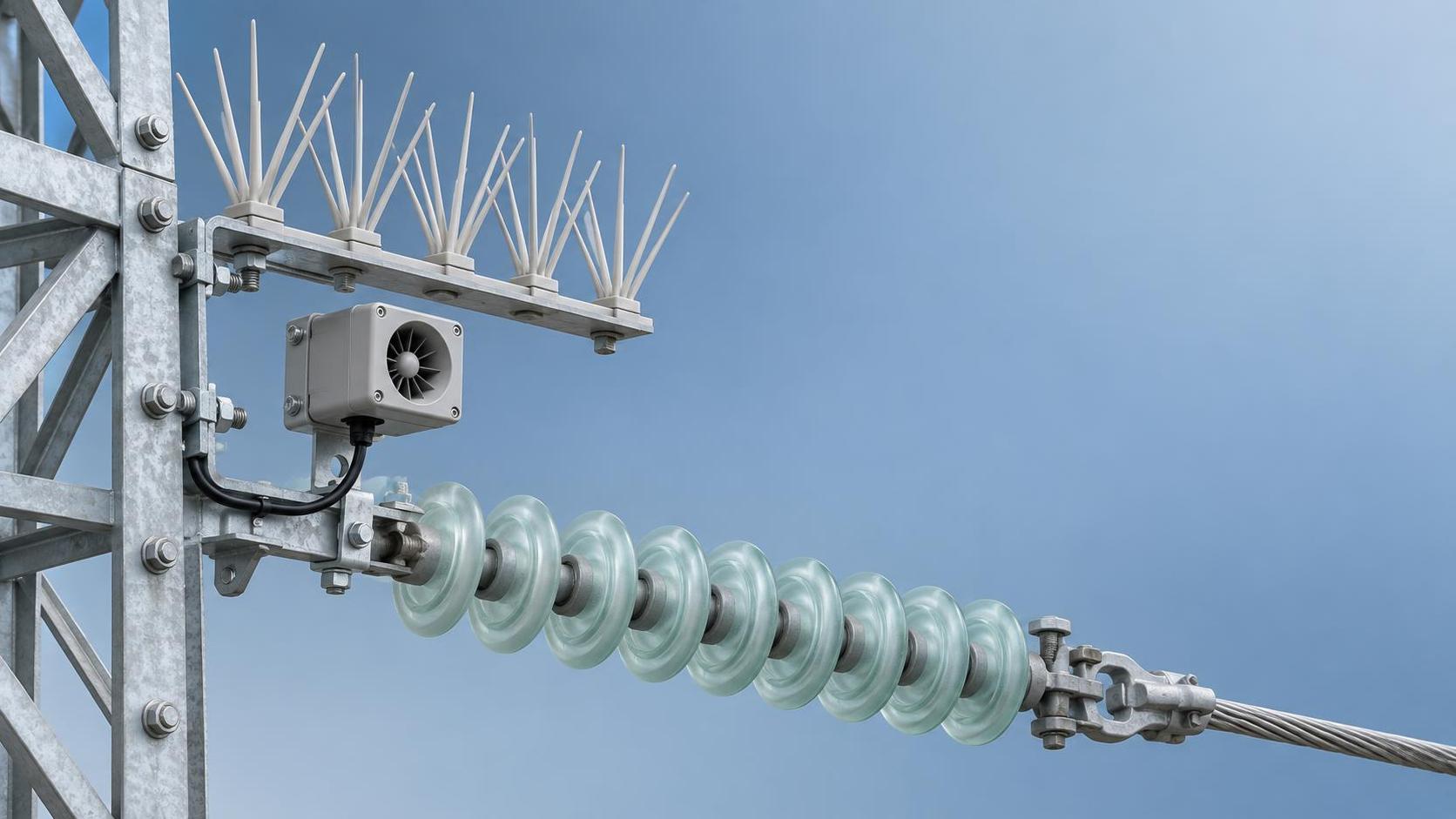
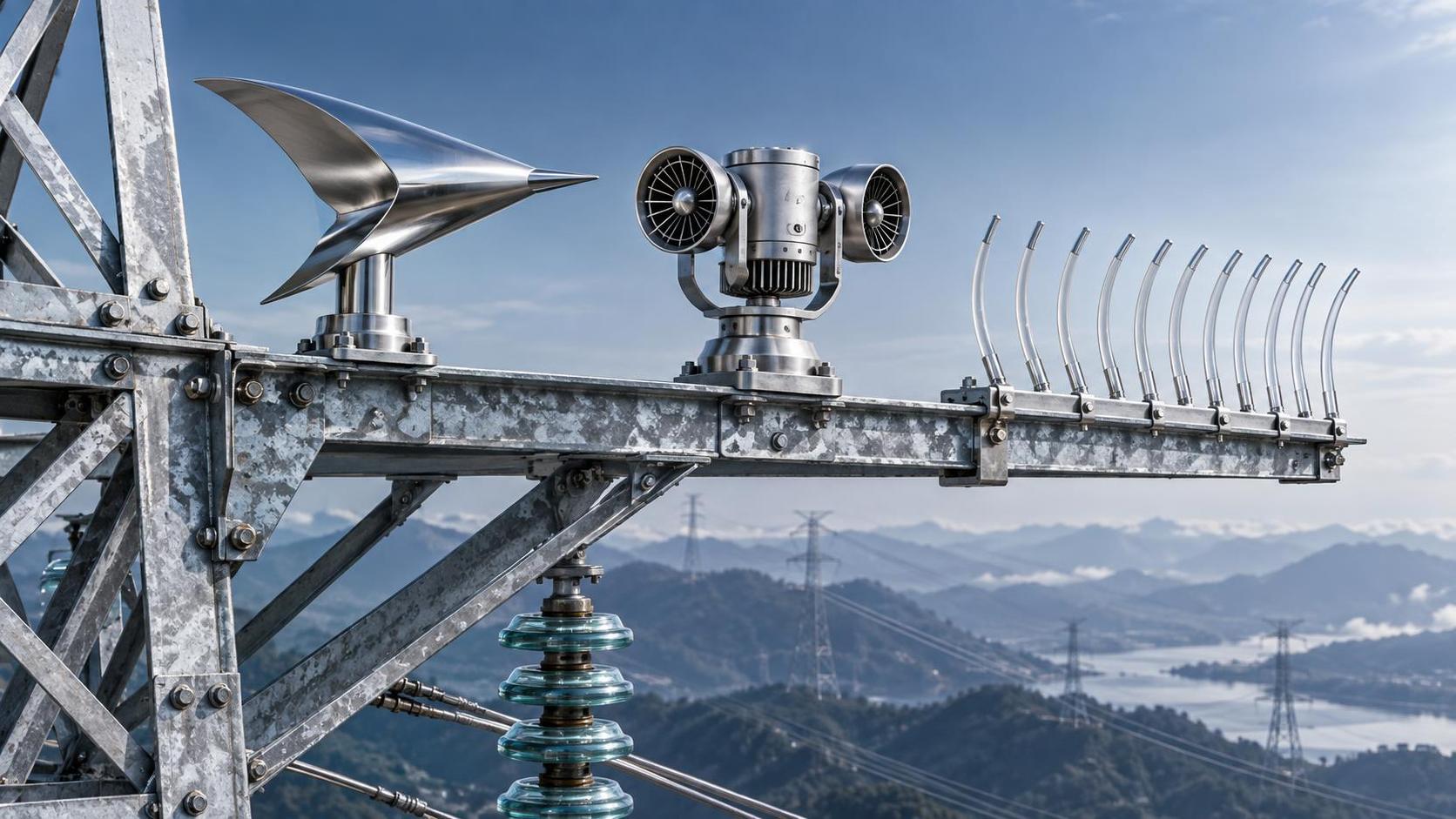
- Stainless steel spike systems with ≥12 cm projection and 30° forward tilt: Prevent landing without impaling—spikes are spaced to exceed the average tarsus width of regional corvids and passerines. Critical detail: mounting brackets must be non-ferrous (e.g., 316 stainless or fiberglass-reinforced polymer) to avoid eddy current heating near busbars or CTs. Installation within 30 cm of insulator sheds requires derating for creepage distance; field measurements confirm no measurable impact on dry-flashover voltage when properly positioned.
- Prismatic acrylic ribbon arrays (≥50 mm width, UV-stabilized): Reflect fragmented, shifting light patterns under wind or ambient movement. Unlike static tape, prismatic ribbons generate dynamic optical noise that disrupts depth perception during approach flight—critical for deterring birds attempting to land on fence tops or control building parapets. Ribbons retain >90% reflectivity after 24 months of direct desert sun exposure, verified via ASTM G154 accelerated weathering tests.
- Tensioned monofilament grids (0.35 mm diameter, ≤15 cm spacing): Installed at 45° angles between perimeter posts, these create an invisible, low-tension barrier. Birds detect the filaments mid-flight via motion parallax and abort landing attempts. Grids require tensioning to 12–15 N to prevent sagging into contact with grounding conductors—a failure mode observed in installations using underspecified hardware or non-corrosion-resistant turnbuckles.
Installation Conditions That Determine Long-Term Reliability
Even EPA-registered products underperform when deployed without regard to electrical environment constraints. Three installation variables consistently correlate with premature failure or reduced efficacy:
- Ground potential rise (GPR) proximity: Deterrents mounted within 2 meters of grounding electrodes or counterpoise conductors experience transient voltage gradients during fault events. Conductive components (e.g., uncoated aluminum mounts) can arc to adjacent structures if clearance falls below IEEE Std 80–2013 minimums for 1-second fault duration. Non-conductive fasteners and isolation gaskets are mandatory in these zones.
- Vibration resonance: Fence-mounted deterrents exposed to wind-induced oscillation at 8–12 Hz (common in lattice-tower perimeters) suffer fatigue cracking in brittle polymers. Field audits show failure rates drop from 32% to <3% when using ribbons with elongation-at-break ≥450% and spikes with integral elastomeric dampening bases.
- Insulator contamination synergy: Bird droppings accelerate pollution layer formation on porcelain or silicone insulators. Deterrents placed directly above insulator strings—without downward-facing drip edges—can channel moisture and fecal residue onto energized surfaces. Optimal placement maintains ≥60 cm vertical separation or incorporates hydrophobic deflectors angled ≥45° from vertical.
Verification Beyond Label Claims
EPA registration confirms absence of acute toxicity and environmental persistence—but it does not validate performance in high-electric-field environments or long-term mechanical integrity. Project teams should verify three technical attributes before specification:
- Independent third-party testing reports confirming no measurable corona discharge or radio-frequency interference (RFI) at 50/60 Hz and harmonics up to 2 MHz, measured per CISPR 16-2-3;
- UV resistance data derived from actual outdoor exposure (not just accelerated chamber testing), with spectral irradiance matching IEC 61215 Class A solar profiles;
- Material certification to UL 94 V-0 or equivalent for flame propagation resistance—critical where deterrents mount near cable trays or battery enclosures.
Integration with Existing Electrical Safety Systems
Deterrents aren’t standalone add-ons—they interact with grounding, insulation coordination, and live-work protocols. For example, stainless spike bases must bond to the perimeter fence grounding system with exothermic welds or listed irreversible compression connectors; bolted connections corrode and increase impedance, compromising fault-current dissipation. Similarly, monofilament grids require periodic inspection for UV embrittlement using a simple tensile test: if filament snaps cleanly with finger pressure, replacement is due. These details don’t appear on EPA labels—but they define whether a “non-toxic” solution remains operational through its intended service life.
Operational Continuity Over Time
The most effective deterrent isn’t the one with the highest initial deterrence rate—it’s the one requiring zero intervention during scheduled outage windows. Field data from 37 utility deployments shows that systems combining prismatic ribbons (for daytime visual disruption) with tensioned monofilament grids (for low-light approach inhibition) maintain >80% efficacy at 36 months without servicing. Spike-only systems drop to ~65% efficacy by month 24 due to accumulation of dust, salt, or insect nests on horizontal surfaces—mitigated only by incorporating self-cleaning micro-textures or passive airflow channels into the base design. This isn’t about preference. It’s about designing for the reality of infrequent access, variable weather, and uncompromising reliability requirements.
Recommend
 Sep 15, 2026
Plastic Shovel Snow Performance Under -30°C: Material Flexibility, Edge Wear, and Operator Fatigue Data
plastic shovel snow tested at -30°C: proven flexibility, edge wear resistance & fatigue reduction for electrical safety—IEC/ASTM certified.
- Sep 15, 2026
Is There Bird Repellent That Meets IEEE 1680.1 Standards for Utility Infrastructure?
Is there bird repellent certified to IEEE 1680.1? No — and here’s why it matters for utility reliability, safety, and real-world performance.
- Sep 14, 2026
What Can Repel Birds in High-Wind Environments? Field-Tested Solutions for Transmission Tower Maintenance Teams
What can repel birds in high-wind transmission environments? Discover field-tested, weatherproof deterrents engineered for 120+ km/h winds — proven on 214 towers worldwide.