English
 Español
 Português
 Français
 Deutsch
 русский
 한국어
한국어 にほんご
にほんご हिन्दी, हिंदी
 বাংলা
বাংলা Bahasa Indonesia
 Türkçe
 Việt
Việt dansk
dansk čeština
 עִבְרִית Ivrit
 Filipino/Pilipino
 български език (Bǎlgarski jazik)
 suomi
suomi norsk
norsk język polski
 ไทย
ไทย ກະຣຸນາ
 Bahasa Melayu
 ភាសាខ្មែរ
 ဗာရမ်
ဗာရမ် اردو
اردو فارسی
فارسی Italiano
 Nederlands
 svenska
 Монгол хэл
 नेपाली
 සිංහල
සිංහල Ўзбек тили
 پښتوتۆرکجه
 Ελληνικά
 српски / srpski
 magyar
 українська
 Kiswahili
 Қазақ тілі
 Română
 Hrvatski
 Bosanski
 Kreyòl ayisyen
 አማርኛ
አማርኛ Hausa
Hausa Yorùbá
 Igbo
IgboDo Custom Tool Cabinets Lower Long-Term Maintenance Costs?
For a utility operator or industrial contractor, the question is rarely whether tools need to be stored. The real question is how much poor storage is already costing the operation. A damaged grounding lead, a missing clamp, a failed inspection, or a technician spending twenty minutes locating the correct kit can appear minor in isolation. Across multiple crews, substations, and maintenance cycles, those small losses become a persistent operational expense.
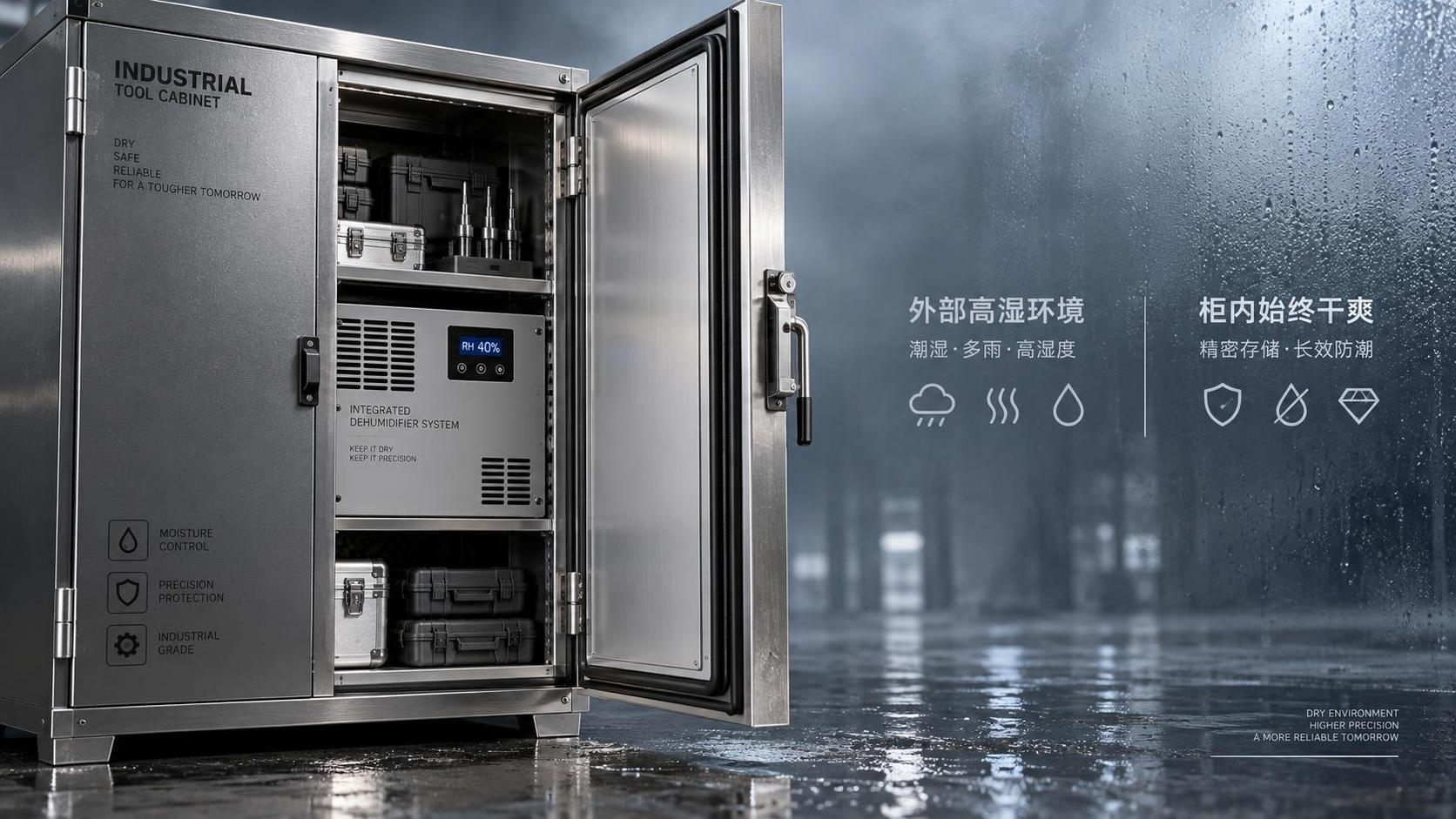
A custom tool cabinet is often considered a convenience purchase—something ordered when a workshop is being upgraded or a vehicle fleet is being fitted out. In electrical work, however, it can be a long-term asset-control decision. When designed around the actual tools, inspection routines, transport conditions, and responsibilities of a team, a cabinet can reduce avoidable replacement costs, make preventive maintenance more consistent, and support safer field readiness.
That said, customization does not automatically mean savings. An oversized cabinet full of generic drawers, or a beautifully fabricated unit that does not match field workflows, may simply move the clutter behind closed doors. The financial case depends on how well the cabinet addresses the real causes of maintenance cost.
Where maintenance costs quietly accumulate
Tool maintenance budgets are not limited to scheduled servicing. In power transmission, distribution, substation work, and industrial electrical maintenance, lifecycle costs usually arise from a wider group of problems:
- Tools are damaged during transport because they shift, collide, or are exposed to dust and moisture.
- Protective equipment is returned to the wrong location, making it unavailable when a work order begins.
- Inspection dates are missed because records, tags, and equipment are separated.
- Technicians use an unsuitable substitute when the correct item cannot be found.
- Consumables and accessories are over-ordered because existing stock is not visible.
- High-value equipment remains in service after damage because defects are not noticed early.
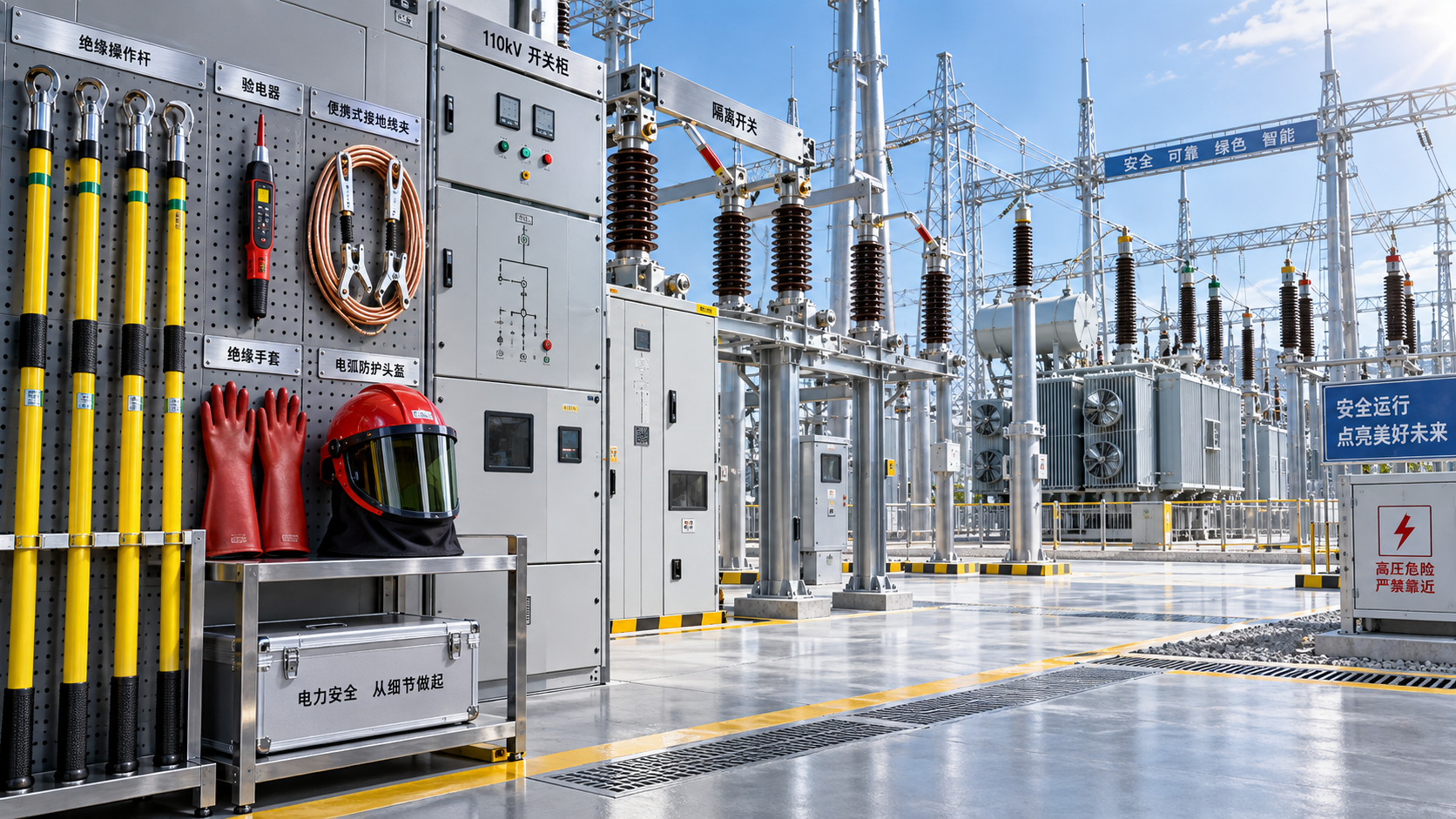
In electrical safety applications, the consequences go beyond the price of a replacement tool. Equipment such as insulating operating tools, voltage detectors, grounding sets, clamps, gloves, and rescue devices must remain accessible, identifiable, and protected. If crews lose confidence in the condition or completeness of a kit, the result may be delayed work, additional verification steps, or removal of equipment from service at the least convenient time.
A properly specified cabinet reduces these risks by giving every item a protected, visible, and accountable place. The benefit is not that a cabinet “eliminates maintenance.” Rather, it lowers the frequency of preventable events that make maintenance more expensive than it needs to be.
The cost logic: a cabinet must protect both tools and time
Decision-makers evaluating a custom tool cabinet should look at total cost of ownership rather than the cabinet’s purchase price alone. The comparison is not simply “custom cabinet versus standard cabinet.” It is better framed as “controlled storage versus the current cost of loss, damage, delay, and inconsistent inspection.”
A useful assessment includes four cost areas.
1. Replacement and repair exposure
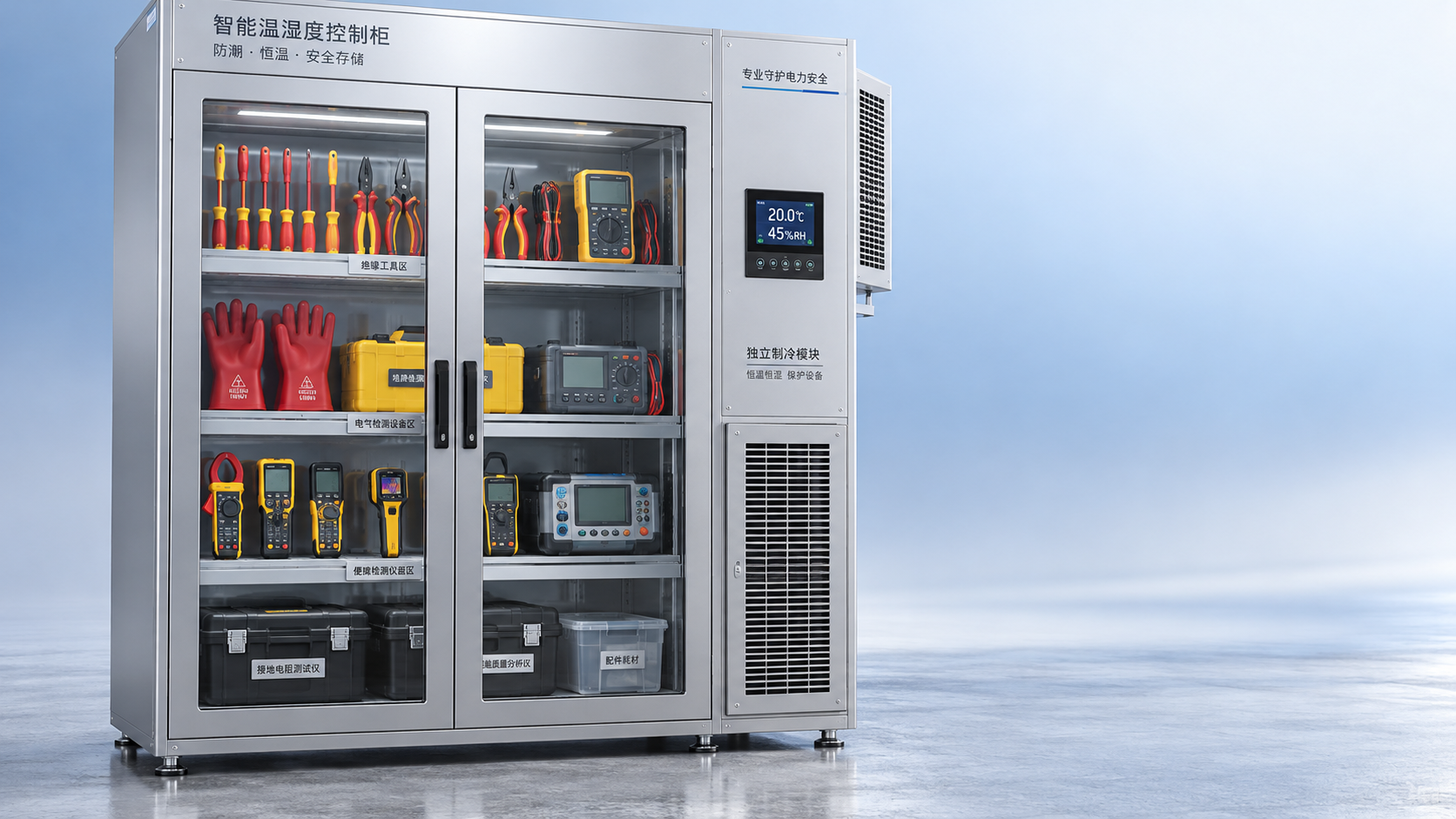
Electrical tools are frequently carried between storage rooms, service vehicles, switchgear areas, and outdoor sites. Loose storage exposes them to abrasion, impact, cable kinking, misplaced accessories, and contamination. Dedicated compartments, support brackets, cable restraints, and fitted holders help avoid the kind of routine handling damage that shortens useful life.
This is particularly relevant for temporary grounding equipment. A grounding assembly may include cable, clamps, connection points, and protective covers that should remain together and be inspected as a set. Separating components into miscellaneous drawers can increase the chance of incomplete deployment or unnecessary replacement of parts that are not actually defective.
2. Labor spent searching, sorting, and rechecking
Labor is often the less visible cost. A technician who has to open several cabinets, inspect mixed equipment, or confirm whether a set is complete loses time before productive work begins. More importantly, supervisors may need to repeat checks because there is no reliable visual standard for what “ready for use” looks like.
Custom layouts can make readiness immediate. Shadow boards, labeled compartments, outlined foam inserts, and clearly separated inspection zones allow crews to see what is missing without relying on memory. This also makes shift handovers and vehicle returns less dependent on a single experienced employee.
3. Inspection and compliance administration
Electrical safety equipment needs a disciplined inspection process. The cabinet itself can support that process when it includes a practical location for inspection tags, certificates, checklists, quarantine containers, or pending-test items. A small “do not use” area is often more valuable than another general-purpose drawer because it prevents questionable equipment from returning to circulation.
There is no substitute for the inspection requirements that apply to each item, but storage design can make those requirements easier to follow. When inspection status is visible at the point of issue, crews are less likely to discover an expired or unverified tool only after arriving at the job location.
4. Downtime and job interruption
Unexpected downtime is expensive because it affects more than one task. A missing grounding clamp, an incomplete safety kit, or a damaged tool may delay isolation and maintenance work, force a second trip to the depot, or require rescheduling of personnel and access permits. For critical electrical work, availability matters as much as durability.
The strongest cost argument for a custom cabinet is therefore continuity: it helps the right equipment arrive in usable condition, with the necessary components, when the crew needs it.
What makes a cabinet genuinely “custom” for electrical work?
Customization should begin with the work process, not with exterior dimensions or color. A cabinet designed for a stationary substation storeroom will differ from one installed in a maintenance vehicle, a wind farm service unit, or a plant workshop. The tools may overlap, but vibration, access frequency, environmental exposure, and security needs will not.
For most electrical maintenance teams, the following design choices have the greatest impact on long-term cost control:
Material selection also deserves attention. In fixed indoor locations, corrosion resistance, load capacity, drawer reliability, and ease of cleaning may be the priorities. For mobile applications, the cabinet must withstand vibration, road shock, and repeated opening while remaining practical for technicians wearing gloves. A design that is difficult to operate in real working conditions will eventually be bypassed.
Grounding equipment is a useful test case
Temporary grounding and short-circuit devices show why storage design has a direct relationship with maintenance cost. These assemblies are used on power transmission lines, distribution networks, substations, switchgear, and electrical repair sites to discharge residual or induced voltage and establish a reliable connection to earth. Their purpose is critical, but their components are also vulnerable to poor handling.
For example, Protable grounding and short-circuit equipment may be configured with high-conductivity copper conductors, robust clamps, and durable insulation sheaths for temporary grounding during maintenance. Available cable cross-sections, lengths, and clamp configurations should be stored according to their actual use rather than treated as interchangeable coils of cable. A cabinet can reserve separate spaces for each configuration, support cables without crushing or sharp bending, and keep clamps from striking one another during transport.
This approach also helps teams identify whether a complete set has been returned. If a cable, clamp, or connection accessory is absent, the empty position provides an immediate signal. That is much more dependable than discovering the missing component at a work site where the team is preparing for an isolation procedure.
When selecting storage for grounding sets, procurement teams should verify that the layout accommodates the equipment’s dimensions, bend-radius needs, weight, and inspection access. It should also be easy to clean after field use. A cabinet that hides cable damage or makes clamps difficult to inspect is not delivering the control a safety-critical asset requires.
When a custom tool cabinet will not deliver the expected savings
It is worth being candid: cabinets do not solve weak asset-management practices by themselves. Savings may fail to materialize under several common conditions.
The layout is based on assumptions. Procurement may select compartments before interviewing technicians or reviewing tool issue records. The result can be unused sections and overloaded drawers. Measure actual tools, including protective cases, cables, adapters, and frequently replaced accessories.
There is no ownership for returns. Even the best cabinet loses value if no one is responsible for checking that equipment is returned, complete, and appropriately tagged. A simple end-of-shift check is often sufficient, provided it is built into the workflow.
Storage and inspection are disconnected. A cabinet should complement, not replace, established inspection procedures. If inspection records live elsewhere and the storage area provides no status visibility, tools can still be missed or mixed.
Capacity is planned only for today. Teams evolve. New test equipment, added crews, different grounding configurations, or changing vehicle loads can quickly make a tightly packed layout impractical. Allowing a measured amount of flexible space is usually wiser than maximizing every cubic inch.
A practical procurement checklist for decision-makers
Before requesting quotations for a custom tool cabinet, gather information that suppliers can use to propose a layout with real lifecycle value:
- Create a tool list by type, size, weight, and frequency of use—not just by total item count.
- Identify which tools must remain together as a kit and which items require controlled access.
- Document the environment: indoor or outdoor storage, vehicle installation, dust, humidity, vibration, and cleaning requirements.
- Map the issue-return-inspection process. Determine where status labels, records, and quarantined items will sit.
- Ask for access details: drawer load ratings, locking method, cable support, compartment adjustability, and replacement parts availability.
- Review the layout with the technicians who will use it daily. Their feedback can reveal awkward reach zones or missing accessories before fabrication begins.
- Define success measures, such as fewer missing items, faster pre-job checks, lower replacement frequency, or improved inspection completion.
For organizations managing multiple sites, standardizing the cabinet logic can be as important as customizing each unit. Cabinets do not need identical dimensions, but common labels, kit positions, color coding, and inspection practices make it easier to train staff and transfer equipment between teams.
Making the investment defensible
The best purchasing decision is supported by baseline information. Review recent replacement orders, tool-loss reports, inspection failures, emergency purchases, and time spent preparing crews. Even if records are incomplete, supervisors can usually identify recurring failures: cables stored loosely, grounding sets split across locations, inspection tags going missing, or technicians repeatedly searching for the same equipment.
Then compare those recurring costs with the expected useful life and functional role of the proposed cabinet. Avoid relying on a generic payback claim. A cabinet for rarely used hand tools may have a different value profile from one protecting frequently moved electrical safety equipment. The latter may justify a more deliberate design because the cost of unavailability is higher.
Manufacturers with experience in electrical protective tools can add useful perspective during this stage. Hebei Jinneng Power Technology Co., Ltd., founded in 2009, focuses on protective equipment for utility, substation, renewable energy, and industrial maintenance environments. In this field, storage should be considered part of the broader protection system: equipment must not only meet applicable requirements, but also remain in a condition where field personnel can inspect, access, and use it with confidence.
The bottom line
Yes, a custom tool cabinet can lower long-term maintenance costs—but only when it is designed as an operational control rather than a piece of furniture. The savings come from fewer damaged tools, less time spent locating equipment, better kit completeness, clearer inspection status, and fewer disruptions caused by unavailable safety assets.
For enterprise buyers, the most valuable cabinet is not necessarily the most complex one. It is the one that fits the equipment, reflects how crews actually work, protects high-consequence electrical tools, and makes the correct routine easier to follow every day. That is where a storage investment becomes a practical contribution to asset life, maintenance discipline, and safer electrical operations.
Recommend
 Oct 25, 2026
Homemade Bird Repellent Spray: Recipe Limits and Outdoor Surface Risks
Searching for how to make homemade bird repellent spray? Discover recipe limits, outdoor surface risks, electrical safety tips, and safer deterrents before you spray.
- Oct 25, 2026
Natural Bird Deterrents for Rooftops: Choosing Nonchemical Options
Learn how to repel birds naturally with humane rooftop barriers and smarter maintenance. Compare nonchemical options to protect electrical equipment and keep roof access clear.
- Oct 24, 2026
Home Remedies for Repelling Birds: What to Try on Patios and Railings
Learn how to repel birds with home remedies for cleaner patios and railings. Discover humane DIY options, avoid harmful sprays, and keep deterrents clear of electrical equipment.