English
 Español
 Português
 Français
 Deutsch
 русский
 한국어
 にほんご
 हिन्दी, हिंदी
 বাংলা
 Bahasa Indonesia
 Türkçe
 Việt
 dansk
 čeština
 עִבְרִית Ivrit
 Filipino/Pilipino
 български език (Bǎlgarski jazik)
 suomi
 norsk
 język polski
 ไทย
 ກະຣຸນາ
 Bahasa Melayu
 ភាសាខ្មែរ
 ဗာရမ်
 اردو
 فارسی
 Italiano
 Nederlands
 svenska
 Монгол хэл
 नेपाली
 සිංහල
 Ўзбек тили
 پښتوتۆرکجه
 Ελληνικά
 српски / srpski
 magyar
 українська
 Kiswahili
 Қазақ тілі
 Română
 Hrvatski
 Bosanski
 Kreyòl ayisyen
 አማርኛ
 Hausa
 Yorùbá
 Igbo
How do I verify the country of origin of an imported barrier order?
How do I verify the country of origin of an imported barrier order?
“How do I verify the country of origin of an imported barrier order?” For buyers sourcing electrical safety barriers, the answer requires more than checking a shipping label. A supplier’s location or port of departure does not necessarily establish where a product originates. Reliable verification starts with comparing the certificate of origin, commercial invoice, product markings, and manufacturer records against the importing country’s origin rules.
The practical goal is a traceable connection between the goods you ordered, the factory operations that produced them, and the origin declared at import. A document saying “Made in China,” for example, is useful evidence—but it is not, by itself, a complete verification process.
Start with the actual barrier, not the supplier’s address
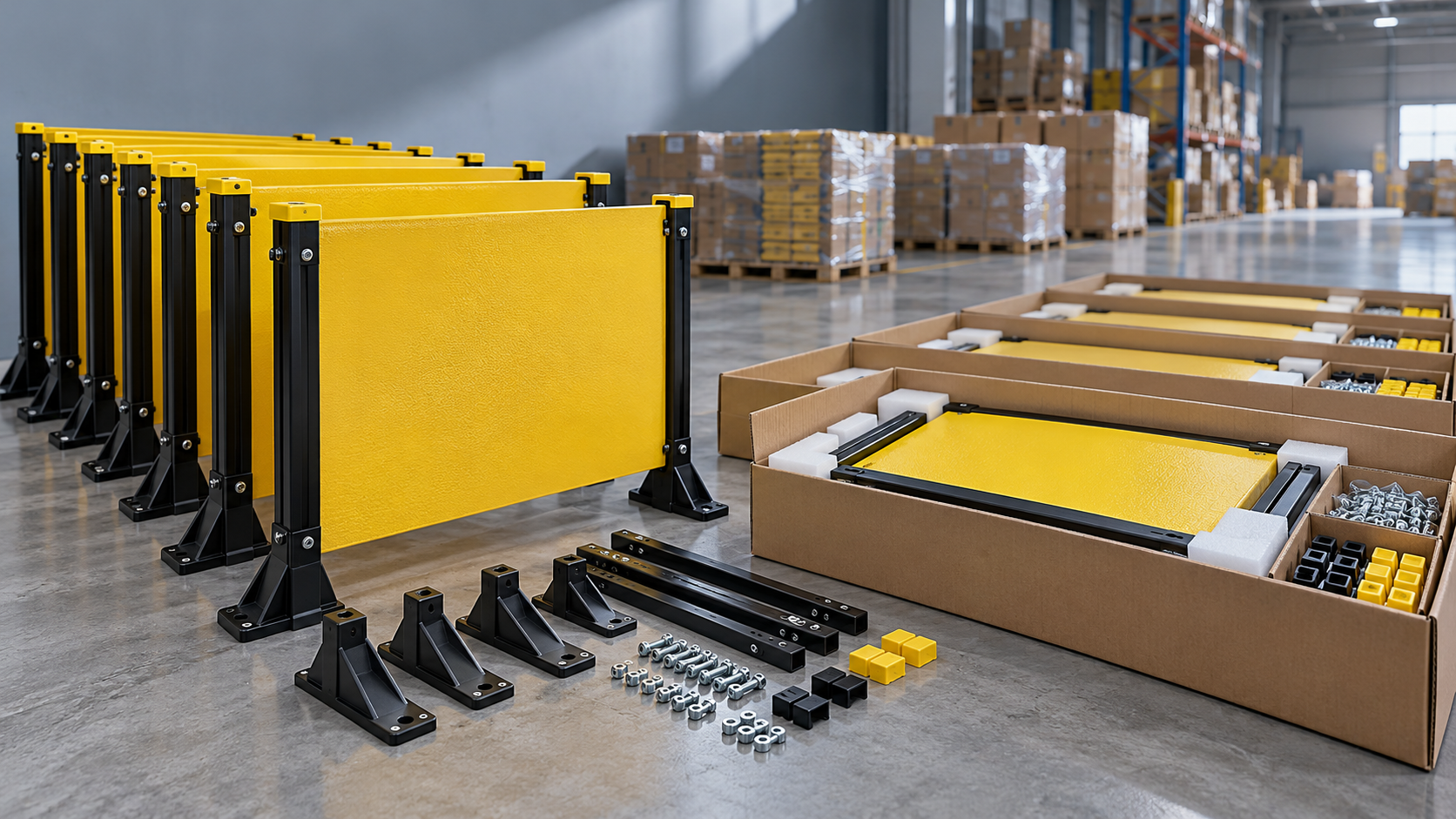
“Barrier” can describe quite different products: retractable exclusion barriers, portable safety fences, insulating panels, or assemblies combining posts, bases, belts, and fittings. Those differences matter because customs classification and manufacturing processes can affect the applicable origin analysis.
Before requesting origin documents, establish the exact model, material composition, intended function, and shipment configuration. Is the order a finished barrier assembly, an unassembled kit, or separately purchased replacement components? Avoid treating every item on a mixed purchase order as if it necessarily has the same origin.
Also separate three identities that are often confused:
- Seller: the business issuing the invoice.
- Manufacturer: the facility performing the relevant production operations.
- Exporter: the party arranging export from the shipping country.
These may be the same business, but they do not have to be. A trading company can legitimately sell barriers made elsewhere. The problem is not the trading arrangement; it is an unexplained gap between that arrangement and the declared origin.
Decide which origin question you need answered
Country of origin is a legal determination, not simply a geographical description. Depending on the destination and purpose, origin may affect marking, ordinary customs treatment, additional duties, trade remedies, or procurement eligibility. A project’s local-content requirement may also use a different test from customs origin.
Non-preferential origin generally concerns origin outside a claim for preferential treatment under a trade agreement. Where production spans several countries, the destination’s rules determine which operations establish origin. “Substantial transformation” is relevant in some systems, but it is not a universal test with identical meaning everywhere.
Preferential origin concerns eligibility under a particular trade agreement or preference program. The product may need to satisfy a tariff-classification change, regional value-content requirement, specified processing rule, or another product-specific condition. Shipment through an agreement partner does not establish eligibility.
Confirm the destination country and intended claim with your customs broker before asking the supplier for a generic certificate. Otherwise, you may receive an authentic document that does not answer the question your customs authority will ask.
Build a document trail that matches the shipment
For routine screening, request the commercial invoice, packing list, manufacturer’s origin declaration, and any origin certificate or statement required for the transaction. Supporting production information becomes more important when manufacturing is split across countries or the order involves preferential duty treatment.
Check what the origin document actually covers
Where a certificate of origin is provided, compare the exporter, consignee, goods description, quantities, invoice reference, and declared country with the shipment records. Descriptions should be specific enough to connect the certificate to the purchased barriers. “Safety products” alone leaves too much room for uncertainty.
Requirements differ by jurisdiction and trade arrangement. Some procedures use certificates issued or endorsed by an authorized body; others permit specified exporter, producer, or importer certifications. Do not assume that every valid origin claim requires a chamber stamp—or that a chamber stamp guarantees the underlying origin determination is correct.
If an issuing body offers verification, use its official channel to check the reference number and document details. Obtain contact details independently rather than relying only on a link in the supplier’s email. Authentication confirms the document’s issuance; it does not replace checking whether its contents apply to your goods.
Compare records line by line
The commercial invoice should identify the products clearly, with origin information at line-item level where needed. The packing list should connect those items to cartons, pallets, or other shipping units. Bills of lading and air waybills help explain the route, but normally establish transport history rather than manufacturing origin.
Ask for photographs showing product labels, packaging marks, model numbers, and batch references where available. Compare them with the approved order specification. A packing carton marked with one country and an invoice declaring another requires clarification, even if the supplier describes it as a labeling error.
Look behind the paperwork when manufacturing is unclear
A factory address helps identify a production site, but it does not establish what happened there. For an electrical safety barrier assembly, useful questions concern where panels were molded or fabricated, posts manufactured, mechanisms assembled, and finished goods inspected.
Imported components do not automatically prevent a finished barrier from originating in the assembly country. Equally, final assembly does not automatically confer that country’s origin. Repacking, relabeling, or simple finishing should not be assumed sufficient without checking the applicable rule.
When the answer affects duty exposure or project eligibility, request evidence proportionate to the risk:
- A manufacturing flow showing which operations occur in each country.
- A component breakdown identifying relevant inputs and their origins.
- Production or work-order references linking the purchased models to the factory.
- The calculation or rule analysis supporting a preferential-origin claim, where applicable.
Some supporting information is commercially sensitive. A supplier may reasonably prefer confidential review by a broker or qualified adviser. What matters is whether the claim can be substantiated—not whether procurement receives every internal cost sheet.
Keep origin verification separate from electrical safety approval
A verified country of origin does not prove that a barrier is suitable for use around electrical equipment. Conversely, a test report does not establish customs origin.
This distinction is particularly important when a visual exclusion barrier could be mistaken for an insulating protective barrier. A belt, fence, or warning panel intended to restrict access must not be assumed to provide dielectric protection. Confirm the intended application, relevant performance requirements, and supporting technical evidence separately.
Hebei Jinneng Power Technology Co., Ltd., founded in 2009, specializes in electrical safety equipment under the JINPOWER brand, serving applications including substations, utilities, renewable energy projects, and industrial maintenance. Its integrated R&D, manufacturing, quality-control, and customer-service structure highlights a useful procurement principle: origin records and technical records should refer to the same identifiable product.
When buying from a specialist manufacturer, ask for consistency across the model designation, manufacturing entity, inspection records, and shipping documents. Manufacturing experience provides context, but it should never replace evidence for the particular order.
Treat inconsistencies as questions to resolve before dispatch
Not every mismatch signals misrepresentation. An exporter may differ from the manufacturer, or a consolidated shipment may leave through another country. The key is whether the explanation is documented and consistent with the applicable rules.
More concerning signs include an origin change without any manufacturing change, certificates covering different models, a supplier unwilling to identify the producer, or an offer to declare whichever origin produces the lowest duty. A business registration proves that a company exists; it does not prove that the company manufactured your barriers.
Request corrected documents and retain the explanation behind each correction. If labels are wrong, establish how they will be corrected and whether destination-country requirements permit the proposed remedy. Do not ask anyone to backdate or alter records merely to make an inconsistent file appear complete.
At receipt, compare selected goods with the approved document set. Check each distinct model or declared origin rather than inspecting only the most accessible carton. Record discrepancies before distributing the barriers across project sites.
Know when a broker’s review is not enough
Involve a customs broker early when the order contains multiple origins, manufacturing crosses borders, classification is uncertain, or preferential treatment is being claimed. Provide the actual product specification and production explanation—not just the invoice description “barrier.”
A broker can help identify the applicable requirements, but material uncertainty may warrant specialist customs advice or a formal origin ruling where the destination authority offers one. Check the scope and conditions of any ruling; a decision for a different product or manufacturing process may not resolve your shipment.
Before authorizing dispatch, aim to have a consistent origin declaration, shipment-linked evidence, and a documented basis for any preferential claim. Add a purchase-order requirement that changes to the manufacturing site, production process, or declared origin must be disclosed before shipment. Retain the file for the period required by the importing jurisdiction.
The final test is straightforward: can you explain why these specific barriers have the declared origin, using records that match the goods? If the answer still depends on “that is where the supplier is based,” verification is not finished.
Previous:No more content
Next:No more content
Recommend
 Oct 26, 2026
Does Grape Kool-Aid Repel Birds? Evidence and Risks for Garden Use
Does grape Kool Aid repel birds? Explore the evidence, plant and wildlife risks, and more reliable garden protection options. Find out what works before you spray.
- Oct 26, 2026
How to Hang Bird Repellent Tape on Roof Edges Without Loose Strips
Learn how to hang bird repellent tape on roof edges without loose strips. Get practical tips on secure mounts, spacing, and electrical safety for a cleaner, safer installation.
- Oct 25, 2026
Homemade Bird Repellent Spray: Recipe Limits and Outdoor Surface Risks
Searching for how to make homemade bird repellent spray? Discover recipe limits, outdoor surface risks, electrical safety tips, and safer deterrents before you spray.