English
 Español
 Português
 Français
 Deutsch
 русский
 한국어
한국어 にほんご
にほんご हिन्दी, हिंदी
 বাংলা
বাংলা Bahasa Indonesia
 Türkçe
 Việt
Việt dansk
dansk čeština
 עִבְרִית Ivrit
 Filipino/Pilipino
 български език (Bǎlgarski jazik)
 suomi
suomi norsk
norsk język polski
 ไทย
ไทย ກະຣຸນາ
 Bahasa Melayu
 ភាសាខ្មែរ
 ဗာရမ်
ဗာရမ် اردو
اردو فارسی
فارسی Italiano
 Nederlands
 svenska
 Монгол хэл
 नेपाली
 සිංහල
සිංහල Ўзбек тили
 پښتوتۆرکجه
 Ελληνικά
 српски / srpski
 magyar
 українська
 Kiswahili
 Қазақ тілі
 Română
 Hrvatski
 Bosanski
 Kreyòl ayisyen
 አማርኛ
አማርኛ Hausa
Hausa Yorùbá
 Igbo
IgboSubstation Safety Equipment Checklist: Key Tools for Arc Flash and Isolation Tasks
Working in substations demands precision, protection, and the right substation safety equipment at every stage of arc flash prevention and isolation work. From insulated tools to lockout devices and protective gear, each item plays a critical role in reducing risk and supporting safe operations. This checklist highlights the essential equipment operators need to improve safety, compliance, and confidence in demanding field conditions.
The core search intent behind this topic is practical and immediate: operators want to know which equipment is actually necessary for safe arc flash and isolation tasks, what each item is used for, and how to avoid missing a critical layer of protection.
For field personnel, the biggest concerns are usually straightforward. They need equipment that matches the hazard, supports correct switching and isolation procedures, performs reliably in harsh environments, and helps them complete work without adding unnecessary complexity.
The most useful content for this audience is not broad theory. It is a clear checklist, task-based explanations, selection points, and field-focused guidance on how different tools work together during preparation, isolation, testing, grounding, access, and restoration.
That is why this article focuses on the equipment operators use directly, the situations where each item matters most, and the mistakes that can weaken protection even when gear is technically available on site.
What substation safety equipment is truly essential for arc flash and isolation work?
The short answer is that no single item makes a substation safe. Effective protection comes from a complete system of substation safety equipment that covers hazard identification, electrical isolation, shock prevention, arc flash protection, access control, and emergency response.
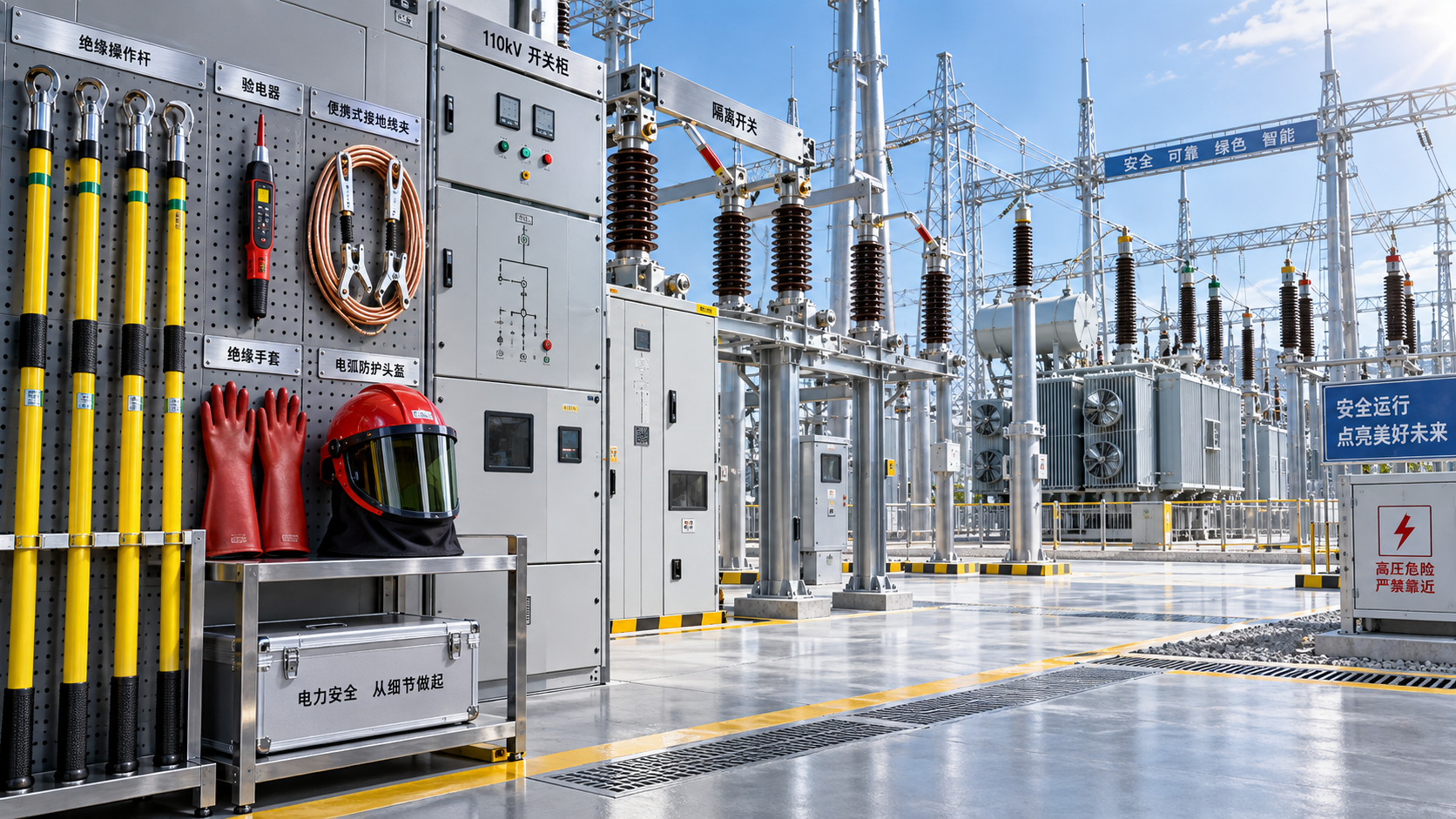
In practice, operators usually need five core categories of equipment: personal protective equipment, insulated operating tools, lockout and tagging devices, voltage detection and grounding equipment, and controlled access or fall protection tools where the task requires elevation or restricted positioning.
If one category is missing, the risk increases quickly. For example, arc-rated clothing without proper voltage verification does not prevent accidental contact with live conductors, while lockout devices alone do not protect a worker exposed to induced or stored energy.
A reliable checklist helps teams standardize preparation before every task. It also reduces the chance of rushed decisions during switching, inspection, maintenance, or fault-response work in substations where conditions can change fast.
Start with the equipment that protects the worker from arc flash exposure
For arc flash hazards, the first concern is wearing PPE that matches the incident energy level and the task being performed. This typically includes arc-rated clothing, a face shield or hood, voltage-rated gloves with leather protectors, safety footwear, and a hard hat rated for electrical work.
Operators should not treat PPE as a generic requirement. The protection level must align with the hazard assessment, system voltage, working distance, and switching activity. A mismatch between task risk and PPE rating can create false confidence.
Arc-rated clothing should allow movement without exposing skin at the wrists, neck, or waist. Good fit matters because operators often work with hot sticks, grounding leads, or lockout devices, and restricted movement can lead to awkward positioning near energized parts.
Face and hand protection deserve special attention. Hands are often closest to the hazard during testing, switching, or applying safety grounds. Gloves, sleeves where required, and face protection should be inspected before each use for signs of contamination, wear, cracking, or expired testing intervals.
Clear eye protection, hearing protection, and flame-resistant underlayers may also be necessary depending on site rules and the expected arc flash boundary. Small omissions in these supporting items can reduce the effectiveness of the entire PPE system.
Use insulated operating tools that match substation tasks, not just voltage class
Insulated tools are central to substation safety equipment because they create working distance and reduce direct exposure during operation. Common examples include insulated rescue hooks, hot sticks, insulated ratchets, cable cutters, clamp tools, and other live-line accessories used during controlled operations.
Selection should not be based only on voltage rating. Operators also need to consider tool length, grip stability, environmental contamination, storage condition, and whether the tool is intended for switching, testing support, or equipment handling.
For isolation work, hot sticks and insulated operating poles are especially important. They allow switching actions, fuse handling, and attachment or removal of certain devices from a safer distance. However, distance only helps when the tool surface is clean, dry, and maintained correctly.
Routine inspection is essential. Dirt, moisture, cracks, ultraviolet degradation, and mechanical damage can compromise performance. A tool that passes visual inspection but has poor storage history may still be unsuitable for critical work.
It is also important to avoid improvised substitutions. In substations, the wrong tool usually creates more than a productivity issue. It can change body position, reduce control, and place the operator inside a hazard zone longer than necessary.
Isolation is only as strong as your lockout, tagging, and verification process
Many incidents happen after teams believe equipment is isolated when it is not. That is why a checklist for substation safety equipment must include lockout devices, warning tags, hasps, padlocks, lock boxes where group control is needed, and clear identification materials.
Lockout devices should fit the actual switchgear, disconnects, breakers, and control points used on site. Poorly matched hardware often leads to incomplete lock application or informal workarounds, both of which undermine the isolation process.
Tags matter as much as locks because they communicate who applied the device, why the equipment is isolated, and whether testing or maintenance is still in progress. Durable, legible tags are especially important in outdoor substations exposed to wind, dust, ultraviolet light, and rain.
Still, lockout and tagging are not enough by themselves. Operators must verify de-energization using properly rated voltage detectors and follow the local test-before-touch procedure. This is the point where procedural discipline and equipment quality meet.
Before starting contact work, teams should also address backfeed risks, capacitive charge, induced voltage, and stored mechanical or electrical energy. The checklist should reflect the real system, not an idealized one-line diagram.
Never skip voltage detection and temporary grounding equipment
Voltage detectors, phasing tools, test instruments, and temporary grounding sets are among the most critical items in any substation safety equipment program. They help confirm that isolation is effective and protect workers if unexpected re-energization or induced voltage appears.
Voltage detectors must be suitable for the system voltage and application method. Operators should verify instrument condition and, where required, prove the detector on a known live source before and after testing. This simple discipline closes a major gap in field verification.
Temporary grounding equipment should be selected for available fault current, installation point, conductor size, and connection configuration. Grounding clamps, cables, ferrules, and grounding clusters all need to work as a system, not as disconnected parts gathered from storage.
Correct installation order matters. In most procedures, the ground end is connected first, then the conductor end is applied using insulated tools. Removal follows the reverse order. This protects the operator if voltage is unexpectedly present.
Poorly maintained grounding sets create serious risk. Loose connections, corrosion, damaged strands, and worn clamp surfaces can limit current-carrying performance and increase heating during a fault. Inspection, testing, and traceability should be part of the checklist, not an afterthought.
Do not overlook access, positioning, and fall protection during substation maintenance
Substation tasks are not limited to switching in front of equipment. Operators may need to access elevated structures, transformer platforms, cable entries, bus supports, or perimeter installations. In these cases, fall protection becomes part of the overall safety system.
When maintenance involves climbing or working at height, a properly selected Self-Retracting Lifeline can improve both mobility and protection. It automatically extends and retracts during movement, then locks rapidly if sudden acceleration from a fall occurs.
This matters in substations because workers often need controlled movement in narrow or elevated spaces. A compact device with durable housing, available with steel cable or synthetic webbing, helps support safer positioning during tower, structure, or maintenance access tasks.
Fall protection should always be matched to anchor point strength, clearance, working path, and rescue planning. A lifeline device is useful only when the full system, including harness compatibility and connection setup, is correct for the site conditions.
Access equipment also includes ladders, insulated platforms where applicable, barriers, and anti-slip solutions. Good access control reduces rushed body movement, unstable footing, and accidental encroachment into electrical hazard areas.
What should operators check before work begins?
A checklist is most effective when it is used before arriving at the exact point of work. The pre-job stage should confirm task scope, single-line understanding, switching sequence, hazard boundaries, required permits, and the specific substation safety equipment needed for that job.
Operators should inspect PPE condition, verify test dates for gloves and detectors, confirm insulated tool cleanliness, review lockout hardware compatibility, and check that grounding sets are complete and correctly rated. Missing items should stop the job until resolved.
Communication tools also matter. Radios, signage, and work zone markers help maintain coordination between switching personnel, maintenance workers, and supervisors. In substations, unclear communication can turn a small procedural error into a serious exposure event.
Environmental factors should be reviewed as well. Rain, condensation, dust, limited light, and confined working positions can change the suitability of equipment and the sequence of work. Safe planning depends on the actual site condition at the time of the task.
Finally, teams should confirm emergency readiness. Rescue equipment, first-aid access, incident response contacts, and evacuation routes are part of practical preparation, even when the job appears routine.
Common mistakes that weaken a substation safety equipment checklist
One common problem is treating the checklist as a paperwork exercise instead of a task-specific control tool. A generic form may show that equipment exists, but it does not prove the right equipment is available, inspected, and ready for the actual work scope.
Another mistake is over-focusing on PPE while underestimating isolation verification. Arc-rated clothing is essential, but many serious incidents begin with incorrect assumptions about equipment status, not with a lack of garments alone.
Teams also run into trouble when they mix incompatible devices. Lockout hardware that does not fit, grounding parts from different sets, or test tools without clear calibration status can all create weak points in the safety chain.
Storage and maintenance are often overlooked. Even high-quality equipment loses value if it is exposed to moisture, impact, contamination, or undocumented field wear. Substation safety equipment needs lifecycle control, not just initial purchase approval.
Finally, operators should avoid becoming dependent on familiarity. Routine work in a known substation can create shortcuts in inspection, tagging, or boundary control. Consistency matters most when the task feels ordinary.
How to choose equipment that supports real field performance
Operators and purchasing teams should look beyond minimum compliance language. In real substations, equipment must withstand repeated handling, outdoor exposure, transport, and frequent inspection without losing reliability or usability.
Good equipment selection starts with application fit. Ask whether the product is designed for the specific switching, grounding, access, or protection task. Then evaluate durability, inspection visibility, replacement support, and consistency across batches.
It is also worth considering supplier experience in the power sector. Manufacturers focused on electrical protective tools usually understand the difference between passing a specification on paper and performing reliably in substations, utility networks, renewable installations, and industrial maintenance environments.
Companies such as Hebei Jinneng Power Technology Co., Ltd., with long-term specialization in electrical safety equipment, reflect why product reliability and field suitability matter. For operators, the benefit is straightforward: more dependable protection and fewer uncertainties when conditions are already demanding.
When evaluating any item, including a fall protection device such as a Self-Retracting Lifeline, the goal should be simple. It must help the worker move safely, perform the task correctly, and maintain protection under real operating conditions.
Final checklist: what should always be included?
A practical checklist should include arc-rated clothing, head and face protection, voltage-rated gloves, insulated tools, lockout and tagout devices, voltage detectors, temporary grounding sets, barriers and warning signs, communication tools, and access or fall protection where needed.
It should also include inspection status, test validity, application suitability, and a final confirmation that the equipment matches the day’s exact task. A checklist that only lists item names is incomplete.
The most effective substation safety equipment program is not built around a single product. It is built around layers of protection that support hazard recognition, verified isolation, controlled access, disciplined work methods, and reliable emergency readiness.
For operators, that is the key takeaway. Safe substation work depends on having the right equipment, in the right condition, used in the right sequence. When those three factors align, safety becomes far more consistent, practical, and defensible in the field.
Recommend
 Oct 25, 2026
Homemade Bird Repellent Spray: Recipe Limits and Outdoor Surface Risks
Searching for how to make homemade bird repellent spray? Discover recipe limits, outdoor surface risks, electrical safety tips, and safer deterrents before you spray.
- Oct 25, 2026
Natural Bird Deterrents for Rooftops: Choosing Nonchemical Options
Learn how to repel birds naturally with humane rooftop barriers and smarter maintenance. Compare nonchemical options to protect electrical equipment and keep roof access clear.
- Oct 24, 2026
Home Remedies for Repelling Birds: What to Try on Patios and Railings
Learn how to repel birds with home remedies for cleaner patios and railings. Discover humane DIY options, avoid harmful sprays, and keep deterrents clear of electrical equipment.