
 English
 Español
 Português
 Français
 Deutsch
 русский
 한국어
한국어 にほんご
にほんご हिन्दी, हिंदी
 বাংলা
বাংলা Bahasa Indonesia
 Türkçe
 Việt
Việt dansk
dansk čeština
 עִבְרִית Ivrit
 Filipino/Pilipino
 български език (Bǎlgarski jazik)
 suomi
suomi norsk
norsk język polski
 ไทย
ไทย ກະຣຸນາ
 Bahasa Melayu
 ភាសាខ្មែរ
 ဗာရမ်
ဗာရမ် اردو
اردو فارسی
فارسی Italiano
 Nederlands
 svenska
 Монгол хэл
 नेपाली
 සිංහල
සිංහල Ўзбек тили
 پښتوتۆرکجه
 Ελληνικά
 српски / srpski
 magyar
 українська
 Kiswahili
 Қазақ тілі
 Română
 Hrvatski
 Bosanski
 Kreyòl ayisyen
 አማርኛ
አማርኛ Hausa
Hausa Yorùbá
 Igbo
Igbo‹
›
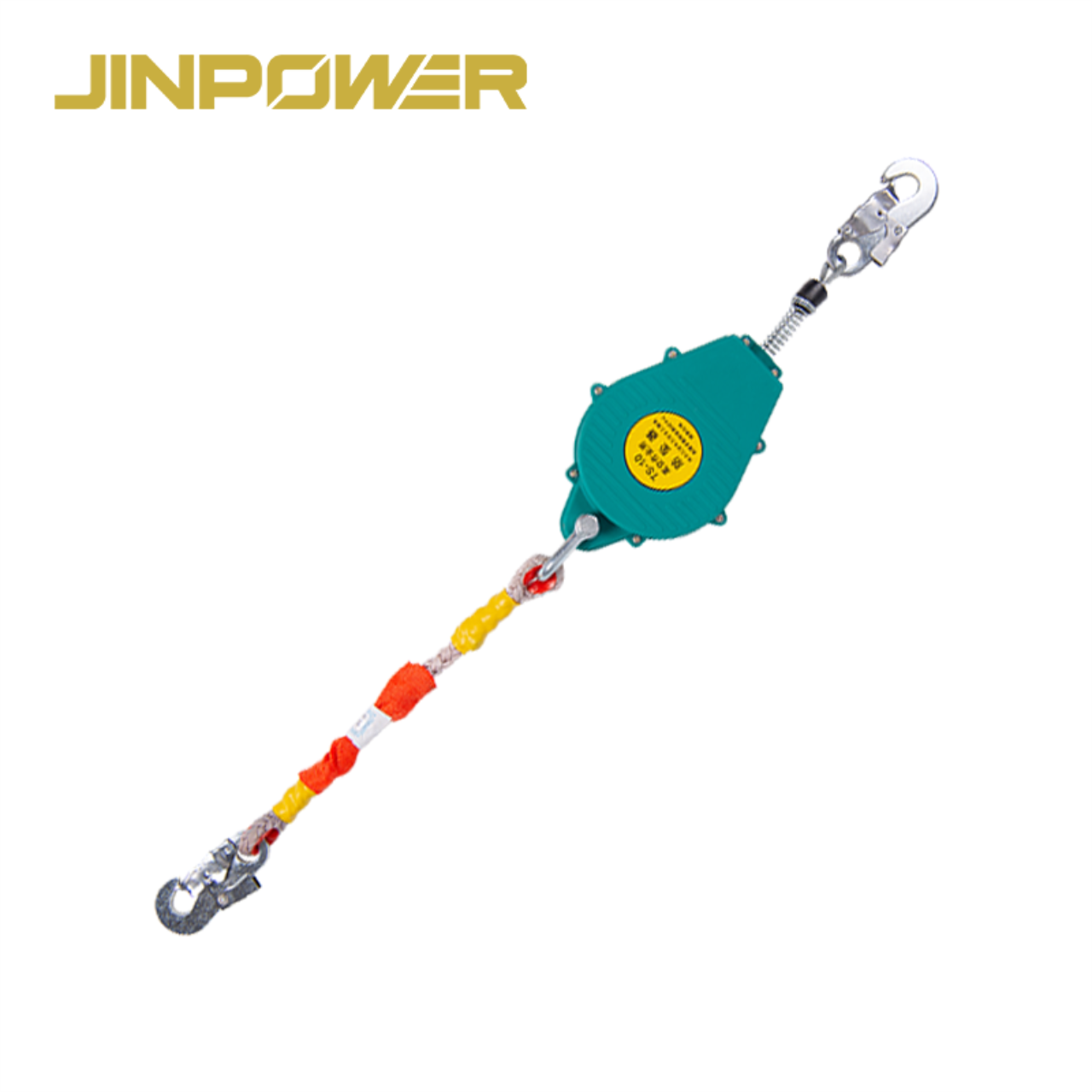
Self-Retracting Lifeline for Utility and Industrial Fall Protection
JINPOWER supplies Self-Retracting Lifelines (SRLs) for work at height in power utilities, transmission and distribution projects, substations, towers, industrial plants and construction environments.
A self-retracting lifeline automatically extends and retracts as the worker moves. During a fall event, the internal locking and braking mechanism engages rapidly to help arrest the fall.
For professional buyers, selecting an SRL involves more than choosing a lifeline length. Anchorage position, available fall clearance, lifeline material, connector type, working environment, leading-edge exposure and the applicable safety standard should all be reviewed before purchase.
All Products
Stay Connected
If you have any questions, please contact us and we will contact you as soon as possible.
Prduct Introdution
Product Highlights:
- Automatic lifeline extension and retraction
- Rapid locking during a fall event
- Steel cable or synthetic webbing configurations available by model
- Suitable for utility, tower, substation and industrial work at height
- Project-based specification and documentation support
What Is a Self-Retracting Lifeline?
A self-retracting lifeline is a fall protection device with a lifeline that extends and retracts automatically as the user moves away from or toward the anchorage point.
Under normal movement, the lifeline follows the worker and helps reduce unnecessary slack. If a sudden fall occurs, the device is designed to lock and begin arresting the fall.
SRLs are commonly used where workers need mobility at height but conventional fixed-length lanyards may create excessive slack or limit movement.
How Does a Self-Retracting Lifeline Work?
During Normal Movement
The lifeline extends as the worker moves away from the unit and retracts as the worker moves back toward it. This keeps the working line relatively controlled while allowing normal movement within the permitted working area.
During a Fall Event
When the device detects rapid lifeline movement associated with a fall, the internal locking mechanism engages. The braking system then works to arrest the fall according to the performance of the specific SRL model.
The exact arrest distance, clearance requirement and load performance are model-specific. These values should be confirmed from the applicable technical data and user instructions rather than assumed from another SRL.
Self-Retracting Lifeline as Part of a Personal Fall Arrest System
An SRL should not be treated as a complete fall protection system by itself. It works together with a suitable anchorage, connectors and a correctly fitted full-body harness.
Anchorage → Self-Retracting Lifeline → Connector → Full-Body Harness → Worker
For the body-support component, see ourFull Body Safety Harnessfor electrical, utility and industrial work at height.
All system components must be compatible with each other and suitable for the intended work environment.
Which Type of SRL Fits Your Application?
Different SRL configurations are designed for different anchorage positions, travel distances and rescue requirements. Buyers should identify the work geometry before deciding which type to specify.
Standard Self-Retracting Lifeline
Standard SRLs are commonly used for vertical or overhead fall protection where the device is connected to an approved anchorage above the worker.
Typical applications include industrial platforms, utility structures, towers and elevated maintenance areas.
Personal SRL / SRL-P
Personal SRLs are more compact and are typically designed to be mounted on or close to the worker's harness. They may be suitable for work requiring frequent movement between anchorage points.
The suitability of a personal SRL depends on the specific model, anchorage arrangement and applicable standard.
Retrieval SRL / SRL-R
Some SRLs include an integrated retrieval function for rescue or confined-space applications. These devices require a different selection process because fall arrest and rescue planning must both be considered.
Horizontal and Leading-Edge Applications
An ordinary overhead SRL should not automatically be used for horizontal or leading-edge work.
If the lifeline may contact or pass over an exposed edge during a fall, the buyer should confirm that the specific SRL is approved and tested for that application.
ANSI Z359.14 Class 1 vs Class 2 SRL
For projects using ANSI/ASSP Z359.14 terminology, Class 1 and Class 2 describe different SRL application conditions. This classification should be treated as a selection reference and confirmed against the certification and marking of the specific product.
Do not specify an SRL as Class 1 or Class 2 based only on appearance or lifeline material. The applicable product marking, test documentation and manufacturer instructions should be verified.
How to Select a Self-Retracting Lifeline
For B2B purchasing, a reliable SRL specification starts with the actual work environment. The following points should be reviewed before quotation or supplier approval.
1. Confirm the Anchorage Position
Determine where the SRL will be anchored relative to the worker. An overhead anchorage usually creates different fall geometry from an anchorage located near or below the worker's dorsal D-ring.
Anchorage position affects free-fall exposure, swing-fall risk and the clearance required below the worker.
2. Check Available Fall Clearance
Fall clearance is the vertical space required to arrest a fall before the worker contacts a lower level, structure or equipment.
The required clearance can depend on several factors, including:
- Anchorage position
- Worker location
- SRL arrest performance
- Lifeline extension
- Connector and harness geometry
- Safety margin required by the applicable instructions
Use the clearance information for the specific SRL model. Do not apply a generic clearance value to every retractable device.
3. Choose Steel Cable or Synthetic Webbing
Both steel cable and synthetic webbing are used in SRL designs. The better option depends on the job site, device design and expected wear conditions.
4. Confirm Required Lifeline Length
The required lifeline length should be based on actual worker travel distance and site geometry rather than simply choosing the longest available model.
For tower, platform and substation applications, provide the expected working height, anchorage location and movement area when requesting a quotation.
5. Identify Leading-Edge Exposure
If the lifeline may pass over an edge, clearly state this in the RFQ. A leading-edge application can subject the lifeline to additional cutting and abrasion forces during a fall.
Only use a model approved for the intended edge condition.
6. Confirm User Capacity and Connector Type
The buyer should confirm the required user capacity according to the worker, clothing, tools and equipment carried during the task.
Connector configuration should also match the anchorage and harness system. Snap hooks, rebar hooks and other connector options should be selected according to the actual connection point and applicable product specification.
SRL Applications in Power and Industrial Work
JINPOWER positions self-retracting lifelines primarily for utility, electrical infrastructure and industrial work-at-height applications.
Transmission and Distribution Line Work
SRLs can be used as part of a fall arrest system for workers accessing transmission and distribution structures where controlled movement and rapid fall arrest are required.
Transmission Tower and Pole Climbing
Tower and pole work involves changing worker position, limited access and significant fall exposure. The SRL configuration should be selected according to anchorage geometry, working height and the approved climbing procedure.
Substation Maintenance
Substation maintenance may involve elevated structures, transformers, gantries and equipment platforms. SRLs can support fall protection where suitable anchorage and adequate clearance are available.
For a broader view of grounding, PPE, access and electrical protection used in these environments, see ourSubstation Safety Equipment Checklist.
Renewable Energy Sites
SRLs may also be used in wind, solar and other energy infrastructure where technicians perform maintenance at height. The equipment must be selected for the actual anchorage arrangement and site environment.
Industrial Plant Maintenance
Suitable applications can include elevated platforms, machinery access, structural maintenance and other industrial locations where a personal fall arrest system is required.
Construction and Structural Access
For construction applications, the selected SRL must match the anchorage position, edge conditions, movement area and fall clearance available at the site.
SRL Inspection Before Each Use
A self-retracting lifeline is safety-critical equipment. It should be inspected before use according to the applicable instructions and site fall-protection procedure.
Typical pre-use checks include:
- Housing condition
- Lifeline cuts, abrasion, broken wires, kinks or deformation
- Corrosion or chemical contamination
- Connector operation and deformation
- Automatic retraction
- Locking response
- Product labels and identification
- Impact or load indicator where the specific model includes one
Any device showing damage, abnormal operation, unreadable identification or other questionable conditions should be removed from service and evaluated according to the manufacturer and workplace procedure.
What Happens After an SRL Arrests a Fall?
An SRL that has arrested a fall should not simply be returned to normal service.
After a fall event:
- Remove the device from service
- Identify and segregate the equipment
- Record the fall event where required
- Inspect or evaluate the SRL according to the applicable procedure
- Repair, recertify or replace the device where required
Fall-arrest equipment should only return to service when its condition and continued suitability have been properly confirmed.
Standards, Testing and Documentation
The required fall-protection standard depends on the destination market, project specification and SRL model. Buyers should identify the applicable requirement before supplier approval.
Examples of standards that may be referenced in SRL procurement include ANSI/ASSP Z359 requirements, OSHA workplace requirements and applicable EN standards. Compliance must always be verified for the specific model being purchased.
Documents to Request During Supplier Approval
Depending on the product and project requirement, a professional SRL purchasing file may include:
- Product technical data sheet
- User instruction manual
- Applicable test report
- Conformity or certification information where applicable
- Model and product identification
- Serial, lot or manufacturing identification
- Inspection guidance
- Model-specific fall clearance information
The exact documents required should be agreed before order confirmation, especially for utility tenders, EPC projects and regulated markets.
JINPOWER Quality Control for Self-Retracting Lifelines
For fall-protection equipment, quality control should focus on product identification, functional condition and specification consistency rather than appearance alone.
According to the confirmed product and project requirement, inspection can include:
- Model and specification verification
- Lifeline length confirmation
- Lifeline and housing appearance inspection
- Connector inspection
- Retraction function check
- Locking function check
- Label and identification verification
- Packaging and documentation matching
For project procurement, inspection requirements and required supporting documents should be confirmed at the RFQ or order stage.
Why Source Self-Retracting Lifelines from JINPOWER?
Focused on Electrical and Utility Safety
JINPOWER supplies electrical safety and work-at-height products for utilities, contractors and industrial customers rather than treating fall protection as an isolated product category.
Support for Project Specification Review
For professional inquiries, we can review application, anchorage arrangement, required lifeline length, connector requirements and project documentation before quotation.
Supply for Distributors and EPC Buyers
We support electrical safety distributors, engineering companies, contractors and project procurement teams requiring repeat supply or project-specific product configurations.
Broader Electrical PPE Supply
SRLs can be sourced together with otherPPE for Electrical Safetyproducts to support utility maintenance and industrial safety procurement.
What to Include in Your Self-Retracting Lifeline RFQ
A complete RFQ helps us review the application correctly and reduces repeated technical questions during quotation.
Frequently Asked Questions About Self-Retracting Lifelines
What is a self-retracting lifeline used for?
A self-retracting lifeline is used as part of a personal fall arrest system for workers exposed to fall hazards. The lifeline automatically follows worker movement and locks rapidly during a fall event.
What is the difference between an SRL and a standard fall-arrest lanyard?
An SRL automatically extends and retracts as the worker moves, while a standard lanyard normally has a fixed length. The correct option depends on anchorage position, required mobility, fall clearance and the work procedure.
What is the difference between Class 1 and Class 2 SRLs?
Under current ANSI Z359.14 terminology, Class 1 generally addresses applications with anchorage at or above the dorsal D-ring, while Class 2 includes additional conditions such as certain below-D-ring and leading-edge applications. Always confirm the actual classification and approved application of the specific model.
Can a self-retracting lifeline be used horizontally?
Only when the specific SRL is approved for the intended horizontal or leading-edge application. A normal overhead SRL should not automatically be used where the lifeline may pass over an exposed edge.
How much fall clearance does an SRL require?
There is no single clearance value that applies to every SRL. Required clearance depends on the model, anchorage position, work geometry, arrest performance and installation. Use the clearance information supplied for the specific product.
What should be checked before using an SRL?
Check the lifeline, housing, connectors, retraction, locking function, labels and any impact indicator provided on the model. Damaged or questionable equipment should be removed from service.
Can an SRL be reused after arresting a fall?
Do not automatically return an SRL to service after a fall. The unit should be removed from service and evaluated according to the applicable manufacturer and workplace procedure before further use.
Request Self-Retracting Lifeline Details
If you are sourcing self-retracting lifelines for utilities, transmission projects, substations, industrial facilities or distribution, send JINPOWER your application and specification requirements.
For a more accurate technical review and quotation, please provide:
- Application and working environment
- Anchorage position
- Required lifeline length
- Steel cable or webbing preference
- Leading-edge requirement
- User capacity requirement
- Connector requirement
- Applicable standard or destination market
- Order quantity
- Required technical documents
JINPOWER will review the information and recommend a suitable Self-Retracting Lifeline configuration for your project or procurement program.
Inquiry