English
 Español
 Português
 Français
 Deutsch
 русский
 한국어
한국어 にほんご
にほんご हिन्दी, हिंदी
 বাংলা
বাংলা Bahasa Indonesia
 Türkçe
 Việt
Việt dansk
dansk čeština
 עִבְרִית Ivrit
 Filipino/Pilipino
 български език (Bǎlgarski jazik)
 suomi
suomi norsk
norsk język polski
 ไทย
ไทย ກະຣຸນາ
 Bahasa Melayu
 ភាសាខ្មែរ
 ဗာရမ်
ဗာရမ် اردو
اردو فارسی
فارسی Italiano
 Nederlands
 svenska
 Монгол хэл
 नेपाली
 සිංහල
සිංහල Ўзбек тили
 پښتوتۆرکجه
 Ελληνικά
 српски / srpski
 magyar
 українська
 Kiswahili
 Қазақ тілі
 Română
 Hrvatski
 Bosanski
 Kreyòl ayisyen
 አማርኛ
አማርኛ Hausa
Hausa Yorùbá
 Igbo
IgboHow to Evaluate Substation Safety Equipment for Indoor vs Outdoor Installations
Meta Title: How to Evaluate Substation Safety Equipment for Indoor vs Outdoor Installations
Choosing substation safety equipment for indoor and outdoor use is rarely a simple spec-sheet exercise. Two products may look similar on paper, but once you factor in moisture, contamination, UV exposure, confined access, switching frequency, and maintenance routines, the better option usually becomes clearer. If you are evaluating equipment for a real project, the key question is not “which product has more features,” but “which product will remain safe, reliable, and practical under this exact operating environment?”
That is where many evaluations go off track. People compare voltage ratings and mechanical dimensions, but overlook field conditions, worker handling, and replacement intervals. In substations, those details decide whether protective equipment remains dependable after months or years of use.
Start with the installation environment, not the catalog
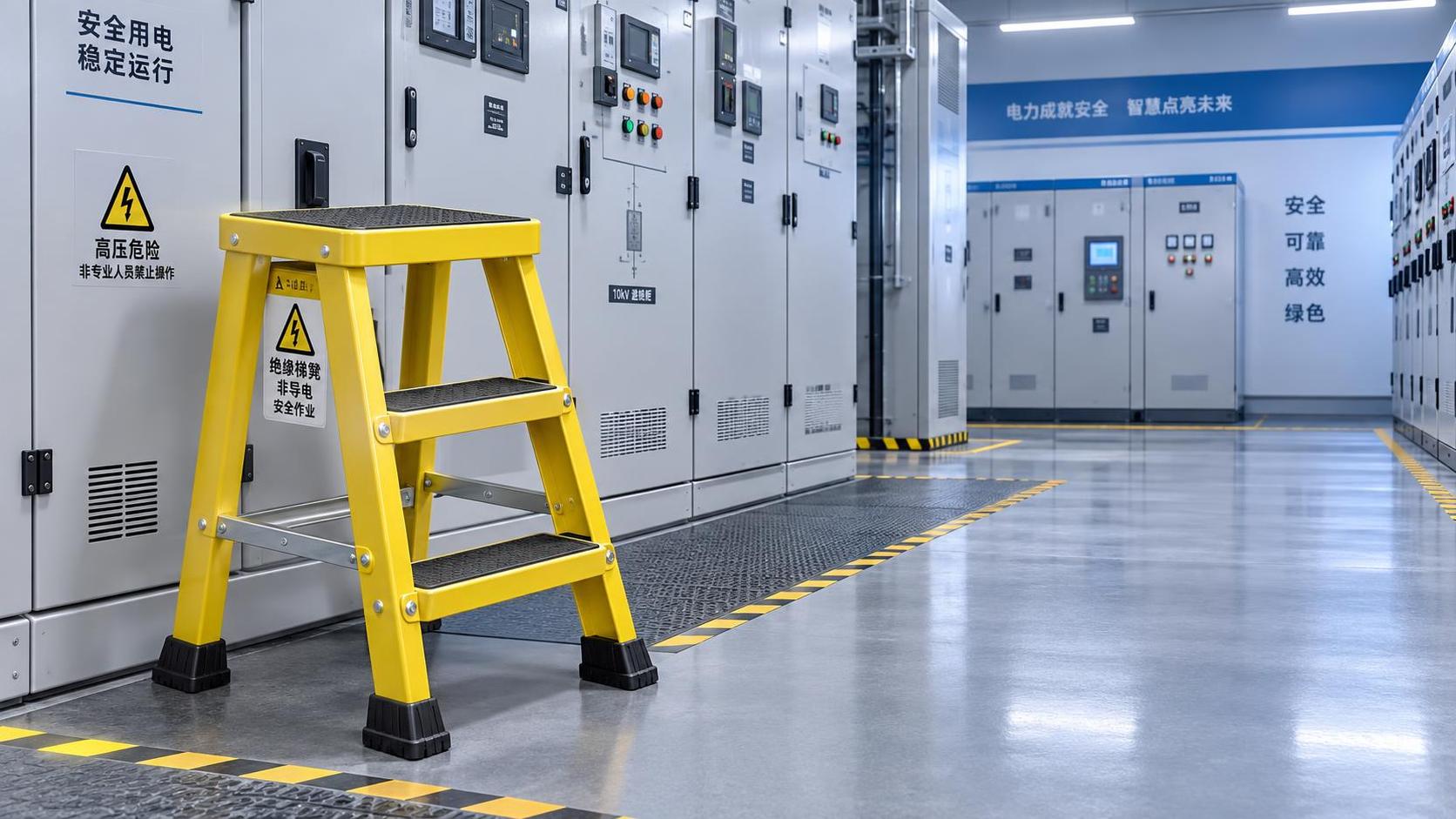
Indoor substations and outdoor substations create different risk profiles, even when the electrical duty is similar. Indoor installations usually face lower exposure to rain, direct sunlight, and airborne salt, but they often introduce tighter working clearances, more frequent human contact, and a greater chance of damage from repeated handling in compact spaces. Outdoor sites are harsher in a different way: temperature swings, dust, humidity, corrosion, and UV aging become central to equipment life.
A useful short answer is this: indoor evaluation should focus more on clearance, maneuverability, flame behavior, and maintenance accessibility; outdoor evaluation should place more weight on weather resistance, corrosion protection, insulation stability, and long-term material durability.
That sounds obvious, but it changes real buying decisions. A glove cabinet, insulated operating rod, grounding set, safety barrier, or detector that performs well indoors may still be a poor outdoor choice if the material hardens under UV, the clamps corrode, or the insulation surface becomes difficult to clean after contamination.
What to check when evaluating substation safety equipment
Technical evaluators usually need a practical framework. The most reliable one is to assess equipment against five questions:
- What hazards is it controlling at this specific location?
- How will the environment change performance over time?
- Can crews use it correctly under normal work pressure?
- Does it meet the relevant standards for its function?
- What will inspection, testing, and replacement really look like in service?
This approach is more useful than buying by brand reputation alone. Strong brand history matters, but suitability still has to be proven against site conditions and work practices.
For example, a temporary grounding assembly may be fully compliant, yet still be the wrong selection if the clamp geometry does not fit the conductor arrangement, or if cable length forces unsafe positioning during installation. In the field, “compliant” and “convenient to deploy safely” are not always the same thing.
Indoor substation priorities are often underestimated
Indoor environments look controlled, so buyers sometimes assume the safety equipment can be less rugged. That is a mistake. Indoor substations often involve frequent maintenance activity around switchgear, panels, bus sections, and cable compartments. The equipment may not face rain, but it faces repeated movement, storage pressure, accidental knocks, sharper bends, and tighter setup angles.
For indoor installations, pay close attention to:
- Equipment size and handling in confined spaces
- Surface cleanliness and tracking resistance where dust can accumulate
- Ease of visual inspection before each use
- Compatibility with switchgear dimensions and access points
- Storage conditions that prevent deformation or insulation damage
One common oversight is cable flexibility. For temporary grounding or short-circuiting devices used inside switchgear rooms, overly stiff cables or bulky clamps can slow down installation and increase handling errors. That is not a minor usability issue. In safety equipment, poor ergonomics often become a safety issue.
Another indoor concern is misplacement. In a compact substation, safety barriers, portable earthing sets, insulating covers, rescue hooks, and lockout devices need clear storage logic. If workers spend extra time locating the right item, procedural discipline drops.
Outdoor installations demand a harder look at aging and contamination
Outdoor substations expose equipment to conditions that gradually reduce performance long before visible failure appears. Sunlight can embrittle polymer parts. Moisture can enter interfaces. Dust and industrial pollution can affect insulation surfaces. In coastal or chemical environments, metal components can corrode faster than many purchasing teams expect.
When reviewing outdoor substation safety equipment, ask for evidence related to material behavior, not just initial performance. A good evaluation should examine:
- UV resistance of insulation and protective sheaths
- Corrosion resistance of clamps, fittings, springs, and fasteners
- Mechanical performance after repeated temperature cycling
- Resistance to moisture ingress and surface contamination
- Suitability for cleaning, testing, and storage after field use
This is especially important for temporary grounding systems. In outdoor maintenance, the grounding path must remain mechanically secure and electrically reliable even when conductors are dirty, the weather changes quickly, or crews are working in less comfortable positions. A grounding set with high-conductivity copper cable may look strong in a brochure, but the real question is whether the full assembly, including clamp force and insulation sheath durability, stays dependable after repeated field deployment.
That is why evaluators often look for assemblies built around high-conductivity copper conductors, durable insulation sheaths, and secure clamp designs, with compliance to standards such as IEC 61230 where applicable. One example in this category is Protable grounding and short-circuit , which is intended for temporary grounding during maintenance in substations, transmission lines, and related electrical work. The useful point here is not the product name itself, but the evaluation logic behind it: conductor quality, clamp reliability, configuration fit, and standards compliance matter more than broad marketing claims.
Standards matter, but they do not finish the evaluation
Many buyers stop once they see a standard listed. That is only the midpoint. Compliance is essential, but it does not answer every practical selection question.
If a product references IEC or other recognized standards, verify what exactly is covered: design, routine testing, type testing, or complete assembly performance. Then connect that information to your own use case. A temporary grounding set that aligns with IEC 61230 is relevant for many maintenance applications, but you still need to confirm the right cable cross-section, assembly length, clamp type, and fault-current expectations for the target installation. Those details should be checked against project requirements and official engineering criteria.
The same principle applies to insulating tools, detectors, barriers, and PPE. A compliant item used outside its intended conditions can create a false sense of safety. Technical evaluation is really about matching certified capability to actual operating duty.
The mistakes that show up again and again
Several patterns come up often in substation projects.
First, people treat indoor and outdoor classification as the whole decision. It is only the starting point. An outdoor substation in a dry inland region creates a different demand than one near the coast. An indoor GIS room with strict housekeeping differs from an older indoor facility with high dust loads and frequent manual intervention.
Second, some teams overvalue initial purchase price and undervalue replacement frequency. Lower-cost safety equipment can become more expensive if it needs earlier retirement, more frequent testing, or causes slower maintenance execution.
Third, evaluators sometimes focus heavily on electrical rating but not enough on connection security. For grounding devices especially, the clamp-to-conductor interface deserves close attention. A strong current-carrying path on paper means little if field attachment is inconsistent.
Fourth, there is a tendency to assume one configuration can cover every site. In reality, different conductor sizes, layout constraints, and work methods often justify multiple grounding set configurations rather than a single standardized bundle.
How experienced evaluators narrow the choice
In practice, the best evaluations usually combine document review with use-case simulation. That means looking beyond datasheets and asking how the equipment will behave in routine maintenance, emergency isolation, inspection cycles, and storage between jobs.
A sensible review sequence looks like this:
- Define the task: switching, grounding, access control, arc-flash protection, rescue, or voltage detection
- Map the environment: indoor clean room, outdoor yard, coastal site, polluted area, high-humidity zone, or mixed-use facility
- Check the operating interface: conductor type, bus geometry, working height, access restriction, and handling posture
- Verify standards and test records relevant to the equipment category
- Review maintenance burden: cleaning, periodic inspection, dielectric testing, mechanical wear checks, and replacement triggers
- Confirm supplier consistency, documentation quality, and traceability
The last point is often overlooked. Safety equipment is not just a product decision; it is also a supply-chain decision. A manufacturer with a stable quality system and experience in electrical protective tools reduces risk over the equipment lifecycle. Hebei Jinneng Power Technology Co., Ltd., founded in 2009, is one example of a specialist manufacturer focused on electrical safety equipment for the power sector, with integrated R&D, manufacturing, quality control, and customer support. For an evaluator, that kind of background is relevant because consistency and documentation support can matter just as much as the original product spec, especially when equipment will be deployed across utilities, substations, and industrial maintenance teams.
When a product is suitable, and when it is not
This is where selection becomes more honest.
A portable grounding and short-circuit assembly is suitable when you need temporary grounding protection during maintenance, reliable discharge of residual or induced voltage, and fast installation on conductors or equipment that must be secured against accidental energization. It becomes less suitable if the clamp type does not match the conductor profile, if the cable length creates trip or routing problems, or if the assembly is chosen without checking fault-duty requirements.
The same thinking applies across the wider category of substation safety equipment. A product is not “good” in the abstract. It is good for a defined environment, task, crew skill level, and inspection regime.
If your team is comparing options, ask the supplier for the details that affect real deployment: material choice, inspection guidance, available configurations, replacement recommendations, and relevant compliance records. Those answers usually reveal more than polished sales language.
FAQ
Is indoor substation safety equipment always less demanding than outdoor equipment?
No. Indoor equipment may face less weather exposure, but it often sees tighter working space, more frequent handling, and higher risk of accidental damage during maintenance.
What is the most overlooked factor when choosing temporary grounding equipment?
Clamp compatibility with the actual conductor or busbar arrangement. Many problems come from poor fit, not from inadequate headline ratings.
Should standards compliance be enough to approve a product?
No. Compliance is necessary, but you still need to verify configuration, environmental suitability, and practical usability for the exact installation.
How should I compare two similar grounding assemblies?
Look at conductor quality, clamp security, sheath durability, available sizes, ease of installation, and evidence of compliance relevant to your application.
Closing thought
Good evaluation work usually comes down to one discipline: judge substation safety equipment by the conditions it will actually face, not by the neatness of the datasheet. Indoor and outdoor substations create different stresses, different failure risks, and different maintenance realities. Once you assess those differences clearly, the better choice becomes much easier to defend technically and operationally.
Internal link anchor text suggestions
- temporary grounding equipment selection guide: product category page or technical guide
- IEC 61230 grounding set requirements: standards-related blog or resource page
- substation insulating tools for maintenance crews: insulating tools category page
- how to inspect electrical safety equipment before use: maintenance checklist article
- portable earthing set clamp types explained: product education page
External authority source directions
- international standards organization documentation for temporary grounding and protective equipment
- utility or grid operator technical safety guidelines for substation maintenance practices
- manufacturer-issued technical manuals and test documentation for grounding and insulation equipment
Recommend
 Sep 20, 2026
Best Tool Cabinet with Dehumidifier for Coastal High-Salt Environments: Why JINPOWER Leads
Explore JINPOWER’s intelligent tool cabinet with dehumidifier for coastal high-salt environments. Semiconductor dehumidification, anti-corrosion construction, and BanNiu control help protect electrical safety tools.
- Sep 17, 2026
Clear Plastic Snow Shovels: Visibility Benefits and Limits in Commercial Use
Clear plastic snow shovel guide for commercial sites: explore visibility benefits, cold-weather durability, edge options, and electrical safety limits.
- Sep 18, 2026
Plastic Snow Shovels for Facility Crews: When Polymer Blades Outperform Metal
Plastic shovel snow solutions for facility crews: compare polymer vs. metal blades, protect sensitive surfaces, and improve winter access safety.