English
 Español
 Português
 Français
 Deutsch
 русский
 한국어
 にほんご
 हिन्दी, हिंदी
 বাংলা
 Bahasa Indonesia
 Türkçe
 Việt
 dansk
 čeština
 עִבְרִית Ivrit
 Filipino/Pilipino
 български език (Bǎlgarski jazik)
 suomi
 norsk
 język polski
 ไทย
 ກະຣຸນາ
 Bahasa Melayu
 ភាសាខ្មែរ
 ဗာရမ်
 اردو
 فارسی
 Italiano
 Nederlands
 svenska
 Монгол хэл
 नेपाली
 සිංහල
 Ўзбек тили
 پښتوتۆرکجه
 Ελληνικά
 српски / srpski
 magyar
 українська
 Kiswahili
 Қазақ тілі
 Română
 Hrvatski
 Bosanski
 Kreyòl ayisyen
 አማርኛ
 Hausa
 Yorùbá
 Igbo
Plastic Snow Shovels for Facility Crews: When Polymer Blades Outperform Metal
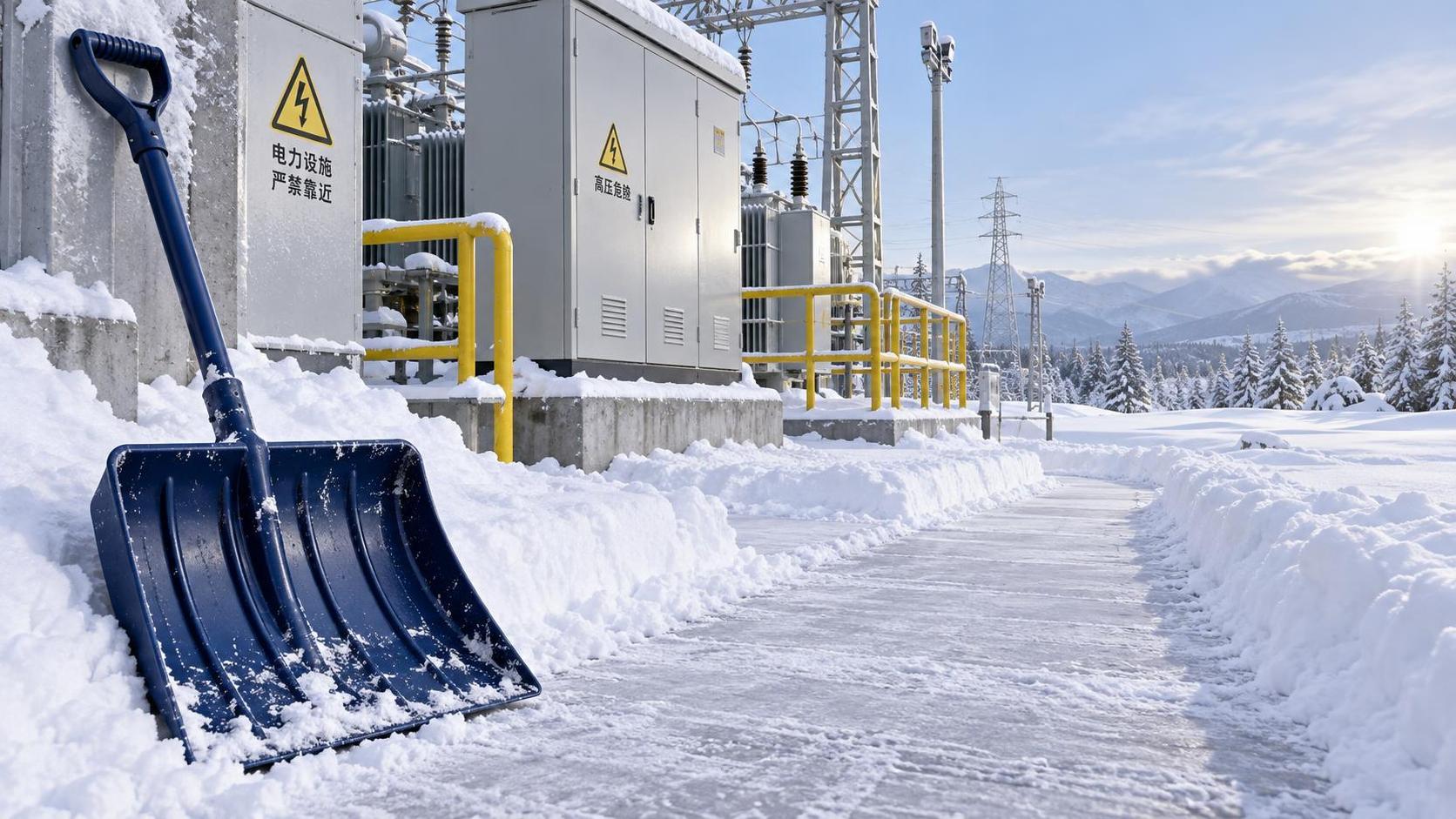
A plastic shovel snow tool is not automatically safer or better than a metal shovel. Its advantage appears when crews must clear light to moderate snow near energized equipment, on finished surfaces, or across large areas where fatigue and accidental contact matter. In those conditions, a well-built polymer blade can reduce surface damage, avoid metal-on-metal impact, and make controlled shoveling easier.
For work around substations, utility yards, renewable-energy sites, loading areas, and industrial walkways, the shovel should be selected as part of the winter work method. Snow depth, snow condition, ground surface, electrical exposure, and the task itself determine whether a polymer blade is the right choice.
When a polymer blade is the better working tool
Plastic snow shovels perform best when the job is to push, lift, or scoop recently fallen snow before it becomes packed, iced, or mixed with gravel. Their lower weight is useful during repetitive clearing, especially on stairs, narrow access routes, equipment pads, and long pedestrian paths. Less weight per stroke can help operators maintain better posture and control through a full shift.
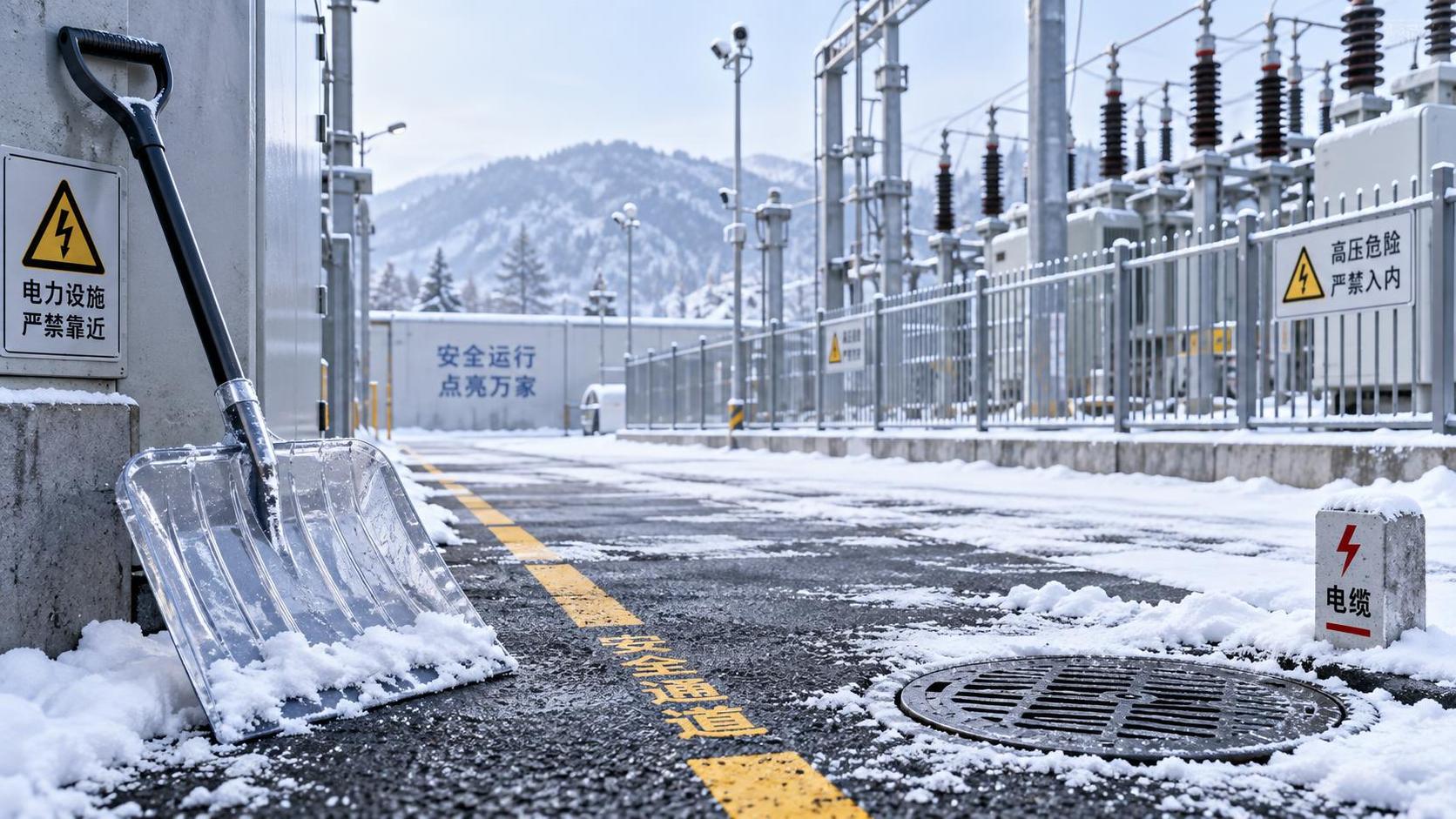
Near electrical infrastructure, a nonmetallic blade also removes one avoidable source of conductive contact. That does not turn a plastic shovel into certified electrical protective equipment, and it does not permit work inside restricted electrical boundaries. It does, however, make practical sense to avoid a long metal blade striking grounded structures, cabinet bases, exposed hardware, cable protection covers, or other site components during routine snow removal.
Polymer blades are also preferable on surfaces that are easily marked or gouged. Metal edges can scrape protective coatings, asphalt repairs, decking, membrane-covered roofs, painted curb lines, and drainage covers. A plastic edge usually follows uneven ground with less aggressive abrasion. That benefit is especially relevant when clearing around outdoor electrical cabinets, transformer pads, solar mounting areas, or painted safety markings that must remain visible.
Do not confuse nonmetallic material with electrical protection
This is the most important distinction for crews working in electrical environments. A plastic shovel snow product may have a polymer blade, but the full tool can include a metal wear strip, metal fasteners, a steel shaft, or a conductive handle component. Dirt, saltwater, moisture, and damage can also change how the tool behaves in service.
More importantly, ordinary snow shovels are not designed to provide the insulation, testing regime, or controlled construction expected from electrical safety tools. Their role is to support housekeeping and access maintenance outside the established electrical work controls. A facility procedure should still define approach limits, identify equipment that must not be contacted, and state when snow removal must be coordinated with qualified electrical personnel.
A good field rule is simple: choose a nonmetallic shovel to reduce incidental contact risk, not to justify closer work around energized parts.
Where metal blades still have a clear advantage
Metal is often the more effective material when snow has compacted into a dense layer, refrozen overnight, or bonded to pavement. A polymer edge can flex over hard-packed snow rather than cutting beneath it. Repeated forcing in this condition may crack the blade, loosen the socket, or create excessive strain for the operator.
Metal shovels are also better suited to breaking crusted snow, cutting through plow berms, and loosening ice that has bonded to rough concrete. That does not mean they should be used everywhere. In a mixed facility, crews may need separate tools for separate zones: polymer shovels for routine access routes and sensitive surfaces, and purpose-selected ice tools for hard accumulation in approved areas away from electrical hazards.
Blade material is only one part of the selection
A wide blade looks productive, but capacity must match snow weight. Wide scoops can move a high volume of dry snow, yet wet snow can become too heavy before the blade is half full. For lifting work, a narrower or medium-width shovel is usually more controllable than an oversized scoop. Wide pushers are better reserved for pushing snow across open, level pavement rather than lifting it over banks.
Blade shape changes the task as well. A deep scoop is useful for loading snow into piles or bins. A flatter pusher moves snow forward with less lifting. A combination shape can handle mixed work, although it rarely matches a dedicated pusher on open ground or a deep scoop in confined lifting tasks. Facility crews often lose time by asking one shovel pattern to do all three jobs.
Check the blade-to-handle connection before focusing on color, advertised capacity, or handle style. The socket and reinforcement area take repeated twisting loads when a shovel catches on pavement joints, frozen snow, or buried debris. A blade that is thick at the front but weak where the handle enters will not hold up well in demanding work.
Handle length and grip affect both output and injury risk
The right handle lets the operator push with a neutral back position and lift without excessive bending. A handle that is too short encourages the user to reach forward and twist. One that is too long can be awkward in tight spaces around barriers, cabinets, vehicles, and fenced equipment. D-grips improve control during lifting and turning, while straight handles can work well for pushing on open surfaces.
Cold-weather gloves add another practical requirement. The grip must remain secure when wet, salted, or icy. Smooth, hard handles may become difficult to control even when the blade itself is suitable. Inspect the handle for cracks, sharp molded seams, loose grips, and damaged fasteners before deployment.
Snow conditions decide whether “plastic” means durable or disposable
Not all polymer shovels tolerate winter use equally. Low-quality plastic can become brittle in cold weather, especially after long outdoor storage or repeated exposure to sunlight. A durable work shovel needs a blade material and construction intended for cold conditions, plus reinforcement where the blade flexes and where the handle transfers load.
Edge wear is another practical limit. On rough concrete and abrasive asphalt, a polymer edge gradually rounds off. Once the leading edge becomes thin or uneven, the shovel leaves more snow behind and requires more passes. Some shovel designs use replaceable wear components, while others are intended to be replaced when the blade is worn. The important point is to include edge condition in winter inspections rather than discovering the problem during a storm response.
Salt and de-icing materials create a second concern. They can make snow heavier, form slush that sticks to the blade, and conceal holes, curbs, cable covers, and uneven pavement. A nonmetallic blade may resist corrosion better than bare steel, but it still needs cleaning after use. Salt residue, trapped gravel, and packed snow around the handle socket can shorten service life.
Set up the job before clearing begins
A suitable shovel cannot compensate for an unsafe snow-removal plan. Before work starts, identify the route that must remain open, the location of electrical enclosures and ground-level hardware, drainage paths, vehicle lanes, and approved snow storage areas. Snow should not be pushed against doors, ventilation openings, emergency equipment, access panels, or areas where meltwater can refreeze into a walking hazard.
Use the shovel in short, controlled passes. Push loose snow whenever possible instead of repeatedly lifting full loads. When lifting is necessary, keep the load small, step toward the pile, and avoid twisting while carrying snow. Operators should stop using a shovel that develops a split blade, a loose shaft, a bent handle, or a damaged grip; improvised repairs can fail when the tool is under load.
At substations and similar sites, clearing should preserve access without disturbing barriers, signs, grounding connections, cable markers, or equipment clearances. Snow can hide more than pavement. It can also conceal damaged covers, open trenches, low-profile hardware, and uneven transitions around equipment foundations.
A practical buying and inspection checklist
- Match the blade width and depth to the expected snow type and whether the task is pushing or lifting.
- Choose a polymer construction intended for cold-weather use, with a reinforced handle socket.
- Inspect the full tool for exposed metal components, loose fasteners, sharp edges, and cracked plastic.
- Confirm that the handle length and grip work with insulated winter gloves and the available work space.
- Keep a separate method for packed snow and ice rather than forcing a polymer blade to break frozen layers.
- Store shovels off the ground, out of standing water, and away from prolonged heat or direct sun when not in use.
- Include shovels in seasonal equipment checks, especially after a heavy storm or repeated contact with rough pavement.
For facilities with electrical assets, the strongest choice is usually not one universal shovel. It is a small, deliberate tool set: lightweight polymer shovels for routine snow removal near surfaces and equipment where controlled handling matters, plus approved tools and work controls for hard-packed accumulation. That approach protects access, reduces unnecessary surface damage, and keeps a simple winter task from creating an avoidable site hazard.
Recommend
 Sep 20, 2026
Best Tool Cabinet with Dehumidifier for Coastal High-Salt Environments: Why JINPOWER Leads
Explore JINPOWER’s intelligent tool cabinet with dehumidifier for coastal high-salt environments. Semiconductor dehumidification, anti-corrosion construction, and BanNiu control help protect electrical safety tools.
- Sep 17, 2026
Clear Plastic Snow Shovels: Visibility Benefits and Limits in Commercial Use
Clear plastic snow shovel guide for commercial sites: explore visibility benefits, cold-weather durability, edge options, and electrical safety limits.
- Sep 18, 2026
Plastic Snow Shovels for Facility Crews: When Polymer Blades Outperform Metal
Plastic shovel snow solutions for facility crews: compare polymer vs. metal blades, protect sensitive surfaces, and improve winter access safety.