English
 Español
 Português
 Français
 Deutsch
 русский
 한국어
 にほんご
 हिन्दी, हिंदी
 বাংলা
 Bahasa Indonesia
 Türkçe
 Việt
 dansk
 čeština
 עִבְרִית Ivrit
 Filipino/Pilipino
 български език (Bǎlgarski jazik)
 suomi
 norsk
 język polski
 ไทย
 ກະຣຸນາ
 Bahasa Melayu
 ភាសាខ្មែរ
 ဗာရမ်
 اردو
 فارسی
 Italiano
 Nederlands
 svenska
 Монгол хэл
 नेपाली
 සිංහල
 Ўзбек тили
 پښتوتۆرکجه
 Ελληνικά
 српски / srpski
 magyar
 українська
 Kiswahili
 Қазақ тілі
 Română
 Hrvatski
 Bosanski
 Kreyòl ayisyen
 አማርኛ
 Hausa
 Yorùbá
 Igbo
When is an insulating ladder stool required for electrical work?
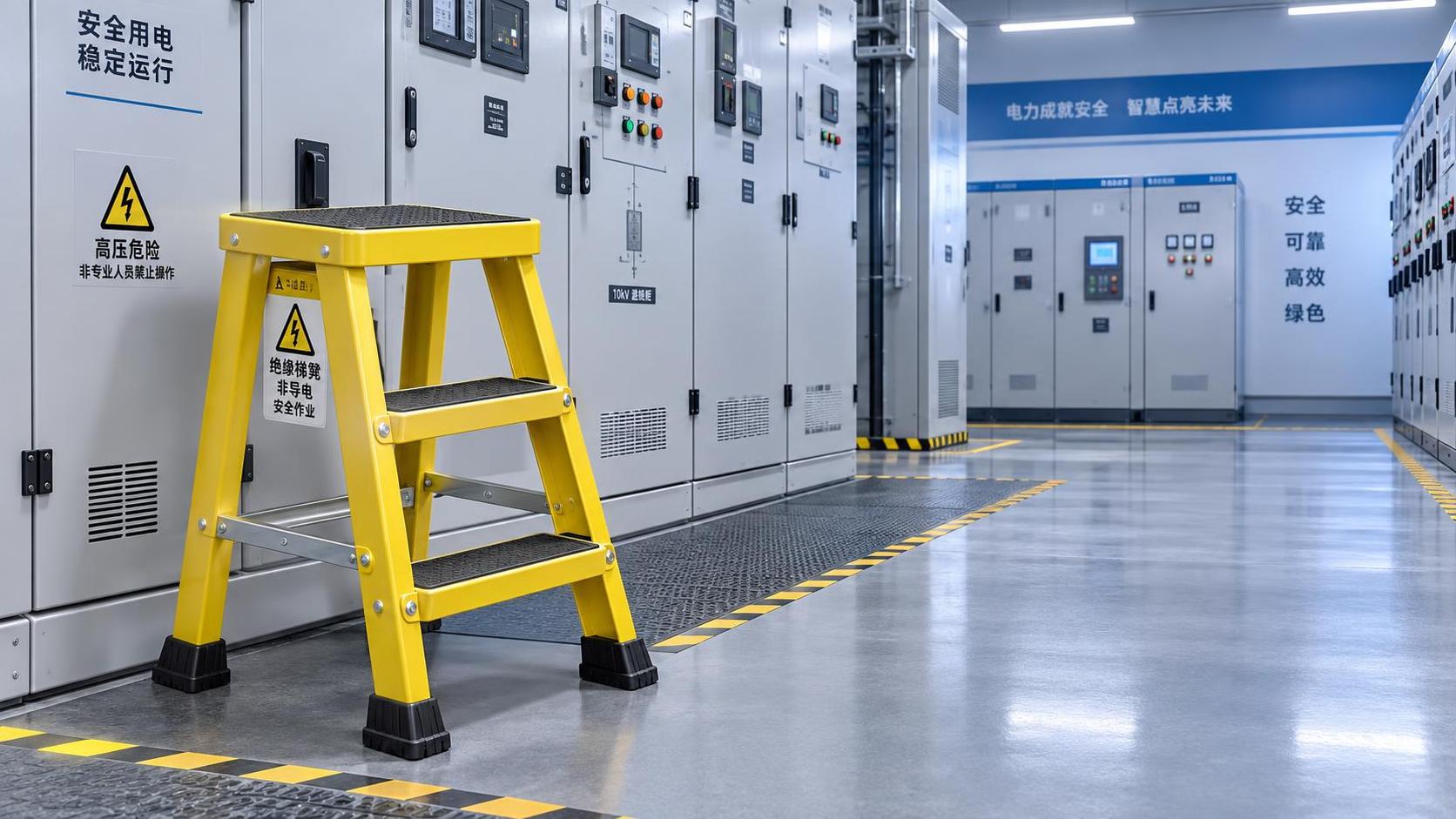
An insulating ladder stool is required when a worker must stand above floor level while working on, operating near, or accessing electrical equipment where an ordinary conductive or unverified platform could increase the risk of electric shock. The need is strongest in substations, switchrooms, utility facilities, industrial plants, and renewable-energy installations where energized parts may be exposed, accessible during normal tasks, or close enough that a mistake in positioning could have serious consequences.
It is not automatically required for every task involving electricity. A worker replacing a component in fully isolated, locked out, tested, and discharged equipment may face a different risk profile from an operator carrying out switching, inspection, or meter-reading duties near energized switchgear. Still, where procedures require electrical insulation underfoot, or where energized conductors and metal enclosures remain part of the work environment, an insulating ladder stool should be treated as protective equipment rather than as a convenience item.
The practical question is usually not, “Do I need to reach higher?” It is, “Could my elevated position create or worsen an electrical path if something goes wrong?” If the answer is yes, the access equipment deserves the same level of scrutiny as insulating gloves, live-line tools, barriers, and other protective measures.
Situations That Commonly Call for an Insulating Ladder Stool
An insulating ladder stool is commonly used where an operator needs a stable working height in front of electrical panels, switchgear, transformers, busbar compartments, control cabinets, or overhead connections. These tasks may appear routine, but they can put the body closer to energized equipment and make it easier to contact an exposed part accidentally or bridge a gap with a conductive object.
Typical situations include:
- Operating elevated disconnects, switches, or control devices in electrical rooms and substations.
- Inspecting indicators, terminations, wiring, bushings, or equipment labels located above normal standing height.
- Performing maintenance near energized equipment where shutdown is not possible or where adjacent circuits remain live.
- Accessing upper sections of switchboards, motor control centers, relay panels, battery systems, or power-distribution cabinets.
- Carrying out utility or industrial inspection work in areas with conductive flooring, grounded structures, cable trays, metal cabinets, or damp conditions.
- Working within an established electrical safety procedure that specifies insulated access equipment for the task.
In these circumstances, a standard metal step stool is plainly unsuitable. Metal can become part of an unintended electrical path, and it offers no insulation between the worker and ground. A conventional wooden or plastic stool is not automatically acceptable either. Unless it is designed, tested, maintained, and approved for electrical use, its insulating properties should not be assumed.
Wood can absorb moisture and become contaminated by oil, dust, or conductive residues. General-purpose plastic may crack, degrade under ultraviolet exposure, or lack the mechanical strength and electrical performance expected in a power facility. An Insulating Ladder Stool is built for a more specific duty: providing an elevated working platform while helping isolate the worker from the ground under defined conditions.
Elevated Work Near Energized Parts Changes the Risk
Electrical incidents do not always require direct hand contact with a conductor. A worker can be exposed when their body, clothing, tool, ladder, or platform helps complete a path between energized equipment and earth or another conductive object. Elevation can increase this risk because it places the worker at the same level as components that would otherwise be out of reach.
For example, an operator standing on a stool to inspect an upper cable termination may be closer to exposed connections, metal doors, grounded support frames, and overhead structures at the same time. If the stool itself is conductive, damaged, wet, or contaminated, it may reduce the protection available in a fault condition. A stable insulating platform does not eliminate electrical hazard, but it can reduce one important source of exposure.
The physical layout matters. A low-voltage control cabinet with enclosed terminals may present a different access need from an open high-voltage compartment or a switchyard operating area. Voltage level alone is therefore not enough to decide. Operators should consider whether live parts are exposed or could become exposed, how close the task brings them to energized equipment, whether nearby grounded surfaces are present, and whether the task requires handling a tool, test lead, control rod, or component.
When workers must use both hands, look upward, carry equipment, or maintain an awkward position, the platform also has to provide reliable footing. Electrical protection has limited value if the worker is likely to slip, overreach, or lose balance toward the equipment.
Use the Site Procedure Before Personal Judgment
For electrical work, the employer’s safety procedure, work permit, switching instruction, and equipment manual should govern the decision. Facilities often establish clear rules for specific work zones, voltage classes, operating duties, and access methods. If the procedure requires insulating equipment, substituting an ordinary ladder stool because it is nearby is not an acceptable field decision.
Procedures may require an insulating ladder stool even when the equipment is believed to be de-energized. This can be appropriate where isolation status is being verified, where adjacent equipment remains energized, where re-energization is possible without complete control of the work area, or where the work takes place within a designated electrical operating zone.
Conversely, the presence of an insulating stool should never be read as permission to approach energized parts beyond authorized limits. It does not replace isolation, lockout/tagout, absence-of-voltage verification, protective grounding where required, arc-flash precautions, insulated tools, or the approach boundaries established by the site. It supports a work method; it does not redefine the limits of that method.
Three questions to ask before setting it in place
Before selecting a platform, the operator should be able to answer three basic questions:
- Is there energized equipment, exposed conductive parts, or an uncertain electrical condition within the task area?
- Does the task require elevation that brings the worker closer to that hazard?
- Does the approved work method specify insulated access equipment, or would a conductive or unverified platform introduce an avoidable risk?
If all three answers point toward electrical exposure, an insulating ladder stool is generally the appropriate choice. If there is any uncertainty about the circuit condition or the required protection, the work should be paused long enough to obtain direction from the responsible supervisor or electrical safety authority.
When an Insulating Stool Is Not Enough
A frequent misunderstanding is that standing on an insulating platform makes energized work broadly safe. It does not. The stool is one layer of protection, and its effectiveness depends on the actual hazard and the rest of the work setup.
It cannot protect a worker who directly contacts two energized points, reaches into an enclosure without appropriate controls, enters an arc-flash exposure area without required protective measures, or uses a damaged tool near live conductors. It may also offer little practical protection if the worker leans against a grounded cabinet, touches a metal structure, holds conductive equipment, or works where clearance from energized parts is inadequate.
For that reason, the stool should be selected after the task method is determined, not used as a substitute for determining the method. In a properly planned job, the sequence is usually: identify electrical sources and nearby hazards, establish isolation or energized-work controls, define approach limits and required PPE, then choose the access equipment that supports the plan.
A ladder stool also has limits as access equipment. It is intended for relatively low-height tasks where a broad, stable standing surface is appropriate. When the task requires substantial vertical reach, movement along a long panel lineup, work above shoulder height for extended periods, or access to equipment at a significant elevation, another approved access method may be safer. Workers should not compensate by standing on the top platform, stacking stools, placing one on an unstable surface, or stretching beyond a balanced working position.
Condition Inspection Is Part of the Requirement
An insulating ladder stool only performs its intended function when it remains clean, dry, structurally sound, and suitable for the environment. A damaged or contaminated stool may be no better than an ordinary platform, and in some conditions it can create a misleading sense of protection.
Operators should inspect it before use, especially when it is stored in a shared equipment room, transported between work areas, or exposed to harsh industrial conditions. The inspection does not need to be complicated, but it should be deliberate.
- Check for cracks, splits, deep scratches, delamination, exposed reinforcing material, or distortion in the insulating structure.
- Inspect steps, platform surfaces, feet, joints, fasteners, and anti-slip features for looseness, wear, or instability.
- Remove dirt, oil, grease, moisture, conductive dust, paint overspray, and chemical residue that could affect footing or insulation.
- Confirm that the stool is dry and has not been compromised by water intrusion, weather exposure, or improper washing.
- Verify that identification labels, warnings, load information, and inspection status remain legible where the site procedure requires them.
- Take damaged or questionable equipment out of service rather than attempting an informal repair.
Storage has a direct effect on condition. Leaving insulated equipment against sharp metal edges, under heavy materials, in standing water, or in areas exposed to oil and chemicals shortens its useful life and makes inspection less reliable. The same applies to using the stool for unrelated tasks such as material handling, improvised scaffolding, or support for heavy equipment.
Choosing the Right Stool for the Task
For operators, selection should begin with function and work conditions rather than appearance. A taller platform is not automatically better. The right height allows the worker to carry out the task without standing on an unsafe level, bending excessively, or reaching into the danger area. The worker should be able to stand with both feet supported and maintain a balanced posture while operating controls or conducting an inspection.
Stability is equally important. Consider the floor condition, available space, equipment layout, door swing, cable routing, and the possibility of vibration or foot traffic. A stool that is stable on a clean indoor concrete floor may be unsuitable on uneven grating, wet surfaces, loose gravel, or sloped ground. In outdoor or field work, wind, moisture, mud, and limited clearance may change the appropriate access method entirely.
Material and construction should match the electrical duty and the facility’s approval requirements. Fiberglass-reinforced insulating structures are commonly used for electrical access equipment because they can combine non-conductive characteristics with mechanical strength. Yet material alone is not a complete purchasing or use criterion. The equipment should be clearly intended for electrical use, compatible with applicable workplace rules, and supported by inspection and maintenance practices that preserve its condition.
Common Shortcuts That Create Problems
One shortcut is using a metal stool for a “quick” job because the worker expects to touch only a control handle or read a label. Short duration does not remove the electrical exposure. Another is using a household step stool because it looks non-metallic. Electrical suitability depends on intended design, condition, and approved use, not on a casual visual impression.
Workers also sometimes place an insulating ladder stool on top of rubber mats, pallets, blocks, or another platform to obtain more height. This arrangement can compromise stability, make emergency movement more difficult, and defeat the design assumptions of the equipment. If the required reach cannot be achieved from the approved standing surface, the task needs a different access plan.
Contamination is an easier problem to overlook. A fiberglass stool stored near machinery or in a vehicle can collect oil, moisture, abrasive dust, and residues that affect both grip and insulation. A clean, documented inspection routine is more useful than relying on the fact that the stool was originally purchased as an electrical safety item.
Finally, an insulating ladder stool should not become a reason to bypass de-energization. Where equipment can be safely isolated and the job can be completed under verified de-energized conditions, that approach generally offers a stronger level of risk control than relying on personal protective equipment and insulated access alone.
A Practical Decision for Operators
Use an insulating ladder stool when the task requires elevated access in an electrical environment and the approved work method calls for insulation between the worker and ground. This is especially relevant near energized or potentially energized equipment, exposed conductors, grounded metal structures, and locations where an ordinary stool would add conductive-path or stability risk.
Before stepping onto it, confirm that the work status is understood, the stool is appropriate and undamaged, the floor can support stable placement, and the required approach limits and protective measures remain in place. That disciplined check is what turns the stool from a simple access aid into a meaningful part of electrical work control.
Recommend
 Sep 16, 2026
What Utility Safety Equipment Is Needed for Routine Maintenance?
What utility safety equipment do I actually need for routine maintenance? Explore essential testers, PPE, grounding, lockout/tagout, and rescue gear for safer utility work.
- Sep 12, 2026
When is an insulating ladder stool required for electrical work?
Insulating Ladder Stool guidance for electrical work: discover when elevated tasks near energized equipment require safer, stable insulated access.
- Jun 30, 2026
For Routine Electrical Utility Work, What Safety Gear Matters Most?
What utility safety equipment do I actually need for routine maintenance? Discover the essential gear for utility crews, from insulating gloves to grounding tools, and choose safer, compliant solutions.