English
 Español
 Português
 Français
 Deutsch
 русский
 한국어
 にほんご
 हिन्दी, हिंदी
 বাংলা
 Bahasa Indonesia
 Türkçe
 Việt
 dansk
 čeština
 עִבְרִית Ivrit
 Filipino/Pilipino
 български език (Bǎlgarski jazik)
 suomi
 norsk
 język polski
 ไทย
 ກະຣຸນາ
 Bahasa Melayu
 ភាសាខ្មែរ
 ဗာရမ်
 اردو
 فارسی
 Italiano
 Nederlands
 svenska
 Монгол хэл
 नेपाली
 සිංහල
 Ўзбек тили
 پښتوتۆرکجه
 Ελληνικά
 српски / srpski
 magyar
 українська
 Kiswahili
 Қазақ тілі
 Română
 Hrvatski
 Bosanski
 Kreyòl ayisyen
 አማርኛ
 Hausa
 Yorùbá
 Igbo
Plastic vs. Steel Barrier Stands: Which Suits Substation Maintenance?
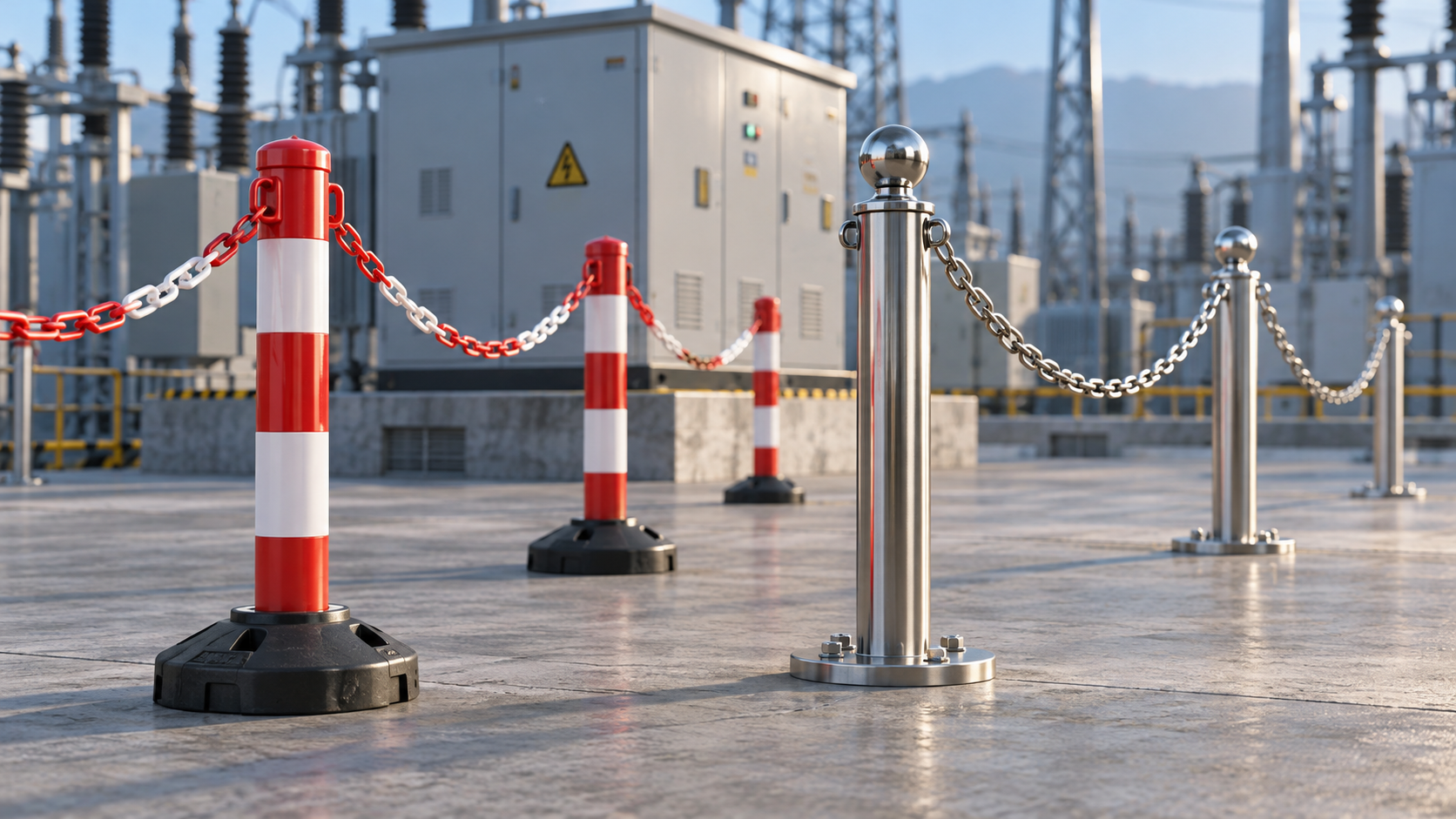
Plastic barrier stands can be the better choice for substation maintenance when crews need portable boundary markers that resist corrosion and reduce the amount of exposed metal brought into a work area. Steel stands may suit locations where rigidity, resistance to handling damage, and a stable permanent layout carry more weight. The choice depends on the complete barrier assembly, its position relative to electrical hazards, and the conditions it must withstand.
Neither material, by itself, establishes a safe electrical boundary. An ordinary plastic stand is not automatically an insulating protective device, and a heavy steel stand is not automatically a secure barrier. For utility teams and maintenance contractors, a useful comparison starts with the job: where the barrier will stand, what it must prevent, and how often workers will move it.
Start with the boundary the maintenance task requires
Temporary stands linked by chain, tape, or retractable belts can make a restricted area easier to recognize. They can mark an access route, separate a work zone from adjacent equipment, or direct personnel toward an authorized entrance. Their effectiveness depends on visibility, placement, continuity, and whether workers understand the boundary.
These assemblies generally provide limited resistance to someone walking through or moving them. Where the task requires a physical guard against access to exposed electrical parts, vehicle restraint, or protection from falling objects, a lightweight chain-and-post arrangement may be unsuitable regardless of the post material. Establishing that requirement first prevents a purchasing decision from becoming a substitute for selecting the appropriate type of protection.
Substation maintenance also creates changing conditions. A boundary suitable for an isolated equipment bay may need a different arrangement when adjacent equipment remains energized. Open cabinet doors, temporary leads, lifting operations, and material delivery can change the available space. The stand’s base and the connecting chain must remain within the approved layout throughout the work.
Before comparing products, define three practical requirements:
- The boundary’s function: visual guidance, controlled access, or a physical protective barrier.
- The installation environment: nearby electrical hazards, surface conditions, wind exposure, and pedestrian or vehicle movement.
- The deployment pattern: frequent relocation, a fixed position for an extended outage, or repeated use in the same location.
Once these are clear, the differences between plastic and steel become easier to evaluate without assuming that one material suits every part of a substation.
Electrical exposure: plastic offers an advantage with limits
Reducing unnecessary conductive objects near electrical equipment can be a sound selection objective. A plastic post may support that objective, particularly where stands must be carried through constrained routes or positioned near equipment under an approved work procedure. It also avoids the exposed conductive surface of a steel post.
However, “plastic” describes a broad material category. The word alone does not establish electrical insulating performance. Resin formulation, fillers, construction, surface condition, moisture, and contamination can affect electrical behavior. A product sold as a crowd-control or safety-marking stand may have no demonstrated suitability for use as electrical protective equipment.
The complete assembly deserves inspection. A plastic upright may contain a metal reinforcing tube, use exposed metal hooks, or sit on a base with accessible conductive components. Adding a steel chain can also change the electrical characteristics of an otherwise plastic arrangement. If electrical performance forms part of the selection requirement, the supplier’s evidence should cover the relevant assembled configuration and intended use.
Surface condition matters during service. Dirt, moisture, and conductive deposits can compromise assumptions based on clean, dry material. A plastic stand that has been stored outdoors or dragged across a contaminated floor should not acquire an electrical safety role simply because it still looks intact. Where a particular insulating function is required, select equipment intended and documented for that function and follow its inspection and maintenance requirements.
Steel presents a more direct concern because accessible steel components conduct electricity. Contact with energized equipment can create a dangerous condition, and location-dependent induction or ground-potential hazards may also require assessment. Paint or powder coating should not be treated as electrical insulation: coatings can wear, chip, and leave conductive surfaces exposed.
Any decision about bonding or grounding conductive barriers belongs within the site’s electrical safety assessment and procedures. Improvised connections can introduce additional hazards. Material selection also does not authorize closer placement to energized parts or reduce required approach distances.
For a visual boundary near electrical work, a suitable plastic assembly can therefore offer a useful reduction in exposed conductive material. That benefit should remain separate from any claim that the stand protects a worker from electrical contact.
Stability depends on the base, connections, and ground
Steel stands often feel more substantial, but post material is a poor shortcut for predicting whether a barrier will stay upright. A plastic upright with a broad, properly ballasted base can be more stable than a steel upright on a narrow, lightweight foot. Base width, total mass, center of gravity, post height, and the forces transferred through the chain or belt all affect performance.
This distinction matters in outdoor substations. Wind acts on the whole installation, particularly attached signs and broad belts. Chain tension can pull a post off balance, while a long unsupported span can sag into a walkway or encourage workers to step over it. Increasing tension to remove that sag may create another stability problem.
Ask how the assembly performs in the configuration you intend to use. A stability claim for an individual post does not necessarily describe a line of connected posts carrying warning signs. Supplier information is more useful when it identifies the base arrangement, connecting span, attachments, surface, and conditions associated with the claim.
The ground can change the answer again. Gravel may allow a small base to rock or settle unevenly. Sloping concrete can undermine an otherwise adequate arrangement. Mud can conceal the edge of a base, and drainage routes may carry water or debris against it. A larger footprint can help in some locations but can also obstruct narrow access routes or create a trip hazard.
Ballast introduces its own handling decision. Some plastic systems use fillable bases, allowing crews to move the components before adding ballast. Their practical value depends on the approved filling material, access to it, leakage resistance, and any restrictions associated with temperature or storage. Compare the effort of transporting, filling, emptying, and cleaning the bases with moving a ready-to-use assembly.
Steel may be preferable where a robust, rigid assembly will remain in position and handling damage is a significant concern. Yet a bent post, damaged connection, or distorted base can make a steel system unreliable. Strength does not eliminate the need to inspect the installed line.
A displaced barrier can leave a work boundary ambiguous. Select a design that crews can inspect readily, and include boundary checks when the work arrangement changes or weather affects the site. A stand that performs well when first positioned still needs to remain effective throughout the task.
Handling and outdoor durability create different ownership costs
For teams moving barriers repeatedly between equipment bays, the weight of each component affects the work. Lighter plastic posts can make carrying and repositioning easier, especially when the route includes steps or limited access. The advantage may shrink if the system relies on heavy bases that must be moved separately.
Compare the complete working kit: uprights, bases, chain or belts, signs, connectors, and transport arrangements. Count how many pieces a crew must handle and whether the components can be assembled consistently while workers wear the required gloves. A low purchase price offers little benefit if awkward fittings or missing parts repeatedly delay setup.
Plastic avoids the rusting associated with exposed carbon steel, making it worth considering where moisture and corrosion complicate maintenance. Its durability still depends on the material and service conditions. Sunlight, temperature, chemicals, and impact can affect different plastics differently. Fading may reduce visibility, while cracking or embrittlement can make clips and post connections fail during handling.
Steel systems need equally specific scrutiny. Coating quality, joints, fasteners, and areas where water can collect influence corrosion performance. Bases dragged over rough surfaces can lose their finish at precisely the points exposed to moisture. Stainless steel, galvanized steel, and painted carbon steel should not be treated as equivalent purchasing options.
Inspectability is an ownership issue as well as a maintenance issue. Can a worker identify a cracked plastic socket, a loose steel connection, or a damaged belt mechanism before deployment? Can the supplier provide replacement bases and connectors? A system built around replaceable wear parts may remain usable longer than one that must be discarded after a minor fitting fails.
For an economic comparison, consider service life under the actual storage and exposure conditions, handling effort, replacement-part availability, and the cost of keeping enough serviceable assemblies ready. Without those details, a general claim that plastic is cheaper or steel lasts longer has limited value.
Choose by maintenance scenario, then verify the assembly
For indoor maintenance with frequent boundary changes, plastic stands are a strong candidate when they provide adequate stability and visibility. Their handling characteristics and reduced exposed metal can be useful, particularly when the kit is designed for quick, repeatable deployment. Check that bases leave enough room for movement and that connecting components remain secure during repositioning.
For an exposed outdoor bay, give more weight to stability evidence, weather resistance, and the site’s electrical assessment. Either material may be suitable for the marking task. A broad, ballasted plastic base may work well; a suitably designed steel assembly may also be appropriate where conductive components are permitted. The deciding evidence should describe the complete installation under relevant conditions.
For extended use in a designated area with rough handling, steel may justify its additional weight through rigidity and resistance to some forms of mechanical damage. That choice still requires an acceptable location relative to electrical hazards and a practical corrosion inspection routine. Where a boundary must physically prevent entry, reassess whether stand-and-chain equipment provides enough protection at all.
Before committing to a fleet purchase, request the assembled weight, base dimensions, material details, connecting-span guidance, environmental limitations, and replacement-part information. Ask suppliers to distinguish visual demarcation claims from any claimed electrical protective function. An undocumented description such as “insulated safety barrier” is insufficient grounds for assigning the equipment a protective role.
A representative site evaluation can then resolve issues that a catalogue leaves open: whether bases sit securely on the actual surface, signs remain readable, components fit through access routes, and crews can establish a clear boundary without obstructing movement. Conduct that evaluation within the site’s approved arrangements and intended operating conditions.
Plastic is often the more practical starting point for portable substation boundary marking, provided the complete system meets the job’s stability and durability requirements. Steel deserves consideration where a permitted location and a more demanding mechanical duty support its use. The purchase should follow the maintenance boundary: define what it must do, then select the assembly that can keep doing it for the duration of the work.
Next:No more content
Recommend
 Nov 01, 2026
Plastic vs. Steel Barrier Stands: Which Suits Substation Maintenance?
Are plastic barrier stands better than steel ones for substation maintenance? Compare electrical considerations, stability, and durability to choose the right system for your crew.
- Nov 01, 2026
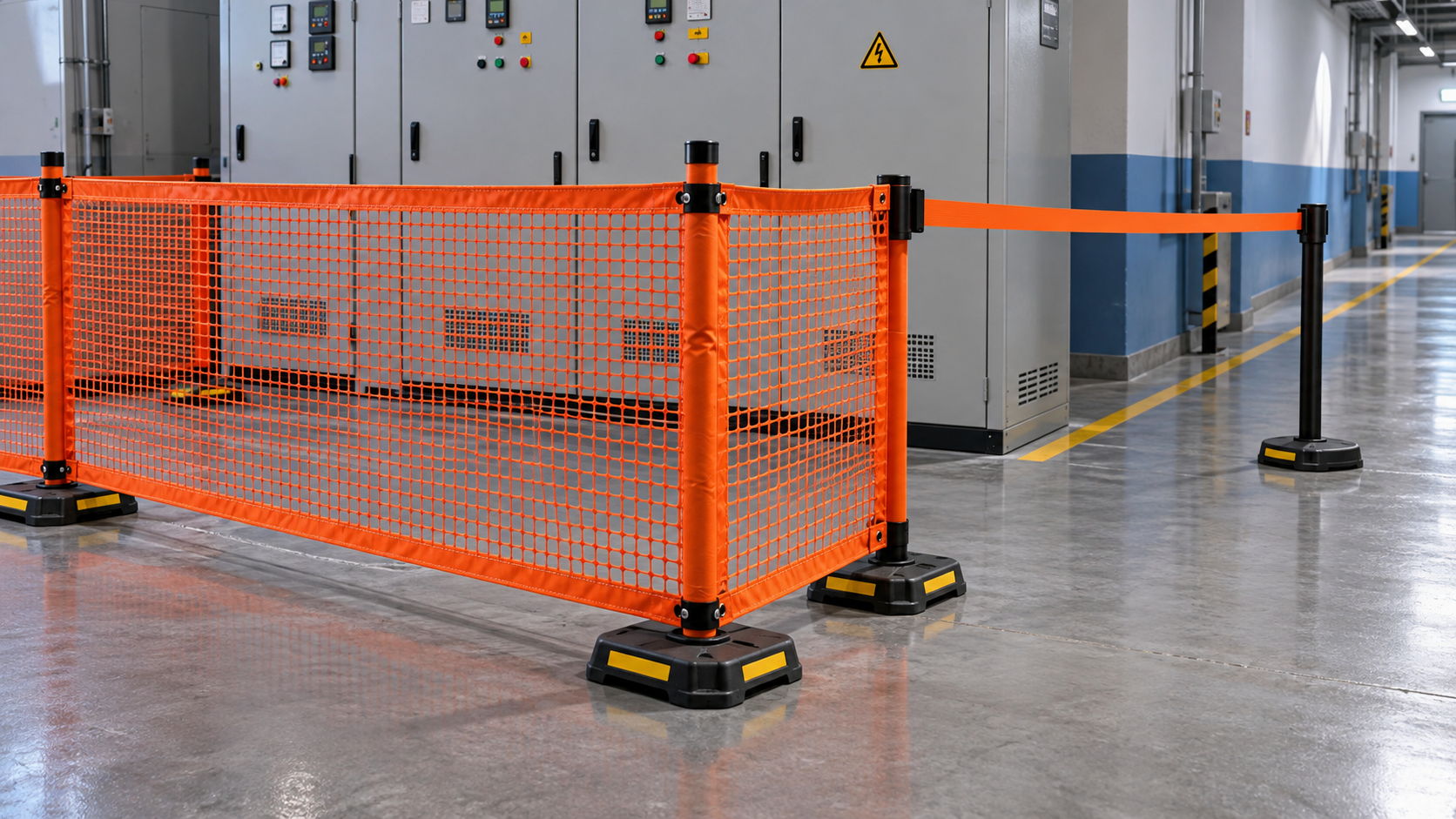
Is Mesh More Visible Than a Single Belt Around a Work Area?
Is a mesh barrier easier to see than a single belt around a work area? Compare visibility, lighting, and site conditions to choose the right boundary for electrical maintenance.
- Oct 31, 2026
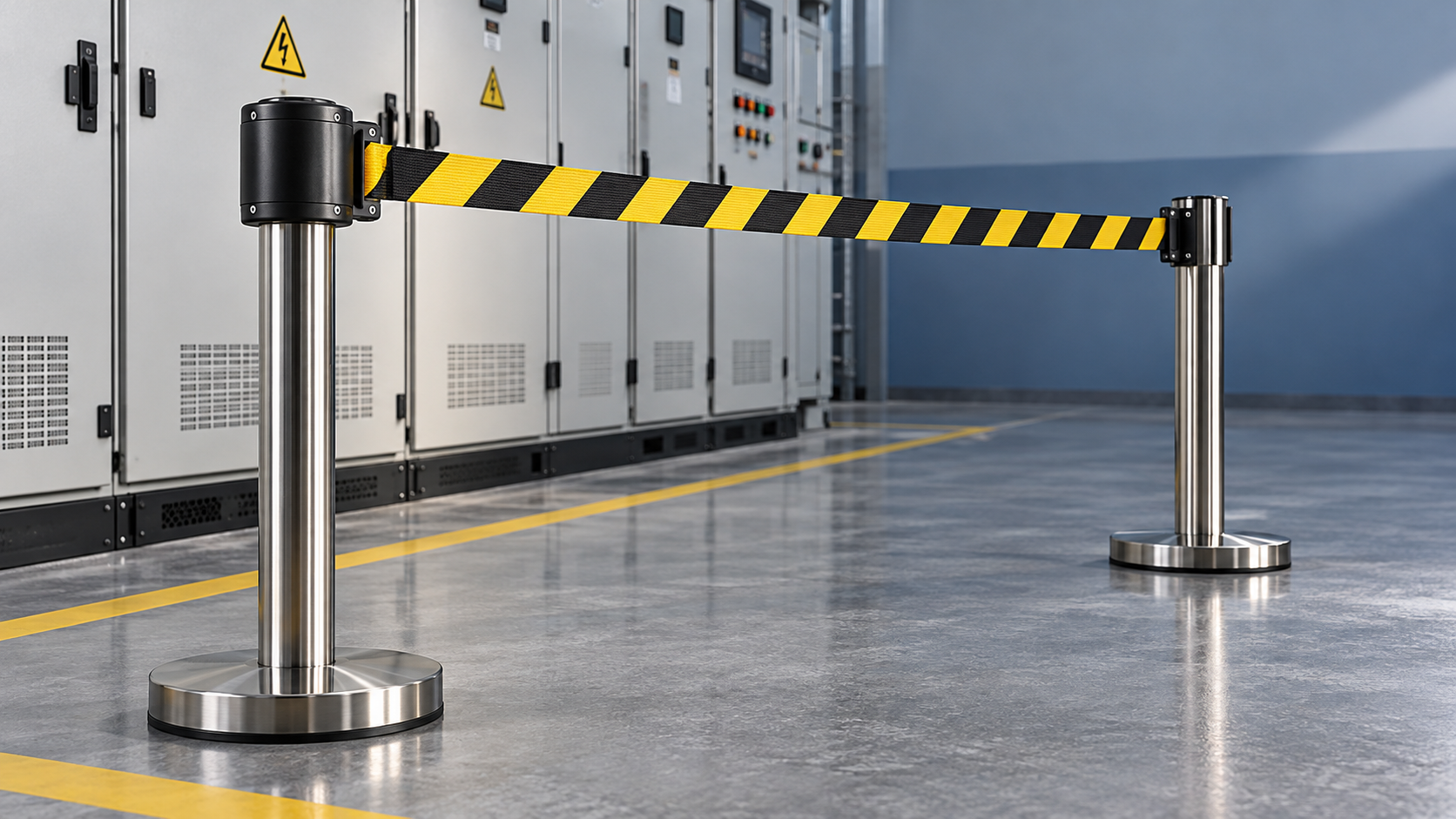
How Do You Evaluate Slow-Retracting Safety Barriers?
Evaluate slow retracting safety barriers with practical checks for controlled return, secure mounting, and durability. Discover how to choose the right barrier for electrical work zones.