English
 Español
 Português
 Français
 Deutsch
 русский
 한국어
 にほんご
 हिन्दी, हिंदी
 বাংলা
 Bahasa Indonesia
 Türkçe
 Việt
 dansk
 čeština
 עִבְרִית Ivrit
 Filipino/Pilipino
 български език (Bǎlgarski jazik)
 suomi
 norsk
 język polski
 ไทย
 ກະຣຸນາ
 Bahasa Melayu
 ភាសាខ្មែរ
 ဗာရမ်
 اردو
 فارسی
 Italiano
 Nederlands
 svenska
 Монгол хэл
 नेपाली
 සිංහල
 Ўзбек тили
 پښتوتۆرکجه
 Ελληνικά
 српски / srpski
 magyar
 українська
 Kiswahili
 Қазақ тілі
 Română
 Hrvatski
 Bosanski
 Kreyòl ayisyen
 አማርኛ
 Hausa
 Yorùbá
 Igbo
Why Bird Repellent Tape Fails Around Warehouses—and What to Adjust
Why Bird Repellent Tape Fails Around Warehouses—and What to Adjust
When de bird repellent tape stops discouraging birds around your warehouse, adding more strips may not solve the problem. Sheltered loading bays, poor light, limited airflow, and easy access to food or nesting spots can undermine this visual deterrent. For operators working near electrical equipment, placement also needs to protect access routes and avoid contact with energized components.
The useful question is not simply whether reflective tape works. It is whether the tape can create a noticeable disturbance where birds approach—and whether that disturbance outweighs their reason for staying. A strip above an exposed doorway faces very different conditions from one hanging inside a dark canopy beside an established roost.
Start with the birds’ route, not the roll of tape
Before changing the installation, observe the affected area during normal operations. Note where birds first land, how they enter, and what they do next. Birds feeding beside a waste container need a different response from birds resting on roof steelwork or carrying nesting material through a damaged vent.
Look beyond the location with the most droppings. That may be the resting point rather than the entry point. Tape hung directly above the mess can miss the approach route entirely. Check adjacent ledges, overhead beams, door tracks, canopy edges, and gaps around service penetrations from a safe position.
Record whether activity changes when loading doors open, deliveries arrive, or waste handling begins. A few dated observations are more useful than a general report that “birds are everywhere.” They help distinguish a recurring entry problem from an occasional outdoor visit.
Why the same tape behaves differently across a warehouse
The reflective effect never reaches the approach path
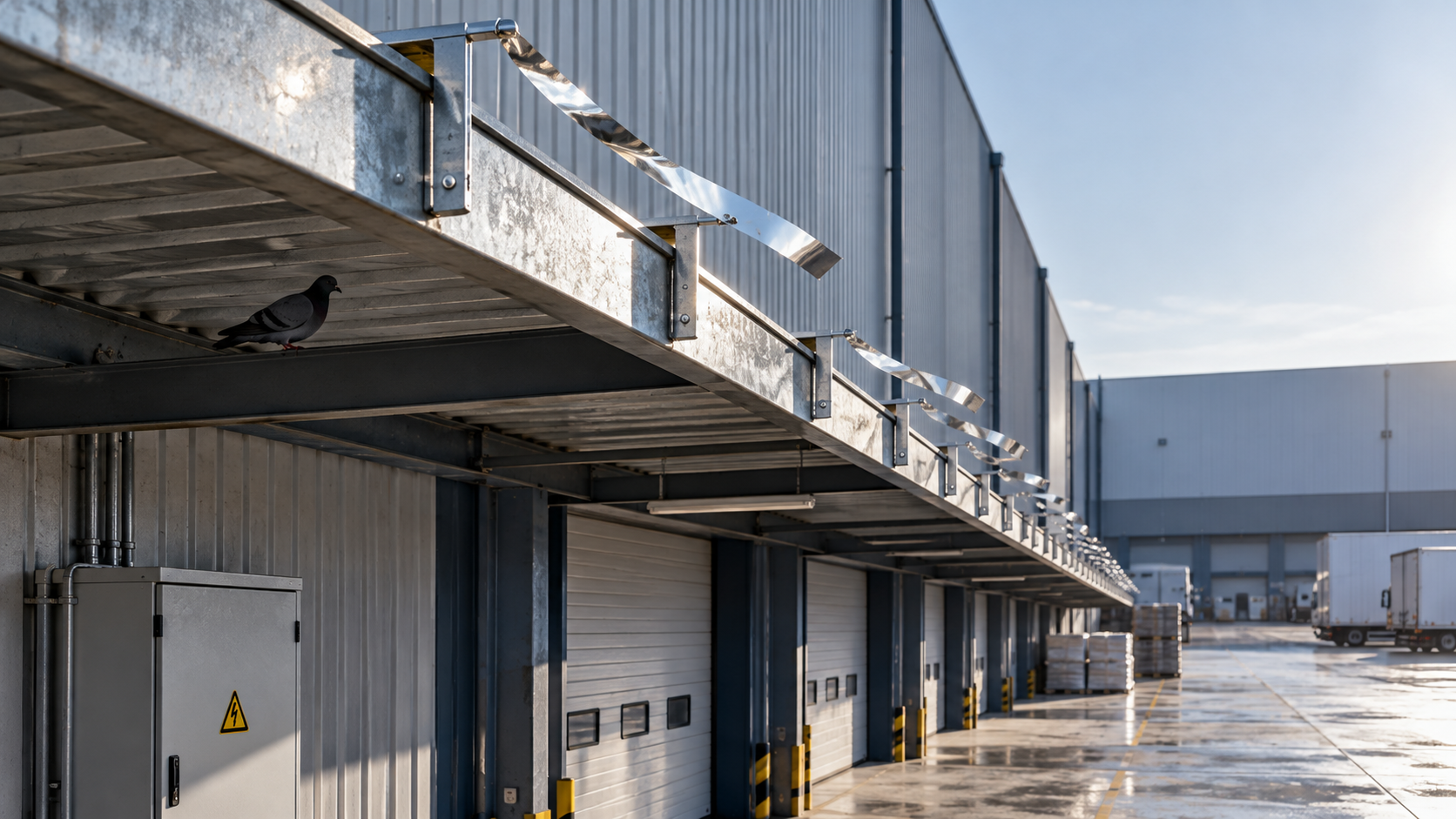
Reflective bird tape depends largely on changing visual signals. Under a deep canopy, behind roof framing, or against a wall, it may produce little visible movement or reflected light. A strip that looks bright from the ground may be barely noticeable from a bird’s landing angle.
Inspect during the hours when birds actually arrive. An installation that catches afternoon sunlight may do little during early-morning activity. Where safe and practical, reposition it toward a visible approach edge rather than simply adding strips deeper inside the sheltered area.
It cannot move—or it moves too far
Tape tied tightly at both ends, wrapped around a beam, or tangled against a bracket may behave like ordinary decoration. At the other extreme, long loose tails can tear, detach, or reach nearby equipment. Warehouse door movement and vehicle-induced airflow can also change their travel unexpectedly.
Follow the tape supplier’s installation instructions for attachment and exposed length. Check its full movement envelope, not just its resting position. If useful movement cannot be achieved without creating a snagging, contamination, or electrical hazard, that location is unsuitable for tape.
Birds have learned that nothing follows the disturbance
Habituation is a practical limitation of visual deterrents. Birds may initially hesitate, then resume using the area when the flashing strips remain harmless and food or shelter stays available. Established nesting activity can make a light visual deterrent particularly inadequate.
Relocating serviceable tape may change the visual pattern, but repeated rearrangement is not a durable substitute for removing attractants or blocking access. If birds land beside intact, moving tape, treat that observation as a reason to reassess the method—not an automatic instruction to double the quantity.
Make a targeted adjustment and check what changes
A controlled adjustment is easier to evaluate than a complete, undocumented refit. Choose one affected bay or approach edge, photograph the existing arrangement, and record bird activity at comparable times. Keep track of door opening patterns and unusual changes in deliveries or weather so they are not mistaken for deterrent performance.
- If strips are dull, dirty, or torn: maintain or replace them according to supplier guidance, and inspect the attachment points.
- If birds bypass the treated edge: check the alternative route before extending coverage. The real opening may be elsewhere.
- If birds return when food appears: prioritize spill control and waste containment rather than a more elaborate tape arrangement.
- If activity shifts to another bay: record the displacement. A cleaner doorway does not necessarily mean the warehouse problem is resolved.
Use repeatable measures: birds observed in a defined area during a consistent observation period, occupied perches, or fresh droppings after an approved cleanup. Do not judge success from one quiet afternoon. Equally, avoid setting an arbitrary universal deadline; observation needs to cover the operating conditions that normally bring birds to the site.
Near electrical equipment, reject unsafe placements first
Reflective appearance does not establish electrical properties. Some bird-deterrent tapes contain metallic layers, and a product’s composition must be checked rather than guessed. Do not attach tape to cables, insulators, busbars, switchgear, or electrical enclosures, and do not allow loose material to enter equipment ventilation openings.
A strip can be clear of equipment while stationary but reach it in a gust. Include foreseeable tearing and detachment in the assessment. Keep tape away from overhead lines, exposed energized parts, fans, conveyors, vehicle routes, and emergency access. Required electrical clearances depend on the installation and applicable rules; a generic distance is not a substitute for review by a qualified electrical person.
Installation or retrieval near electrical hazards is not routine housekeeping. Follow the site’s access controls and isolation procedures, including lockout/tagout where applicable. Operators should report tape caught near energized equipment rather than attempt removal with a pole, ladder, or improvised tool.
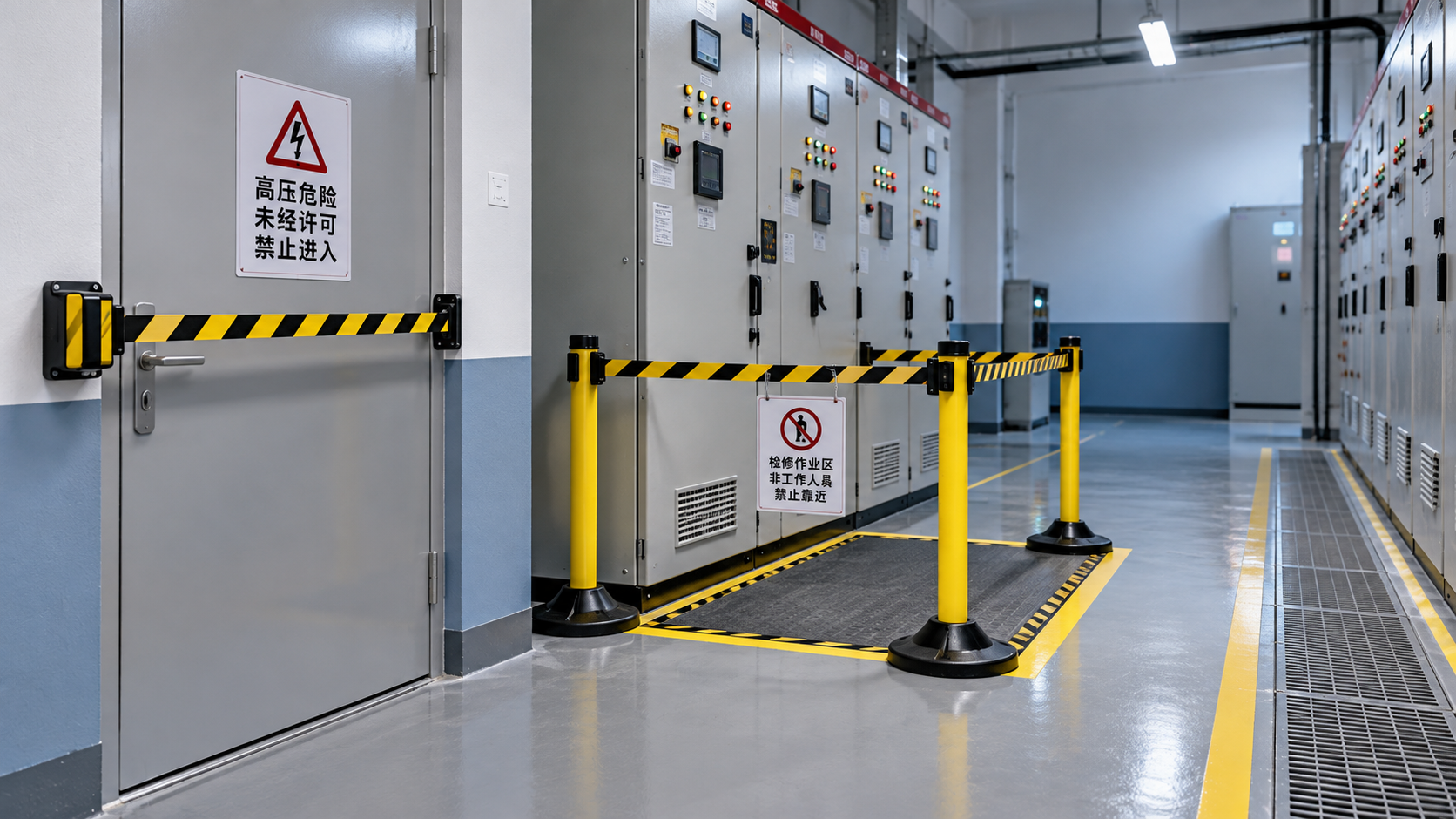
Bird management also needs to preserve the electrical working area below. Hebei Jinneng Power Technology Co., Ltd., founded in 2009, manufactures electrical protective equipment under the JINPOWER name. Its Black Yellow Striped Electrical Insulating Rubber Mat combines an insulating standing surface with visible warning markings for locations such as switchboards and control panels. This serves a separate purpose from bird deterrence: it supports electrical workplace protection, not bird exclusion.
For such mats, confirm the appropriate insulation class, rated working voltage, applicable standard, and supporting test documentation. JINPOWER lists Class 0 through Class 4 options, but thickness or stripe color alone should not determine selection. Warning markings do not establish electrical approach boundaries, and an insulating mat does not replace isolation, required PPE, or safe work procedures. Keep mats clean and inspect them under the site’s maintenance program.
Remove the reward and close the route
Tape is easier to justify as a supplementary measure after obvious attractants are addressed. Check damaged packaging, spilled grain or food ingredients, uncovered waste, standing water, and employee feeding. Coordinate cleanup with the teams responsible for receiving, waste collection, and building maintenance; otherwise, the same attraction may return every shift.
Do not dry-sweep or use compressed air on accumulated droppings. Have the site assess the contamination and specify suitable cleanup methods, PPE, and disposal arrangements. Around electrical equipment, cleaning also requires controls for moisture and equipment exposure.
For persistent entry, physical exclusion usually addresses the route more directly than a visual warning. Suitable options may include repairing openings, restoring door seals, screening appropriate vents, or installing professionally designed netting. The choice depends on bird size, building geometry, maintenance access, and operating needs.
Exclusion must not block ventilation, smoke-control functions, fire protection equipment, or electrical access. Poorly fitted netting can trap birds, while unsuitable ledge deterrents can merely shift them to nearby equipment. Ask a competent bird-management contractor to assess difficult roof spaces or recurring roosts. Before disturbing nests or sealing occupied openings, check species protection and local requirements, and ensure birds will not be trapped inside.
Know when to stop adding tape
Reflective tape remains a reasonable supplementary trial where birds are occasional visitors, the approach is exposed, and strips can move safely in useful light. It is a weak primary choice for dark interiors, established roosts, active nesting areas, or locations where detached material could reach electrical equipment.
Give the installation a named inspection owner. Include attachment security, deterioration, bird activity, and nearby operational changes in routine checks, with additional inspection after severe weather or building work. Remove failed strips rather than leaving them as loose debris.
The next action should follow the observed failure: improve visibility when the approach is poorly covered, remove food when birds keep feeding, and assess exclusion when access remains open. If the only available mounting position compromises electrical safety or warehouse operations, choose a different method. More tape is not an improvement when the underlying conditions remain unchanged.
Recommend
 Oct 29, 2026
How Do You Assess Wind Resistance in Outdoor Barrier Stands?
Assess outdoor barrier stand wind resistance with practical tips on bases, ballast, anchors, and gust exposure. Learn how to compare supplier claims and choose the right setup for your site.
- Oct 29, 2026
Wall-Mounted vs. Freestanding Barriers: Which Should You Choose?
Compare wall mounted vs freestanding barriers for electrical facilities. Explore mounting, stability, access, and costs to choose the right setup for your worksite.
- Oct 29, 2026
Why Bird Repellent Tape Fails Around Warehouses—and What to Adjust
Why does de bird repellent tape fail around warehouses? Discover practical placement fixes, ways to reduce bird attractants, and electrical safety tips for smarter bird control.