English
 Español
 Português
 Français
 Deutsch
 русский
 한국어
 にほんご
 हिन्दी, हिंदी
 বাংলা
 Bahasa Indonesia
 Türkçe
 Việt
 dansk
 čeština
 עִבְרִית Ivrit
 Filipino/Pilipino
 български език (Bǎlgarski jazik)
 suomi
 norsk
 język polski
 ไทย
 ກະຣຸນາ
 Bahasa Melayu
 ភាសាខ្មែរ
 ဗာရမ်
 اردو
 فارسی
 Italiano
 Nederlands
 svenska
 Монгол хэл
 नेपाली
 සිංහල
 Ўзбек тили
 پښتوتۆرکجه
 Ελληνικά
 српски / srpski
 magyar
 українська
 Kiswahili
 Қазақ тілі
 Română
 Hrvatski
 Bosanski
 Kreyòl ayisyen
 አማርኛ
 Hausa
 Yorùbá
 Igbo
What Affects Barrier Tape Supplier Lead Times?
Barrier tape lead times depend on more than the time needed to make a roll. A standard, unprinted tape already in stock may be ready for dispatch quickly, while a custom-printed order can require material procurement, artwork approval, production scheduling, inspection and international transport. The most useful question is therefore not simply “How long is the lead time?” but “When does the clock start, and what delivery milestone does it cover?”
For an electrical safety project, an incorrect assumption about stock, printing or shipping can leave a site without the required warning materials. A dependable estimate connects the tape specification and order quantity to a confirmed production slot, dispatch date and transport plan.
What does a barrier tape supplier’s lead time include?
Lead time can describe several different intervals. A supplier might quote the period from order acceptance to completion of production, from payment receipt to dispatch, or from dispatch to arrival at a named destination. These are not interchangeable.
A complete delivery schedule may include specification review, quotation acceptance, payment or credit approval, artwork sign-off, raw-material purchasing, manufacturing, quality checks, packing, export clearance and transport. Some activities can overlap; others cannot start until an earlier decision is complete. For example, a printer cannot reliably schedule a custom warning message until the wording and layout are approved.
Ask the supplier to state both the start event and the end event for its quoted lead time. A production estimate beginning after final artwork approval does not account for the time needed to agree on that artwork. Similarly, an estimated vessel arrival date is not the same as delivery to a warehouse after customs clearance.
Does tape type affect how quickly an order can be filled?
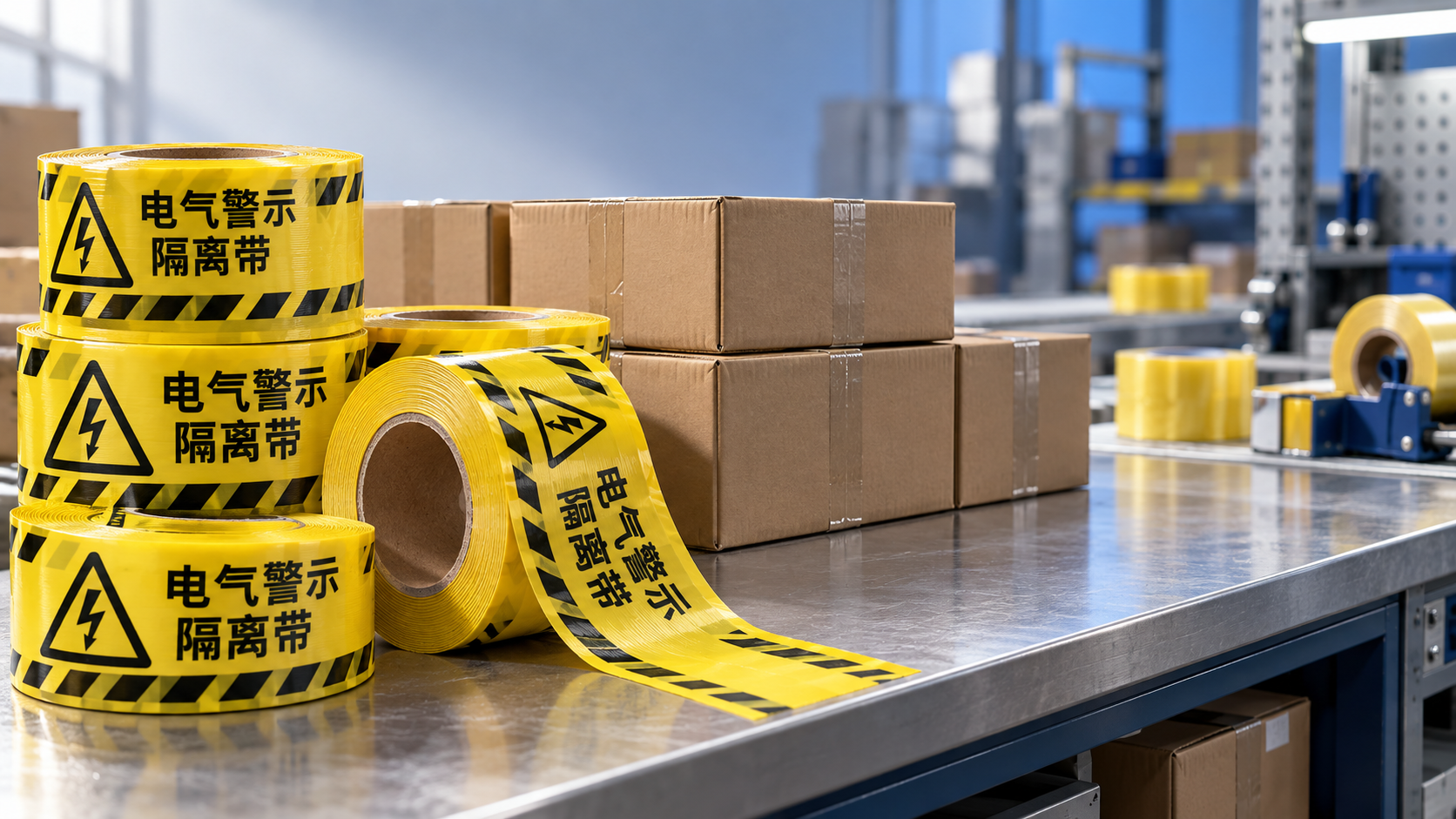
Yes. “Barrier tape” can refer to different products, including non-adhesive warning tape used to mark a temporary exclusion zone and adhesive tape used for identification or marking. Width, thickness, roll length, color, printing and packaging all determine whether a supplier can use existing stock or must arrange a separate production run.
For temporary electrical work zones, the required warning message and visibility may matter as much as the tape dimensions. A supplier may have a red-and-white tape available but not the specified wording, language or roll length. Stock in a similar color does not necessarily satisfy the order.
Material choice also changes the sourcing path. If a particular film, pigment, adhesive or outdoor-performance characteristic is required, the supplier must confirm that the relevant material is available in the required quantity. Requests for enhanced durability or a specific documented test result can narrow the available options and add review or testing time.
Barrier tape is a visual warning and boundary marker; it should not be assumed to provide electrical insulation or physical protection. If the application requires protective equipment or a rigid barrier, clarify those requirements separately rather than treating tape availability as a substitute.
How does order quantity influence production time?
A small order can be filled quickly when the exact product is in finished-goods inventory. If it is not, a small custom order may need to wait for a suitable production slot, particularly when a machine setup is needed for a short run. The minimum order quantity stated in a quotation can reflect that setup and material commitment, not necessarily the amount of stock available.
A larger order may justify a dedicated run, but it also consumes more film, ink, packaging and machine time. If those inputs are not reserved, part of the order may be delayed even when the supplier can start production promptly. Capacity should therefore be assessed against the requested quantity and specification, not against a general claim that the factory can manufacture barrier tape.
Ask whether the quoted quantity can be shipped in full on one date. If a project has an early requirement for part of the order, discuss a split shipment before placing it. Confirm the quantity and dispatch date for each portion, along with any additional freight or handling charges. A partial shipment is useful only if the first portion contains the correct tape and sufficient rolls for the immediate work.
Why does custom printing add time?
Custom printing introduces decisions and production steps that do not apply to plain stock. The supplier needs a usable design file or clear instructions for the warning text, language, colors, repeat pattern and placement. The buyer then needs to approve a proof before production begins. If wording changes after approval, the supplier may have to revise the artwork, remake printing components or reschedule the run.
Allow extra attention for multilingual warnings and electrical hazard messages. The supplier can reproduce approved text, but responsibility for the wording should be agreed rather than assumed. Check spelling, translations, symbols and the direction in which the message will appear as the roll is unwound.
A digital proof can confirm layout and wording, but it does not necessarily show the final appearance of ink on the selected film. If a physical pre-production sample or a specific color match is required, agree on the approval method and shipping arrangements in advance. The schedule should state whether bulk production waits for sample approval and what happens if the sample is rejected.
Can raw-material availability delay an order that has already been quoted?
It can. A quotation shows that a supplier is prepared to offer a product under stated terms; it does not always mean the film, ink and packaging have been allocated to that order. Availability can change between quotation and order confirmation, especially for a less common specification or a large quantity.
Distinguish among finished stock, raw material in stock and material that still needs to be purchased. Finished stock may only require verification and packing. Film already held by the manufacturer may still need printing, slitting and winding. Material sourced after order confirmation adds the upstream supplier’s schedule to the delivery plan.
Where the deadline is important, ask when materials will be reserved and whether the quoted dispatch date depends on an external material delivery. If substitutes are offered, require approval before use: changing film thickness, print, roll length or packaging may affect acceptance even if the rolls look similar.
How do production schedules and quality checks affect dispatch?
Production capacity is not the same as immediate availability. A supplier may have the equipment to make the tape but already have other work scheduled on that equipment. Printing, slitting and winding can also be separate operations, each with its own queue. A realistic confirmation identifies when the order is expected to enter production rather than relying solely on a general manufacturing duration.
Inspection and packing take time after the line finishes. Depending on the agreed specification, checks may cover dimensions, roll count, print legibility, color, winding and packaging. If the purchase order requires inspection records, retained samples, third-party inspection or particular shipping marks, those requirements should be visible when the schedule is agreed.
Do not treat inspection time as automatically removable when an order becomes urgent. If defects are discovered after shipment, replacement production and transport can take longer than the original check. Instead, agree on the acceptance criteria early and clarify who can approve any deviation.
Does shipping time form part of the supplier’s lead time?
Only if the quotation explicitly says so. International orders can involve inland collection, export documentation, a freight booking, transit, import clearance and final delivery. Each handoff can affect the arrival date, and the responsible party depends on the agreed delivery terms.
Ask for the named place associated with the quoted Incoterms rule and confirm who arranges and pays for each transport leg. A dispatch-ready date, handover to a carrier and arrival at the destination are separate milestones. Freight schedules and customs processing can change, so an estimated arrival should not be presented internally as a guaranteed delivery date unless that commitment is expressly agreed.
Packaging can also affect timing. Carton dimensions, palletization, labels and destination-specific documentation should be settled before dispatch. If a site requires delivery on a particular date, work backward from that date and allow for clearance, inland transport and the consequences of a missed connection.
What information produces a more reliable lead-time quotation?
Give suppliers enough detail to check stock and capacity against the actual order. An enquiry that asks only for “electrical warning tape” leaves too many variables open. Include:
- Tape type, material, width, thickness and roll length, where specified.
- Required quantity, acceptable shipment split and the date each quantity is needed.
- Colors, warning text, languages, symbols and artwork approval requirements.
- Performance, inspection or documentation requirements relevant to the application.
- Packaging, labels, destination and requested delivery terms.
Request separate dates for order acceptance, artwork approval, production completion and dispatch, plus an estimated transit period if the supplier is arranging freight. Also ask which assumptions could change those dates. A conditional schedule can be more useful than a short, unqualified promise because it shows which decisions must be made to protect the deadline.
How do I verify Hebei Jinneng Power Technology Co. as a potential supplier?
Verification should connect the company’s identity and capabilities to the specific barrier tape order. Hebei Jinneng Power Technology Co., Ltd. describes itself as a manufacturer of electrical safety equipment; that description alone does not establish current stock, in-house production of a particular tape or a committed delivery slot.
Check that the legal company name on registration records, quotation, contract and bank account is consistent. Request a written explanation of whether the tape is made in-house or sourced from another manufacturer, and ask which organization will handle printing, quality control and dispatch. Where appropriate, use an independent factory audit or inspection to confirm the relevant operation.
For the proposed order, request the exact product specification, available test or inspection documents, a sample if needed, and a dated delivery schedule. Verify that documents relate to the offered product and requirements rather than assuming a general company certificate covers every tape. Confirm payment conditions, responsibility for delays and the process for handling nonconforming goods in the purchase agreement.
What should be done if the quoted lead time is too long?
Identify the constraint before changing the order. If the delay comes from unavailable custom film, an approved alternative material or dimension may help. If printing is the bottleneck, a suitable stock design could be considered, provided its warning is acceptable for the intended site. If transport is the constraint, a different route or shipment split may be useful after comparing cost and delivery risk.
Any change should be documented against the original requirement. Faster delivery has little value if the tape arrives with the wrong warning, insufficient durability or an unapproved specification. The strongest commitment is a schedule tied to a defined product, allocated materials, approved artwork and clearly stated dispatch and delivery responsibilities.
Next:No more content
Recommend
 Nov 03, 2026
What Affects Barrier Tape Supplier Lead Times?
How do I verify Hebei Jinneng Power Technology Co. as a barrier tape supplier? Discover what affects lead times and how to secure a reliable delivery schedule.
- Nov 03, 2026
Retractable Mesh vs. Belt Barriers: Which Should You Choose?
Assess Hebei Jinneng Power Technology Co., Ltd.'s bulk barrier delivery capacity and compare mesh vs. belt barriers to find the right fit for your site.
 Sep 28, 2026
When a plastic shovel for snow is suitable around outdoor equipment
Plastic shovel snow tools help crews clear light buildup around outdoor electrical equipment safely, protect sensitive surfaces, and maintain reliable winter access.