English
 Español
 Português
 Français
 Deutsch
 русский
 한국어
 にほんご
 हिन्दी, हिंदी
 বাংলা
 Bahasa Indonesia
 Türkçe
 Việt
 dansk
 čeština
 עִבְרִית Ivrit
 Filipino/Pilipino
 български език (Bǎlgarski jazik)
 suomi
 norsk
 język polski
 ไทย
 ກະຣຸນາ
 Bahasa Melayu
 ភាសាខ្មែរ
 ဗာရမ်
 اردو
 فارسی
 Italiano
 Nederlands
 svenska
 Монгол хэл
 नेपाली
 සිංහල
 Ўзбек тили
 پښتوتۆرکجه
 Ελληνικά
 српски / srpski
 magyar
 українська
 Kiswahili
 Қазақ тілі
 Română
 Hrvatski
 Bosanski
 Kreyòl ayisyen
 አማርኛ
 Hausa
 Yorùbá
 Igbo
Can IEC and IEEE Tool Standards Cause Shipment Rejection?
Yes. IEC and IEEE insulating tool standards can differ enough to cause a shipment to be rejected, but the rejection usually happens because the delivered product does not match the buyer's specified compliance basis, test evidence, marking requirements, or local acceptance rules. The problem is rarely that one organization is inherently “stricter” than the other. It is that IEC and IEEE documents may address different parts of the safety question, use different test logic, or be applied alongside different national and utility requirements.
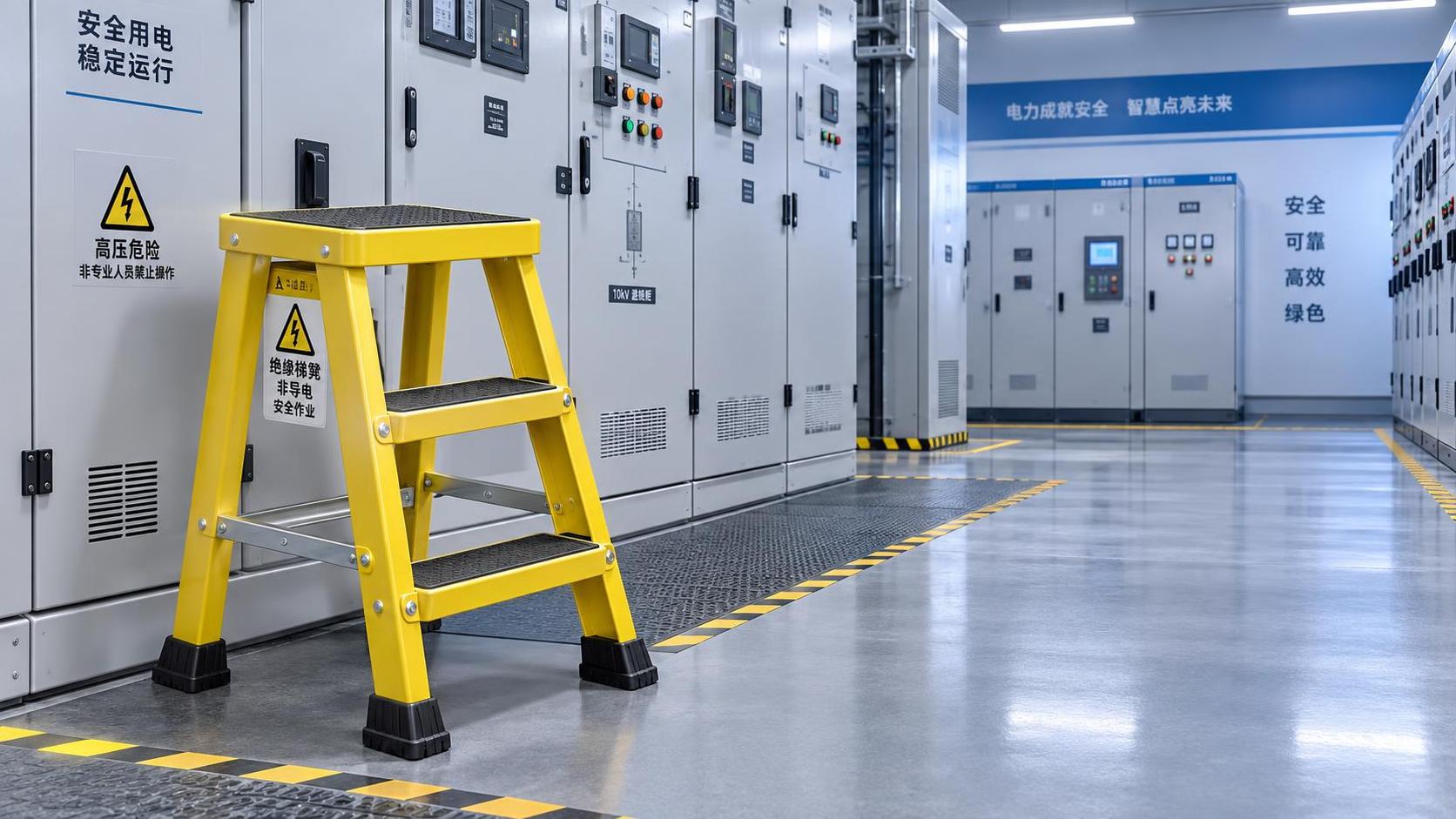
For a utility, EPC contractor, distributor, or industrial maintenance buyer, an insulating tool marked to one recognized standard is not automatically acceptable wherever another standard is named in the purchase order. A hot stick, insulating operating rod, voltage detector support, insulating ladder, or insulated hand tool can be technically sound and still fail receiving inspection if its documentation and identification do not align with the contractual requirement.
The practical answer to the question is therefore: yes, the differences can lead to rejection, but only when they create a mismatch against the acceptance specification. Buyers should evaluate the requested standard at the product-family and test-report level before production and shipment, rather than treating “IEC compliant” and “IEEE compliant” as interchangeable labels.
Why a standards mismatch becomes a shipment problem
Electrical safety equipment is often purchased for work where an insulating failure can expose personnel to live parts. Procurement teams consequently use standards as a control point: they define which product construction, electrical performance, tests, markings, and records must accompany the tools. Once the purchase order names a standard, that reference becomes part of the deliverable, even if the product would function well under a different standard system.
Shipment rejection commonly appears in one of four places:
- Pre-shipment document review: the buyer asks for test reports, declarations, inspection records, drawings, or certificates before authorizing dispatch.
- Incoming inspection: warehouse or quality personnel compare labels, dimensions, ratings, serial identification, and supplied documents with the purchase order.
- Project-site acceptance: a contractor or utility safety team checks whether the tools meet the project standard and local work procedures before workers may use them.
- Import or tender compliance review: product documentation does not support a mandatory national, customer, or tender requirement.
Customs authorities do not ordinarily reject a shipment merely because an insulating tool follows IEC rather than IEEE. Customs risk increases when a regulated market requires particular declarations, labels, certificates, or conformity documentation. In many B2B transactions, however, the more immediate commercial risk is that the consignee refuses delivery, withholds payment, or places the tools in quarantine until the discrepancy is resolved.
IEC and IEEE may not be direct substitutes
A recurring sourcing mistake is to assume that an IEC reference and an IEEE reference describe the same product in different terminology. Sometimes they overlap in purpose, but they may not be parallel standards at all.
IEC standards are frequently used as product standards for live-working equipment. Depending on the product category, they can set requirements for materials, design, dielectric testing, mechanical testing, marking, instructions, periodic inspection, and service conditions. For example, a buyer of insulating operating sticks may refer to the IEC standard applicable to insulating sticks and attachable devices for live working. A buyer of insulated hand tools may instead require the IEC standard for tools intended for work on or near energized systems.
IEEE publications may serve a different role. Some are detailed standards; others are recommended practices or guides for selecting, applying, maintaining, or testing equipment within a power-system safety program. A specification that says “IEEE compliant” without a document number, edition, and scope can be difficult to satisfy because it may not identify a single product qualification route.
This distinction matters. A manufacturer cannot responsibly declare conformity with an IEEE document if that document does not establish the product tests, ratings, and marking requirements being claimed. Equally, an IEC test report does not prove compliance with a separate IEEE-based utility specification when that specification imposes its own dimensions, acceptance tests, environmental conditions, or documentation.
In North American procurement, IEEE references are also often used alongside ASTM, ANSI, OSHA, CSA, or utility-specific requirements. In IEC-oriented markets, an IEC reference may be supplemented by national adoption rules, local electrical safety regulations, or customer standards. The actual acceptance basis is usually the combination, not the first acronym seen on a data sheet.
The differences that most often trigger rejection
Many disputes arise after a buyer sees that the supplied tools have passed an electrical test. Dielectric performance is important, but it is only one part of compliance. The following areas deserve closer comparison.
Scope and intended use
Start with the precise tool and working task. “Insulating tool” can refer to insulated hand tools for relatively low-voltage work, fiberglass live-line sticks for utility distribution systems, insulating rescue devices, insulating ladders, or attachments used with operating rods. These products have very different hazards and test expectations.
A standard for a hand tool with an insulating handle should not be used to support a claim about a live-line operating stick. Likewise, a document applicable to a completed assembly may not cover a custom attachment supplied separately. A receiving inspector can reject a shipment simply because the cited standard falls outside the delivered product's scope.
Voltage rating and test voltage
Nominal system voltage, rated voltage, proof-test voltage, flashover performance, and withstand test conditions are related but are not identical. Procurement documents sometimes use these terms loosely, creating an avoidable disagreement after delivery.
For insulating sticks and similar live-working equipment, the relevant acceptance question may involve the specified withstand voltage over a stated length, the arrangement of electrodes, dry or wet test conditions, and the conditions under which the result is valid. For insulated hand tools, the voltage marking and dielectric test requirements may follow a different structure. A report showing a high test voltage is not enough if it does not demonstrate the exact requirement cited in the order.
Buyers should also inspect whether the rating applies to the whole tool, the insulating section, a removable attachment, or only a material sample. Suppliers should avoid broad statements such as “tested for high voltage” where the governing test method and product configuration are not stated.
Test method, specimen condition, and sample basis
Two standards can ask for electrical testing while producing evidence that is not directly comparable. The difference may involve test frequency, duration, wetting method, conditioning, electrode configuration, mechanical preconditioning, sample quantity, or pass/fail criteria. Even small changes in test setup can affect whether a report satisfies a project specification.
There is also an important distinction between type testing, routine testing, and in-service testing. Type testing is generally used to establish that a product design can meet specified requirements. Routine testing may apply to every manufactured unit or a defined production control process. In-service tests concern the condition of tools already exposed to handling, contamination, ultraviolet light, moisture, impacts, and storage conditions.
A type-test report on an earlier model may be insufficient when the shipment includes a different rod diameter, insulating length, fitting design, material system, or attachment. Conversely, demanding a routine test report for every item when the contract only required type-test evidence can add cost and delay without improving contractual clarity. The correct test package should be agreed before production.
Mechanical construction and dimensional requirements
Electrical insulation cannot be separated from mechanical integrity. Operating tools experience bending, compression, twisting, pulling, accidental impacts, and repeated handling. Standards and customer specifications may differ in how they address deflection, load, fittings, end connections, surface condition, moisture sealing, and warning markings.
This is particularly important for sectional hot sticks and tools with interchangeable heads. A buyer may require a defined universal fitting, locking arrangement, or compatible attachment system. A product that passes dielectric testing but uses a non-approved interface can be unusable in the buyer's maintenance program. It may be rejected for compatibility rather than insulation failure.
Marking, traceability, and instructions
Missing markings are among the easiest defects to identify at receiving inspection. The buyer may expect a manufacturer name or identifier, model, rated voltage where applicable, production date or batch code, serial number, standard reference, warnings, and inspection information. The required content, language, permanence, and placement can vary by market or contract.
Traceability is especially relevant when tools are ordered for a utility fleet or critical project. If the manufacturer cannot connect the delivered product to its batch records and test documentation, the buyer may have no defensible way to place that tool into service. A generic certificate that does not identify the shipped models, quantities, or production lot is often a weak substitute for item-specific records.
Do not treat an IEC marking as proof of IEEE compliance
An IEC marking can be meaningful evidence that a tool was designed and assessed against the cited IEC standard. It does not, by itself, establish conformity with every IEEE requirement a purchaser may have in mind. The reverse is also true.
Where both standards are mentioned, the buyer should ask a more useful question: which clauses, tests, and records must be demonstrated for this exact tool? The answer may show that one standard provides most of the technical basis while the other is a project reference governing application, maintenance, or safety procedures. In that case, the gap may be manageable through a documented compliance matrix rather than a complete redesign.
Where the standards require materially different product testing or construction, the gap should be resolved before the order is released. It is risky to promise cross-compliance based solely on a comparison of standard titles, catalog descriptions, or similar voltage labels.
A practical pre-shipment review for buyers and suppliers
A short technical alignment process can prevent most standards-related disputes. It should happen before tooling, production, or final packaging, especially for export orders and utility tenders.
The purchase order should identify the acceptance standard with enough precision to be auditable. “IEC/IEEE standard” is too vague. It leaves the manufacturer to guess whether the buyer expects a product test standard, a work-practice guide, an older edition, a national equivalent, or a combination of requirements.
For custom tools, a compliance matrix is useful. One column can list the buyer's mandatory clauses or technical requirements; another can identify the product drawing, test report, quality record, or marking that demonstrates each item. Any exceptions should be approved in writing before shipment. This is more reliable than relying on a broad conformity statement after the tools have already been packed.
When a deviation may be acceptable
Not every difference requires rejection. A buyer may accept an alternative standard when the product scope is equivalent for the intended work, the evidence demonstrates equal or more demanding relevant performance, and the deviation is formally approved by the responsible engineering or safety authority. The approval should consider operational compatibility, not simply electrical test values.
For example, a project may accept tools built to an IEC product standard where its own specification had cited an IEEE-related document for general work practices, provided the purchaser's technical authority confirms that the supplied test evidence, markings, and use limitations are suitable. That decision belongs with the organization responsible for worker safety and contractual acceptance, not with a sales description.
Acceptance is much less likely when the discrepancy affects live-working voltage capability, tool geometry, attachment compatibility, mandatory certification, required labels, or the traceability needed for periodic inspection. In those cases, post-shipment paperwork rarely solves the underlying problem.
The procurement lesson
IEC and IEEE insulating tool standards do differ enough to cause shipment rejection when the named requirement, the delivered product, and the supporting evidence do not line up. The most costly failures usually begin earlier: an ambiguous tender, a generic compliance claim, an outdated standard edition, or a missing comparison between the buyer's application and the supplier's test basis.
Before approving shipment, confirm the exact tool category, applicable documents, ratings, test method, markings, and traceability records. That review does more than protect delivery schedules. It establishes whether the insulating tool can enter the buyer's safety system with a clear, defensible basis for use.
Recommend
 Sep 20, 2026
Best Tool Cabinet with Dehumidifier for Coastal High-Salt Environments: Why JINPOWER Leads
Explore JINPOWER’s intelligent tool cabinet with dehumidifier for coastal high-salt environments. Semiconductor dehumidification, anti-corrosion construction, and BanNiu control help protect electrical safety tools.
- Sep 17, 2026
Clear Plastic Snow Shovels: Visibility Benefits and Limits in Commercial Use
Clear plastic snow shovel guide for commercial sites: explore visibility benefits, cold-weather durability, edge options, and electrical safety limits.
- Sep 18, 2026
Plastic Snow Shovels for Facility Crews: When Polymer Blades Outperform Metal
Plastic shovel snow solutions for facility crews: compare polymer vs. metal blades, protect sensitive surfaces, and improve winter access safety.