English
 Español
 Português
 Français
 Deutsch
 русский
 한국어
한국어 にほんご
にほんご हिन्दी, हिंदी
 বাংলা
বাংলা Bahasa Indonesia
 Türkçe
 Việt
Việt dansk
dansk čeština
 עִבְרִית Ivrit
 Filipino/Pilipino
 български език (Bǎlgarski jazik)
 suomi
suomi norsk
norsk język polski
 ไทย
ไทย ກະຣຸນາ
 Bahasa Melayu
 ភាសាខ្មែរ
 ဗာရမ်
ဗာရမ် اردو
اردو فارسی
فارسی Italiano
 Nederlands
 svenska
 Монгол хэл
 नेपाली
 සිංහල
සිංහල Ўзбек тили
 پښتوتۆرکجه
 Ελληνικά
 српски / srpski
 magyar
 українська
 Kiswahili
 Қазақ тілі
 Română
 Hrvatski
 Bosanski
 Kreyòl ayisyen
 አማርኛ
አማርኛ Hausa
Hausa Yorùbá
 Igbo
IgboHow an Electrical Safety Equipment Cabinet Supports Audit Readiness and PPE Control
An electrical safety equipment cabinet solves a very practical problem: it keeps protective gear visible, controlled, and ready for inspection instead of scattered across vehicles, workshops, and site rooms. If you are preparing for an internal review, customer audit, or routine safety check, the cabinet matters because it affects whether insulated gloves, hot sticks, face shields, grounding tools, and test records can be found quickly and verified with confidence. In day-to-day work, that same control reduces missed inspections, expired PPE, and the quiet habit of “borrowing” equipment without clear return tracking.
Many teams first think of storage when they hear electrical safety equipment cabinet. In practice, good storage is only the visible part. The real value is operational discipline. A cabinet creates one fixed control point for issue, return, segregation, inspection status, and accountability. That is why the best installations support both compliance and field efficiency at the same time.
Why audit readiness usually fails long before the auditor arrives
When audits go badly, it is rarely because a site has no PPE at all. More often, the site has the right categories of equipment but poor control over condition, location, and records. One pair of insulated gloves is in a truck, another is hanging near a panel, a face shield has no clear inspection date, and an insulating mat is folded behind a door. On paper, the site may look prepared. On the floor, it is not.
This gap shows up fast in power distribution rooms, substations, renewable energy facilities, and industrial maintenance areas where equipment moves between teams. The more mobile the work, the more important fixed storage becomes. A cabinet does not eliminate human error, but it makes error easier to spot before it becomes a finding.
A simple way to think about it: an audit-ready site is not the one with the most equipment. It is the one where people can answer three questions immediately:
- What protective equipment should be here?
- What condition is it in right now?
- Who is responsible for checking and replacing it?
If those answers depend on memory, verbal handover, or searching multiple rooms, the system is weak.
How an electrical safety equipment cabinet improves PPE control
PPE control is not just about locking things away. Over-restrictive storage can create a different problem: workers bypass the system because access is too slow. The better approach is controlled visibility. A cabinet should allow staff to see what belongs inside, what is missing, what is in quarantine, and what is approved for use.
That matters for insulated gloves, sleeves, helmets, dielectric footwear, rescue hooks, voltage detectors, insulated tools, and other protective items that may have inspection intervals, usage restrictions, or environmental storage requirements. Once these items are mixed with general tools or stored in poor conditions, traceability starts to break down.
In real use, a cabinet supports PPE control in five ways:
- It centralizes issue and return, so missing items are noticed early.
- It separates serviceable equipment from items waiting for test, cleaning, or replacement.
- It protects sensitive gear from dust, moisture, sunlight, and casual damage, depending on the cabinet design and location.
- It standardizes layout across sites, which helps when teams move between facilities.
- It gives supervisors one place to verify readiness before shift start or permit-to-work activity.
That last point is often underestimated. Daily control is where audit performance is really built. If the cabinet supports a quick pre-job check, the audit trail becomes much easier to maintain.
In many facilities, a short direct answer fits here: an electrical safety equipment cabinet supports audit readiness because it turns PPE storage into a controlled process, with clearer status, faster verification, and fewer undocumented gaps between what the record says and what the team can actually use on site.
Storage is not enough if the cabinet layout is wrong
Some cabinets look organized but still work poorly. The common mistake is arranging equipment by whatever fits physically, rather than by inspection logic or usage sequence. That may seem minor until a review team asks for all in-service insulating equipment, all expired items, or all gear assigned to a specific work group.
A more effective layout usually separates items into practical zones such as:
- Ready for use
- Awaiting inspection or electrical test
- Damaged or quarantined
- Site emergency equipment
- Documents, checklists, and identification records
Labeling should be plain, durable, and easy to understand under real site conditions. Fancy systems are less useful than clear ones. If workers need extra explanation every time they open the door, the setup is already too complicated.
Another point people miss: cabinet size should reflect the actual workflow, not a purchasing guess. When a cabinet is too small, equipment gets stacked, crushed, or moved elsewhere. When it is too large and poorly arranged, missing items are harder to notice. Good control depends on the cabinet matching the site’s equipment profile.
Where quality control teams should look first
If you are assessing whether your current setup is helping or hurting compliance, start with the basics that affect evidence quality.
- Can each critical item be identified clearly?
- Is the inspection or test status visible without removing everything?
- Are there items stored together that should be separated?
- Does the environment support the protective material, or could heat, moisture, and contamination reduce service life?
- Can a supervisor verify readiness in a few minutes?
These checks sound simple, but they reveal most control weaknesses very quickly. In many sites, the cabinet itself is acceptable while the surrounding process is not. For example, equipment may be returned without status update, or damaged items may stay in circulation because nobody owns the quarantine step.
That is why a cabinet should be treated as part of a broader control method, not a standalone purchase.
What should be stored together, and what should not
Not all electrical protective equipment belongs in the same compartment or even the same cabinet. Teams often combine PPE, live-line tools, cleaning supplies, and general maintenance tools for convenience. That convenience can create confusion and contamination risk.
As a rule, equipment that needs cleaner handling, defined inspection status, or special storage protection should not compete for space with ordinary hardware. Insulating materials especially deserve better discipline. If the cabinet becomes a mixed utility locker, control weakens fast.
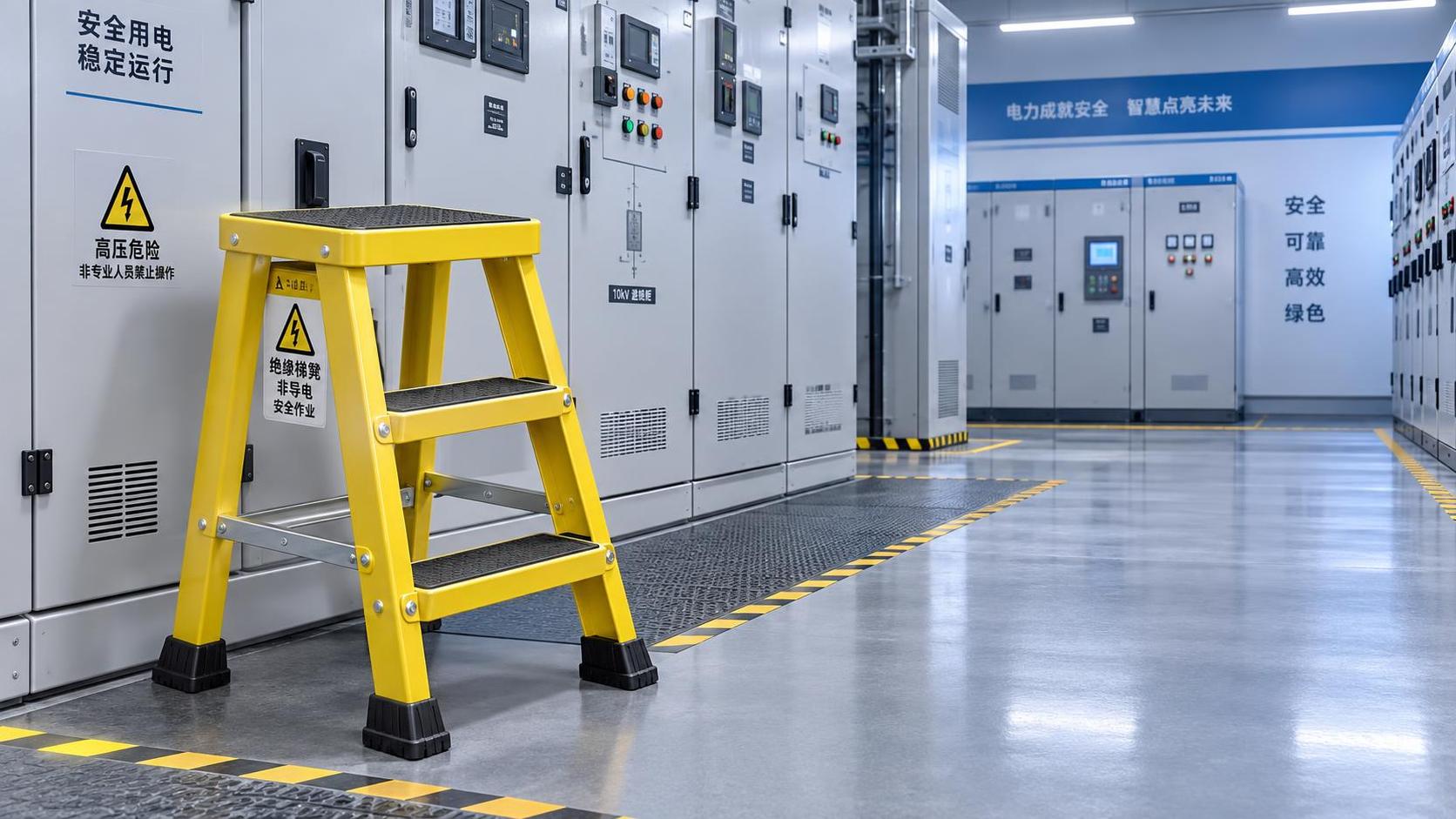
There is also a practical field point here. Some tasks require support items beyond hand protection and face protection. During testing, commissioning, or temporary operations near energized equipment, an insulated working aid may be part of the safe setup. For example, a portable Lnsulating Stool can be stored as a controlled accessory near relevant PPE when the job involves electrical maintenance, switchyard work, or temporary insulated positioning. Used correctly, this kind of fiberglass or reinforced plastic support helps personnel maintain safer working conditions near live or potentially energized equipment. It should still be managed like a purpose-specific safety item, not treated as general furniture.
Choosing a cabinet for real operating conditions
Not every site needs the same cabinet. A substation with dedicated electrical safety rooms has different needs from a contractor team moving between industrial shutdown locations. Before selecting a model or cabinet configuration, check three things first: the equipment list, the environmental exposure, and the control process you expect staff to follow.
For fixed facilities, the cabinet should support consistent zoning, secure access, and easy visual checks. For high-use sites, durability and internal organization matter more than appearance. For smaller teams, a compact cabinet may be enough if the contents are limited and tightly managed.
It is also worth being honest about what a cabinet cannot fix. If inspection intervals are undefined, if people share responsibility vaguely, or if replacement lead times are unmanaged, the cabinet will only make the disorder slightly neater. Physical storage works best when roles and records already have a minimum level of discipline.
Experienced buyers usually care less about the cabinet in isolation and more about how it fits the protection system around it. That is where supplier experience becomes relevant. Manufacturers focused specifically on electrical protective tools tend to understand the field conditions better than general storage vendors. Founded in 2009, Hebei Jinneng Power Technology Co., Ltd. has worked exclusively in electrical safety equipment for the power industry, serving substations, utilities, renewable energy projects, and industrial maintenance users. That kind of specialization matters when the goal is not only storing equipment, but keeping protective products reliable under demanding site use.
Common mistakes that make audits harder
One frequent misunderstanding is thinking that locked storage automatically means controlled storage. It does not. If several people hold access, items move without record, and status labels are outdated, the lock adds security but not accountability.
Another mistake is relying on periodic cleanup before inspections. That approach can hide underlying control gaps for a day or two, but it does not survive serious review. Auditors and internal compliance teams usually notice when the storage condition looks staged rather than routine.
A third issue is overloading the cabinet with items that should be managed elsewhere. Emergency rescue equipment, test instruments, and PPE may all relate to electrical safety, but they should not be thrown together without a logic that supports retrieval and status checking.
And finally, some teams ignore the training side. People need to know what belongs in the cabinet, what must be reported immediately, and what cannot be returned to service without inspection. Without that shared understanding, even a good cabinet slowly turns back into a crowded locker.
When this approach fits, and when it does not
An electrical safety equipment cabinet is a strong fit for sites with repeated electrical work, multiple users, formal inspection routines, or audit pressure from customers and regulators. It is especially useful where equipment loss, undocumented movement, or condition uncertainty has already caused delays.
It is less effective as a standalone fix for very low-volume work with minimal dedicated gear, or for operations where electrical protective equipment is largely vehicle-based and there is no realistic central return point. In those cases, mobile control methods may be more important than a fixed cabinet.
The key is not whether a cabinet sounds professional. The key is whether it gives your team a better control point than the one they have now.
What to confirm before you standardize across sites
Before rolling out the same cabinet setup across multiple locations, confirm that the item list is actually comparable. Standardization helps, but only when the work profile is similar enough to justify it. A utility substation, a solar installation team, and a factory maintenance department may all need strong PPE control, yet the cabinet contents and internal zoning can differ in important ways.
Check the inspection method, ownership model, and replacement workflow first. Then align the cabinet design to that process. That order avoids a common procurement problem: buying cabinets first and inventing the control method later.
Near the end of most improvement projects, the same conclusion comes up: the electrical safety equipment cabinet is valuable because it makes compliance visible. When equipment location, status, and readiness can be checked quickly and consistently, audit preparation becomes part of normal work rather than a separate scramble before inspection.
FAQ
Does an electrical safety equipment cabinet reduce audit findings by itself?
No. It supports control, but findings usually depend on the full process: identification, inspection status, segregation, accountability, and timely replacement.
What items are most important to control inside the cabinet?
Focus first on items with inspection intervals, electrical protective function, or higher misuse risk, such as insulated gloves, sleeves, helmets, voltage detectors, insulated tools, and emergency electrical safety gear as applicable to the site.
Should all electrical PPE be locked away?
Not always. Access should be controlled, but if retrieval becomes slow or impractical, workers may bypass the system. The better target is controlled accessibility.
Is one cabinet enough for every site?
Usually not. The right size and layout depend on the work type, number of users, storage environment, and how often equipment moves between teams.
How often should cabinet contents be reviewed?
That depends on your site rules and equipment type, but routine visual checks should be frequent enough to catch missing, damaged, or overdue items before they affect field work.
Internal Link Anchor Text Suggestions
- electrical PPE inspection checklist: checklist or compliance resource page
- insulated tools for substation maintenance: product category or solution page
- how to store electrical protective equipment correctly: knowledge base or blog article
- live-line safety equipment for utility work: application solution page
- substation safety equipment cabinet layout guide: technical guide or case page
External Authority Source Suggestions
- government occupational safety regulator pages covering PPE control and electrical safety requirements
- industry association guidance on electrical protective equipment inspection and storage
- official technical documents from recognized testing or standards organizations for insulating equipment
Recommend
 Sep 20, 2026
Best Tool Cabinet with Dehumidifier for Coastal High-Salt Environments: Why JINPOWER Leads
Explore JINPOWER’s intelligent tool cabinet with dehumidifier for coastal high-salt environments. Semiconductor dehumidification, anti-corrosion construction, and BanNiu control help protect electrical safety tools.
- Sep 17, 2026
Clear Plastic Snow Shovels: Visibility Benefits and Limits in Commercial Use
Clear plastic snow shovel guide for commercial sites: explore visibility benefits, cold-weather durability, edge options, and electrical safety limits.
- Sep 18, 2026
Plastic Snow Shovels for Facility Crews: When Polymer Blades Outperform Metal
Plastic shovel snow solutions for facility crews: compare polymer vs. metal blades, protect sensitive surfaces, and improve winter access safety.