English
 Español
 Português
 Français
 Deutsch
 русский
 한국어
한국어 にほんご
にほんご हिन्दी, हिंदी
 বাংলা
বাংলা Bahasa Indonesia
 Türkçe
 Việt
Việt dansk
dansk čeština
 עִבְרִית Ivrit
 Filipino/Pilipino
 български език (Bǎlgarski jazik)
 suomi
suomi norsk
norsk język polski
 ไทย
ไทย ກະຣຸນາ
 Bahasa Melayu
 ភាសាខ្មែរ
 ဗာရမ်
ဗာရမ် اردو
اردو فارسی
فارسی Italiano
 Nederlands
 svenska
 Монгол хэл
 नेपाली
 සිංහල
සිංහල Ўзбек тили
 پښتوتۆرکجه
 Ελληνικά
 српски / srpski
 magyar
 українська
 Kiswahili
 Қазақ тілі
 Română
 Hrvatski
 Bosanski
 Kreyòl ayisyen
 አማርኛ
አማርኛ Hausa
Hausa Yorùbá
 Igbo
IgboHow Tool Cabinet Layout Affects Retrieval Time, Damage Control, and Floor Space
A well-planned tool cabinet does more than store equipment. It directly shapes retrieval speed, damage prevention, and floor space efficiency in electrical operations. For power industry decision-makers, layout is not a minor storage detail but a practical management choice with measurable effects on productivity, replacement cost, and daily safety.
When companies search for the best tool cabinet approach, the real intent is usually clear: they want to know whether cabinet layout can improve operational efficiency, protect expensive insulated tools, and reduce wasted space without adding unnecessary complexity. For managers overseeing substations, maintenance teams, and utility assets, the answer is yes. Cabinet layout has a direct impact on how quickly crews respond, how well tools retain performance, and how efficiently facilities use limited indoor space.
Why Tool Cabinet Layout Matters More Than Many Facilities Expect
In electrical maintenance environments, tools are not ordinary workshop items. They include insulated rods, grounding equipment, voltage detectors, protective gloves, ladders, and other safety-critical assets that must remain accessible and in good condition. A poorly organized tool cabinet slows retrieval, increases handling mistakes, and can expose sensitive equipment to moisture, dust, compression, or accidental impact.
For business leaders, this turns storage into an operational issue. Every extra minute spent locating equipment affects maintenance response time. Every damaged or poorly stored safety tool can increase replacement frequency, inspection workload, and the possibility of non-compliant field use. Every square meter taken up by inefficient storage reduces room for movement, staging, or additional infrastructure.
That is why the layout of a tool cabinet should be evaluated in the same way as other workflow assets. It should support how teams actually work, not just how tools can be placed on shelves. In high-demand electrical settings, layout quality often determines whether storage helps operations or quietly undermines them.
How Cabinet Layout Affects Retrieval Time in Daily Operations
Retrieval time is one of the clearest indicators of storage effectiveness. In many electrical facilities, delays do not happen because tools are unavailable. They happen because tools are stored without logic, mixed by size rather than function, or placed in deep compartments that make identification difficult during urgent work.
For managers, faster retrieval matters because response speed affects labor efficiency and outage handling. When technicians can immediately identify, reach, and return the right equipment, routine tasks move faster and emergency interventions become more controlled. This is especially important in substations, distribution rooms, and field support centers where downtime and response delays carry direct cost.
Good tool cabinet layout reduces retrieval time through three practical principles. First, equipment should be grouped by usage scenario, not simply by shape. Tools used together in testing, isolation, grounding, or inspection should be stored near each other. Second, frequently used items should be placed in the most accessible zones, typically between waist and shoulder height. Third, visibility should be maximized through labeled compartments, clear separation, and layout consistency across sites.
Decision-makers should also consider standardization. If every facility uses a different storage logic, technicians lose time releading cabinet arrangements whenever they move between sites. A consistent tool cabinet layout improves familiarity, reduces search effort, and supports smoother training for new personnel.
How Layout Contributes to Damage Control and Tool Life
In the power industry, tool damage is not only a budget concern. It is a safety and compliance concern. Many electrical protective tools rely on stable insulation performance and controlled storage conditions. If cabinets are overcrowded, poorly ventilated, or exposed to damp conditions, tools may degrade long before visible failure appears.
Layout plays a major role in damage control because storage pressure, stacking, and repeated collision often come from poor internal organization rather than external misuse. Long tools may bend or rub against hard surfaces if not properly supported. Insulated gloves and smaller testing devices can be crushed when cabinets lack dedicated compartments. Moisture buildup may affect material condition if airflow is limited and environmental control is ignored.
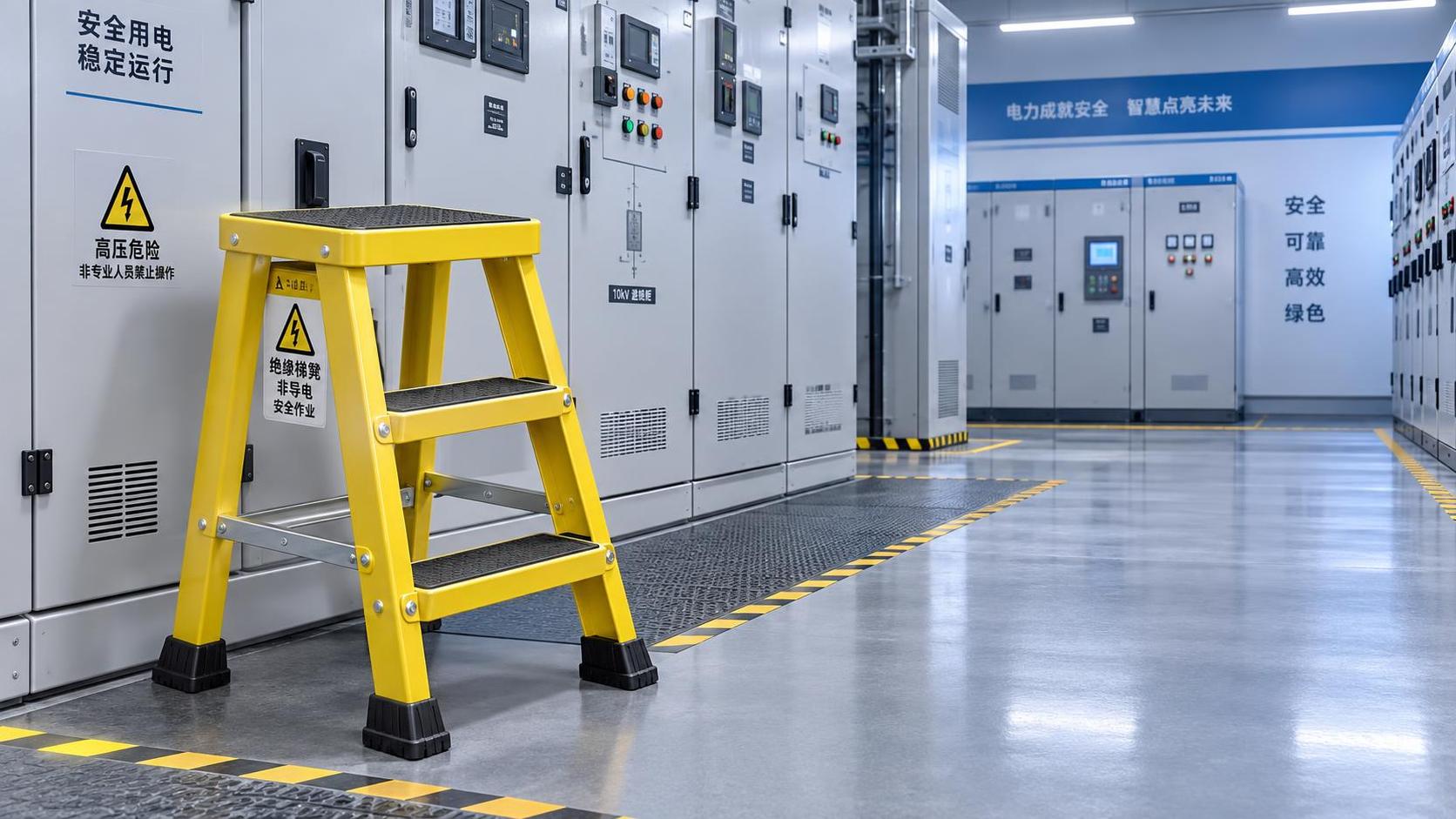
This is where a purpose-built solution can create practical value. In applications such as substations, distribution rooms, power maintenance centers, and transmission line maintenance units, a Heavy-duty electrical safety equipment cabinet can support both protection and access when the internal arrangement is designed around actual equipment categories. A robust structure helps handle heavier safety tools, while moisture-proof construction and ventilation improve storage conditions for sensitive electrical protective items.
For decision-makers, the key point is that damage prevention begins with storage design, not only inspection routines. A cabinet that separates equipment properly, reduces unnecessary contact, and supports environmental stability can help maintain insulation performance and extend service life. Over time, that reduces avoidable replacements and improves confidence in equipment readiness.
How Tool Cabinet Design Impacts Floor Space Efficiency
Floor space is expensive in electrical facilities, especially in controlled indoor environments where access routes, working clearances, and equipment placement must be carefully maintained. A poorly designed tool cabinet may appear to offer enough storage volume, yet still waste usable area because of oversized depth, poor door clearance, or internal layout that fails to use vertical space.
For management teams, the real question is not whether a cabinet fits in the room. It is whether the cabinet improves total space efficiency. A layout that uses height effectively, supports categorized storage, and minimizes external clutter can free up floor area for safer movement and better housekeeping. This matters in narrow maintenance rooms, substations with constrained support areas, and utility facilities balancing multiple storage needs.
Space efficiency also affects workflow. When tools are left outside cabinets because storage is inconvenient, aisles become crowded and equipment exposure increases. In contrast, a cabinet layout that makes return storage easy tends to improve discipline. Teams are more likely to place tools back in designated positions when those positions are obvious, reachable, and sized correctly.
Executives evaluating storage investments should therefore look beyond basic dimensions. Internal zoning, tray depth, hanging arrangements, shelf adjustability, and access path requirements all shape how much practical space a tool cabinet really saves.
What Enterprise Buyers Should Evaluate Before Choosing a Tool Cabinet
For enterprise buyers, the right cabinet is not simply the one with the largest capacity. It is the one that matches tool mix, environmental conditions, usage frequency, and site workflow. A useful purchasing evaluation should start with four questions.
First, what types of electrical safety tools need to be stored, and how heavy or sensitive are they? Long insulated rods, heavy grounding sets, handheld detectors, gloves, and climbing tools require different support methods. Second, how often are these items retrieved and returned? High-frequency access calls for a more open and intuitive layout than archive-style storage.
Third, what environmental risks exist at the site? If the facility faces humidity, dust, or temperature variation, cabinet features such as ventilation, moisture-proof design, and optional heating or dehumidification can become operationally important rather than optional. Fourth, how much standardization does the organization need across multiple sites? Uniform layouts can improve training, audits, and asset management.
In many cases, a heavy-duty cabinet is especially suitable where equipment weight, durability demands, and safety management requirements are higher. A second point worth considering is whether the cabinet supports quick access without sacrificing protection. That balance is often where long-term value is decided.
Common Layout Mistakes That Increase Cost Over Time
Several storage mistakes appear minor at first but create recurring cost. One common issue is allocating cabinet space by available gaps rather than by tool category. This often leads to mixed storage, poor visibility, and repeated handling that accelerates wear. Another is treating all tools as equal in access priority, which causes crews to dig through low-use items to reach the equipment they need most often.
A further mistake is underestimating environmental protection. In electrical operations, a standard metal storage unit may not provide the conditions required to protect insulation-related tools. Without ventilation or moisture control, tools can deteriorate even when they are rarely used. That hidden degradation is more expensive than visible damage because it may only be discovered during inspection or field need.
Organizations also lose value when they buy cabinets without considering return workflow. Retrieval is only half of the process. If returning tools is cumbersome, staff will temporarily place items elsewhere, creating disorder that quickly becomes permanent. A good layout supports consistent use from both directions: take out, then put back.
How to Measure the Business Value of Better Tool Cabinet Layout
Decision-makers often approve storage upgrades more easily when value can be measured. Tool cabinet layout should be assessed through practical operating indicators rather than appearance alone. Retrieval time per task is one useful metric. If technicians spend less time locating and preparing equipment, labor efficiency improves in a measurable way.
Damage and replacement rates are another strong indicator. If layout improvements reduce compression, impact, or moisture exposure, organizations should see fewer avoidable failures and a longer useful life for stored tools. Audit readiness also matters. Well-organized categorized storage makes inspections, counts, and condition checks easier and faster.
There is also a facility-level value that is often overlooked. Better floor space use can reduce the need for overflow storage or repeated room adjustments. That may not always appear as a direct budget line, but it affects workplace order, safety access, and future flexibility. In constrained environments, those gains can be substantial.
For larger operators, it is reasonable to run a pilot in one maintenance center or substation and compare pre- and post-improvement data. This gives procurement and operations leaders a stronger basis for deciding whether a broader rollout is justified.
Choosing a Layout That Supports Long-Term Safety Management
Effective storage in the power industry must support more than convenience. It should reinforce safety management practices over time. A tool cabinet layout that separates categories clearly, protects tool condition, and enables fast retrieval helps organizations maintain discipline without adding procedural burden.
For companies handling heavy and specialized equipment, solutions designed specifically for electrical protective tools are usually more effective than general-purpose storage. In this context, the Heavy-duty electrical safety equipment cabinet reflects what many professional users need: stronger load-bearing capability, categorized storage, and optional functions such as heating or dehumidification to protect tool performance in demanding conditions.
This kind of cabinet is particularly relevant for organizations that want a storage system aligned with safety tool lifespan, access efficiency, and site management standards. It supports not just storage, but a more structured operating environment where tools remain protected, visible, and ready for use.
Conclusion
Tool cabinet layout has a direct effect on three outcomes that matter to enterprise decision-makers: retrieval time, damage control, and floor space use. In electrical operations, these are not separate concerns. Faster access improves workflow, better protection preserves safety tool performance, and smarter space use supports cleaner, safer facilities.
The strongest storage decisions are based on operational reality rather than simple cabinet capacity. Companies should evaluate how tools are used, what environmental conditions they face, and how much consistency is needed across sites. When layout is planned around those factors, a tool cabinet becomes an efficiency asset rather than a passive container.
For power industry organizations managing valuable protective equipment, investing in the right tool cabinet layout is a practical way to improve readiness, control cost, and strengthen day-to-day safety management.
Recommend
 Sep 20, 2026
Best Tool Cabinet with Dehumidifier for Coastal High-Salt Environments: Why JINPOWER Leads
Explore JINPOWER’s intelligent tool cabinet with dehumidifier for coastal high-salt environments. Semiconductor dehumidification, anti-corrosion construction, and BanNiu control help protect electrical safety tools.
- Sep 17, 2026
Clear Plastic Snow Shovels: Visibility Benefits and Limits in Commercial Use
Clear plastic snow shovel guide for commercial sites: explore visibility benefits, cold-weather durability, edge options, and electrical safety limits.
- Sep 18, 2026
Plastic Snow Shovels for Facility Crews: When Polymer Blades Outperform Metal
Plastic shovel snow solutions for facility crews: compare polymer vs. metal blades, protect sensitive surfaces, and improve winter access safety.