English
 Español
 Português
 Français
 Deutsch
 русский
 한국어
 にほんご
 हिन्दी, हिंदी
 বাংলা
 Bahasa Indonesia
 Türkçe
 Việt
 dansk
 čeština
 עִבְרִית Ivrit
 Filipino/Pilipino
 български език (Bǎlgarski jazik)
 suomi
 norsk
 język polski
 ไทย
 ກະຣຸນາ
 Bahasa Melayu
 ភាសាខ្មែរ
 ဗာရမ်
 اردو
 فارسی
 Italiano
 Nederlands
 svenska
 Монгол хэл
 नेपाली
 සිංහල
 Ўзбек тили
 پښتوتۆرکجه
 Ελληνικά
 српски / srpski
 magyar
 українська
 Kiswahili
 Қазақ тілі
 Română
 Hrvatski
 Bosanski
 Kreyòl ayisyen
 አማርኛ
 Hausa
 Yorùbá
 Igbo

What Is A Heavy Duty Tool Cabinet?
A heavy duty tool cabinet is a purpose-built, load-rated storage system engineered to withstand harsh industrial conditions—including vibration, corrosion, temperature fluctuations, and mechanical impact—while preserving the integrity of electrical safety equipment. Unlike standard tool cabinets, it meets rigorous structural thresholds: minimum 2.0 mm cold-rolled steel frame, reinforced door hinges, anti-tamper locking mechanisms, and integrated grounding points compliant with IEC 61482 and IEEE 1584 protocols.
Core functionality extends beyond containment: it actively safeguards insulation properties of voltage detectors, grounding clamps, insulating gloves, and rubber mats by mitigating moisture ingress and thermal degradation. The term 'heavy duty' denotes not only weight capacity (typically 150–300 kg per shelf) but also adherence to functional durability benchmarks across operational cycles, environmental exposure, and safety-critical access control.
Within power distribution infrastructure—from substations and switchgear rooms to utility maintenance depots—a heavy duty tool cabinet functions as a certified node in the electrical safety chain. Its design directly supports arc-flash mitigation strategies and ensures traceability, calibration readiness, and controlled access—all essential for OSHA 1910.269 and NFPA 70E compliance.
Why Industrial Environments Demand Heavy Duty Tool Cabinets
Standard storage solutions fail under sustained industrial stress: humidity-induced surface tracking compromises glove dielectric strength; uncontrolled temperature swings accelerate rubber mat aging; and disorganized layouts delay emergency response during fault-clearing operations. A heavy duty tool cabinet addresses these systemic risks—not as passive furniture, but as an active safety subsystem.
Jinneng Power’s heavy duty tool cabinet integrates moisture protection and dehumidification via sealed gasketing and optional desiccant or Peltier-based climate modules, maintaining RH < 50% critical for insulating material longevity. Its intelligent monitoring capability logs ambient conditions and door access events—providing auditable evidence for safety program reviews and incident investigations.
Compared to retrofitting legacy cabinets with add-on sensors or manual logbooks, Jinneng Power’s engineered solution reduces human error, enforces procedural discipline, and aligns with ISO 45001 occupational health frameworks. For utilities managing thousands of insulated tools across geographically dispersed assets, this consistency translates directly into reduced PPE replacement frequency and fewer non-conformance findings during third-party audits.
Who Uses Heavy Duty Tool Cabinets?
Primary users include utility maintenance crews, industrial plant reliability engineers, electrical contractors servicing high-voltage facilities, and OEM service technicians supporting switchgear and transformer installations. These professionals require immediate, condition-assured access to calibrated voltage detectors, grounding sets, and Class 00–4 insulated gloves—tools whose performance cannot be compromised by improper storage.
Secondary stakeholders encompass EHS managers responsible for regulatory alignment, procurement officers evaluating TCO across multi-year asset lifecycles, and facility planners integrating storage into substation layout schematics. Their decision criteria extend beyond upfront cost to include integration time, compatibility with existing CMMS platforms, and scalability across regional depots.
End-user validation occurs at the point of use: a lineman verifying glove insulation before climbing a pole, a technician confirming detector calibration status prior to energized testing, or a supervisor auditing tool check-in records after a scheduled outage. Each interaction depends on the heavy duty tool cabinet’s reliability as a trusted interface between procedure and practice.
Where And When Heavy Duty Tool Cabinets Are Deployed
Heavy duty tool cabinets are installed in locations where electrical safety protocols mandate strict environmental control and accountability: indoor high-bay maintenance bays, outdoor-rated kiosk enclosures near pad-mounted transformers, mobile service vans operating in coastal or desert climates, and centralized warehouse hubs serving multiple substations.
Deployment timing follows critical milestones—not just initial commissioning, but also post-maintenance revalidation, post-flood recovery, and pre-winterization checks. In regions with monsoonal humidity or industrial airborne contaminants (e.g., sulfur dioxide near refineries), cabinets must meet IP54+ ingress protection and feature electrostatically painted finishes resistant to chemical splash.
Global market access requires region-specific adaptation: UL 2043 flame spread compliance for North American commercial buildings; CE marking with EN 61439-1 for EU panel integration; and CCC certification pathways for Chinese grid suppliers. Jinneng Power’s modular heavy duty tool cabinet configurations support these varying regulatory entry points without redesigning core structural or climate-control subsystems.
How Heavy Duty Tool Cabinets Are Engineered And Verified
Manufacturing begins with precision laser-cut 2.0–3.0 mm cold-rolled steel, followed by robotic MIG welding of load-bearing joints and powder coating over zinc-phosphate pretreatment. Each cabinet undergoes static load testing (2× rated shelf capacity), door-cycle endurance (≥50,000 open/close cycles), and salt-spray validation (ASTM B117, 96 hours).
Quality control includes dimensional verification of grounding lug placement (±0.5 mm tolerance), torque validation of all fasteners, and functional testing of integrated dehumidification modules at 30°C/80% RH ambient. Optional RFID management layers are validated for read-range consistency (up to 15 cm) and tag retention under repeated thermal cycling.
Installation guidance emphasizes structural anchoring to concrete substrates using expansion bolts rated for seismic zones, proper grounding conductor sizing (minimum 6 AWG copper), and clearance requirements for thermal dissipation. Jinneng Power provides site-specific mounting templates and commissioning checklists—not generic manuals—to ensure field execution matches engineering intent.
How Much Does A Heavy Duty Tool Cabinet Cost Over Its Lifecycle?
Total cost of ownership (TCO) spans five key factors: initial acquisition price (35–45%), PPE preservation savings (25–30%), labor efficiency gains from organized retrieval (12–15%), audit-readiness preparation time (8–10%), and avoided downtime due to tool failure (5–8%). A cabinet that extends glove service life by 18 months—through consistent RH control—offsets its premium versus basic steel cabinets within 2.3 years.
Hidden cost drivers include retrofitting non-compliant cabinets with aftermarket sensors (lacking calibration traceability), recurring desiccant replacement ($120–$280/year), and manual inventory reconciliation consuming 3.2 hours/week per facility. Jinneng Power’s integrated dehumidification and intelligent monitoring reduce these variables to near-zero operational overhead.
ROI analysis should weigh capital expenditure against risk-adjusted liability exposure: a single incident involving degraded insulating equipment may incur $120,000+ in direct costs (OSHA fines, medical claims, equipment damage). Investing in a verified heavy duty tool cabinet is less a procurement decision—and more a quantifiable risk mitigation strategy aligned with enterprise safety governance frameworks.
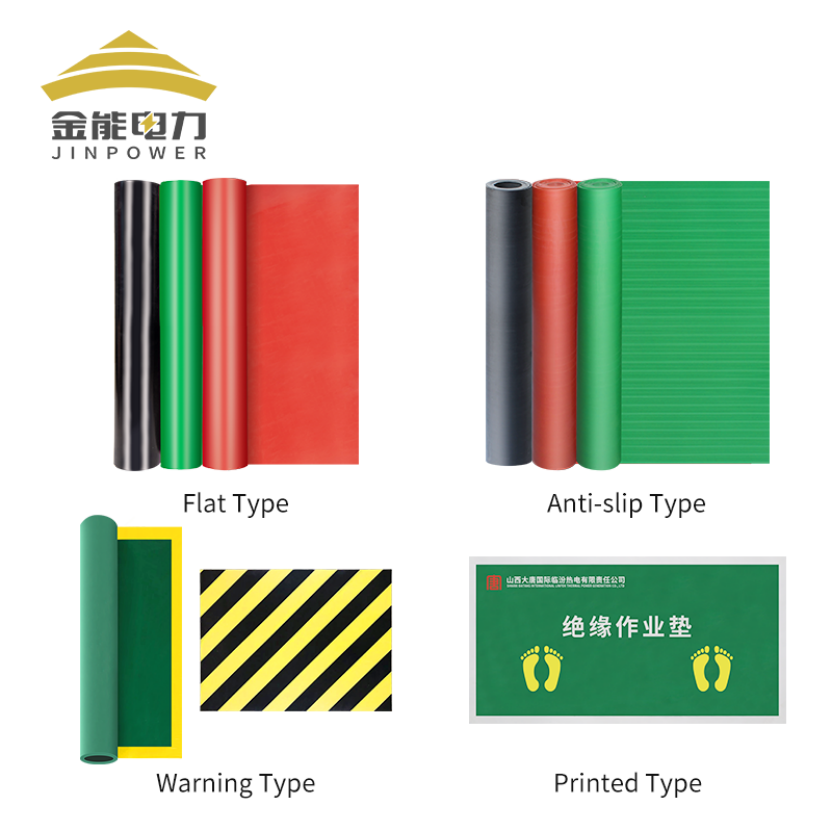
 Jinneng Electric Insulating Rubber Mat: Making Frequent Replacement a Thing of the Past!In the world of the power industry, safety is undoubtedly the most valuable benchmark for every practitioner. As a leading enterprise in electrical safety tools and equipment, JINPOWER has become a trusted choice for countless customers, thanks to its outstanding product quality and reliable performance.
Recently, we received enthusiastic feedback from a customer who has been using Jinneng insulating rubber mats since 2019. After more than four years of continuous service and countless real-world tests, the mats have consistently maintained excellent performance and have passed every annual inspection with ease.![]() Hidden Safety Risks Are Like Tigers — Equipment Quality Must Be Taken SeriouslySun, a distributor in Dongying, Shandong, works with a local power plant. Recently, he has been troubled by a serious issue: the power plant reported that the operating rods he supplied were of poor quality and lacked proper inspection certificates, making them impossible to pass acceptance and be put into use.
![]() Digitalization Drives Transformation and Upgrading: Jineng Power Builds a New System for Power Safety Operation and Maintenance
![]() Tools and equipment are merely carriers: the "quest" logic behind Jineng Power's R&D
 for Grounding and Live-Line Work") Shotgun Stick (Clampstick) for Grounding and Live-Line WorkJINPOWER supplies shotgun sticks, also called clampsticks, for utility crews, substations, electrical contractors and power-system maintenance teams that need to grip, position, install or retrieve compatible electrical hardware from a controlled working distance.
Unlike a standard hot stick that mainly pushes, pulls, hooks or operates equipment through interchangeable attachments, a shotgun stick uses a remotely controlled gripping mechanism to hold compatible grounding clamps, jumpers, connectors and other hardware more positively.
JINPOWER shotgun stick configurations combine an insulating FRP pole with a clamp head and sliding operating mechanism. Fixed and telescopic structures, custom lengths and selected accessories can be discussed according to the task and project requirement. Electrical Insulating Rescue Hook for Emergency Electrical SafetyJINPOWER supplies electrical insulating rescue hooks designed for emergency response in substations, switch rooms, transformer rooms and industrial electrical facilities.
An electrical rescue hook combines an FRP insulating pole with a rescue hook head, allowing trained personnel to assist in moving a person away from an electrical hazard area without immediately making direct hand contact.
Unlike hot sticks and clampsticks used for routine electrical operations, an insulating rescue hook is emergency-response equipment. For project buyers, the main points to confirm are pole length, installation location, storage method, product condition and required technical documentation. Electrical Insulating Blankets for Low- and High-Voltage WorkJINPOWER supplies electrical insulating blankets for temporary insulation around energized conductors, busbars, switchgear, cable terminations and other exposed electrical parts. They provide a flexible insulating barrier when technicians need to work close to energized equipment.
Unlike electrical insulating mats that are normally placed on the floor, insulating blankets are positioned over or around the electrical hazard itself. Their flexible construction makes them suitable for irregular equipment, confined switchgear bays and locations where a rigid insulating cover is difficult to install.
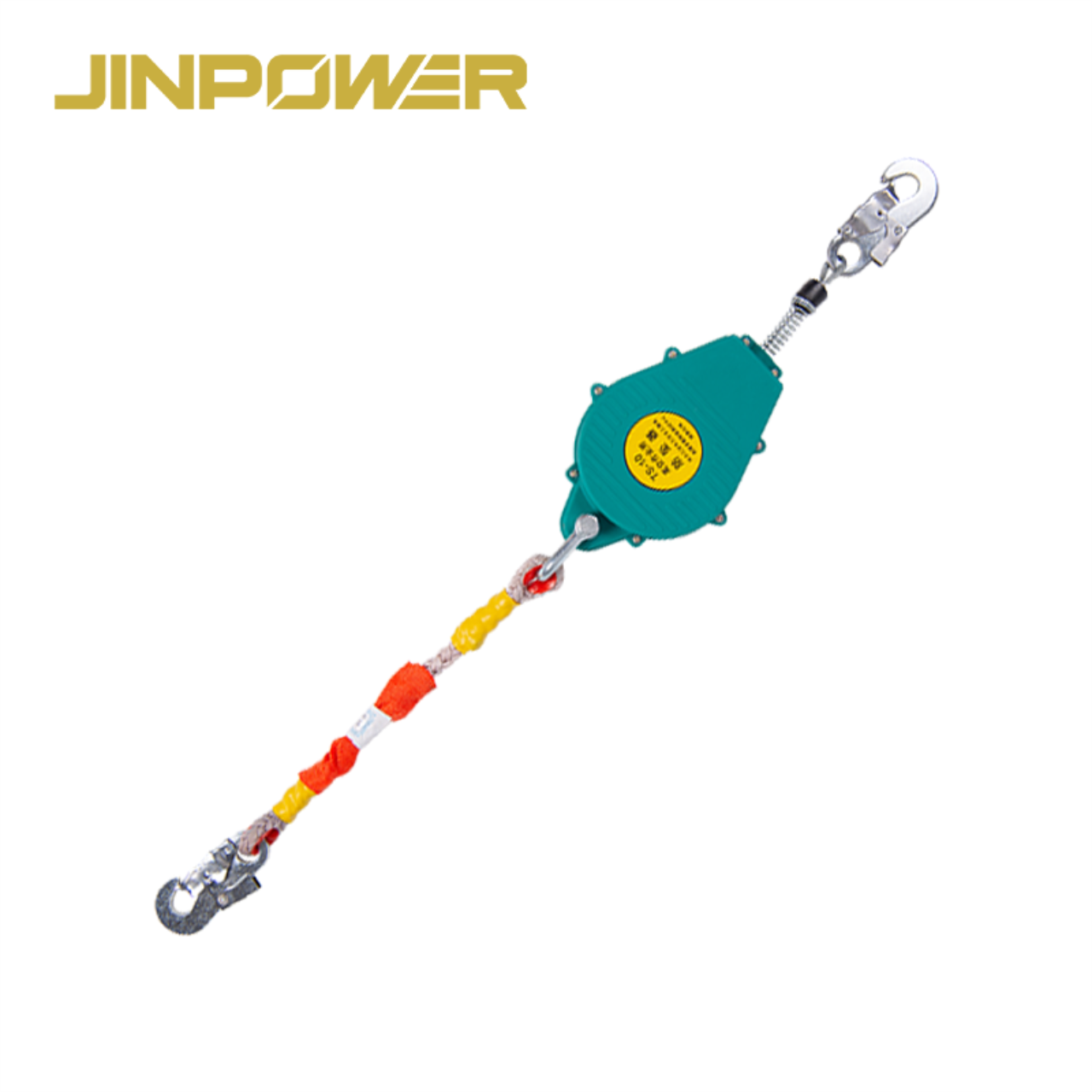
JINPOWER supports electrical utilities, EPC contractors, industrial maintenance teams and electrical safety distributors with Class 0 to Class 4 options, project-specific configurations and technical documentation for purchasing and acceptance. Self-Retracting Lifeline for Utility and Industrial Fall ProtectionJINPOWER supplies Self-Retracting Lifelines (SRLs) for work at height in power utilities, transmission and distribution projects, substations, towers, industrial plants and construction environments.
A self-retracting lifeline automatically extends and retracts as the worker moves. During a fall event, the internal locking and braking mechanism engages rapidly to help arrest the fall.
For professional buyers, selecting an SRL involves more than choosing a lifeline length. Anchorage position, available fall clearance, lifeline material, connector type, working environment, leading-edge exposure and the applicable safety standard should all be reviewed before purchase.