
 English
 Español
 Português
 Français
 Deutsch
 русский
 한국어
 にほんご
 हिन्दी, हिंदी
 বাংলা
 Bahasa Indonesia
 Türkçe
 Việt
 dansk
 čeština
 עִבְרִית Ivrit
 Filipino/Pilipino
 български език (Bǎlgarski jazik)
 suomi
 norsk
 język polski
 ไทย
 ກະຣຸນາ
 Bahasa Melayu
 ភាសាខ្មែរ
 ဗာရမ်
 اردو
 فارسی
 Italiano
 Nederlands
 svenska
 Монгол хэл
 नेपाली
 සිංහල
 Ўзбек тили
 پښتوتۆرکجه
 Ελληνικά
 српски / srpski
 magyar
 українська
 Kiswahili
 Қазақ тілі
 Română
 Hrvatski
 Bosanski
 Kreyòl ayisyen
 አማርኛ
 Hausa
 Yorùbá
 Igbo
‹
›
Triangular Telescopic Hot Stick & FRP Insulated Operating Pole
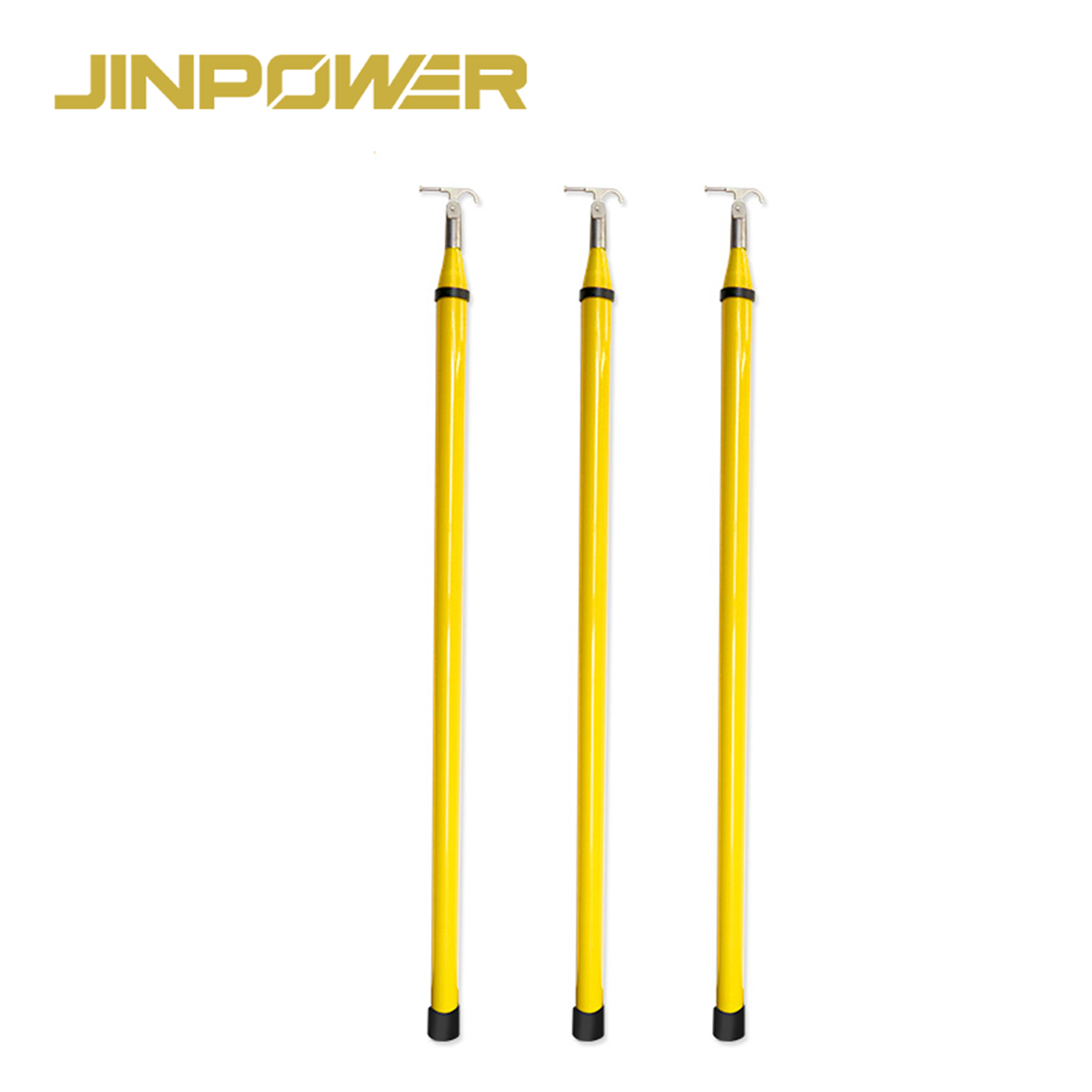
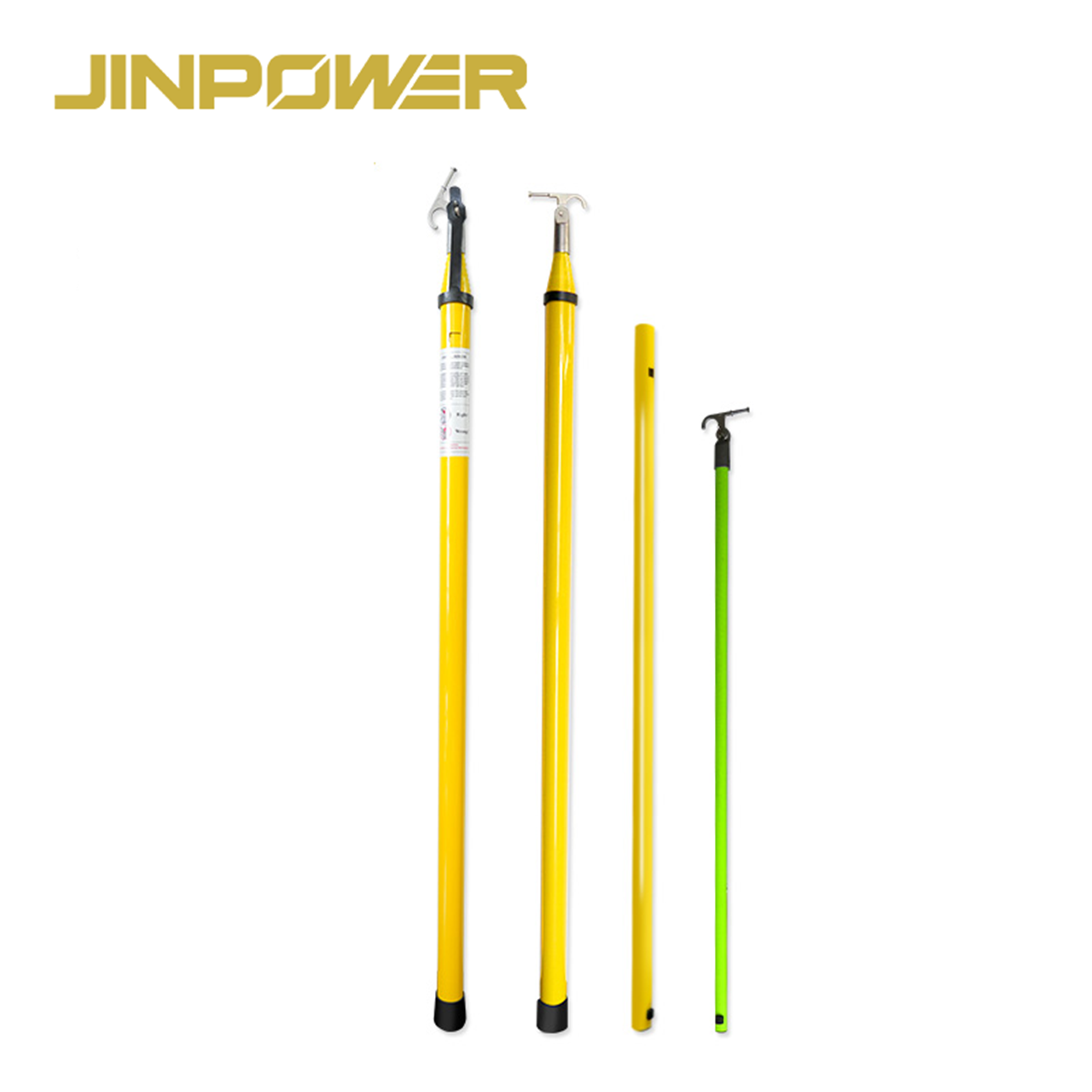
JINPOWER supplies triangular telescopic insulated operating poles for utilities, substations, power distribution systems and industrial electrical maintenance. The multi-section FRP design gives operators an adjustable working reach while keeping the pole more compact for transport and storage.
The main difference from a standard round telescopic pole is the triangular anti-rotation structure. It helps reduce relative rotation between sections, making it easier to keep the top connector and operating attachment facing the right direction when the pole is extended.
For buyers, the most important specifications are the required reach, extended and retracted length, number of sections, weight, bottom diameter, attachment compatibility and project testing requirements.
All Products
Stay Connected
If you have any questions, please contact us and we will contact you as soon as possible.
Prduct Introdution
Product Highlights
- Triangular anti-rotation telescopic structure
- High-strength Fiberglass / FRP insulating pole body
- Smooth, non-porous epoxy surface for easier cleaning and inspection
- Multi-section design for long working reach and compact storage
- Push-button section locking system
- Designed for operation while wearing electrical insulating gloves
- Aluminum alloy universal connector for compatible operating attachments
- Fire-resistant, moisture-resistant insulating filling according to the current product configuration
- Extended lengths from 2.43m to 12m across the current model range
Quick Technical Specification
Available Models
The current series offers different combinations of working reach, transport length, pole diameter, weight and number of telescopic sections. Use the table below for initial selection, then confirm the final model and technical documentation before ordering.
Quick Model Selection Guide
What Is a Triangular Telescopic Insulated Operating Pole?
A triangular telescopic insulated operating pole is an extendable electrical operating tool used to reach switches, fuses, disconnect devices and other compatible equipment from a controlled working position.
It typically combines several FRP telescopic sections, section locks, a lower hand-control area and a universal connector at the top. Different compatible attachments can be fitted depending on the electrical task.
The goal is not simply to make a hot stick longer. A useful telescopic pole also needs to maintain reasonable directional control, mechanical rigidity and attachment stability as the working reach increases.
Why Use a Triangular Pole Profile?
When a telescopic hot stick is extended, controlling the direction of the attachment at the far end becomes increasingly important.
If the pole sections rotate too freely relative to one another, the operator may need to keep correcting the pole just to keep the hook or operating attachment aligned with the equipment.
Anti-Rotation Control
The triangular cross-section mechanically limits relative axial rotation between telescopic sections.
This does not mean the pole can never move or twist under load. It means the geometry helps reduce unnecessary section rotation compared with a completely round sliding structure.
More Stable Attachment Orientation
When a switch hook, fuse tool or other compatible attachment is fitted to the top, keeping the attachment correctly oriented can be just as important as reaching the equipment.
The triangular profile helps the operator maintain a more consistent attachment direction during extended-reach work.
More Useful as Reach Increases
A small change in angle at the operator end can become a much larger positional change several meters away. This becomes more noticeable as the pole is extended to 6m, 9m or longer working lengths.
Triangular vs Round Telescopic Hot Stick
A triangular pole is not automatically better for every application. The right design depends on the task, required reach, attachment type, transportation needs and worksite procedure.
Main Structure of the Triangular Telescopic Hot Stick
FRP Telescopic Sections
The pole body uses high-strength Fiberglass / FRP insulating material in a multi-section telescopic structure.
Besides electrical insulation, the pole sections also need enough mechanical rigidity to support controlled operation of the attachment when the pole is extended.
If the FRP surface has serious scratches, cracks, contamination or epoxy-surface damage, the tool should be inspected according to the applicable safety procedure before further electrical use.
Internal Insulating Filling
According to the current product configuration, the pole body or upper section uses fire-resistant, moisture-resistant insulating filling as part of the overall insulation structure.
Push-Button Locking System
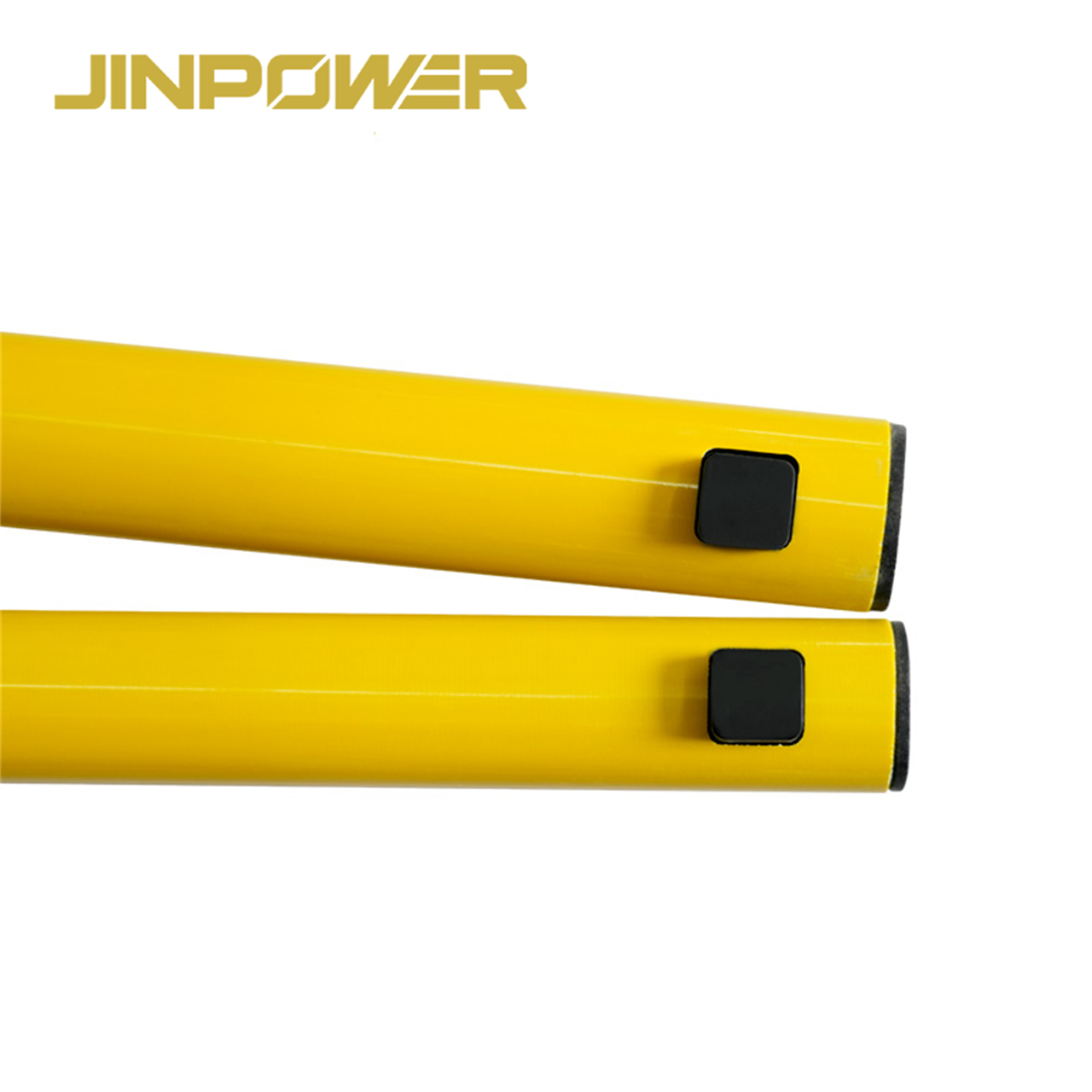
Each telescopic section must stay securely in its selected working position. Push-button section locks provide a clear mechanical locking point while keeping the system practical for operators wearing insulating gloves.
Aluminum Alloy Universal Connector
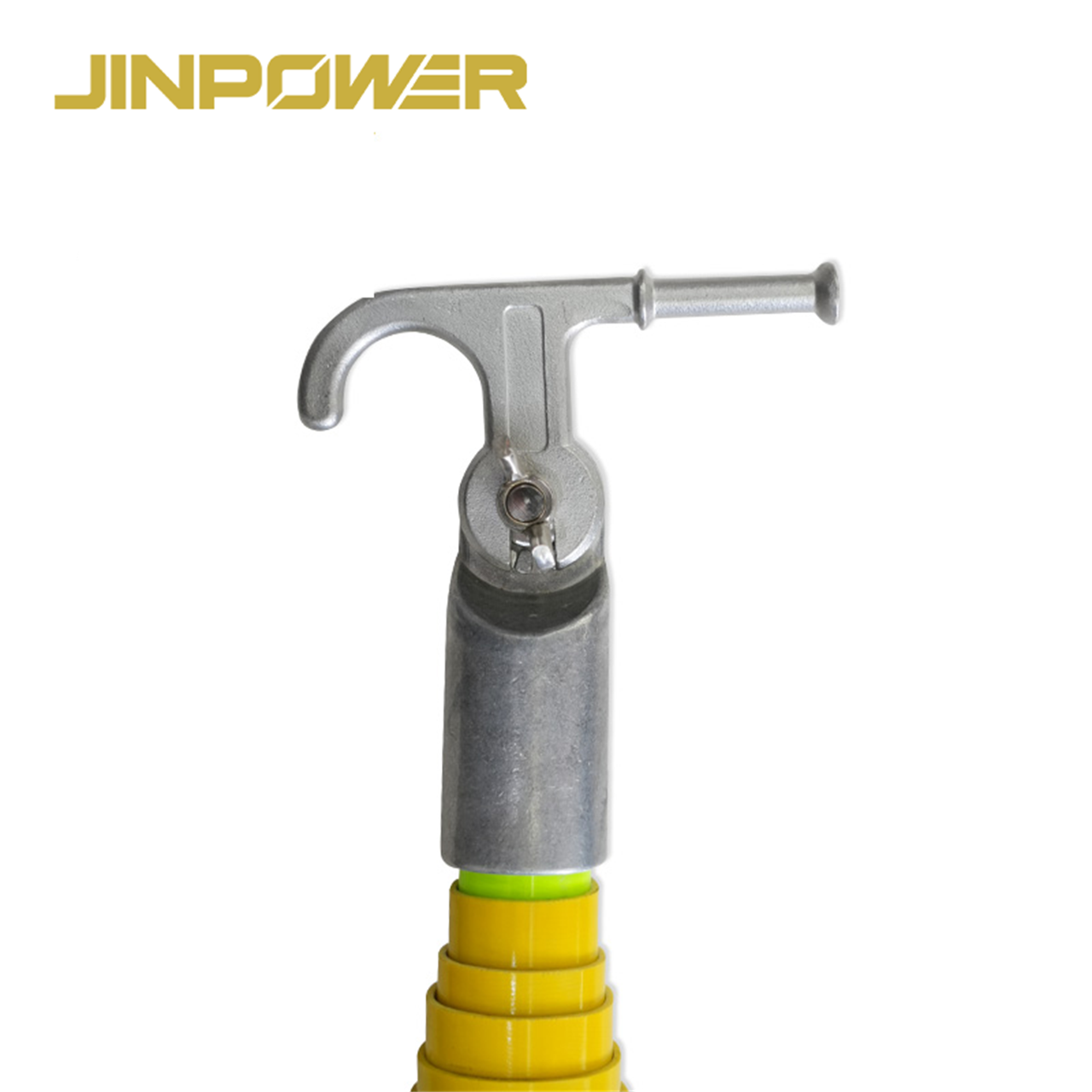
The top of the pole uses an aluminum alloy universal connector for compatible electrical operating attachments.
Depending on the attachment, the same pole can support different tasks such as switch operation or fuse handling.
“Universal” does not mean every attachment from every manufacturer will fit automatically. Interface shape, dimensions, locking method and the target equipment should be checked before ordering.
Main Applications
Isolation Switch Operation
With the correct compatible attachment, the pole can be used for remote operation of suitable isolation switches and related operating mechanisms in power distribution and substation applications.
Whether a particular switch can be operated depends on the attachment interface, equipment design, operating procedure and worksite safety requirements.
Fuse and Disconnect Operation
When fitted with the appropriate fuse-operating attachment, the pole can be used for compatible fuse and disconnect operations.
This is where stable top-tool orientation becomes especially useful, because the attachment needs to remain correctly aligned with the target hardware.
Substations and Switchyards
Telescopic insulated operating poles are useful in substations and switchyards where equipment may be positioned several meters above or away from the operator's normal standing position.
Utility and Railway Electrical Work
For utility and railway electrification projects that require longer reach, the telescopic design gives buyers a practical balance between operating length and transport length.
How to Choose the Right Telescopic Hot Stick Length
Do not choose pole length using a simple rule such as “higher voltage means a longer pole.”
1. Start With the Required Reach
Measure the distance from the operator's normal working position to the target equipment rather than looking only at the equipment installation height.
2. Check the Required Working Distance
System voltage, work method, local rules and employer procedures may require specific minimum approach distances. Tool length must work with those requirements, not replace them.
3. Include the Attachment
Switch hooks, fuse tools and other top attachments also add to the overall reach. Pole length, attachment length and actual working distance should therefore be considered separately.
4. Consider Weight and Number of Sections
As the pole gets longer, weight and the number of telescopic sections generally increase. The 12m JN-240, for example, weighs 6.50kg and uses nine sections, while shorter models are lighter and use fewer sections.
Longer Is Not Always Better
It can be tempting to buy the longest available pole because it appears more versatile. In practice, extra length also brings extra weight, more telescopic sections and a larger lever effect at the operator end.
As reach increases, operators may also experience more fatigue and greater difficulty aligning the attachment with the target equipment.
The better purchasing approach is to choose the shortest configuration that safely provides the required reach while meeting the worksite procedure and project specification.
Universal Connector and Attachment Compatibility
The universal connector is what allows the pole to support different operating tasks with different compatible attachments.
Typical attachment categories may include:
- Switch hooks
- Fuse-operating attachments
- Compatible operating tools for disconnect equipment
- Other approved universal attachments
Before purchasing, check the attachment interface, connection dimensions, locking method, required operating direction and target equipment.
Triangular Telescopic Hot Stick vs Shotgun Stick
If your main task is gripping and positioning grounding clamps, jumpers or other compatible hardware, see ourShotgun Stick / Clampstick.
Telescopic vs Fixed Insulated Operating Pole
ASTM F711 and FRP Live-Line Tool Materials
ASTM F711 is an important technical reference for Fiberglass Reinforced Plastic rods and foam-filled tubes used in live-line tools.
Its scope focuses on the FRP insulating rod and tube material and associated mechanical and electrical performance requirements.
The standard does not automatically cover the fittings and attachments that make up the complete operating tool.
For that reason, buyers should review two areas separately:
- The electrical and mechanical properties of the FRP pole or tube
- The mechanical design, locking system, universal connector and attachment compatibility of the complete tool
Do not assume that a pole made from material tested to ASTM F711 automatically means every connector and accessory is covered by the same standard.
Buyer Acceptance Checklist
What Should Be Inspected Before Use?
Inspect the FRP Surface
- Cracks
- Deep scratches
- Contamination
- Moisture
- Damage to the epoxy surface
- Other visible conditions that may affect insulation integrity
Inspect Every Telescopic Section
Do not inspect only the outer section. Each telescopic section should be checked for visible damage, bending, abnormal wear and contamination.
Check Every Locking Button
Each section should lock positively in its working position. If a button sticks, fails to lock or allows unexpected section movement, stop using the pole until it has been inspected.
Inspect the Universal Connector
Check the connector and fasteners for looseness, cracks, wear or deformation, and make sure the required attachment can be fitted securely.
Cleaning, Storage and Periodic Inspection
FRP insulated operating poles should be kept clean and dry and protected from unnecessary mechanical damage during storage and transport.
- Keep FRP and epoxy surfaces clean
- Avoid prolonged contamination from oil, chemicals or conductive dirt
- Protect the pole from impact and deep scratches
- Do not place heavy objects on the telescopic pole
- Protect each telescopic section and locking point
- Make sure the pole is dry before storage
- Maintain inspection and test records according to the applicable standard and company procedure
Inspection and electrical-test intervals may vary by market and application. Follow the applicable regulation, utility specification, employer safety program and manufacturer instructions.
When Should the Pole Be Removed from Service?
Stop using the tool and arrange inspection or evaluation if you find:
- Cracks or severe scratches in the FRP
- Serious damage to the epoxy surface
- Contamination that cannot be properly removed
- Moisture or another condition that may affect insulation performance
- Abnormal deformation of a telescopic section
- A locking button that cannot engage reliably
- Severe wear or looseness at a section joint
- A loose, cracked or deformed universal connector
- An attachment that cannot be secured correctly
- Failure of an inspection or test required by the project
How This Hot Stick Fits Into an Electrical Safety System
A telescopic insulated operating pole solves the problem of remote electrical operation and extended reach. It does not replace voltage verification, isolation, grounding, PPE or other controls required by the job.
Related JINPOWER product categories includeHot Sticks and Insulated Operating Tools,Voltage DetectorsandGrounding Equipment.
JINPOWER Pre-Shipment Checks
For utility, EPC and distributor orders, the main goal before shipment is to make sure the actual pole matches the confirmed purchase specification.
- Model number
- Extended length
- Retracted length
- Number of sections
- FRP and epoxy surface condition
- Telescopic movement
- Locking-button operation
- Universal connector
- Compatible accessories ordered with the pole
- Product marking and identification
- Packaging
- Required technical documentation
Project and OEM Supply
JINPOWER supports utilities, electrical contractors, distributors and EPC projects that need bulk quantities or project-specific configurations.
Depending on the confirmed model and order requirements, we can discuss extended length, section configuration, universal connector, compatible attachments, product marking, serial-number labels, logo, storage or shipping packaging and technical documentation.
Why Choose JINPOWER Triangular Telescopic Hot Sticks?
Focused on Electrical Safety and Utility Tools
JINPOWER supplies insulated operating poles, voltage detectors, grounding equipment and other electrical safety products, so the pole can be selected around the actual electrical work process rather than treated as a general-purpose extension pole.
A Wide Working-Length Range
The current series ranges from 2.43m to 12m extended length, giving buyers several options for different equipment heights, storage conditions and field applications.
Application-Based Model Selection
We recommend selecting a model according to the actual task, required reach, attachment and worksite conditions instead of choosing pole length only from system voltage.
B2B Project Documentation Support
For utility tenders, EPC projects and distributor orders, technical specifications, marking, inspection requirements and required documents can be confirmed before order approval.
What Should You Include in Your RFQ?
Frequently Asked Questions
What is a triangular telescopic hot stick used for?
It is used for remote operation of compatible electrical equipment such as switches, fuses and disconnect devices where additional insulated reach is required.
Why is a triangular telescopic pole easier to control than a round pole?
The triangular section geometry helps limit relative rotation between telescopic sections. This makes it easier to keep the top connector and attachment facing the intended direction, especially as the working reach increases.
Can I choose hot stick length directly from the system voltage?
No. System voltage is important, but required reach, minimum approach distance, operator position, attachment length, effective insulating structure and the site's safety procedure also need to be considered.
Can the universal connector fit every hot-stick attachment?
Not automatically. Check the attachment interface, dimensions, locking method and target equipment before ordering.
What is the difference between a triangular telescopic hot stick and a shotgun stick?
A triangular telescopic hot stick is mainly used for pushing, pulling, rotating and operating compatible electrical equipment with interchangeable attachments. A shotgun stick uses a positive-grip head and is better suited to gripping and positioning compatible clamps, jumpers, connectors and hardware.
Why should every locking button be checked before use?
Each telescopic section depends on its lock to stay in the selected working position. A lock that does not engage correctly can allow unexpected movement or retraction during operation.
Is the longest hot stick always the best choice?
No. Longer models also add weight, sections and leverage. Choose the model that provides the required reach without adding unnecessary handling difficulty.
Does ASTM F711 cover the complete hot stick?
ASTM F711 focuses on FRP insulating rods and foam-filled tubes used in live-line tools. Fittings and attachments used to build the complete tool are outside that specific scope, so they need to be reviewed separately.
Does JINPOWER offer different telescopic lengths?
Yes. The current JN-208 to JN-240 series covers extended lengths from 2.43m to 12m with different section counts, weights and transport lengths.
Request Triangular Telescopic Hot Stick Details and Pricing
If you are sourcing triangular telescopic hot sticks for utilities, substations, EPC projects, railway electrification or industrial electrical maintenance, send JINPOWER the actual operating task rather than only asking for the longest available pole.
Please provide the system voltage, required reach, target equipment, preferred model if known, required attachments, applicable standards, quantity and test-document requirements.
JINPOWER can then help match the pole length, section configuration and universal connector to the project before quotation and order confirmation.
Inquiry