
 English
 Español
 Português
 Français
 Deutsch
 русский
 한국어
한국어 にほんご
にほんご हिन्दी, हिंदी
 বাংলা
বাংলা Bahasa Indonesia
 Türkçe
 Việt
Việt dansk
dansk čeština
 עִבְרִית Ivrit
 Filipino/Pilipino
 български език (Bǎlgarski jazik)
 suomi
suomi norsk
norsk język polski
 ไทย
ไทย ກະຣຸນາ
 Bahasa Melayu
 ភាសាខ្មែរ
 ဗာရမ်
ဗာရမ် اردو
اردو فارسی
فارسی Italiano
 Nederlands
 svenska
 Монгол хэл
 नेपाली
 සිංහල
සිංහල Ўзбек тили
 پښتوتۆرکجه
 Ελληνικά
 српски / srpski
 magyar
 українська
 Kiswahili
 Қазақ тілі
 Română
 Hrvatski
 Bosanski
 Kreyòl ayisyen
 አማርኛ
አማርኛ Hausa
Hausa Yorùbá
 Igbo
Igbo‹
›
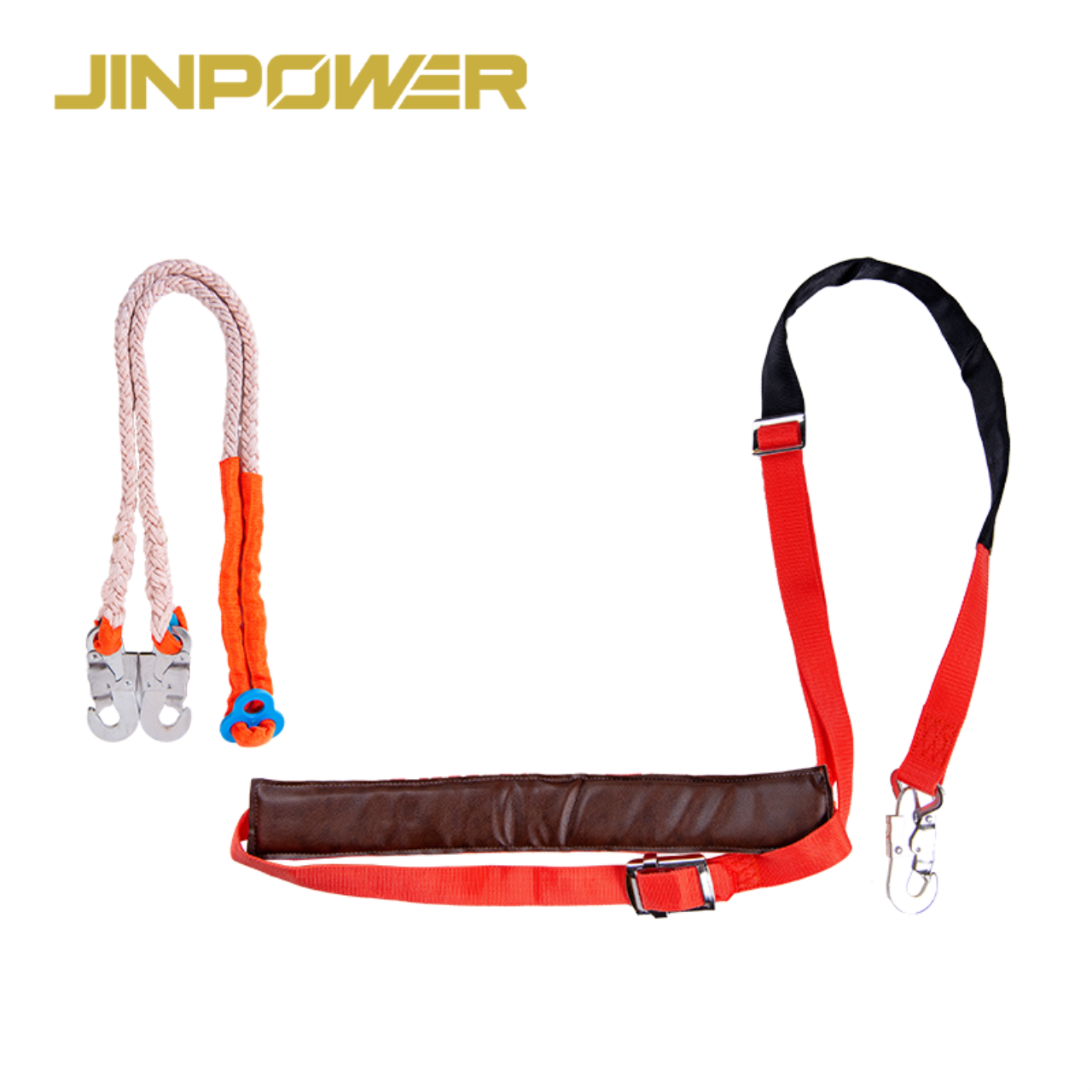
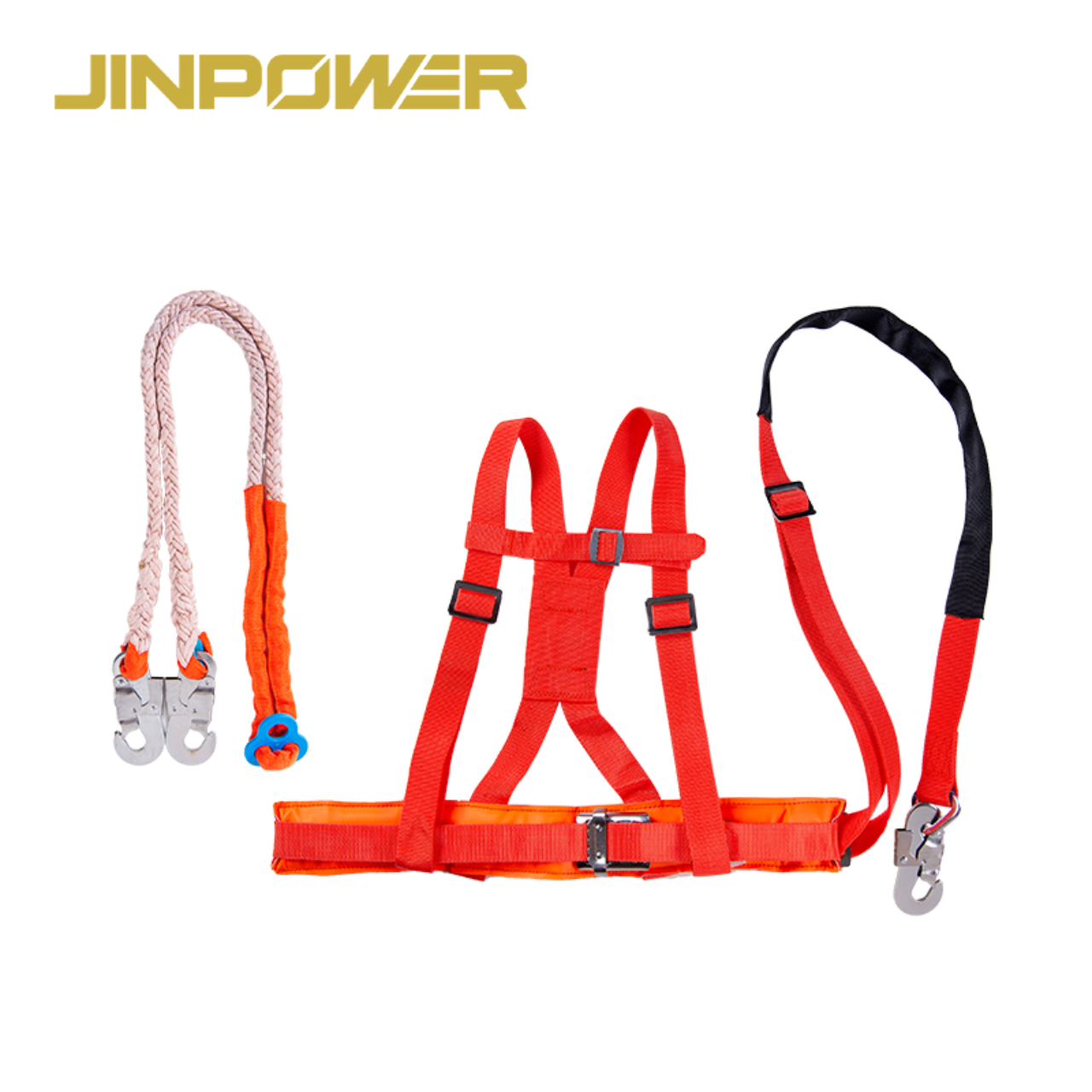
Lineman Safety Belt for Electrical Work Positioning
JINPOWER supplies lineman safety belts for electrical utility, pole work, transmission and distribution maintenance, substations and other fixed-position work at height.
Unlike a full body fall-arrest harness, a safety belt is mainly used for work positioning. When connected to a suitable positioning strap or pole strap, it helps support the worker around the waist and maintain a stable working position on a pole, tower or structure.
For utilities, electrical contractors and distributors, correct product selection starts with the work function. Buyers should confirm whether the task requires positioning, restraint, fall arrest, or a combination of systems before choosing the belt and connecting equipment.
All Products
Stay Connected
If you have any questions, please contact us and we will contact you as soon as possible.
Prduct Introdution
Product Highlights:
- Designed primarily for electrical work positioning
- Suitable for pole and fixed-structure maintenance
- High-strength webbing or leather options depending on model
- Side D-ring / attachment configurations available by model
- Compatible positioning strap or pole strap configurations
- Project and distributor supply support
What Is a Lineman Safety Belt?
A lineman safety belt is a waist-supported positioning device used to help electrical workers maintain a stable position while working on utility poles, towers or other elevated structures.
The belt normally works together with a positioning strap, pole strap or compatible connecting component. The strap passes around or connects to the structure while the belt supports the worker at the waist.
This arrangement can allow linemen and maintenance personnel to work with both hands available for inspection, installation, repair and tool operation.
The safety belt should be selected according to the actual work procedure. It should not automatically be treated as personal fall-arrest equipment.
Why Work Positioning Matters for Pole and Line Work
Electrical line work often requires a worker to remain in one position while using tools, handling conductors, installing fittings or inspecting equipment.
Holding the body in position without suitable support can reduce stability and make two-handed work difficult. A positioning belt and pole strap help support the worker against the structure so that the work position is more controlled.
Typical positioning tasks can include:
- Pole-mounted equipment maintenance
- Electrical line inspection
- Hardware installation and adjustment
- Fixed-position tower maintenance
- Substation structure work
- Short-duration maintenance where positioning is the approved protection method
Work positioning should always be considered together with the site's fall-hazard assessment. If a credible free-fall hazard remains, an independent fall-arrest system may also be required.
Safety Belt vs Full Body Harness: What Is the Difference?
Safety belts and full body harnesses may be used by the same utility crew, but they serve different functions. Choosing between them based only on price or appearance can result in the wrong equipment being specified.
For work where personal fall arrest is required, see ourFull Body Safety Harnessoptions.
Work Positioning Does Not Replace Fall Arrest
This distinction is important when specifying a lineman safety belt.
A positioning system is intended to support a worker at a working location. A fall-arrest system performs a different function: it arrests the worker after a fall begins.
For U.S. projects, OSHA does not permit a body belt to be used as part of a personal fall-arrest system. Body belts may be used in suitable positioning, travel-restraint or other permitted systems according to the work procedure.
A safety belt alone may therefore be insufficient where the job involves:
- Unprotected fall exposure
- Tower ascent or descent
- Movement between anchor points
- Open edges
- A credible free-fall distance
- A site procedure that requires personal fall arrest
In these conditions, the complete protection system should be reviewed rather than adding a positioning belt and assuming the fall hazard has been controlled.
Typical Work Positioning System for Linemen
A lineman safety belt normally works as one component of a positioning system rather than as an isolated product.
Pole / Structure → Positioning Strap or Pole Strap → Side Attachment Points → Safety Belt → Worker
The belt, strap, connectors and structure must be compatible. The user should also verify that the selected positioning arrangement matches the approved work method.
Technical Overview of JINPOWER Safety Belts
JINPOWER safety belts are available in configurations for electrical and utility work-positioning applications. Exact dimensions, hardware and accessories depend on the selected product and project requirements.
Understanding Safety Belt Attachment Points
Side D-Rings
Side attachment points are commonly used to connect a positioning strap or pole strap. The worker can lean into the positioning system while remaining supported at the work location.
Side D-rings are associated with positioning use and should not be assumed to be primary personal fall-arrest attachment points.
Rear or Additional Attachment Points
Some safety belt designs may include additional attachment points. Their permitted use depends on the specific product design and instructions.
A rear ring on a waist belt should not be treated as equivalent to the dorsal fall-arrest attachment on a full body harness unless the complete product and application are specifically designed and approved for that function.
Pole Strap Connection
When a pole strap is used, buyers should verify connector compatibility with the belt attachment points and confirm that the strap length and adjustment range match the intended structure.
Safety Belt with Pole Strap for Hands-Free Work
A pole strap is one of the most important accessories for many lineman positioning applications.
The strap typically passes around a pole or suitable structure and connects to the positioning points on the belt. Once correctly adjusted, it supports the worker in the required position and can allow both hands to remain available for the electrical task.
When selecting a positioning strap, buyers should consider:
- Structure or pole diameter
- Required adjustment range
- Strap or rope material
- Connector configuration
- Compatibility with the belt attachment points
- Expected abrasion and environmental exposure
A positioning strap helps maintain the working position. It should not automatically be treated as a separate personal fall-arrest device.
How to Select a Lineman Safety Belt
For professional procurement, the belt should be selected from the actual job requirement rather than from a generic product photo.
1. Define the Work Task
Start by identifying where and how workers will use the belt.
Typical tasks include:
- Utility pole maintenance
- Transmission and distribution line work
- Electrical equipment installation
- Fixed-position tower work
- Substation structure maintenance
2. Confirm Positioning or Fall-Arrest Requirements
Ask whether the worker only needs positioning support or whether a credible fall hazard remains.
If the risk assessment requires personal fall arrest, specify an appropriate full body harness and connecting system in addition to any positioning equipment required for the task.
3. Select Webbing or Leather Construction
JINPOWER safety belt configurations can use high-strength webbing or leather depending on the product type and application.
4. Confirm Waist Size and Adjustment
Correct fit is important for stable work positioning. A belt that is too loose may shift during use, while an unsuitable size can affect comfort and positioning.
Buyers should confirm:
- Required waist-size range
- Adjustment range
- Buckle configuration
- Compatibility with seasonal clothing and other PPE
5. Confirm Attachment-Point Requirements
For pole positioning, side attachment points are normally an important part of the configuration. Buyers should confirm the required number, position and compatibility with the intended pole strap or positioning device.
6. Define the Pole Strap Configuration
If a positioning strap is required, state this clearly in the RFQ. Include any known requirements for material, adjustment range, connectors and pole or structure size.
7. Review the Electrical Work Environment
For line and substation work, fall and positioning hazards are not the only considerations. Electrical exposure must also be evaluated.
Where workers operate close to energized equipment, buyers should confirm whether conductive hardware is permitted by the site's electrical safety procedure.
Do not assume that ordinary metal buckles, hooks or D-rings provide electrical insulation. If dielectric or non-conductive hardware is required, this must be stated separately and verified for the specific product.
Lineman Safety Belt Applications
Pole Climbing and Pole Work
Safety belts are commonly used by linemen for positioning after reaching an approved working location on a utility pole. A suitable pole strap helps maintain a stable position while inspection, repair or installation work is performed.
Transmission and Distribution Line Maintenance
Positioning belts can support electrical line workers during installation, inspection and maintenance tasks where the worker must remain stable against a pole or structure.
Fixed-Position Tower Work
Once a worker reaches an approved work location on a tower, a positioning system may be used to support hands-free work where permitted by the task procedure.
Tower ascent, descent and movement between exposed positions may require separate fall-arrest protection.
Substation and Facility Maintenance
Safety belts may be used for approved positioning tasks on structures or equipment frames within substations and power facilities.
The work method should also address electrical isolation, approach boundaries and other electrical safety controls required at the site.
Short-Duration Positioning Work
A waist positioning belt may be suitable for temporary work where the site risk assessment and approved work procedure identify positioning or restraint as the required protection method.
The duration of the task alone does not determine whether fall-arrest protection is required.
When Is a Safety Belt Not Enough?
One of the most important purchasing decisions is knowing when a positioning belt should not be the only fall-protection equipment provided.
Additional fall-arrest protection should be evaluated when the task includes:
- A credible free-fall exposure
- Tower or structure ascent and descent
- Movement between anchorage points
- Open edges
- Locations where the worker could fall below the work level
- A site or regulatory requirement for personal fall arrest
Where full body support is required, see ourFull Body Safety Harness.
For work requiring an automatically extending and retracting fall-arrest connection, see ourSelf-Retracting Lifeline.
Safety Belt Inspection Before Each Use
A positioning belt is safety-critical equipment and should be inspected before use according to the applicable product instructions and workplace procedure.
Inspect Webbing
- Cuts or tears
- Heavy abrasion
- Burns or heat damage
- Chemical contamination
- Damaged edges
- Broken or pulled stitching
Inspect Leather Components
For leather belt configurations, check for cracking, deep cuts, excessive hardening, damaged edges, stitching failure or other deterioration that could affect the structural condition of the belt.
Inspect D-Rings and Metal Hardware
- Cracks
- Bending or deformation
- Corrosion
- Sharp edges or burrs
- Unusual wear
Inspect Buckles and Adjusters
Check that the buckle closes correctly, adjustment hardware holds securely and there is no deformation or damage that could affect the belt fit.
Inspect the Pole Strap and Connectors
If the belt is used with a positioning strap, inspect the complete strap, rope or webbing and both connectors. Look for abrasion, cuts, damaged stitching, corrosion, deformation and abnormal hook operation.
Check Product Identification
Product identification and safety-related markings should remain readable so the equipment can be correctly identified and included in the inspection record where required.
When Should a Safety Belt Be Removed from Service?
A safety belt should be removed from normal use when inspection, damage history or product condition creates doubt about continued safe performance.
Typical reasons include:
- Cut, torn or badly abraded webbing
- Cracked, hardened or seriously damaged leather
- Broken structural stitching
- Deformed or cracked D-rings
- Buckle or connector malfunction
- Heavy corrosion
- Serious heat or chemical damage
- Abnormal loading or an incident requiring evaluation
- Failed inspection
- Critical identification or safety markings are no longer readable
Do not apply a universal replacement period to every safety belt. Retirement criteria should follow the specific product instructions, inspection results, applicable regulations and site procedures.
Standards and Project Requirements for Work Positioning Belts
Safety-belt requirements vary by market, utility specification and work method. Buyers should identify the applicable requirement before approving a product.
For U.S. applications, OSHA distinguishes positioning systems from personal fall-arrest systems. Body belts are not permitted as the body support for personal fall arrest, while positioning systems are subject to separate performance and use requirements.
OSHA also includes specific test requirements for lineman body-belt and pole-strap systems. If these requirements apply to a project, they should be stated in the RFQ and verified against the documentation of the selected product.
For other markets, the buyer should provide the applicable local standard, tender specification or utility requirement. Do not assume that one product configuration automatically satisfies every market.
Testing and Documentation for Buyer Approval
For utility, EPC and distributor procurement, product approval should include both the physical belt and the supporting technical information.
Depending on the selected product and project requirement, buyers may request:
- Product technical data sheet
- Material and configuration information
- Size or adjustment information
- D-ring / attachment-point configuration
- Pole strap or positioning-strap information
- Connector information
- Applicable test report where required
- Instructions for use and inspection
- Product identification and marking information
- Traceability information where applicable
For tenders and regulated projects, documentation requirements should be agreed before order placement rather than requested only after production.
What JINPOWER Checks Before Shipment
For positioning equipment, inspection should focus on structural condition, configuration and consistency with the confirmed order rather than appearance alone.
According to the confirmed product configuration, shipment checks can include:
- Belt material and configuration verification
- Webbing or leather appearance inspection
- Structural stitching inspection
- D-ring and attachment-point inspection
- Buckle and adjustment function check
- Pole strap and connector inspection where supplied
- Size and specification confirmation
- Label and product-identification check
- Packaging and documentation matching
Project-specific acceptance requirements should be confirmed during the inquiry or order stage so the inspection scope matches the buyer's purchasing specification.
OEM and Project-Based Safety Belt Supply
JINPOWER supports electrical safety distributors, utility suppliers, EPC contractors and industrial procurement programs with project-based safety belt supply.
Depending on the selected model and confirmed technical requirements, customization can be discussed for:
- Webbing or belt configuration
- Color
- Required size range
- Attachment-point configuration
- Positioning or pole strap configuration
- Product labels
- Packaging
Any requested electrical or dielectric hardware requirement should be identified separately and verified for the specific product rather than assumed from the standard configuration.
Why Source Lineman Safety Belts from JINPOWER?
Focused on Electrical Utility Applications
JINPOWER supplies safety equipment for utilities, electrical contractors and industrial users, allowing positioning belts to be reviewed within the actual electrical work environment.
Positioning and Fall-Arrest Functions Are Kept Separate
We recommend selecting work-positioning equipment according to its intended function rather than treating a waist safety belt as a universal solution for every work-at-height risk.
Support for Distributor and Project Procurement
For professional inquiries, application, material, belt configuration, positioning strap, quantity and required documentation can be reviewed before quotation.
Broader Electrical PPE Supply
Safety belts can be sourced together with otherPPE for Electrical Safetyproducts for utility and industrial safety procurement.
What to Include in Your Lineman Safety Belt RFQ
A clear RFQ helps confirm whether a positioning belt is appropriate for the planned task and which configuration should be quoted.
Frequently Asked Questions About Lineman Safety Belts
What is a lineman safety belt used for?
A lineman safety belt is mainly used for work positioning. Together with a compatible positioning or pole strap, it helps support a worker in a stable position while performing electrical work on a pole or suitable structure.
Is a safety belt the same as a full body safety harness?
No. A safety belt mainly supports the waist for positioning or restraint. A full body harness supports the shoulders, torso and legs and is the body-support component used in a personal fall-arrest system.
Can a waist safety belt be used for personal fall arrest?
A positioning belt should not be treated as the body-support component of a personal fall-arrest system. For U.S. applications, OSHA specifically prohibits body belts as part of personal fall-arrest systems.
What are the side D-rings on a lineman belt used for?
Side attachment points are commonly used with a pole strap or positioning device to support the worker at the work location. They should not automatically be treated as primary fall-arrest attachment points.
Should I choose a webbing or leather safety belt?
The choice depends on the product specification, work environment, required fit and buyer preference. Webbing and leather require different inspection and maintenance considerations, so the application should be confirmed before selection.
How should a pole positioning belt be inspected?
Inspect the belt material, stitching, D-rings, buckles, pole strap and connectors before use. Look for cuts, abrasion, cracking, corrosion, deformation, chemical damage and any other condition that could affect safe positioning.
When should a safety belt be removed from service?
Remove the belt from service when it fails inspection, has damaged webbing or leather, broken stitching, deformed hardware, malfunctioning connectors, serious contamination or another condition that creates doubt about continued safe use.
Request Lineman Safety Belt Details
If you are sourcing safety belts for utility poles, transmission and distribution projects, substations or electrical maintenance, send JINPOWER your actual application requirements.
For a more accurate product review and quotation, please provide:
- Application and working environment
- Required positioning or restraint function
- Webbing or leather preference
- Required waist size
- Attachment-point requirements
- Pole strap requirements
- Whether work is near energized equipment
- Applicable standard or project specification
- Order quantity
- Required technical documents
- Customization requirements
JINPOWER will review the information and recommend a suitable Lineman Safety Belt configuration for your utility, distribution or project procurement requirements.
Inquiry