English
 Español
 Português
 Français
 Deutsch
 русский
 한국어
 にほんご
 हिन्दी, हिंदी
 বাংলা
 Bahasa Indonesia
 Türkçe
 Việt
 dansk
 čeština
 עִבְרִית Ivrit
 Filipino/Pilipino
 български език (Bǎlgarski jazik)
 suomi
 norsk
 język polski
 ไทย
 ກະຣຸນາ
 Bahasa Melayu
 ភាសាខ្មែរ
 ဗာရမ်
 اردو
 فارسی
 Italiano
 Nederlands
 svenska
 Монгол хэл
 नेपाली
 සිංහල
 Ўзбек тили
 پښتوتۆرکجه
 Ελληνικά
 српски / srpski
 magyar
 українська
 Kiswahili
 Қазақ тілі
 Română
 Hrvatski
 Bosanski
 Kreyòl ayisyen
 አማርኛ
 Hausa
 Yorùbá
 Igbo
How Bird Repellent Discs Work: Light, Movement, and Covered-Area Limits
Reflective bird repellent discs can discourage birds around electrical installations, but their usefulness depends heavily on where they hang. A disc turning beside an open-sided shelter is not operating under the same conditions as one suspended beneath a deep equipment canopy. Both may look bright during installation; only one may produce a changing visual signal where birds actually approach.
When evaluating de bird repellent discs, the central question is not simply whether the surface reflects light. It is whether available light, movement, visibility, and bird behavior combine to make the chosen location less attractive. Electrical clearances and maintenance access remain non-negotiable, even when a different mounting position would improve deterrence.
The mechanism is changing visual contrast—not a physical barrier
A reflective disc redirects incident light. As its angle changes, an approaching bird may see alternating bright flashes, darker surfaces, and movement against the background. Wind-driven rotation or swinging makes those signals less predictable than a fixed reflective panel. The intended effect is visual disturbance that encourages the bird to choose another landing or resting place.
That does not mean every flash produces an avoidance response. Species, previous exposure, feeding opportunities, and attachment to a nesting or roosting location all influence behavior. A bird investigating an unfamiliar ledge presents a different challenge from one repeatedly returning to an established shelter.
Discs also do not prevent access. They cannot close a roof opening, make a horizontal beam physically unavailable, or guarantee separation between birds and electrical equipment. Treat them as a behavioral deterrent with site-dependent performance, not as exclusion hardware.
Why brightness alone is a poor acceptance criterion
Direct sunlight can create strong flashes, but only along particular viewing directions. A disc that dazzles someone standing in the service aisle may be barely noticeable from the birds’ approach route. Diffuse daylight can still produce changing contrast, although it may not create the same sharp reflections. A roof can reduce both illumination and the range of useful reflection angles.
Unless the selected product has a documented powered-light function, it produces no light of its own. Do not assume that daytime observations establish nighttime performance. Likewise, claims involving ultraviolet reflection need product-specific evidence; a shiny appearance does not establish a particular spectral response or proven deterrent effect.
Movement must occur at the mounting point
General weather conditions tell only part of the story. Wind outside a substation shelter may not reach the underside of its roof. Beams, cable trays, sidewalls, and adjacent buildings can create sheltered pockets where a hanging disc remains almost stationary.
The suspension arrangement matters too. A stiff connection, a seized swivel where one is fitted, or contact with a nearby surface can restrict motion. Excessive freedom creates a different problem: the assembly may strike equipment, abrade its attachment, or detach. The objective is controlled movement within a safe envelope—not maximum swinging.
There is also a practical trade-off. Moving a disc toward a canopy edge may improve light exposure and airflow, but increase weather loading and the chance of interference with doors or access routes. Establish the allowable mounting zone before trying to optimize visual performance.
Covered areas can remove several operating conditions at once
“Suitable for outdoor use” does not establish suitability beneath every outdoor cover. A deep canopy may simultaneously reduce daylight, suppress air movement, and conceal the disc behind structural members. These effects compound: a visible but motionless disc offers a different signal from a moving disc that birds cannot see until after landing.
Consider a roofed maintenance bay where birds enter through an open side and settle on rear beams. Hanging discs near the entrance may create a visible disturbance without affecting the sheltered resting positions. Adding more discs in the same location may not address the actual failure: the birds still have an accessible refuge beyond the disturbed zone.
Electrical compatibility comes before deterrent placement
Reflective appearance reveals little about electrical properties. A disc may use metal, metallized film, or another surface construction; cords and fittings introduce additional materials. Obtain the actual material specification rather than assuming an assembly is insulating because it is lightweight or described as plastic.
The installation review should account for normal movement, foreseeable attachment failure, and the possibility of loose components reaching energized equipment. Applicable utility requirements, equipment instructions, and local electrical safety rules determine acceptable separation and work procedures. There is no universal clearance that can safely be assigned to all reflective-disc installations.
- Check the complete moving assembly against electrical clearances, operating mechanisms, and ventilation openings.
- Keep inspection windows, warning labels, access panels, and maintenance routes unobstructed.
- Assess corrosion resistance, edge condition, attachment integrity, and exposure to site contaminants.
- Do not drill or modify equipment enclosures without the relevant equipment owner’s approval.
- Use authorized personnel and the site’s required isolation or controlled-work procedures for installation and inspection.
A general bird-deterrent claim is not evidence of dielectric suitability or approval for mounting on electrical apparatus. Request supporting documentation for each claimed property, and distinguish material durability from demonstrated bird-control effectiveness.
A useful trial measures bird behavior, not disc activity
Before installation, identify the target behavior: landing on a particular beam, entering a shelter, roosting overnight, or contaminating a maintenance area. Record where and when it occurs. Without that baseline, a quieter afternoon after installation can easily be mistaken for a successful result.
Repeat observations across comparable activity periods and record weather, lighting, landings, occupancy, and fresh fouling. Where practical, observe an untreated nearby area to help distinguish local deterrence from broader changes in bird activity. Keep the trial proportionate to the consequence of failure; a low-risk storage canopy and a critical electrical location warrant different acceptance decisions.
Watch beyond the initial response. Birds may become accustomed to a visual stimulus that brings no meaningful consequence, particularly where shelter or food remains attractive. Continued disc movement does not prove continued deterrence. A reduction in one resting spot also deserves scrutiny if birds simply relocate above another sensitive component.
Useful acceptance criteria are site-specific: fewer observed landings at the target location, reduced fresh contamination, no displacement into higher-risk positions, and no interference with operations. Avoid assigning a universal coverage radius or guaranteed percentage reduction without evidence for the product and conditions concerned.
Protect stored equipment separately
Even an effective deterrent does not make an open maintenance area a controlled storage environment. Insulated tools, grounding accessories, and PPE still need storage appropriate to their care instructions. Bird-control measures and equipment housekeeping solve different parts of the problem.
Founded in 2009, Hebei Jinneng Power Technology Co., Ltd. focuses on electrical safety equipment for utilities and industrial maintenance. Its Heavy-Duty Electrical Safety Equipment Cabinet for Insulated Tools & PPE provides a separate storage option for these environments, with lockable organization and configurable shelves, panels, drawers, or hooks. The equipment list and estimated storage weight should guide layout and load requirements.
Ventilation depends on the selected configuration; heating or dehumidification is optional according to model and project requirements. Neither capability should be assumed. A cabinet also does not remove contamination already present on equipment or replace prescribed inspection, cleaning, and electrical testing.
Know when to move beyond reflective discs
Persistent occupation beneath a dark, sheltered roof is a strong reason to assess exclusion rather than repeatedly rearranging reflective devices. Closing suitable entry points, modifying accessible resting surfaces, or installing appropriately designed barriers may address access more directly. Each option still needs review for ventilation, fire safety, maintenance access, wildlife entrapment, and electrical compatibility.
Active nests and protected species can introduce legal restrictions. Confirm local requirements before disturbing birds or changing access around occupied nesting locations. Netting or perch-control hardware should not be improvised around energized equipment.
For a bright, open location with occasional exploratory landings, reflective discs may justify a monitored trial. For a shaded recess with established roosting, limited airflow, and serious contamination consequences, they are a weak primary control. Make that distinction during the site survey—before specifying quantities or choosing mounting hardware.
Recommend
 Oct 30, 2026
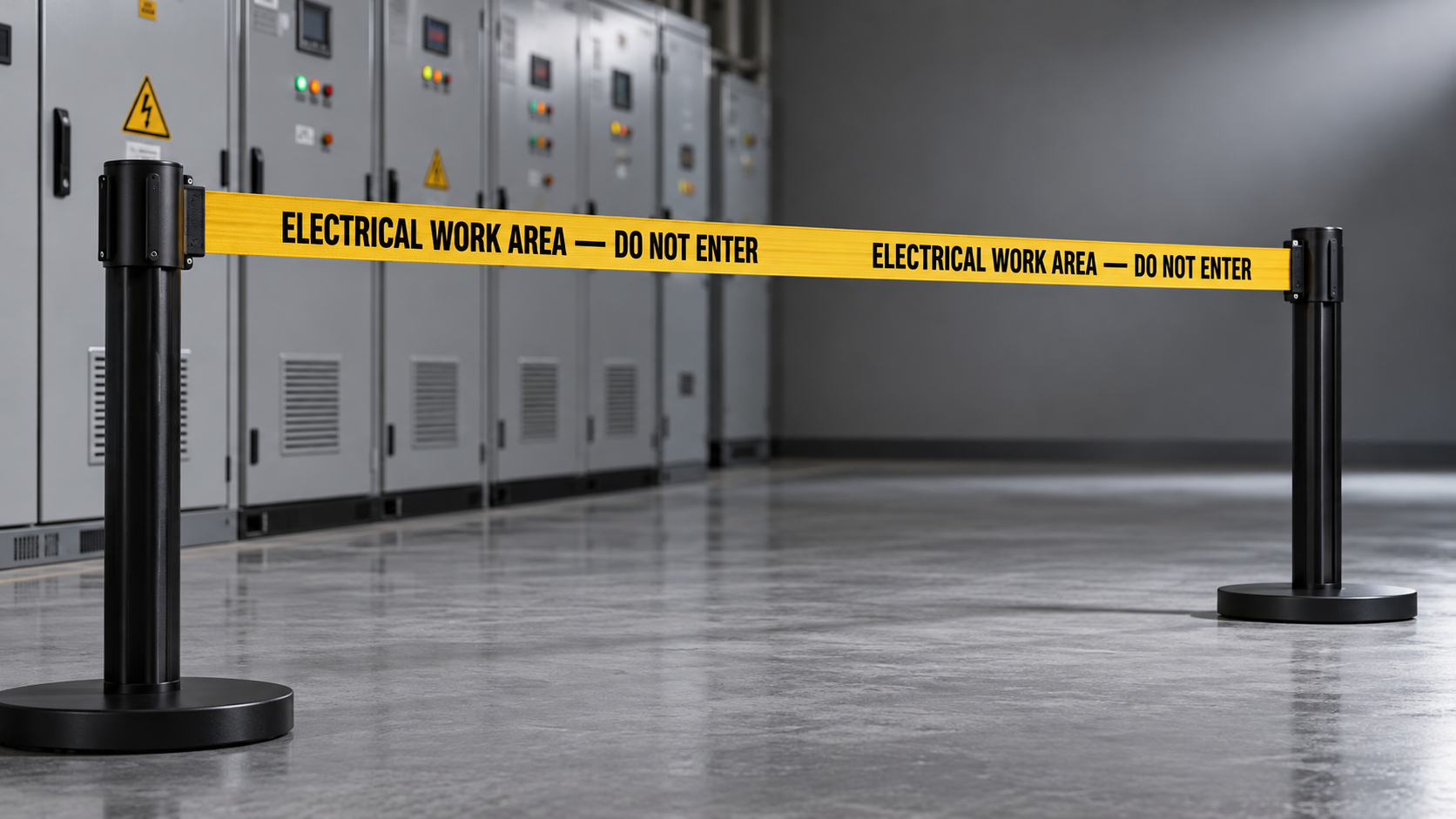
How Do You Specify Custom Warning Text for Barrier Belts?
Specify custom warning text barrier belts with confidence. Discover how to choose clear messages, print layouts, and approval criteria for electrical work areas. Get the practical guide.
- Oct 30, 2026
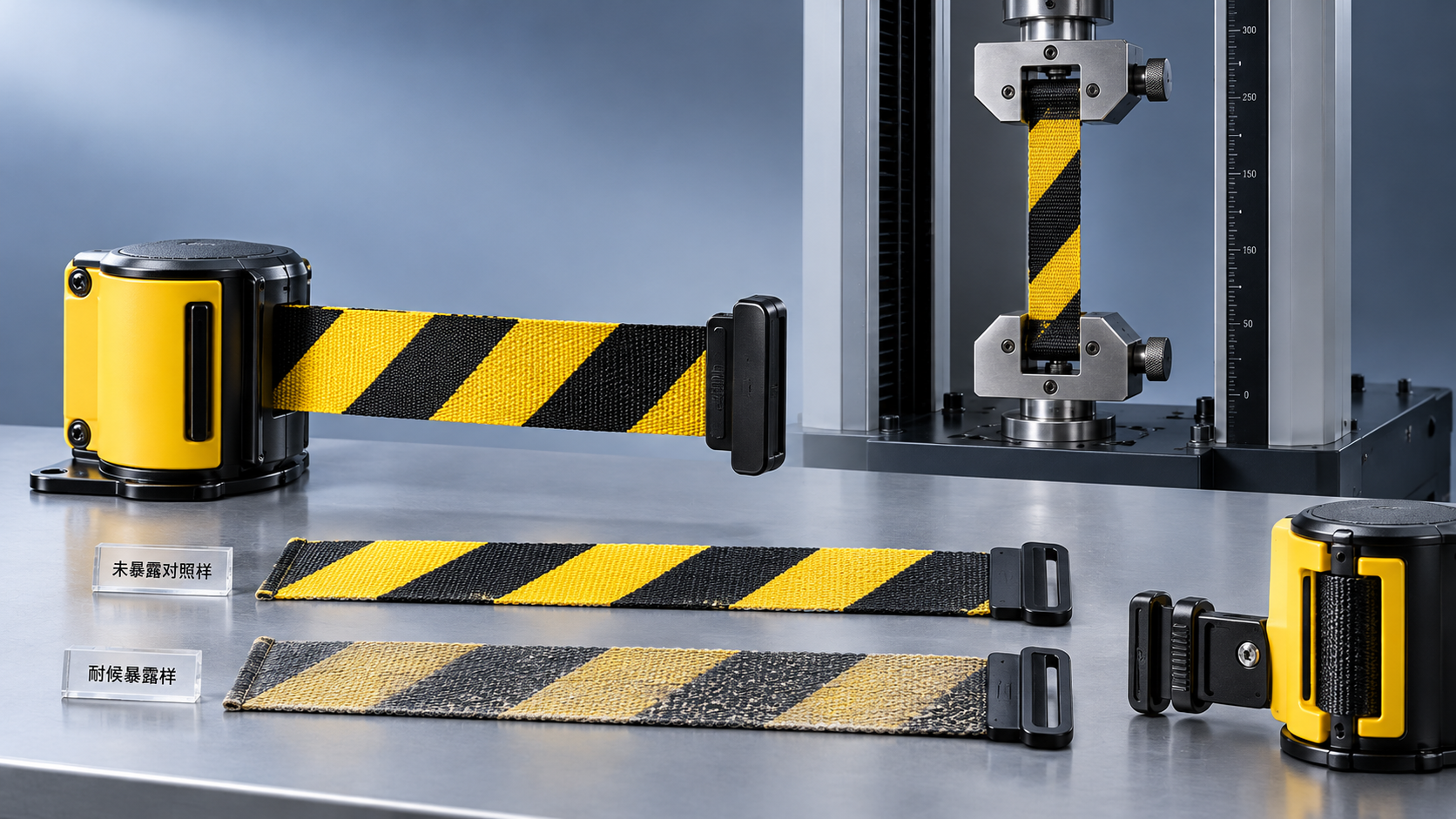
How Can You Verify UV Resistance in Retractable Barrier Belts?
UV resistant retractable barrier belts: learn how to verify weathering reports, retained strength, and assembly performance to compare suppliers and choose with confidence.
- Oct 29, 2026
How Do You Assess Wind Resistance in Outdoor Barrier Stands?
Assess outdoor barrier stand wind resistance with practical tips on bases, ballast, anchors, and gust exposure. Learn how to compare supplier claims and choose the right setup for your site.