
 English
 Español
 Português
 Français
 Deutsch
 русский
 한국어
한국어 にほんご
にほんご हिन्दी, हिंदी
 বাংলা
বাংলা Bahasa Indonesia
 Türkçe
 Việt
Việt dansk
dansk čeština
 עִבְרִית Ivrit
 Filipino/Pilipino
 български език (Bǎlgarski jazik)
 suomi
suomi norsk
norsk język polski
 ไทย
ไทย ກະຣຸນາ
 Bahasa Melayu
 ភាសាខ្មែរ
 ဗာရမ်
ဗာရမ် اردو
اردو فارسی
فارسی Italiano
 Nederlands
 svenska
 Монгол хэл
 नेपाली
 සිංහල
සිංහල Ўзбек тили
 پښتوتۆرکجه
 Ελληνικά
 српски / srpski
 magyar
 українська
 Kiswahili
 Қазақ тілі
 Română
 Hrvatski
 Bosanski
 Kreyòl ayisyen
 አማርኛ
አማርኛ Hausa
Hausa Yorùbá
 Igbo
Igbo‹
›
Resistive & Direct Discharge Rod for High-Voltage Equipment
JINPOWER supplies Resistive & Direct Discharge Rods for electrical maintenance and testing applications where residual electrical energy must be managed after equipment shutdown and isolation. The product combines resistive discharge and direct discharge functions in one tool configuration.
The resistive discharge function is designed to limit initial discharge current through a resistance element. The direct discharge function provides a separate conductive path for subsequent discharge or grounding operations when the equipment condition and approved safety procedure permit.
For utilities, EPC contractors and electrical maintenance teams, the key selection factors are equipment voltage, stored energy, resistance value, resistor energy capability, insulating rod dimensions, grounding lead configuration and the actual two-mode connection design.
All Products
Stay Connected
If you have any questions, please contact us and we will contact you as soon as possible.
Prduct Introdution
Product Highlights
- Combines resistive discharge and direct discharge functions
- Resistance element helps limit initial discharge current
- Designed for specified high-voltage equipment discharge applications
- Insulating operating rod with an electrical contact head
- Grounding lead and clamp according to the selected configuration
- Suitable for applications involving stored electrical energy where approved by the equipment manufacturer and site procedure
- Rod length, resistance requirements and connection design can be reviewed for project applications
- Technical configuration and required inspection documentation confirmed before order approval
Quick Technical Specifications
The following table identifies the principal technical parameters for product selection. Exact electrical ratings, dimensions and component specifications depend on the selected model and approved technical documents.
The equipment voltage alone is not sufficient to select a discharge rod. Buyers should also provide information about the stored energy, discharge requirements and equipment connection arrangement. Exact ratings must be confirmed before the product is approved for the intended application.
Product Configuration and Main Components
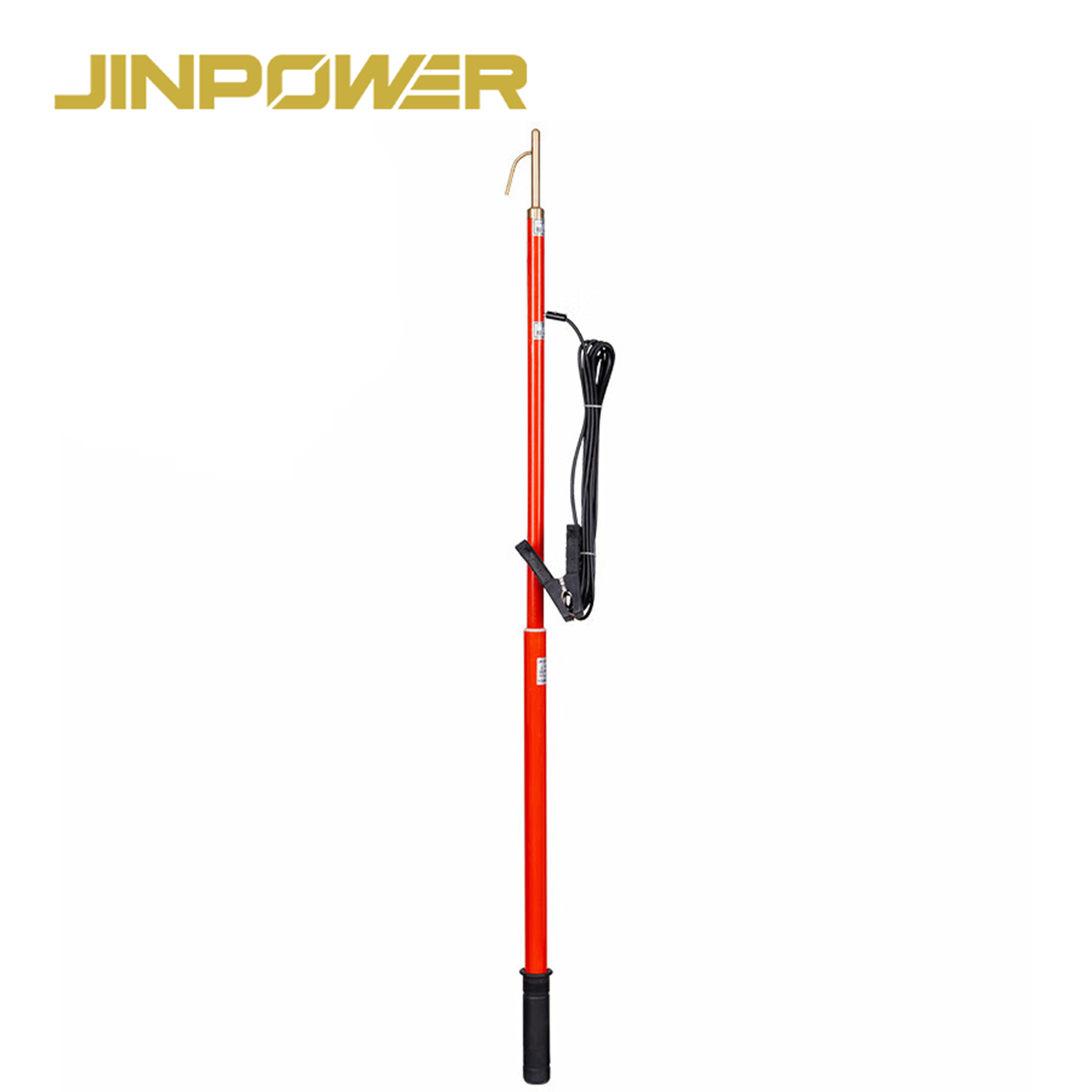
A Resistive & Direct Discharge Rod combines an insulating operating section, electrical contact components and the required discharge connections. The actual internal arrangement depends on the product configuration.
Insulating Rod
The insulating rod provides the operating section used to position the discharge contact head while maintaining the separation required by the approved work procedure.
The total rod length and effective insulating section should be selected according to the equipment voltage, accessibility of the connection point and applicable electrical safety requirements.
A longer rod does not automatically mean a higher electrical rating. Insulation performance must be supported by the specifications and test documentation of the actual product.
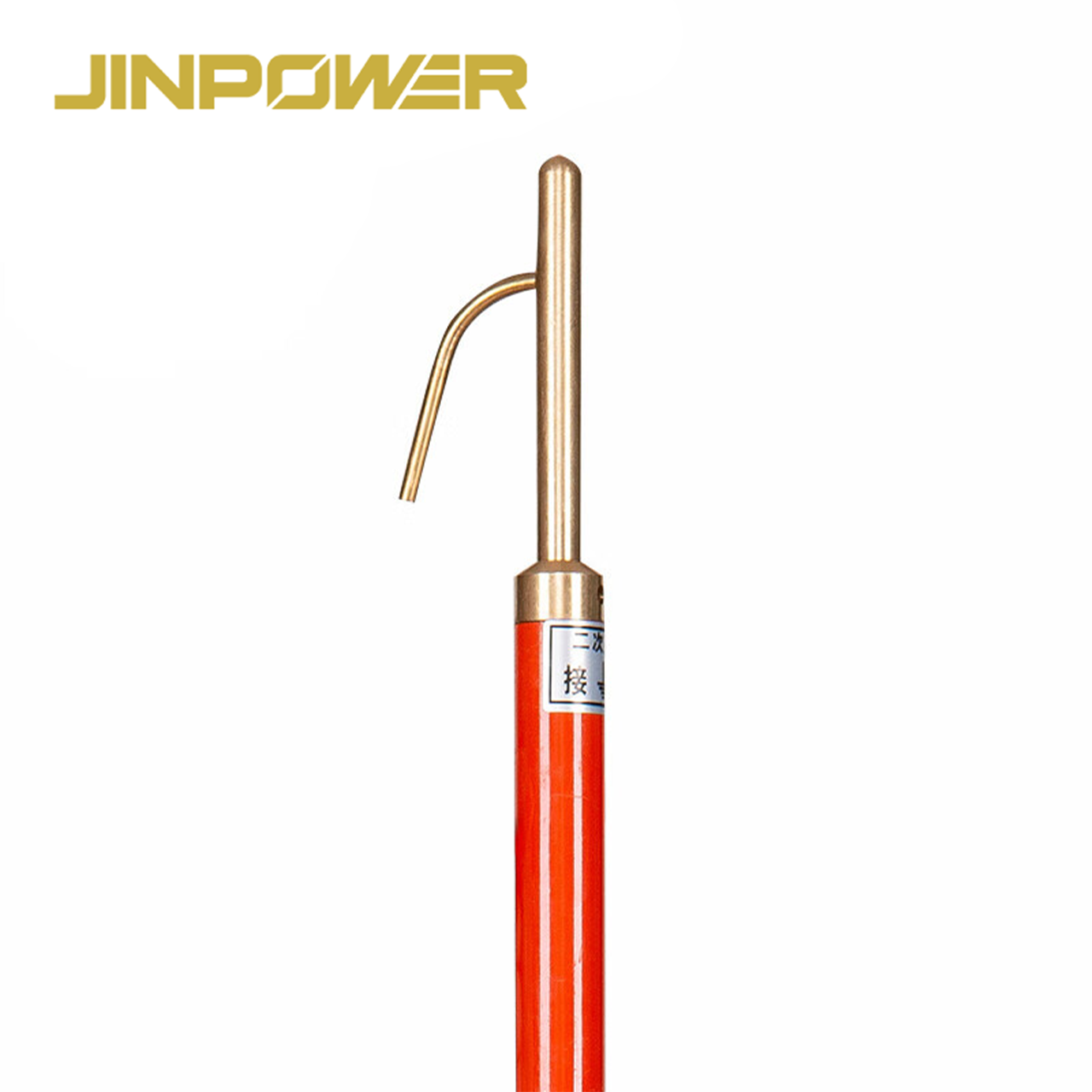
Contact Head
The contact head provides the intended connection interface with the electrical equipment. Its shape and connection arrangement should match the designated equipment contact point.
For equipment with special terminals or connection points, buyers should provide drawings or photographs so the required contact-head configuration can be reviewed.
Resistance Element
The resistance element is the principal component of the resistive discharge function. It limits discharge current according to its resistance value and the electrical conditions of the equipment.
Its suitability must be assessed using more than resistance value alone. The resistor also needs an appropriate energy rating and discharge-duty capability for the intended application.
Direct Discharge Path
The direct discharge function provides a conductive connection path without the current-limiting resistance used during resistive discharge.
The exact arrangement of the two discharge functions must be confirmed from the product's approved technical drawing. Buyers should not assume a particular switch, contact sequence or internal circuit arrangement without verifying the supplied model.
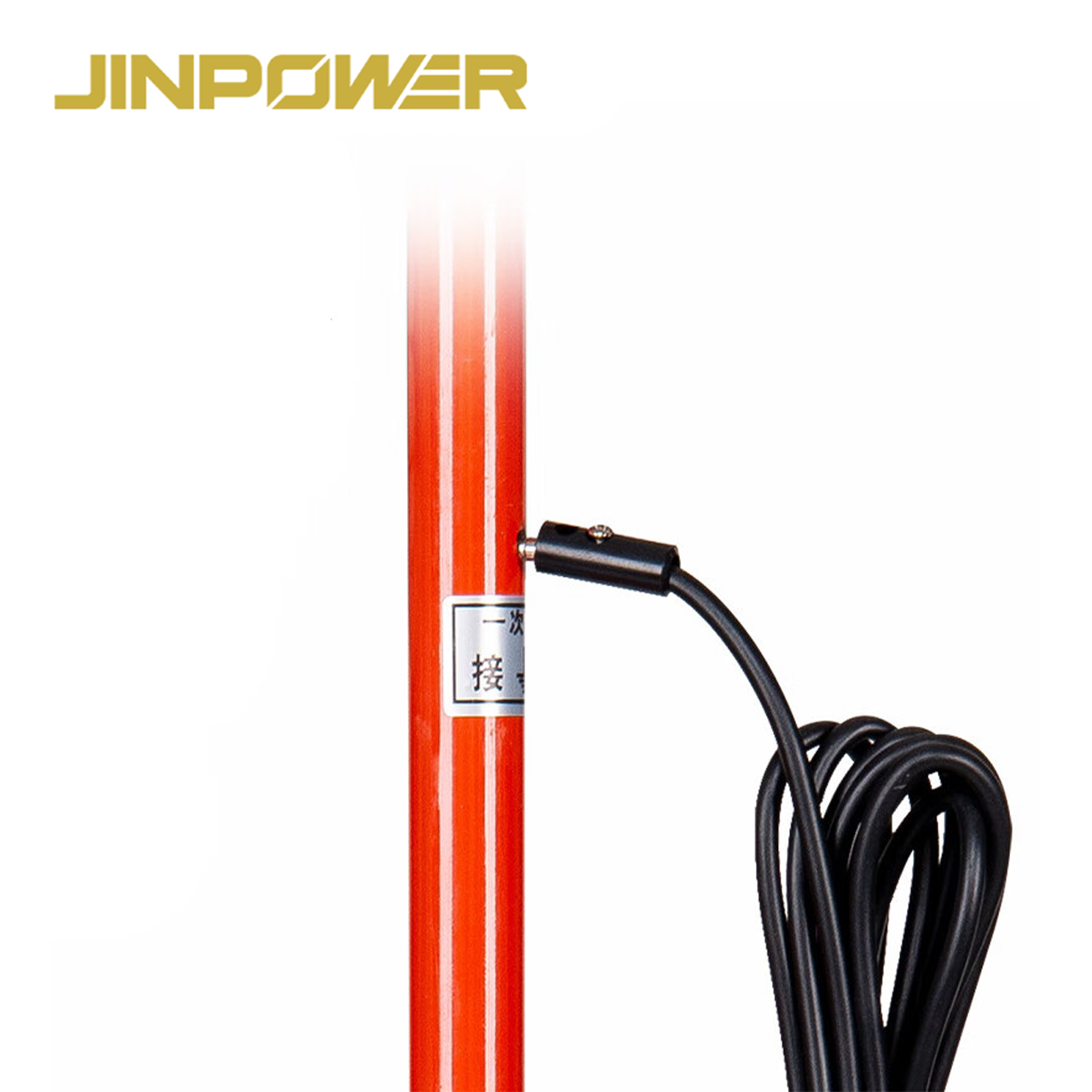
Grounding Lead
The grounding lead provides the conductive connection to the designated grounding point. Its material, cross-section, length and connection arrangement should match the selected product and its electrical duty.
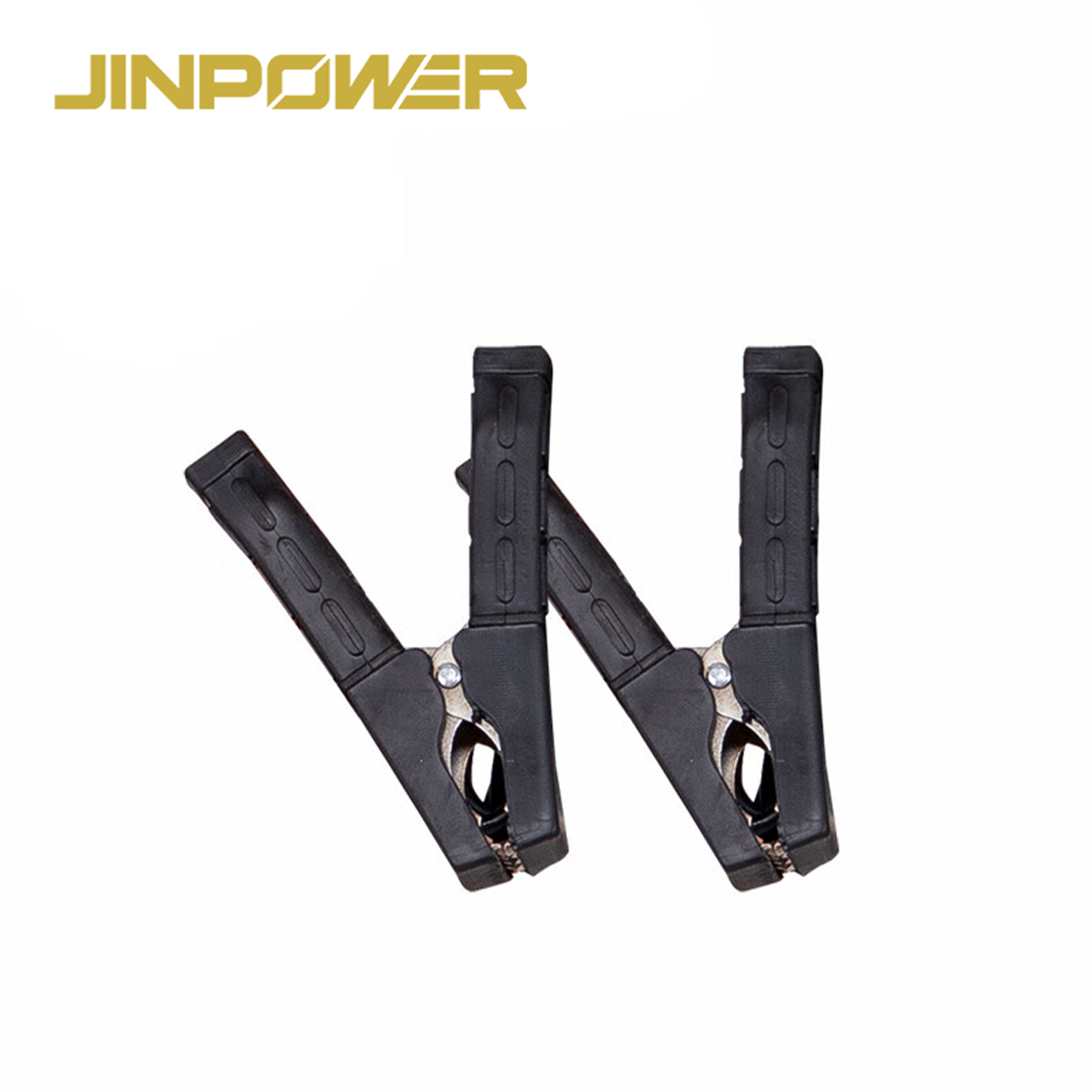
Grounding Clamp
The grounding clamp provides the interface with the specified grounding connection point.
Clamp dimensions, material and compatibility should be confirmed before ordering. A clamp that does not fit the intended connection point can make an otherwise suitable discharge rod unusable for the project.
How Does Resistive & Direct Discharge Work?
The product combines two electrical functions intended for different stages of an approved discharge process. These functions have different purposes and should not be treated as interchangeable.
Resistive Discharge: Limiting Initial Discharge Current
Electrical equipment containing capacitive elements may retain energy after the power supply has been disconnected. If a charged component is connected directly to a low-resistance path without proper assessment, a high initial discharge current may occur.
The resistive discharge function places a resistance element in the intended discharge path. This limits current according to the circuit conditions and allows stored energy to decrease in a more controlled manner.
The actual discharge behavior depends on several factors, including:
- Initial equipment voltage
- Stored electrical energy
- Equipment capacitance
- Resistance value
- Resistor energy rating
- Discharge-circuit configuration
The resistance must be selected for the intended electrical duty. A discharge rod should not be assumed suitable simply because it contains a resistor.
Direct Discharge: Completing the Approved Discharge Process
The direct discharge function provides a low-resistance conductive path for the subsequent stage of an approved discharge or grounding procedure.
However, direct discharge must not be applied solely because a certain amount of time has passed. The stored energy must first be reduced to a level at which direct grounding is safe under the applicable equipment-specific procedure.
The conditions for using the direct discharge function must be established by qualified electrical personnel using the equipment manufacturer's instructions, relevant electrical safety requirements and approved site procedures.
Why Combine Both Functions?
A two-function discharge rod brings current-limited resistive discharge and direct discharge capability into one product configuration.
This can be useful where the maintenance procedure requires both functions, provided that the selected rod is rated for the equipment and its discharge arrangement is correctly designed.
The product should not be used as a universal discharge tool for all high-voltage equipment. Its suitability depends on the actual electrical conditions and approved technical specification.
Resistive & Direct Discharge Rod vs Resistive Discharge Rod
JINPOWER offers a Resistive Discharge Rod and a Resistive & Direct Discharge Rod. The main difference is the number of discharge functions available in the product configuration.
Neither product is automatically better for every application. Selection depends on the equipment type, electrical duty, required discharge method and site operating procedure.
If your project only requires controlled resistive discharge, see our Resistive Discharge Rod.
Typical Applications
Capacitor Banks
Capacitor banks can retain significant electrical energy after disconnection. Some installations therefore require a controlled discharge arrangement before further grounding or maintenance activities.
For these applications, the equipment capacitance, voltage and stored energy are important selection parameters. The discharge rod's resistor energy capability and approved operating configuration must match the application.
High-Voltage Cables
High-voltage cables may retain capacitive charge after isolation. The appropriate discharge arrangement depends on the cable system, testing history, connection accessibility and approved maintenance procedure.
Before selecting a rod, confirm the cable voltage, relevant stored-energy conditions and designated discharge connections.
GIS and Switchgear
Certain GIS and switchgear maintenance or testing applications may require residual-charge management.
Discharge tools should only be considered where the equipment manufacturer provides an appropriate accessible connection point and approves the intended procedure. This product is not intended to bypass interlocks or provide access to sealed or energized compartments.
High-Voltage Test Equipment
High-voltage test equipment and connected test objects may retain stored energy after a test is completed.
A suitable discharge tool may form part of the test system's approved energy-release procedure. The required resistance, energy capability and connection arrangement must match the testing equipment and the test object's electrical characteristics.
Substation Electrical Equipment
Substation maintenance teams may need controlled discharge tools for particular equipment with stored electrical energy.
The application should be identified before procurement. A general description such as "for substations" is not enough to establish electrical suitability.
How to Choose the Right Resistive & Direct Discharge Rod
1. Confirm Equipment Voltage
Provide the system or equipment voltage and specify whether the intended application involves AC, DC or a particular high-voltage testing arrangement.
The selected insulating rod and discharge components must be suitable for the applicable voltage and operating conditions.
2. Identify the Equipment Type
Tell us whether the tool will be used with a capacitor bank, high-voltage cable, switchgear, GIS installation, test object or another defined type of equipment.
Different equipment can have very different stored-energy characteristics even when their nominal voltage ratings are similar.
3. Confirm the Stored-Energy Requirement
Where available, provide the equipment capacitance, initial voltage, stored-energy data and any discharge-duty requirements specified by the equipment manufacturer or project engineer.
This information helps determine whether the resistance element and complete tool configuration are suitable for the intended application.
4. Check the Resistance and Energy Rating
Resistance value is a critical parameter, but it must be reviewed together with resistor energy capacity, permitted discharge duty and the expected electrical conditions.
If your project already specifies the resistance value or other discharge parameters, provide them in the RFQ.
5. Verify the Two-Function Design
Confirm how the resistive and direct discharge functions are provided in the selected product. The actual circuit arrangement and connection interfaces should be shown in the approved technical information.
Do not assume that all two-function discharge rods use the same internal connections or operating mechanism.
6. Select the Rod Length and Insulating Section
Provide the required total rod length, effective insulating length and information about the equipment access point.
These dimensions should match the approved electrical safety and operating-distance requirements of the application.
7. Confirm Grounding Lead and Clamp Compatibility
Specify the grounding lead length, conductor requirements and the type of grounding connection available at the site.
The clamp and cable arrangement should match both the product's electrical duty and the intended connection points.
8. Review the Required Technical Documents
For utility and EPC purchasing, confirm which technical documents are required before quotation and order approval.
These may include an approved drawing, technical datasheet, resistance verification, insulating-section test documentation and other applicable inspection records.
Discharge Rod vs Portable Earthing and Short-Circuiting Equipment
A discharge rod and a portable earthing set may be used within the same electrical safety process, but they perform different functions.
A direct discharge function does not automatically establish that a rod is rated as a complete temporary protective earthing device.
If your project requires a complete temporary grounding and short-circuiting system, review our Portable Earthing and Short-Circuiting Set.
Electrical Safety and Application Requirements
Resistive and direct discharge tools are intended for use by trained and authorized electrical personnel. The actual procedure must be determined from the equipment conditions, electrical hazard assessment and approved maintenance or testing instructions.
Several distinctions are important when evaluating this product.
Equipment Isolation and Voltage Verification
Disconnection alone does not prove that electrical equipment is safe. Isolation, voltage verification and other required controls must follow the applicable site procedure.
Where a separate voltage detector is required, use suitable equipment and the approved verification method. See our High Voltage Detector range.
Stored Electrical Energy
Capacitors, cables and certain high-voltage test objects may retain significant electrical energy after disconnection.
The required discharge method must account for the equipment's stored energy and its specific electrical behavior. Residual or reappearing voltage must be managed according to the equipment manufacturer's and site's approved procedures.
Direct Discharge Is Not Automatically Safe
The availability of a direct discharge path does not mean it can be used immediately or under every electrical condition.
For applicable high-voltage testing work under OSHA 29 CFR 1910.269(o)(4)(v), high-capacitance equipment must be discharged through a resistor rated for the available energy before direct grounding, and direct grounding is permitted only after stored energy has fallen to a safe level.
This is an application-specific safety requirement, not a universal operating instruction for every discharge rod or electrical installation.
Temporary Protective Earthing
Discharging residual energy and establishing temporary protective earthing are related but separate functions. Where the work requires a rated portable earthing and short-circuiting system, that equipment must be selected and verified independently.
Applicable Standards and Technical Documentation
For discharge rods, the applicable technical requirements depend on the product design, intended application and project specification.
Buyers should avoid treating every insulating operating rod or discharge tool as automatically compliant with a particular IEC or national standard.
Discharge Function and Stored-Energy Requirements
The selected product should have technical information sufficient to evaluate resistance, energy capability, applicable voltage, insulation and the relevant discharge arrangement.
Project-specific electrical tests or independent verification may be required depending on the application.
IEC 61230 and Portable Earthing Equipment
IEC 61230 addresses portable equipment for temporary earthing or earthing and short-circuiting. It should not automatically be presented as certification for every resistive and direct discharge rod.
If the project includes separate portable grounding equipment, its applicable standard, short-circuit rating and supporting documents must be reviewed according to that equipment's actual design and scope.
Project-Specific Compliance
If your utility or EPC project specifies a national standard, electrical test method, inspection requirement or third-party certificate, include the exact requirement in the RFQ.
Any compliance statement should be supported by documentation for the actual supplied product and configuration.
Testing and Quality Verification
For a two-function discharge rod, both the resistive and direct discharge configurations need to be considered during technical acceptance.
The exact factory inspection and test plan should be agreed according to the ordered product and project requirements.
Visual inspection and a basic resistance measurement alone do not establish the complete electrical suitability of a high-voltage discharge tool. Where specified, insulation and functional performance must be evaluated using the applicable test requirements.
Inspection, Storage and Maintenance
Discharge tools should be inspected and maintained according to the manufacturer's instructions and the electrical facility's approved equipment-management procedure.
Insulating Rod Condition
Inspect the rod for visible cracks, mechanical damage, contamination, moisture or surface deterioration that may affect its suitability.
Contact and Connection Components
Check that the contact head, grounding lead, clamp and accessible connections are complete and free from obvious damage or looseness.
Resistance and Electrical Condition
Follow the required inspection or test schedule for the selected product. A suspected damaged resistor, abnormal electrical condition or failed test result should be referred for qualified evaluation.
Storage
Store the discharge rod in a clean, dry and protected location according to its instructions. Avoid mechanical impact, contamination and conditions that may damage the insulating section or electrical components.
If there is any doubt about the tool's electrical integrity or mechanical condition, remove it from normal service until it has been evaluated under the applicable procedure.
Buyer Acceptance Checklist
For utility tenders, EPC projects and distributor orders, acceptance should be based on the actual approved configuration rather than the product name alone.
Project Configuration and Procurement Support
JINPOWER supplies electrical safety and grounding equipment for utility, industrial and project-based applications. For Resistive & Direct Discharge Rods, the technical configuration should be reviewed against the actual discharge requirement before order approval.
Depending on the available product designs, project requirements may involve:
- Application voltage
- AC or DC application
- Resistance value
- Discharge-duty requirement
- Insulating rod length
- Effective insulating section
- Contact-head configuration
- Grounding lead length
- Grounding clamp design
- Product identification and labeling
- Packaging
- Inspection and test documentation
Technical customization is subject to the product design, applicable safety requirements and confirmation of the resulting electrical performance. Changes to resistance, insulation or discharge connections should never be treated as cosmetic modifications.
What Should You Include in Your RFQ?
A technical drawing or equipment specification is particularly useful when the project requires a specific discharge connection or resistor configuration.
Frequently Asked Questions
What is a Resistive & Direct Discharge Rod?
It is an electrical discharge tool that combines current-limited resistive discharge with a direct discharge function in one product configuration. It is intended for specified equipment and approved discharge procedures.
Why is resistive discharge necessary?
Equipment containing capacitive elements may retain electrical energy after isolation. A suitable resistance element limits the initial discharge current and supports controlled energy release.
When can the direct discharge function be used?
Only when the equipment condition, stored-energy level and approved operating procedure permit it. The direct discharge function must not be applied merely because an assumed discharge time has passed.
What is the difference between a Resistive Discharge Rod and a Resistive & Direct Discharge Rod?
A Resistive Discharge Rod provides the specified current-limited discharge function. A Resistive & Direct Discharge Rod combines resistive and direct discharge functions. The correct choice depends on the equipment and the required discharge procedure.
Can the rod be used with capacitor banks?
It may be suitable for specified capacitor-bank applications when the resistance, energy capability, voltage rating and connection design match the equipment. Suitability must be confirmed before use.
Can it be used on high-voltage cables?
It may be used in approved cable discharge applications where the product's ratings and connections are suitable. Cable voltage, stored energy and the required maintenance procedure must be considered.
How do I select the correct resistance value?
Resistance selection depends on equipment voltage, capacitance, stored energy, permitted discharge current and the resistor's energy capability. The value should follow the equipment design or approved project engineering requirement.
Does every discharge rod have the same voltage rating?
No. The applicable voltage and insulation configuration depend on the selected model and supporting technical data. Do not assume all discharge rods are interchangeable.
Can the rod replace a Portable Earthing Set?
Not automatically. A discharge rod is selected for its discharge function. A Portable Earthing Set is designed for specified temporary protective earthing and short-circuiting duties. The required equipment must be determined from the work procedure.
Can rod length and grounding lead length be customized?
Project-specific lengths and connection requirements can be reviewed according to the available product designs. Changes affecting insulation or electrical performance require technical confirmation.
What documents should buyers request?
Depending on the project, request the Technical Datasheet, Approved Drawing, Resistance Verification, Insulation Test Documentation, applicable performance records and other agreed inspection documents.
Request Resistive & Direct Discharge Rod Details and Pricing
If you are sourcing Resistive & Direct Discharge Rods for capacitor banks, high-voltage cables, electrical testing, substations or utility maintenance projects, send JINPOWER the equipment and discharge requirements for technical review.
Please provide the equipment voltage, AC/DC application, equipment type, stored-energy information where available, required discharge functions, resistance requirement, rod length, grounding lead configuration, quantity and applicable project specification.
JINPOWER can then review the requested product configuration and clarify the technical information and documentation needed before quotation and order confirmation.
Inquiry