
 English
 Español
 Português
 Français
 Deutsch
 русский
 한국어
 にほんご
 हिन्दी, हिंदी
 বাংলা
 Bahasa Indonesia
 Türkçe
 Việt
 dansk
 čeština
 עִבְרִית Ivrit
 Filipino/Pilipino
 български език (Bǎlgarski jazik)
 suomi
 norsk
 język polski
 ไทย
 ກະຣຸນາ
 Bahasa Melayu
 ភាសាខ្មែរ
 ဗာရမ်
 اردو
 فارسی
 Italiano
 Nederlands
 svenska
 Монгол хэл
 नेपाली
 සිංහල
 Ўзбек тили
 پښتوتۆرکجه
 Ελληνικά
 српски / srpski
 magyar
 українська
 Kiswahili
 Қазақ тілі
 Română
 Hrvatski
 Bosanski
 Kreyòl ayisyen
 አማርኛ
 Hausa
 Yorùbá
 Igbo
‹
›
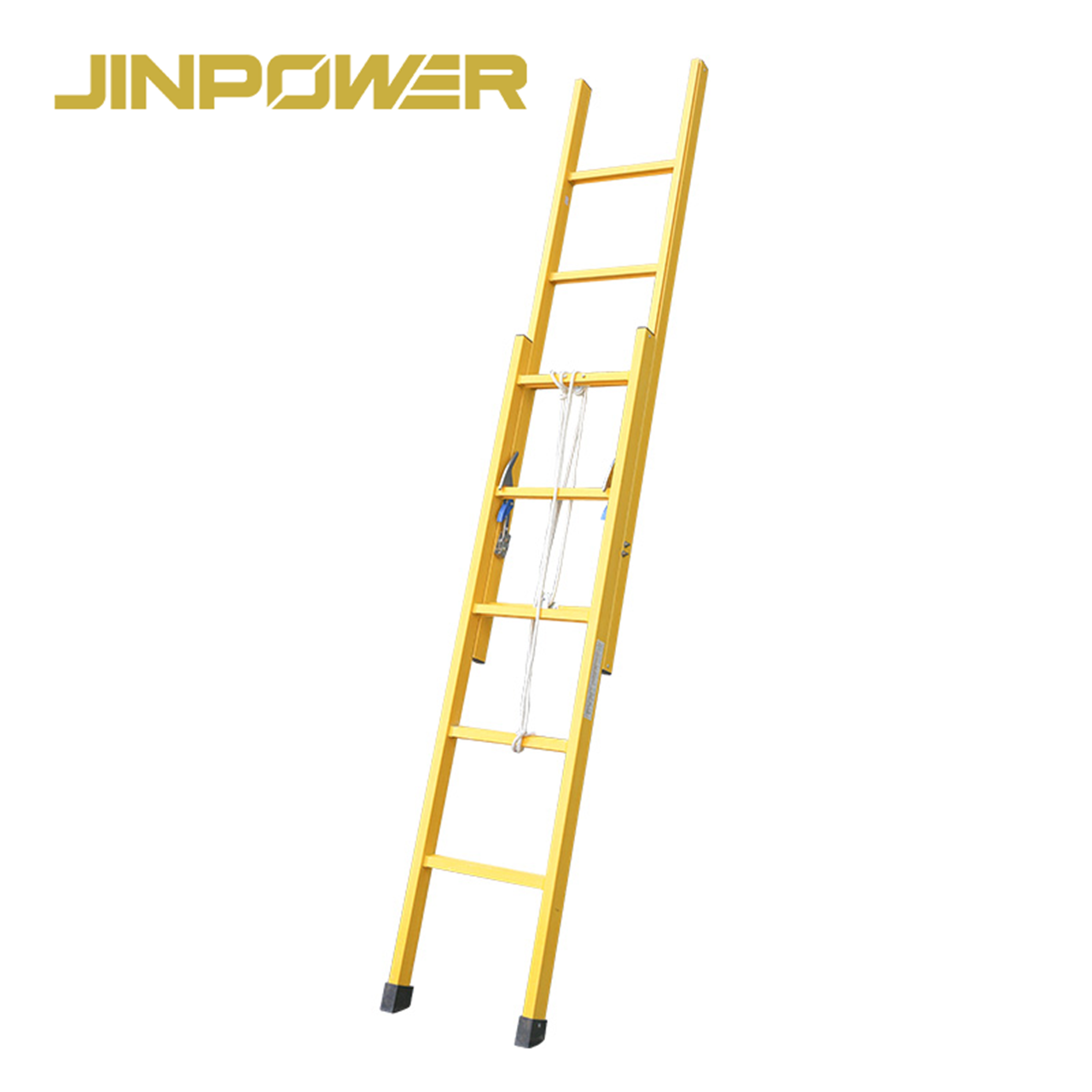
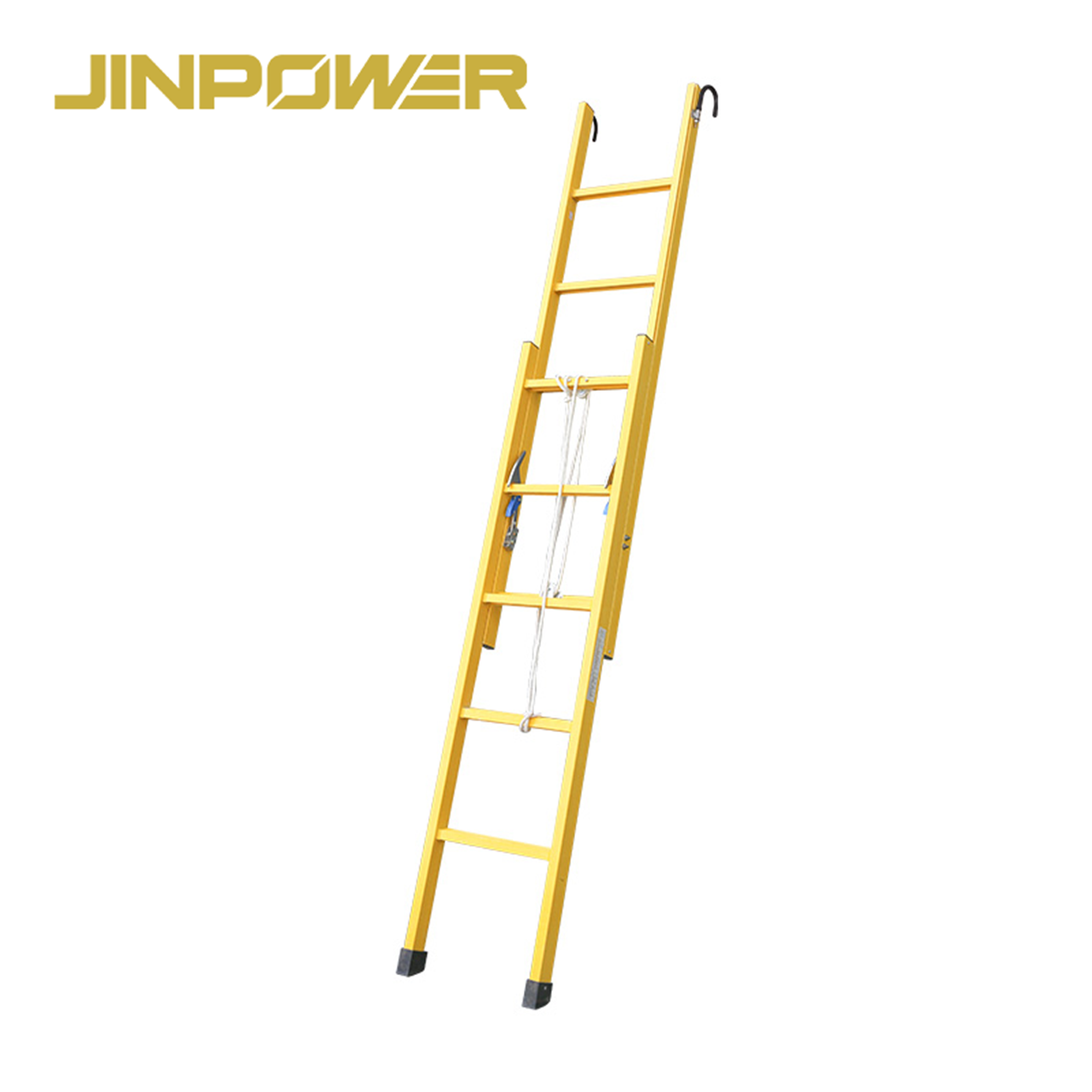
Single-Section FRP Insulating Ladder for Electrical Access
JINPOWER supplies Single-Section FRP Insulating Ladders for substations, switchyards, transformer facilities, transmission and distribution work, and industrial electrical maintenance.
This is a fixed-length straight ladder with fiberglass / FRP non-conductive side rails. Unlike an extension or telescopic ladder, it does not use multiple sliding sections to change its length.
For professional buyers, the main selection points are the required access height, ladder length, rated load, rung structure, support conditions, electrical requirements and the technical documents required by the project.
All Products
Stay Connected
If you have any questions, please contact us and we will contact you as soon as possible.
Prduct Introdution
Product Highlights
- Single-section fixed-length ladder design
- Fiberglass / FRP non-conductive side rails
- Designed for electrical access and maintenance applications
- No extension ropes, pulleys or sliding ladder sections
- Simple structure for repeated work at known access heights
- Suitable for substations, switchyards, transformer facilities and industrial electrical sites
- Ladder length can be discussed according to the selected model and project requirement
- Project labels, logo, packaging and technical documentation can be discussed according to confirmed requirements
Quick Technical Specification
Exact ladder length, rated load, rail profile, wall thickness, weight and electrical performance depend on the selected model. These values should be confirmed in the final Technical Datasheet and Approved Drawing before ordering.
Quick Selection Guide
Ladder Length, Access Height and Working Height Are Different
This is one of the most important points to confirm before ordering a straight insulating ladder.
Ladder Length
Ladder Length is the physical length of the ladder measured along the side rail.
Access Height
Access Height is the elevation that the ladder allows the worker to reach when it is correctly positioned against a suitable upper support.
Because a straight ladder is normally used at an angle, Ladder Length is not the same as vertical access height.
Working Height
Working Height is the height at which the operator can actually perform the task from an approved position on the ladder.
It also depends on:
- Worker height
- Permitted standing position
- Equipment location
- Ladder angle
- Site procedure
- Fall-protection requirements
For an RFQ, it is better to provide both the required Access Height and expected Ladder Length instead of writing only “Need 5 m working height.”
What Is a Single-Section FRP Insulating Ladder?
A Single-Section FRP Insulating Ladder is a fixed-length portable straight ladder used for vertical access, inspection and maintenance in electrical environments.
“Single-Section” means the ladder has one main fixed ladder section. It does not rely on multiple sections sliding over one another to change the overall length.
That makes it different from an Extension Ladder or Telescopic Ladder, both in structure and in the way buyers should select and inspect the product.
Its main roles are:
- Providing access to elevated electrical equipment
- Reducing reliance on conductive metal side rails in electrical work areas
- Providing a simple fixed-length access solution where the required height is already known
Why Are FRP Side Rails Used for Electrical Work?
Aluminum ladders are common because they are lightweight and practical, but aluminum is electrically conductive.
Where workers or the ladder may be exposed to energized electrical parts, a conductive ladder frame can create an additional hazard.
FRP side rails provide a non-conductive main ladder structure, making them more suitable for many electrical maintenance environments.
However, using FRP does not mean voltage, approach distance, PPE or electrical work procedures can be ignored.
An Insulating Ladder Is Not a Complete Electrical Protection System
An FRP ladder mainly solves an access problem while reducing the use of conductive ladder side rails. It does not remove every electrical or fall hazard around the job.
Depending on the work, the complete safety system may also require:
- Electrical isolation
- Lockout / Tagout where applicable
- Voltage verification
- Temporary grounding
- Minimum approach-distance controls
- Electrical insulating gloves
- Insulating boots
- Electrical insulating mats
- Arc-flash / electrical PPE
- Fall protection
- Approved work procedures
The ladder should therefore be treated as one part of the complete electrical access and safety system.
Why Choose a Single-Section Ladder?
Simple Fixed-Length Structure
When the worksite has a known and repeatable access height, a fixed-length ladder can be simpler to deploy than a multi-section design.
Fewer Moving Components
A single-section ladder does not normally require extension locks, ropes, pulleys or sliding ladder sections.
Routine inspection can therefore focus more directly on the side rails, rungs, rail-to-rung connections, feet and support areas.
Straightforward Deployment
For repeated work around fixed transformers, substation structures or industrial electrical equipment, the ladder can be positioned without extending multiple ladder sections first.
Known Physical Length
Because the ladder length is fixed, transportation, storage and site access should be checked before purchasing.
If one maintenance crew regularly needs several very different access heights, an Extension or Telescopic Ladder may be more practical.
Single-Section Ladder vs Extension Ladder
There is no simple rule that one structure is always safer than the other. The correct choice depends on access height, site conditions, transportation, inspection and the work procedure.
Insulating Ladder vs Insulating Stool
If your main requirement is a stable platform for lower electrical equipment, see ourElectrical Insulating Stool.
Do not stack stools, boxes or other temporary supports to create the access height that should be provided by a suitable ladder.
Main Structure of a Single-Section FRP Insulating Ladder
FRP Side Rails
The side rails are the main longitudinal load-bearing structure of the ladder and the most important insulating structural component.
During procurement and long-term use, buyers should review not only the material name but also the condition of the FRP surface.
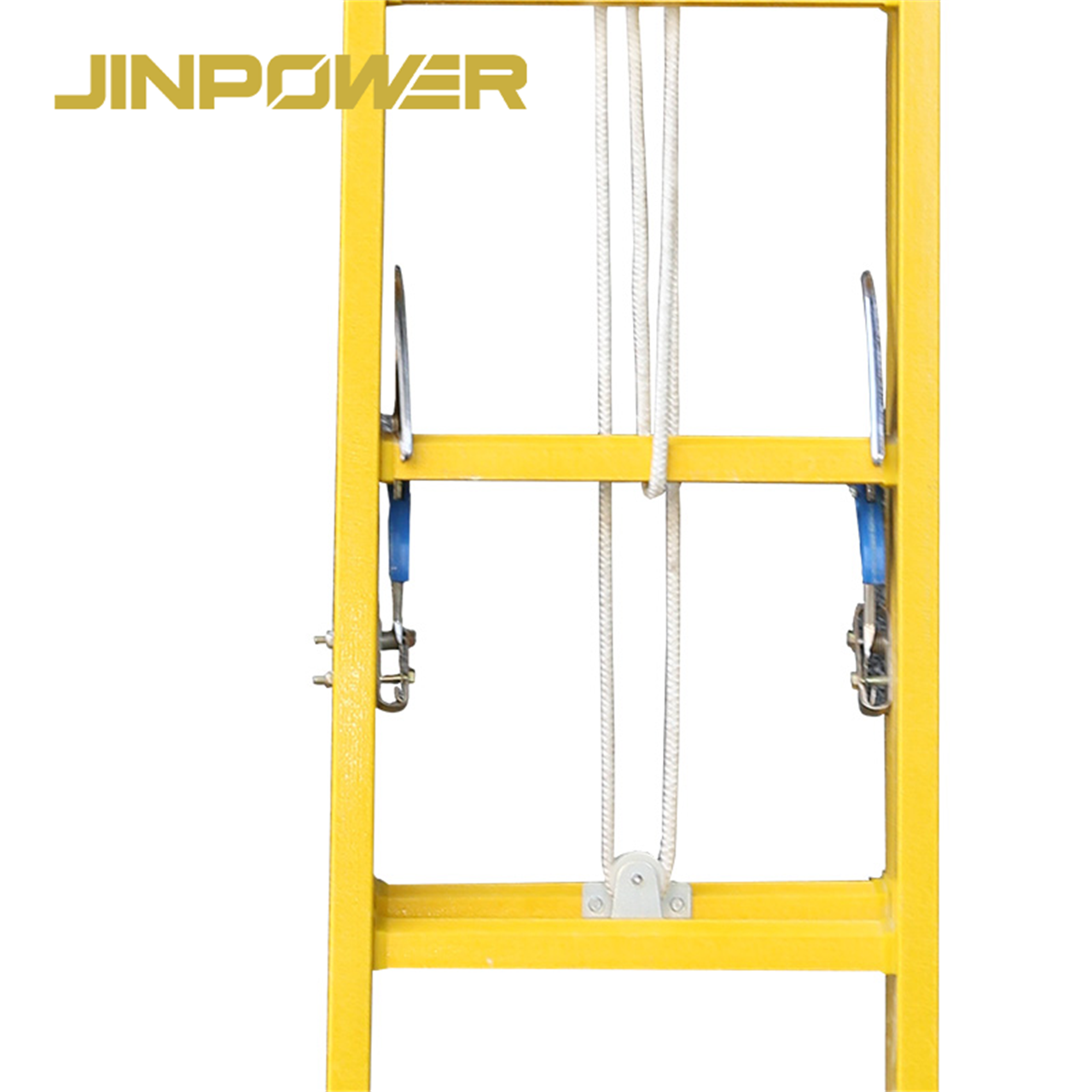
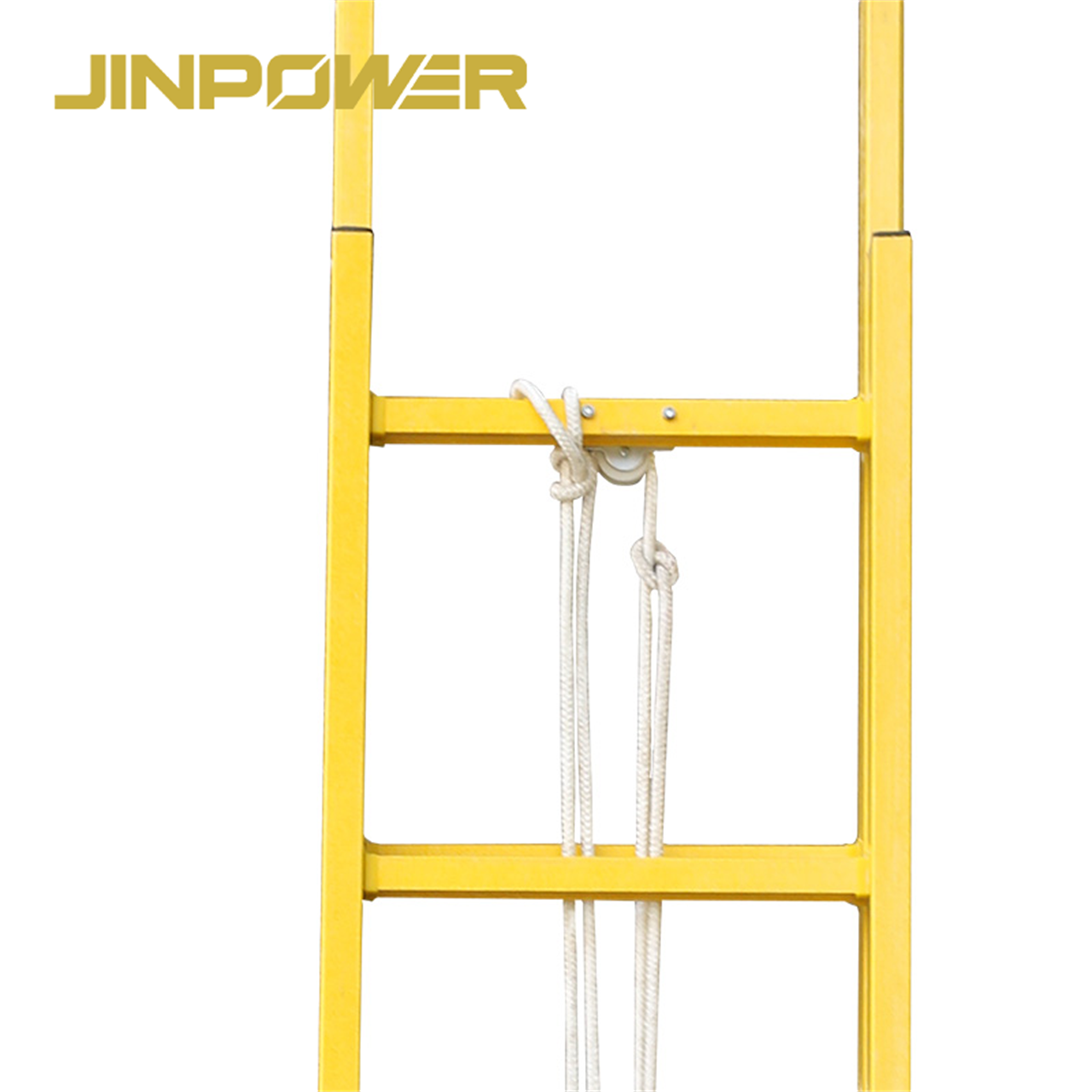
Rungs
The rungs support the worker during climbing and positioning.
Check rung material, spacing, surface condition and the connection between each rung and the side rails according to the selected ladder design.
A loose, cracked or badly damaged rung is a reason to remove the ladder from normal use even when the FRP rails still appear intact.
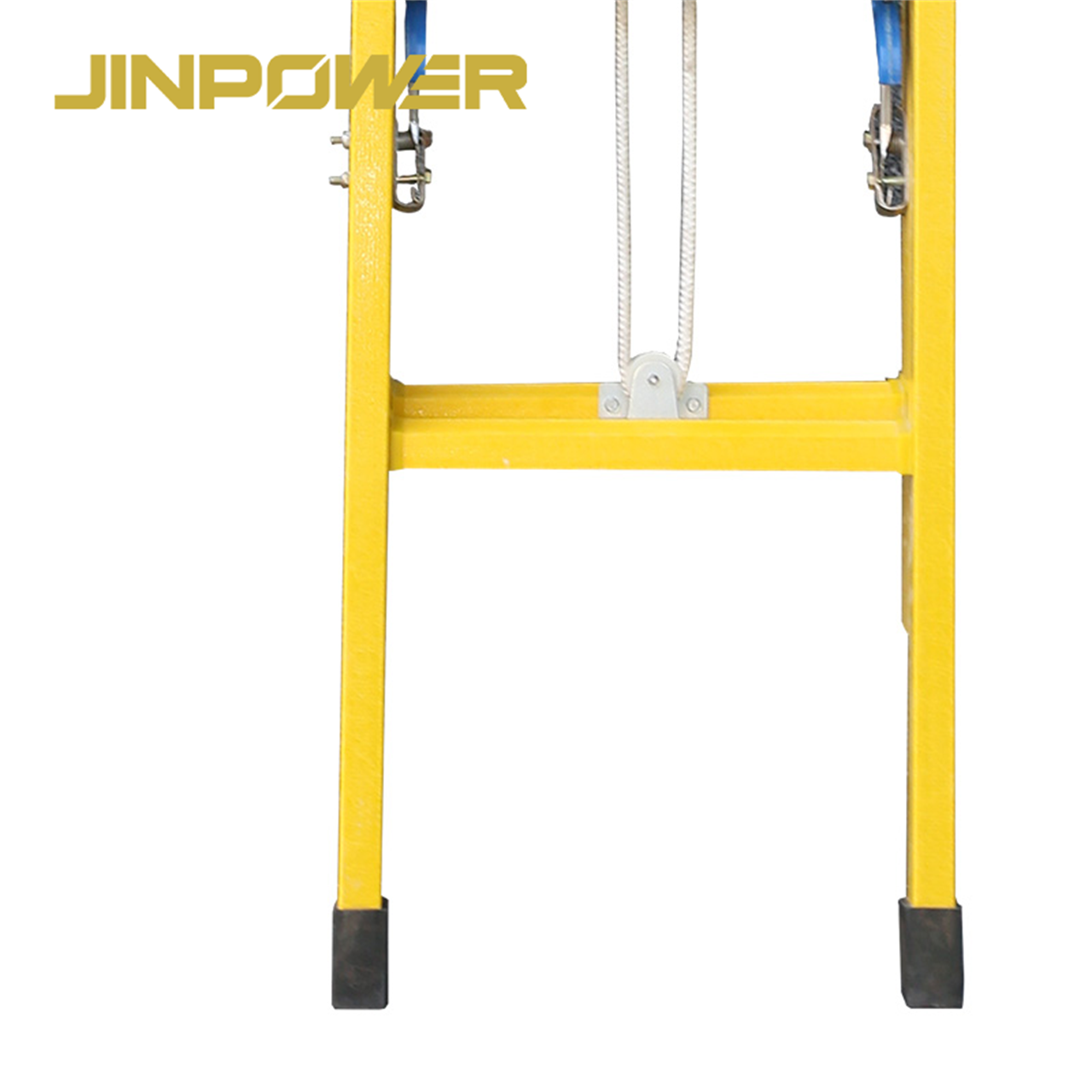
Bottom Support / Feet
The lower support points help keep the ladder stable on the ground or floor.
The exact foot or anti-slip configuration depends on the selected ladder model and should be checked in the approved drawing.
Top Support Area
A straight ladder depends on a suitable upper support point. Buyers and users therefore need to consider both the ladder structure and the surface or structure against which it will be positioned.
Product Identification
For utility and EPC projects, product identification may include the model, rated load, manufacturer information, warning label, serial or batch identification and other project-specific markings.
How to Select the Right FRP Insulating Ladder
1. Determine the Required Access Height
Start with the actual equipment or structure the worker needs to reach, such as a transformer component, gantry, bus structure or other elevated electrical equipment.
2. Confirm the Ladder Length
A single-section ladder has a fixed physical length, so the correct ladder length needs to be confirmed before production.
A ladder that is too short will not provide the required access. One that is unnecessarily long may be harder to transport, store and position.
3. Confirm the Rated Load
Do not calculate load requirement only from the worker's body weight.
The working load may also include:
- Tool belt
- Test instruments
- Hand tools
- Portable equipment
- Other carried items
The Rated Load and supporting mechanical test information should be checked for the exact model being purchased.
4. Check the Work Environment
Indoor substations, outdoor switchyards and industrial facilities can have very different conditions.
Consider:
- Floor or ground condition
- Moisture
- Mud
- Oil or chemical contamination
- UV exposure
- Electrical clearance
- Available setup space
- Transport route
5. Confirm the Support Conditions
A single-section straight ladder is not a self-supporting platform.
The jobsite needs a suitable lower surface and upper support position. The ladder must then be positioned and secured according to the applicable ladder procedure.
6. Confirm Electrical Requirements
If the tender requires dielectric testing, insulation requirements or a specific live-working standard, include the exact standard, test method and acceptance criteria in the RFQ.
7. Confirm the Required Documentation
- Technical Datasheet
- Approved Drawing
- Mechanical Test Report
- Electrical Test Documentation where required
- COC / Inspection Document
- Product Marking
- Traceability Information
Ladder Stability Depends on More Than FRP Material
FRP helps address electrical conductivity, but it does not automatically make a ladder stable.
Stability also depends on:
- Bottom support
- Foot condition
- Ground or floor stability
- Upper support point
- Rail straightness
- Rung integrity
- Ladder position
- Securing method
A ladder can still create a serious fall hazard if it is placed on a slippery, uneven or unstable surface even when the side rails have good insulating properties.
Why Does FRP Surface Condition Matter?
For an electrical ladder, buyers should not look only at the words “Fiberglass” or “FRP.” Surface condition matters throughout transport, storage and service.
Important signs to check include:
- Cracks
- Splits
- Delamination
- Exposed fibers
- Deep scratches
- Impact damage
- Chemical damage
- Heavy contamination
- Moisture
- Visible UV or surface deterioration
If it is unclear whether the damage affects mechanical strength or electrical condition, remove the ladder from normal service and have it evaluated according to the applicable inspection procedure.
Main Applications
Substation and Switchyard Access
FRP insulating ladders are commonly used where technicians need access to elevated equipment in substations and switchyards.
Typical work may involve inspection or maintenance around disconnect equipment, instruments, bus structures and other elevated components.
Transformers and Power Facilities
Transformer facilities often contain auxiliary equipment, instruments and connection points at different heights.
A fixed-length ladder works well where the required access position is already clearly defined.
Transmission and Distribution Maintenance
FRP ladders can provide access to elevated electrical equipment during transmission and distribution maintenance when the ladder type, support method, electrical clearances and site procedure all match the task.
Gantry and Elevated Equipment
Substation gantries and other elevated structures may require temporary vertical access.
A single-section ladder is most practical where the access height and support points are known before the job starts.
Industrial Electrical Maintenance
Factories, mines, electrical equipment rooms and industrial power facilities may require non-conductive ladder access during electrical inspection and maintenance.
Construction Near Electrical Equipment
During construction and commissioning near electrical installations, FRP side rails can help avoid introducing a conductive metal ladder structure into the work area.
The actual work should still follow the site's Electrical Hazard Assessment and approved work procedure.
How Should IEC 61478 Be Understood?
IEC 61478 is an important standard for certain insulating ladders used in live-working applications, but its scope is specific.
IEC 61478 applies to specified synthetic insulating ladder designs used for live working on electrical installations at 1,000 V AC and above or 1,500 V DC and above.
Its scope includes particular ladder constructions such as fully insulating spliced or hook ladders with extension, as well as certain combinations of insulating and conductive sections.
That means IEC 61478 should not automatically be applied to every fixed single-section FRP ladder simply because the ladder is made from insulating material.
For a project requiring IEC 61478, confirm:
- Exact ladder design
- Intended live-working application
- Whether the design falls within the standard's scope
- Test method
- Test report corresponding to the actual supplied model
Compliance should only be claimed where the specific ladder model and supporting documentation justify that claim.
EN 131 and Electrical Insulating Ladder Requirements
The EN 131 family deals with portable ladder terminology, dimensions, general design, mechanical requirements, testing, marking and user instructions.
These mechanical ladder requirements should be considered separately from any electrical insulation or live-working requirements.
For European projects, do not simply ask whether a ladder “has an EN certificate.” Define which mechanical and electrical requirements the project actually needs.
What About U.S. OSHA Requirements?
For U.S. general-industry work, OSHA requires portable ladders to have non-conductive side rails where the employee or ladder could contact exposed energized parts.
This supports the use of fiberglass side rails in electrical environments, but it does not mean a ladder should be marketed as “OSHA Certified.”
OSHA requirements apply to workplace use and safety practices. Product design, mechanical performance, electrical testing and project acceptance still need to be reviewed separately.
Buyer Acceptance Checklist
What Should Be Checked Before Use?
Inspect the FRP Side Rails
- Cracks
- Splits
- Delamination
- Exposed fibers
- Deep scratches
- Contamination
- Moisture
- Deformation
Inspect the Rungs
Make sure the rungs do not have cracks, loose connections, serious wear, deformation or missing components.
Inspect the Bottom Support / Feet
Check that all lower support components are complete and in good condition, and make sure the floor or ground can provide stable support.
Inspect the Top Support Area
Check the ladder's upper structure and make sure the jobsite provides a suitable upper support point for this ladder type.
Check the Product Label
Verify that the model, rated load, warnings, identification and any required inspection or test status remain clear and traceable.
Cleaning, Storage and Transport
FRP Insulating Ladders should be managed as both electrical safety equipment and access equipment rather than treated as ordinary building material.
- Keep FRP surfaces clean and dry
- Avoid prolonged contact with oil, chemicals and other contaminants
- Protect side rails and rungs from impact during transport
- Do not leave heavy objects on the ladder during storage
- Avoid unnecessary prolonged UV exposure
- Store the ladder so that the fixed-length structure is properly supported and does not bend
- Maintain inspection records where required
- Perform periodic inspection and testing according to the applicable procedure and product requirements
When Should the Ladder Be Removed from Service?
If there is doubt about the ladder's mechanical integrity or electrical condition, stop normal use and arrange inspection or evaluation.
Typical reasons include:
- Visible cracks or splits in the FRP rails
- Delamination or exposed fibers
- Serious impact damage
- Visible rail deformation
- Loose, damaged or missing rungs
- Abnormal rail-to-rung connections
- Serious damage to the feet or lower supports
- Severe chemical contamination
- Uncertain effect of moisture or surface damage
- Unreadable model or load identification
- Failure of a required mechanical or electrical inspection
Fall Protection and Ladder Use
An insulating ladder addresses electrical access, but work at height can also create a separate fall hazard.
The need for a Full Body Harness, Lanyard, Self-Retracting Lifeline or another fall-protection system should be determined from the working height, task, work position and applicable site requirements.
Unless the ladder has been specifically designed, tested and documented for that purpose, the ladder itself should not automatically be treated as an approved fall-arrest anchorage point.
For related equipment, seeElectrical Safety PPE.
JINPOWER Pre-Shipment Checks
For utilities, EPC contractors, industrial buyers and distributors, pre-shipment inspection focuses on making sure the actual ladder matches the Approved Specification.
- Product type
- Ladder length
- FRP rail surface
- Rail straightness
- Rung quantity and connections
- Bottom support condition
- Top structure
- Product marking
- Logo / project label where required
- Packaging
- Required technical documentation
If the project requires dielectric testing, mechanical load testing, third-party inspection, batch traceability or another acceptance requirement, it should be defined before order confirmation and production.
OEM and Project Configuration
JINPOWER supports bulk purchasing and project-based supply for utilities, EPC contractors, industrial buyers and electrical safety distributors.
Depending on the confirmed ladder structure and project requirement, we can discuss:
- Ladder length
- Product identification
- Safety labels
- Color configuration
- Serial / batch marking
- Logo / branding
- Export packaging
- Technical Datasheet
- Approved Drawing
- Project test documentation
Cosmetic customization does not change the ladder's electrical or mechanical rating. Any performance requirement must be confirmed through the actual product design and supporting test documentation.
How Does an FRP Ladder Fit Into an Electrical Safety System?
An FRP ladder mainly provides vertical access with non-conductive side rails. A complete electrical maintenance process may also require other safety equipment.
Related JINPOWER products includeInsulated Ladders & Stools,Electrical Insulating Stools,Electrical Insulating Rubber Mats,Voltage DetectorsandElectrical Safety PPE.
Why Choose JINPOWER Single-Section FRP Insulating Ladders?
Focused on Electrical Access
JINPOWER supplies insulating ladders, stools, voltage detectors, rubber mats, grounding equipment and electrical PPE, so ladder selection can be considered as part of the wider electrical worksite.
Clear Single-Section Positioning
This product is designed around fixed-length electrical access rather than being presented as an extension or telescopic ladder.
Application-Based Selection
We recommend selecting the ladder according to access height, physical ladder length, rated load, support conditions, electrical requirements and documentation rather than buying only by the number of meters.
B2B Project Documentation
For utility tenders and EPC projects, drawings, test requirements, markings, traceability and project documentation can be confirmed before order approval.
What Should You Include in Your RFQ?
Frequently Asked Questions
Is this an extension ladder?
No. This product is a Single-Section FRP Insulating Ladder with one fixed-length ladder section. It does not use multiple sliding sections to adjust its length.
Is this a telescopic ladder?
No. A telescopic ladder uses multiple nested sections that extend and retract. This page is for a fixed single-section straight ladder.
Why use FRP instead of an aluminum ladder?
Aluminum is conductive. FRP provides non-conductive side rails, making it more suitable for many electrical work environments where contact with exposed energized parts may be a concern.
Does FRP mean the ladder completely protects the worker from electric shock?
No. FRP side rails are one part of electrical risk control. Isolation, voltage verification, working distance, PPE, grounding and other site procedures may still be required.
Is Ladder Length the same as Working Height?
No. Ladder Length is the physical length of the ladder. Working Height depends on ladder angle, worker position, permitted standing level, operator reach and equipment location.
How do I choose the correct ladder length?
Start with the required access height and the available upper and lower support positions. Then confirm the physical ladder length, ladder angle, transport route and storage space.
Does every JINPOWER FRP ladder comply with IEC 61478?
No blanket claim should be made. IEC 61478 has a specific scope for particular insulating ladder designs used in live working. Compliance must be confirmed for the exact model and supported by the corresponding documentation.
What does EN 131 cover?
The EN 131 family addresses portable ladder terminology, dimensions, design, mechanical requirements, testing, marking and user instructions. Electrical insulation requirements should be reviewed separately where applicable.
Can the ladder itself be used as a fall-arrest anchorage?
Not automatically. Unless the ladder is specifically designed, tested and documented as an anchorage point, fall-arrest equipment should be connected only to an approved anchorage selected according to the applicable fall-protection procedure.
Can JINPOWER customize the ladder length?
Ladder length and other project details can be discussed according to the confirmed ladder design, mechanical requirements, electrical requirements and order quantity.
Request Single-Section FRP Insulating Ladder Details and Pricing
If you are sourcing FRP Insulating Ladders for substations, transformers, switchyards, utility maintenance, industrial electrical facilities or EPC projects, send JINPOWER the actual access requirement rather than only asking for a “5 m fiberglass ladder.”
Please provide the required Access Height, Ladder Length, Rated Load, work environment, support conditions, electrical requirements, applicable standards, quantity and required test documentation.
JINPOWER can then confirm the appropriate Single-Section FRP Insulating Ladder configuration before quotation and project approval.
Inquiry