
 English
 Español
 Português
 Français
 Deutsch
 русский
 한국어
 にほんご
 हिन्दी, हिंदी
 বাংলা
 Bahasa Indonesia
 Türkçe
 Việt
 dansk
 čeština
 עִבְרִית Ivrit
 Filipino/Pilipino
 български език (Bǎlgarski jazik)
 suomi
 norsk
 język polski
 ไทย
 ກະຣຸນາ
 Bahasa Melayu
 ភាសាខ្មែរ
 ဗာရမ်
 اردو
 فارسی
 Italiano
 Nederlands
 svenska
 Монгол хэл
 नेपाली
 සිංහල
 Ўзбек тили
 پښتوتۆرکجه
 Ελληνικά
 српски / srpski
 magyar
 українська
 Kiswahili
 Қазақ тілі
 Română
 Hrvatski
 Bosanski
 Kreyòl ayisyen
 አማርኛ
 Hausa
 Yorùbá
 Igbo
‹
›
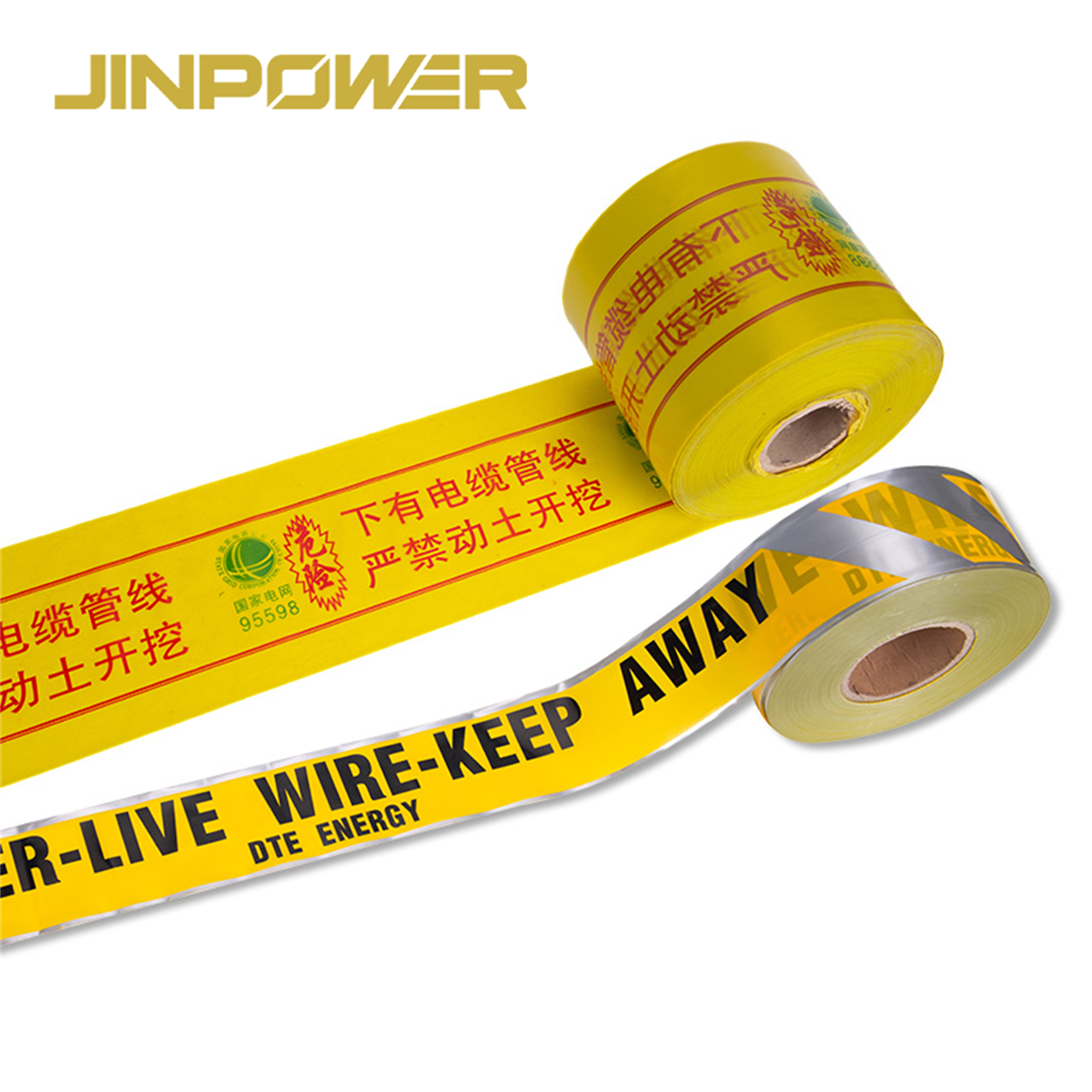
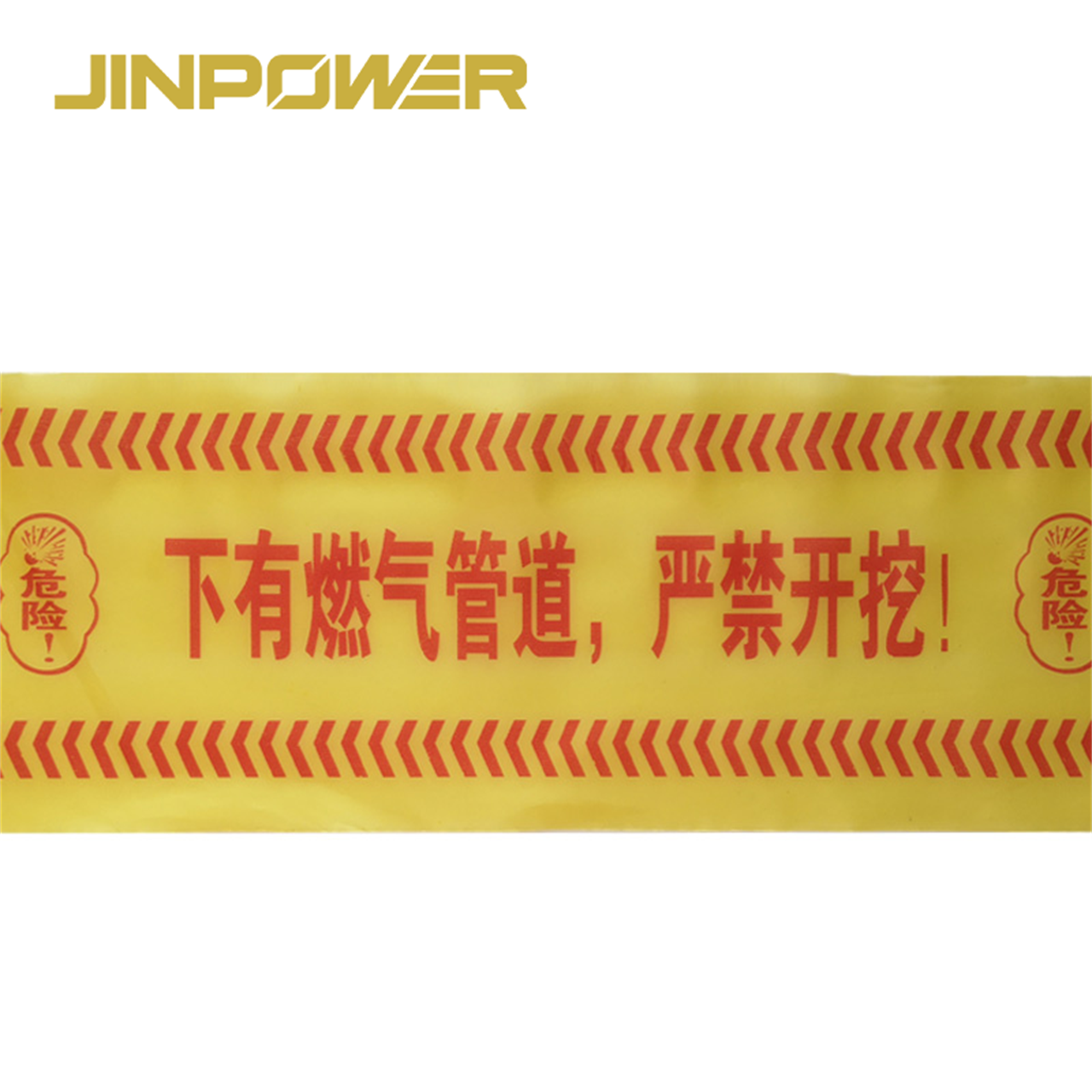
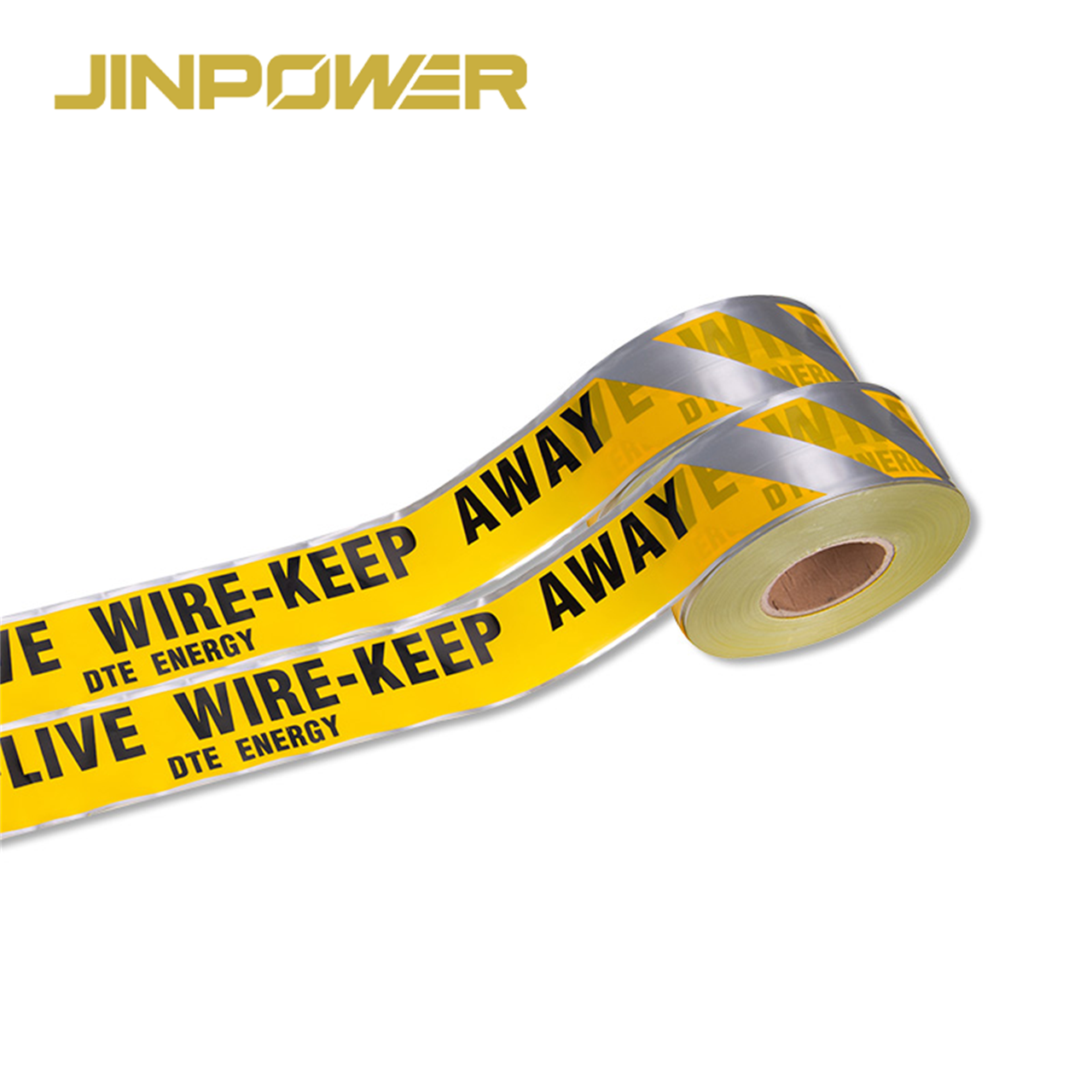
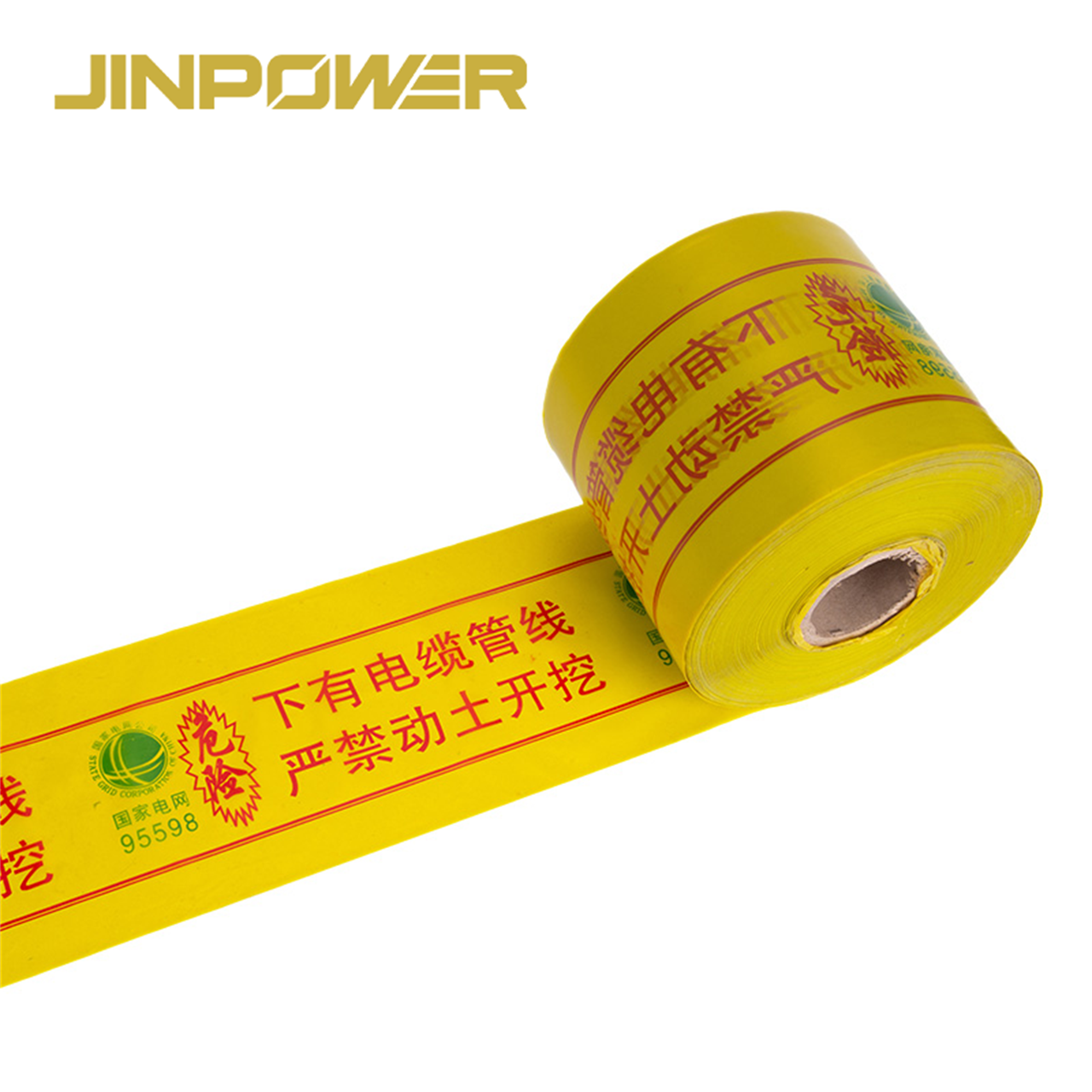
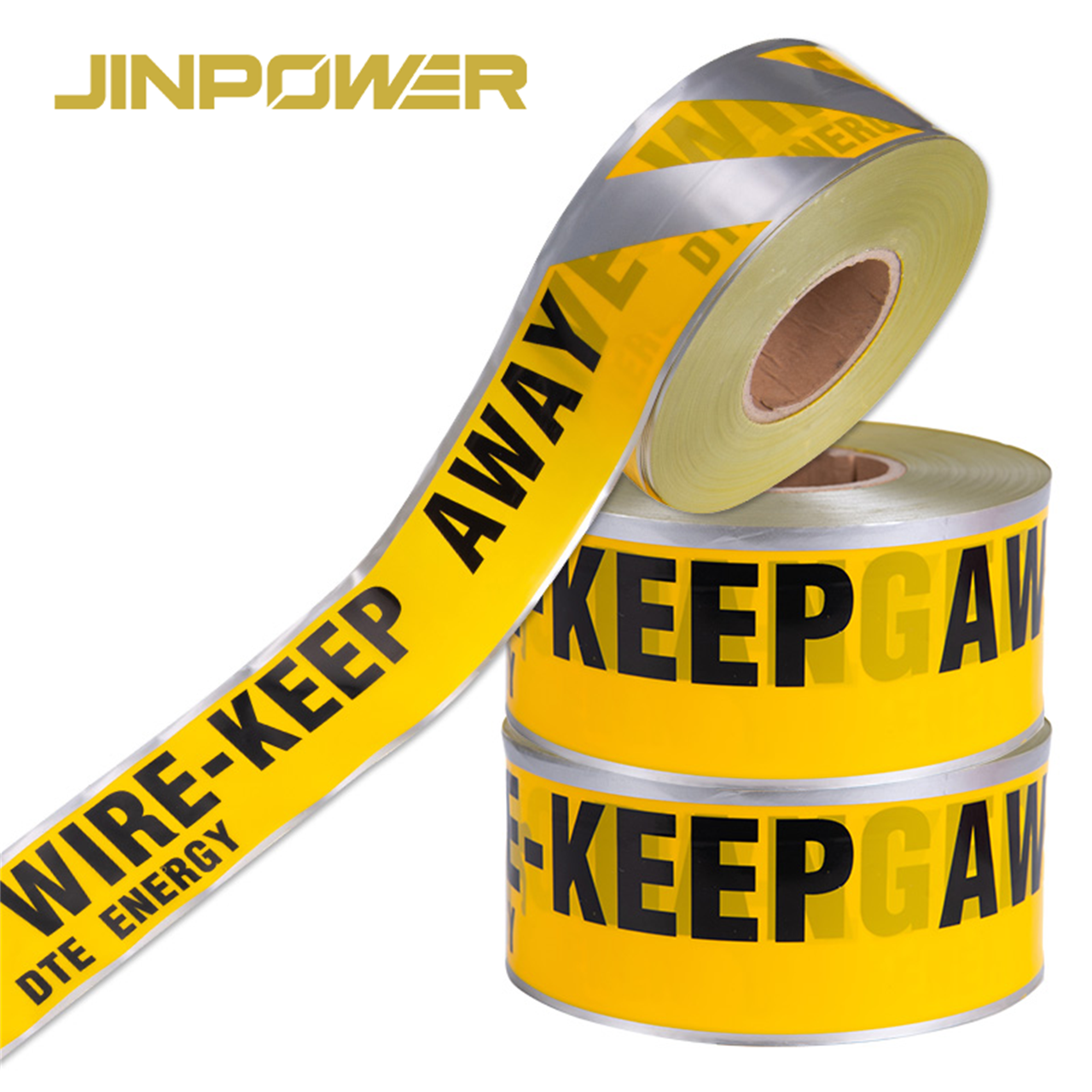
Underground Warning Tape for Buried Cables & Utilities
When a power cable, conduit or utility line is buried underground, the warning needs to appear before an excavator or worker reaches the actual asset. That is exactly what JINPOWER Underground Warning Tape is designed to do.
Our underground warning tape is made from PE and is available in widths from 10cm to 120cm, with 12mil and 15mil thickness options. Standard rolls are 500m long, making the product practical for cable routes, substations, utility corridors, renewable-energy projects and other long infrastructure runs.
For projects that also need the buried route to be located from above ground, a Detectable Warning Tape configuration is available with an embedded metallic element. Length, width and warning text can also be discussed according to the project specification.
All Products
Stay Connected
If you have any questions, please contact us and we will contact you as soon as possible.
Prduct Introdution
Key Product Features- PE underground warning tape for buried cable and utility identification
- Available width range: 10–120cm
- 12mil and 15mil thickness options
- 500m per roll
- Detectable and non-detectable configurations
- Detectable version available with an embedded metallic element
- Custom width, length and warning text available according to project requirements
- Suitable for power cables, cable ducts, telecom lines and other buried utilities
- Designed as an early visual warning layer before excavation reaches the actual underground asset
Quick Technical Specifications
Detectable or Non-Detectable: Which One Do You Need?
- PE underground warning tape for buried cable and utility identification
- Available width range: 10–120cm
- 12mil and 15mil thickness options
- 500m per roll
- Detectable and non-detectable configurations
- Detectable version available with an embedded metallic element
- Custom width, length and warning text available according to project requirements
- Suitable for power cables, cable ducts, telecom lines and other buried utilities
- Designed as an early visual warning layer before excavation reaches the actual underground asset
This is usually the first selection decision after size and thickness.
A detectable tape is not simply a “stronger” version of standard warning tape. Its main difference is the added locating function.
If the tender or utility specification requires future route detection, tell us that at the RFQ stage so the correct configuration can be confirmed before production.
Quick Selection Guide
What Is Underground Warning Tape?
Underground Warning Tape is a buried visual warning layer placed above an underground cable, conduit, pipe or utility route.
The idea is simple: if the ground is excavated later, the worker should reach the warning tape before reaching the actual cable or utility below it.
That gives the excavation team an early warning that a buried service is nearby and that work should proceed according to the project’s underground utility and excavation procedures.
Unlike theMagnetic Retractable Safety BarrierorBoxed Warning Tape Reel, this product is not designed to create an above-ground temporary boundary.
It is installed underground and stays with the buried route as a warning for future excavation.
How Does Underground Warning Tape Provide Early Warning?
Imagine a power cable buried along a utility corridor.
Instead of leaving only soil between the surface and the cable, a clearly marked warning tape is installed above the cable route at the location defined by the project design.
If the area is excavated years later, the excavation crew encounters the warning tape first.
The printed message can immediately communicate information such as:
- Buried electrical cable below
- High-voltage cable route
- Underground utility line
- Telecommunication cable
- Other project-specific buried service
This simple warning layer is especially useful in projects where underground routes may remain in service for many years and future maintenance teams may not be familiar with the original installation.
How Does Detectable Underground Warning Tape Work?
The detectable version adds an embedded metallic element to the warning tape.
This allows the installed route to support above-ground locating when used with suitable locating equipment and according to the project’s locating method.
This can be especially useful when:
- The buried route needs to be found again before excavation
- The cable or pipe itself is difficult to locate directly
- The project specification requires a detectable warning layer
- Future maintenance teams need an additional way to trace the underground route
The exact metallic structure should be confirmed for the selected product configuration. Detection distance, locator settings and other locating performance should not be assumed unless they are defined in the approved project specification or product documentation.
Main Product Structure
PE Warning Layer
PE forms the main warning tape body.
For underground use, the material needs to remain practical to handle in long rolls while working in a buried environment where moisture and soil contact are expected.
For project purchasing, however, the material name alone is not enough. Width, thickness, warning message and detectable requirement should all be reviewed together.
Metallic Detectable Element
The detectable configuration includes a metallic element integrated into the warning tape.
Its purpose is to support future route locating. The exact detectable construction depends on the selected product configuration and should be confirmed before ordering.
Printed Warning Message
The printed warning message tells future workers what type of buried asset is below.
For example, an electrical project may require wording such as:
- CAUTION BURIED ELECTRIC CABLE BELOW
- WARNING ELECTRIC LINE BELOW
- BURIED HIGH VOLTAGE CABLE
The actual wording should follow the project, utility or local requirement rather than simply using a generic message for every market.
12mil vs 15mil: Which Thickness Should You Choose?
JINPOWER Underground Warning Tape is available in 12mil and 15mil thickness options.
The important point is not to assume that thicker automatically means “better” for every project.
The correct thickness should follow:
- Project specification
- Utility requirement
- Tender document
- Required tape construction
- Local installation requirement
If your tender already specifies a minimum thickness, include that requirement in your RFQ.
How Do You Choose the Right Tape Width?
Available widths range from 10cm to 120cm, which gives buyers much more flexibility than a single narrow warning tape size.
The right width depends on what is buried and how the project wants the underground route to be marked.
Things to consider include:
- Single cable or multiple cables
- Cable conduit or duct bank
- Overall trench width
- Utility corridor width
- Required warning-message size
- Visibility during excavation
- Project or utility specification
A narrow tape may be enough for a simple cable route, while a wider project configuration may make more sense for a broad duct bank or utility corridor.
The project drawing should always take priority over choosing width by habit.
Why 500m Rolls Work Well for Infrastructure Projects
Buried cable and utility projects often run for hundreds or thousands of meters.
A 500m roll reduces the need to manage many short rolls across a long cable route and makes quantity planning easier for contractors and project buyers.
This is useful for projects such as:
- Substation cable routes
- Power distribution projects
- Solar farm cable corridors
- Industrial cable trenches
- Telecommunication routes
- Utility infrastructure projects
500m refers to the roll length. It does not mean every installation needs to use one continuous 500m section without interruption.
Actual installation should follow trench sections, construction drawings, joints, route changes and the project method statement.
Warning Color Should Follow the Project Standard
Different utilities and markets may use different color systems to identify power, gas, telecom, water and other buried services.
Because of that, color should not be selected only because it “looks like a warning color.”
Before production, confirm:
- Utility type
- Required background color
- Required text color
- Local utility marking convention
- Tender or project drawing requirement
Color conventions are not universal in every market, so the project specification should always come first.
Custom Warning Text for Your Project
JINPOWER can discuss custom warning text based on the confirmed Underground Warning Tape configuration.
Common project information may include:
- Buried utility type
- Electrical warning message
- Voltage-related wording where required
- Utility or project name
- Local-language warning
- Dual-language or multilingual warning text
For export projects, it is better to provide the final approved wording rather than asking the supplier to translate a safety message after production has already started.
Main Applications
Buried Power Cables
Power cable projects are one of the most important applications for Underground Warning Tape.
The tape is installed above the buried cable route according to the project design so that future excavation reaches the warning layer before the cable itself.
For electrical projects, warning wording, width, color and detectable requirement should all be confirmed before production.
Cable Conduits and Duct Banks
Where multiple cables are installed inside conduit or a wider duct bank, the warning tape can be selected according to the overall utility corridor and project marking requirement.
The available width range up to 120cm gives project buyers more flexibility for wider underground installations.
Substation Cable Routes
Substations often contain underground control, power and auxiliary cable routes connecting different equipment areas.
Using a clearly identified buried warning layer can help future maintenance and civil-work teams recognize that an underground cable route is present before excavation reaches the cable.
Solar and Renewable Energy Projects
Solar farms and other renewable-energy projects can contain long underground AC or DC cable runs between arrays, inverter stations, transformers and substations.
The 500m roll format is practical for these long cable corridors, while detectable configurations can be considered where the project requires future route locating.
Telecommunication and Fiber Routes
Underground Warning Tape can also be used above buried telecom ducts and fiber routes when the project needs a visible warning layer for future excavation.
Text and color should follow the telecom operator or project requirement.
Other Underground Utilities
The same basic warning concept can be used for other buried utility routes, provided the material, color, text and detectable requirement match the relevant project specification.
Underground Warning Tape vs Above-Ground Warning Tape
For above-ground temporary work areas, see the fullSafety Warning Taperange.
Detectable Tape Does Not Replace Utility Locating Procedures
A detectable warning tape can make future route locating easier, but it should not be treated as the only source of information before excavation.
Professional underground work may still rely on:
- Project drawings
- Utility records
- Approved locating procedures
- Survey information
- On-site utility marking
- Safe excavation procedures
The warning tape is one part of underground utility identification, not a replacement for the full locating and excavation process.
How Deep Should Underground Warning Tape Be Installed?
There is no single installation depth that should be copied into every project.
The correct position depends on:
- Buried asset depth
- Cable or utility type
- Trench design
- Local utility standard
- Project specification
- Construction method
The warning tape should be installed above the buried asset at the position specified by the approved project drawing, utility requirement or local installation standard.
We do not recommend selecting an installation depth simply from a generic online recommendation when the project already has its own engineering specification.
What Should Buyers Check Before Approving an Order?
Storage and Handling
Underground Warning Tape is simple to handle, but good storage helps keep long rolls clean and ready for installation.
- Keep rolls clean and dry before installation
- Protect the tape from unnecessary cuts or punctures during transport
- Avoid dragging the roll across sharp surfaces
- Do not place heavy objects on the roll if they may deform the tape
- Keep printed warning text clean enough to remain easy to read
- Store detectable tape carefully to avoid unnecessary damage to the embedded metallic element
- Check the product against the approved specification before sending it to the trench
When Should Underground Warning Tape Be Rejected Before Installation?
A roll should be checked before installation if there is any reason to think it no longer matches the approved project requirement.
Typical issues include:
- Wrong tape width
- Wrong thickness
- Wrong warning message
- Wrong project language
- Wrong color
- Damaged or unreadable printing
- Serious cuts or tears
- Incorrect detectable / non-detectable configuration
- Visible damage to the detectable element
- Roll identification does not match the approved order
JINPOWER Pre-Shipment Checks
For utility, EPC, contractor and distributor orders, we focus on making sure the supplied tape matches the confirmed project specification before shipment.
- PE material configuration
- Tape width
- 12mil / 15mil thickness
- Roll length
- Detectable / non-detectable configuration
- Warning text
- Language
- Color and printing appearance
- Roll quantity
- Packaging
For custom-printed projects, the warning message and layout should be approved before batch production starts.
Project Customization
Underground warning tape is often specified project by project, so customization is more important here than it is for many general safety products.
JINPOWER can discuss:
- Tape width
- Tape length
- 12mil / 15mil thickness
- Detectable configuration
- Warning wording
- Local-language text
- Multilingual warning text
- Project-specific color requirement
- Packaging
The best way to avoid mistakes is to send the actual tender specification, drawing or approved warning wording together with the RFQ.
How Does Underground Warning Tape Fit Into the JINPOWER Safety Warning Range?
See the fullSafety Warning Taperange for different underground and above-ground site-control applications.
Why Buy Underground Warning Tape from JINPOWER?
Built for Electrical and Utility Projects
JINPOWER focuses on electrical safety and utility products, so we understand that underground warning tape is usually purchased as part of a real cable, substation or infrastructure specification rather than as a general-purpose plastic tape.
Wide Size Range
The 10–120cm width range gives project buyers flexibility for anything from a simple cable route to a much wider trench or utility corridor.
Detectable and Non-Detectable Options
Buyers can select a standard visual-warning configuration or a detectable version where future route locating is part of the project requirement.
Project-Based Printing
Warning wording can be discussed around the actual buried service, local language and project requirement instead of using one generic message for every market.
Long Roll Supply
500m rolls are well suited to long cable and infrastructure routes and make quantity planning easier for EPC contractors, utilities and distributors.
What Should You Include in Your RFQ?
Frequently Asked Questions
What is Underground Warning Tape used for?
It is buried above an underground cable, conduit, pipe or utility route to provide an early visual warning if the area is excavated in the future.
What material is the tape made from?
The current JINPOWER Underground Warning Tape is made from PE.
What widths are available?
Available width options range from 10cm to 120cm, depending on the project requirement.
What thickness options are available?
The current product range includes 12mil and 15mil options.
How long is each roll?
The standard current configuration is 500m per roll.
What does “detectable underground warning tape” mean?
It means the tape includes an embedded metallic element that can support future route locating with suitable locating equipment.
Is detectable tape always better?
Not necessarily. If your project only requires a buried visual warning layer, a non-detectable version may be enough. If future route locating is required, a detectable configuration should be considered.
Can Underground Warning Tape replace a cable locator?
No. Detectable tape supports route locating, but it does not replace utility records, approved locating procedures, survey information or safe excavation practices.
How deep should the tape be buried?
The installation depth should follow the approved project drawing, utility specification or local installation requirement. There is no single depth that should automatically be used for every project.
Can the warning text be customized?
Yes. Warning text can be discussed according to the project requirement, including electrical cable wording, utility identification and local-language or multilingual warnings.
Can the tape width be customized?
Yes. Width can be selected or discussed within the available product range according to the trench, buried asset and project specification.
Is Underground Warning Tape only for electrical cables?
No. Electrical cable is a major application for JINPOWER, but the same warning concept can also be used for telecom and other underground utility projects when the product configuration matches the project requirement.
Request Underground Warning Tape Details and Pricing
If you are buying Underground Warning Tape for a power cable, substation, renewable-energy project, telecom route or utility infrastructure job, send us the actual specification instead of only asking for “underground tape price.”
Tell us the required width, 12mil or 15mil thickness, detectable or non-detectable configuration, warning text, color, total route length and quantity.
If the project already has a drawing, tender specification or approved warning wording, send that information with your RFQ. JINPOWER can then confirm the Underground Warning Tape configuration before quotation and production.
Inquiry